In this story
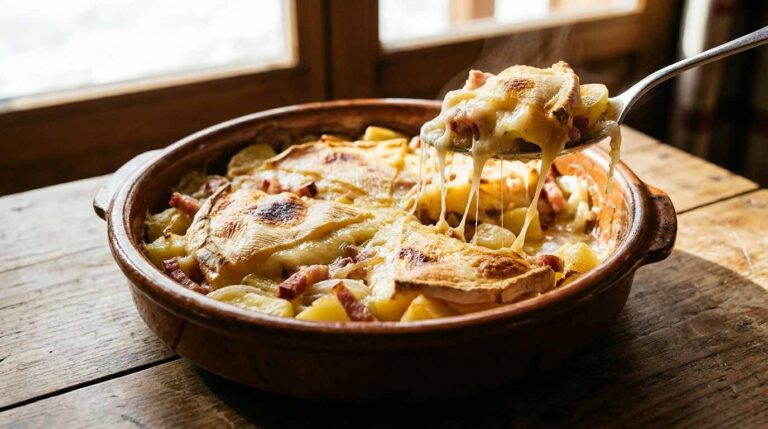
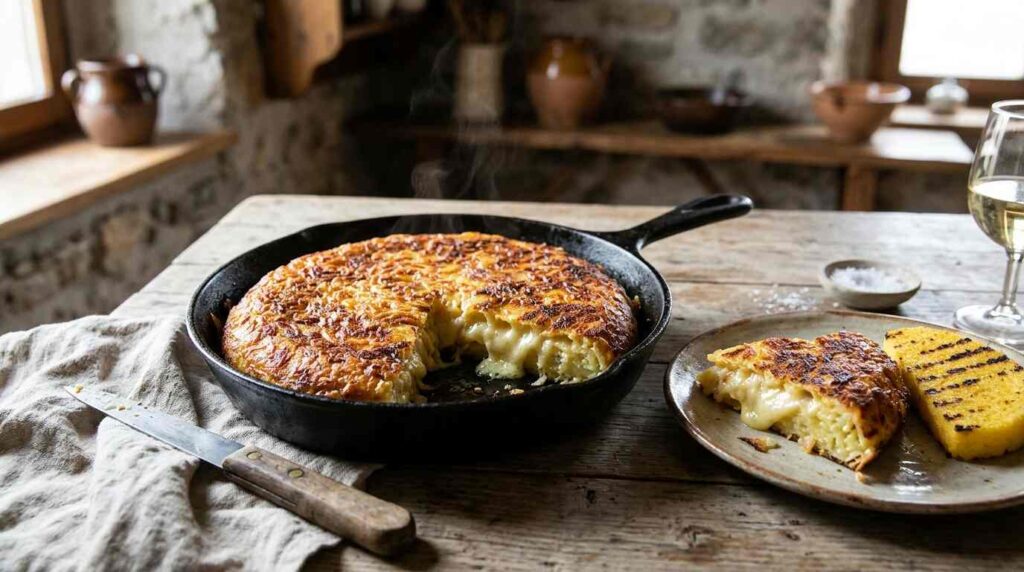
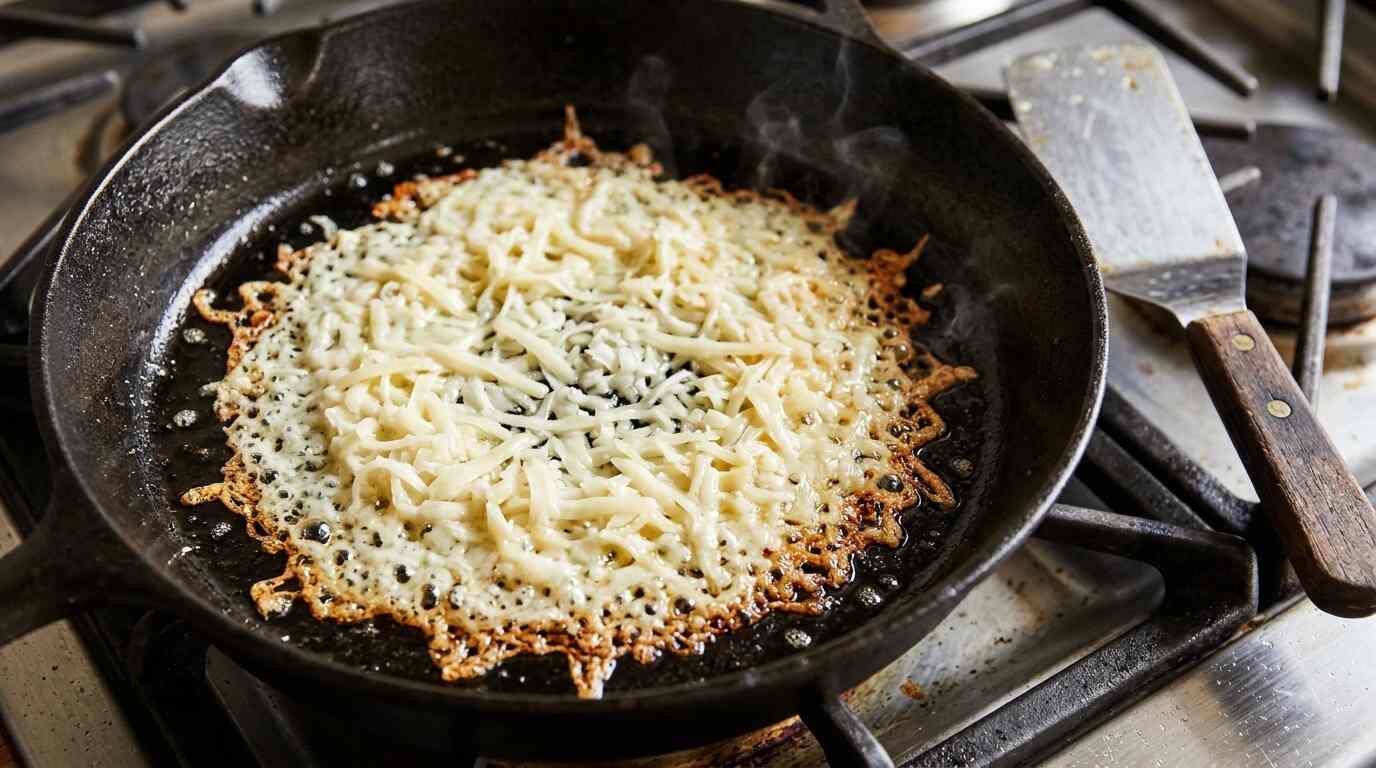
Frico is cheese fried in a pan until it becomes something else. In Friuli, in northeastern Italy, the word covers two dishes. One is a thin, lacy wafer of nothing but cheese, fried until it shatters. The other is a thick, golden cake of potato, onion and melted cheese, crisp outside and runny within, cut in wedges and served with polenta. Both start with the same mountain cheese, Montasio.
Video: Double helpings of fried cheese called frico, from the Pasta Grannies YouTube channel
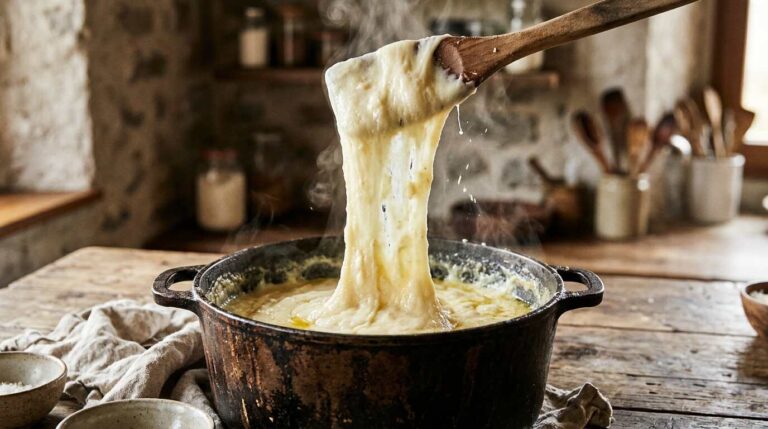
Montasio, the mountain cheese
The cheese predates the dish by name. Frank Fariello, who writes the Italian food site Memorie di Angelina, says Montasio has been made since the 13th century, traditionally by monks at the abbey of Moggio in the Carnic Alps, and is named after the nearby Jôf di Montasio. Young Montasio, aged two to five months, is mild and semi-hard, the kind his potato frico calls for. Montasio aged about a year becomes a hard grating cheese with a sharper bite.
A 15th-century recipe
The dish has older paperwork than most. A listing from Friuli-Venezia Giulia’s register of traditional agri-food products, the PAT, posted by ONAF, says frico’s origins are very old and largely undocumented. It names the earliest written recipe as “caso in patellecte,” cheese in little pans, in the Libro de arte coquinaria by Maestro Martino, cook to Lodovico Trevisan, Patriarch of Aquileia, in the second half of the 1400s.
Food for woodcutters, or for poor households
The two common origin stories point at the same need from different directions.
The PAT listing ties the crisp version to mountain work: woodcutters carried frico in their packs along with cold, firm polenta. Chowhound, in a February 2026 piece by Jennifer M. McNeill, describes frico as a way for poorer households to use up leftover cheese scraps, and notes it is now eaten in homes of every income and on trattoria and osteria menus, usually hot and with polenta.
Neither source says which version came first.
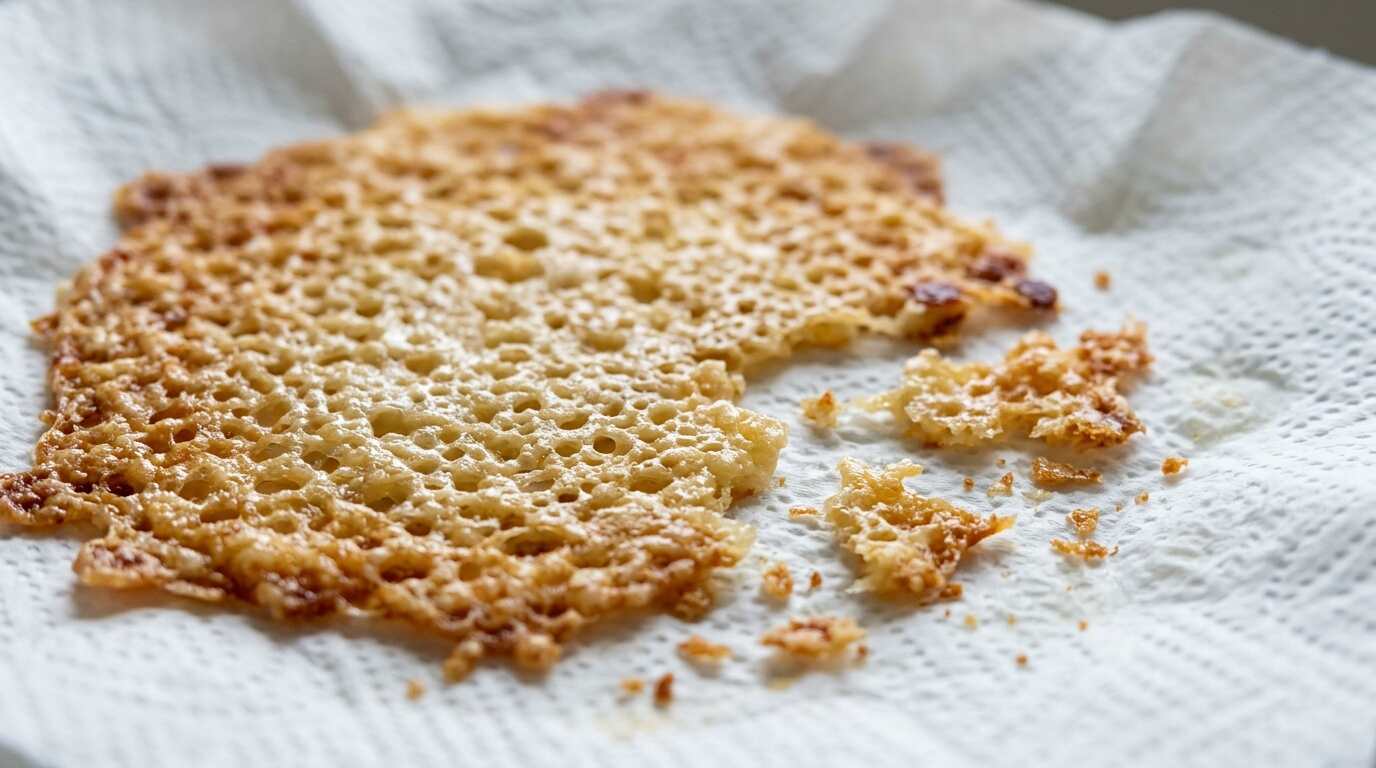
Frico croccante: just cheese
The crisp version is almost nothing but technique. The PAT listing describes it as a round, crisp, intensely flavored fried cheese disc, typically 10 to 15 centimeters across, made from Montasio, Latteria or Malga cheese aged six to 12 months. Its method:
- Grate the aged cheese coarsely
- Heat a lightly oiled iron or nonstick pan
- Spread a thin, even layer of cheese into a disc
- Press it with a spatula to release excess fat
- Flip when the underside is golden, cook the second side
- Drain on absorbent paper
Fariello adds that a warm wafer draped over a small bowl sets into a basket as it cools. The PAT listing pairs the crisp frico with fried polenta or potatoes and a medium-bodied local red.
Aged cheese for the wafer
The PAT listing specifies cheese aged six to 12 months for the crisp version. GrillCheesy’s post on why cheese melts and turns greasy covers the fat that the spatula presses out of the pan.
Frico morbido: potato and cheese
Chowhound describes the soft version as shredded potato and onion folded with Montasio into a potato cake with a crisp outside and a molten middle. Methods vary more than the crisp version’s. Fariello lists potatoes sliced, chunked, grated, or boiled first; potato-to-cheese ratios from two to one down to one to one; and a two-pot method that cooks the mixture gently in a saucepan before browning it in a skillet.
Chowhound notes one detail traditional cooks keep: the potatoes aren’t rinsed, which makes a denser cake.
Substitutes for Montasio
Montasio can be hard to find outside Italy, and the sources suggest different stand-ins. Chowhound calls Montasio essential for a traditional texture and suggests aged Parmigiano or Grana Padano. Fariello, cooking the soft version, suggests Emmenthal, gruyère, young Asiago or Fontal, and says any meltable cheese will work. Chowhound’s list is aged hard cheeses for the crisp wafer; Fariello’s is melting cheeses for the soft cake.
The recipe
The card below follows Frank Fariello’s potato frico from Memorie di Angelina, posted in March 2018. It serves four to six and uses roughly two parts potato to one part young Montasio, with optional pancetta, guanciale or speck. Fariello recommends a nonstick skillet and gives times only for the final stages. The amounts are his; the steps are summarized here.
Frico (Potato and Montasio)
Ingredients
Method
- Cook the onion gently in the fat in a skillet, nonstick for preference, until soft and translucent. Add the pancetta, guanciale or speck at this stage if using.
- Add the potatoes and mix them with the onion. Season generously with salt and pepper, add a glass of water, cover and simmer until the potatoes are soft, adding more water if needed.
- Uncover and let the remaining liquid cook off. Mash with a wooden spoon into a rough purée, leaving some pieces whole.
- Fold in the cheese and stir over gentle heat until fully melted, then cook 5 to 10 minutes more, until the mixture holds together as one mass.
- Flatten the mixture and raise the heat. Brown the bottom into a crust, flip, and brown the other side, about 3 to 5 minutes a side. Repeat for a deeper crust if needed.
- Serve right away, while the cheese is still warm and creamy.
Notes
Frico belongs to the family of Alpine dishes built on melted mountain cheese, with Swiss raclette and cheese fondue. The Parmigiano-Reggiano that Chowhound suggests for the crisp version has its own GrillCheesy post.

For the pan
The cheeses and pan mentioned above.
- Montasio Cheese (1 lb): a one-pound piece of Montasio, the Friulian cheese both versions of frico are built on. See it on Amazon (affiliate link)
- Frank and Sal – Genuine Grana Padano Aged 24 Months Italian Import. (2 Pound): a 24-month Grana Padano, one of Chowhound’s suggested substitutes for the crisp version. See it on Amazon (affiliate link)
- Lodge Pre-Seasoned Cast Iron Skillet, PFAS-Free, 10.25 Inches: a 10.25-inch cast iron skillet, the kind of iron pan the PAT listing names for frico croccante. See it on Amazon (affiliate link)
As an Amazon Associate I earn from qualifying purchases. A commission may be earned if you buy through this link, at no extra cost to you.
Frequently asked questions
What is frico?
A Friulian dish of fried cheese, usually Montasio. Frico croccante is a thin crisp wafer of cheese alone; frico morbido is a soft cake of potato, onion and cheese.
Where does frico come from?
Friuli-Venezia Giulia in northeastern Italy. Its earliest written recipe is credited to Maestro Martino in the 15th century.
What cheese is used for frico?
Montasio. The crisp version uses Montasio or similar cheese aged six to 12 months; the soft version uses young Montasio.
What can replace Montasio?
Chowhound suggests aged Parmigiano or Grana Padano; Memorie di Angelina suggests Emmenthal, gruyère, young Asiago or Fontal.
Sources
- Frank Fariello, “Frico,” Memorie di Angelina (March 23, 2018): https://memoriediangelina.com/2018/03/23/frico/
- ONAF, Friuli-Venezia Giulia PAT listing, “Frico”: https://www.onaf.it/uploads/public/7139_frico.pdf
- Jennifer M. McNeill, “Why Italian Frico Is A Golden, Crispy Dish Worth Knowing By Name,” Chowhound (February 24, 2026): https://www.chowhound.com/2104908/italian-frico-friuli-venezia-giulia-regional-dish