In this story
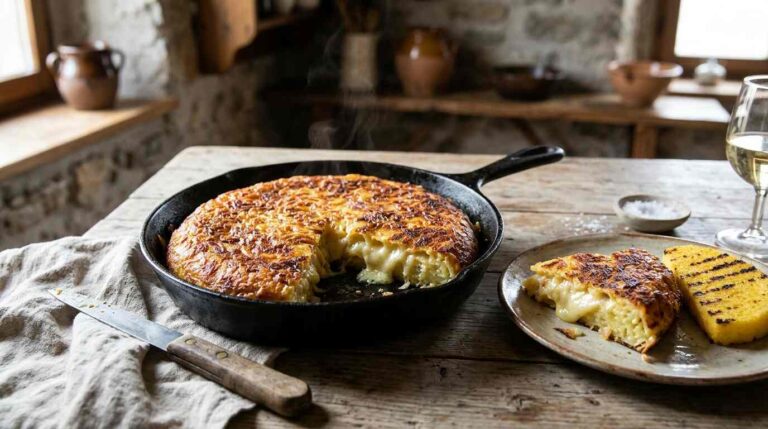
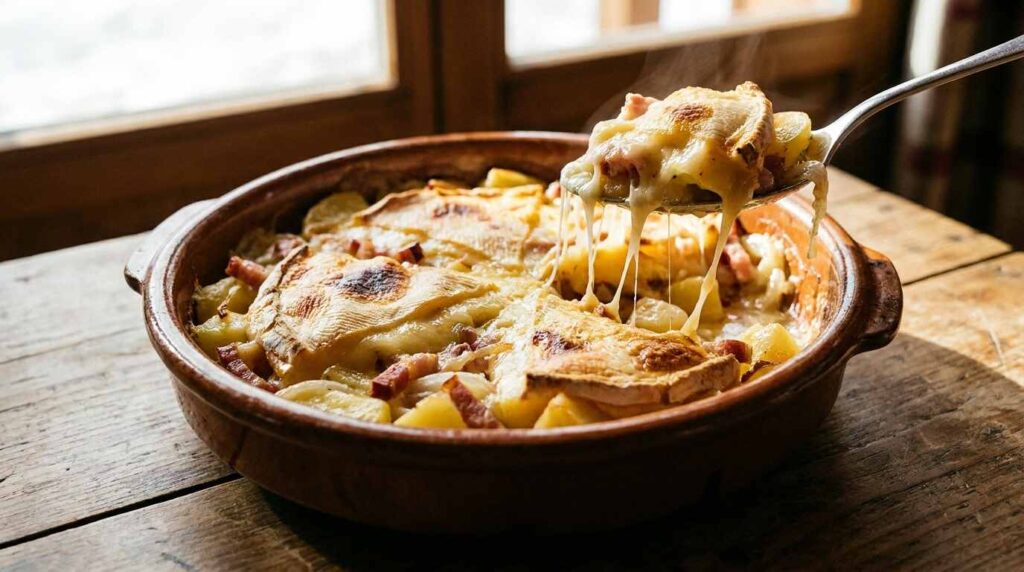
Tartiflette is potatoes, smoked lardons and onions in a baking dish, with a whole Reblochon cut in half and laid on top so it melts down through everything underneath. It is the dish ski resorts in the French Alps serve after a day outside, and it tastes old. It isn’t, or at least the version on the menu isn’t. Most accounts put it in the 1980s, and the argument over who came up with it involves a cheese guild, a famous restaurant critic and a restaurateur in a ski town.
Video: How to Make Tartiflette (French Potato and Cheese Gratin), from the America's Test Kitchen YouTube channel
A cheese named for a second milking
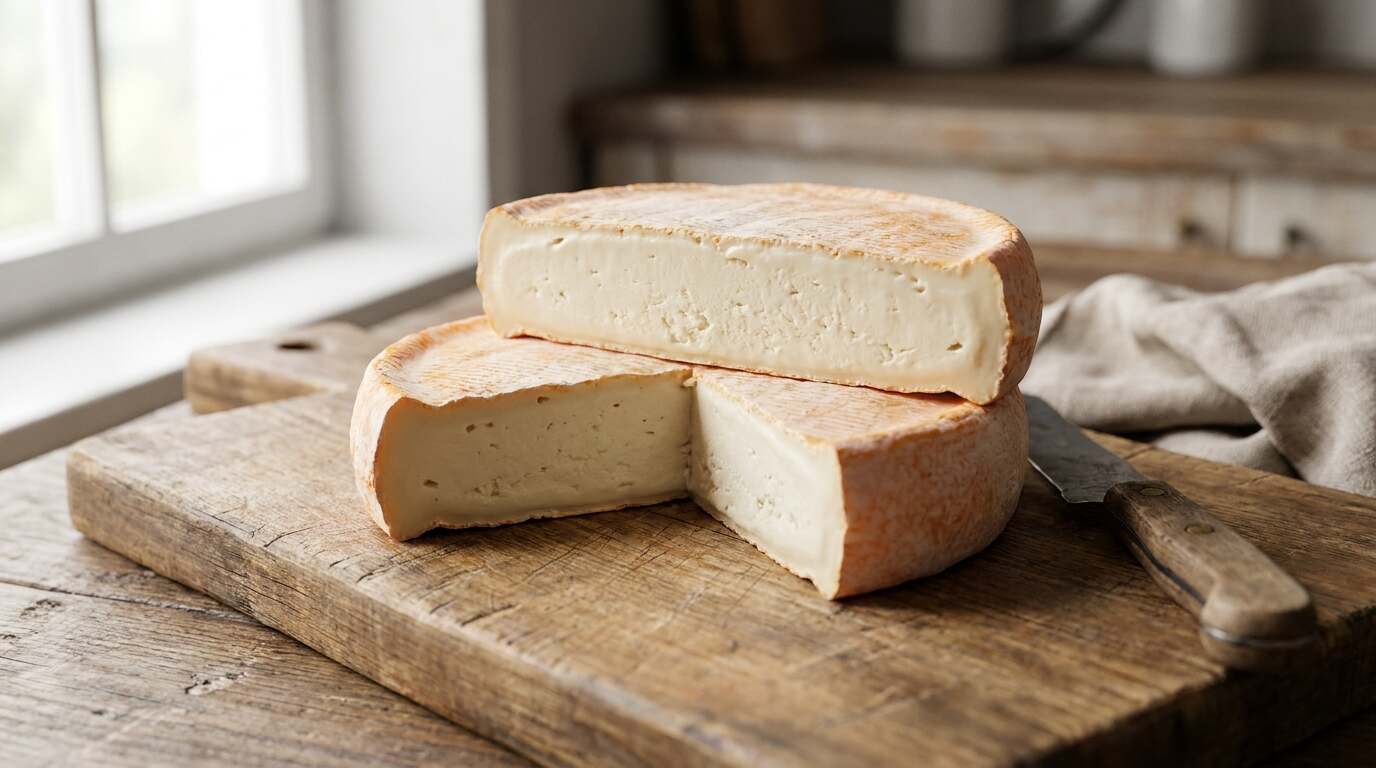
The cheese came first by about seven centuries. Food52, in a December 2022 piece by Emily Monaco, says Reblochon has been made in the Alps since the 13th century, when farmers under-milked their cows during the landlord’s tax visits and milked them again afterward. The name comes from the local word reblocher, to milk again. Cook’s Illustrated renders the word as “to pinch a cow’s udder again,” and says ranchers did the second milking secretly at night.
The Reblochon producers’ own site describes it as a raw-milk cheese from Savoie protected by an AOP, supplied by 620 farms across the appellation area, and says the second milking gives a richer, creamier cheese.
The péla came before
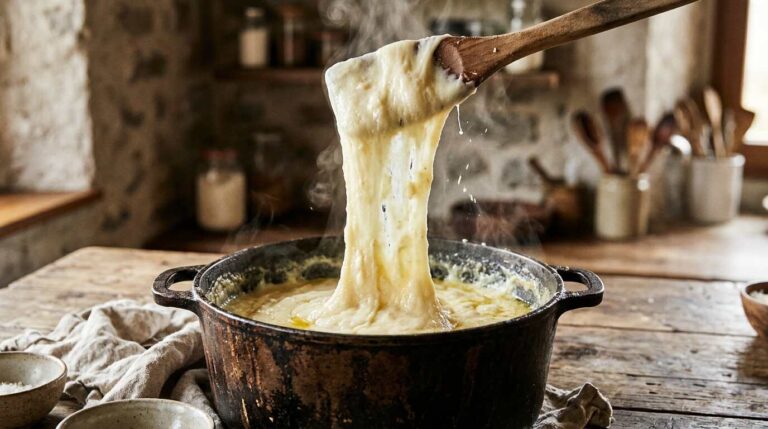
Savoyard kitchens had a potato and cheese dish long before tartiflette. Food52 describes the péla as potatoes, cheese and onions, cooked for centuries and named after the long-handled pan it was made in. Anne-Lise Francoz, communications director of the Syndicat Interprofessionnel du Reblochon, told Food52, “You would traditionally add leftovers to [péla].” The Reblochon site adds that the péla was cooked in a pan shaped like a shovel, in the fireplace or the communal bread oven.
Who invented tartiflette
The modern dish turns up in the 1980s. After that, the accounts disagree.
The guild did it
The most repeated version says the cheesemakers invented it. Food52 cites Christian Millau, co-founder of the Gault Millau restaurant guide, who wrote in his Dictionnaire amoureux de la gastronomie that the Syndicat Interprofessionnel du Reblochon created the dish to sell more cheese. The Reblochon site itself says the recipe changed from the péla partly to use up surplus Reblochon and partly to give the old dish a younger image.
The guild says it didn’t
Lucile Marton, director of the same guild, told Food52 that the syndicate did not invent the recipe, though she acknowledged the cheese has benefited from it. Experts quoted by Food52 credit a ski-resort restaurateur in La Clusaz with combining surplus Reblochon with bacon, potatoes and onions.
The 1980s or the late 1990s
National Geographic Traveller, in a January 2025 piece by Caroline Morrish, gives a two-step timeline. Alpine restaurants began serving something like the modern tartiflette in the 1980s; then, in the late 1990s, the syndicate published its own recipe to sell off a surplus of Reblochon that was too runny. Morrish also notes that the word tartiflette is said to appear first in François Massialot’s 18th-century cookbook Le Cuisinier Royal et Bourgeois, in a recipe closer to péla than to the modern dish.
The official rules
The guild that may or may not have invented tartiflette is clear about how to make it. The Reblochon site lists Reblochon de Savoie, firm potatoes such as Roseval or Belle de Fontenay, smoked lardons, onions, a splash of dry Savoie white wine and pepper, with nutmeg optional. The name, it says, may come from tartifla, the Savoyard word for potato.
Its exclusions are specific:
- No grated cheese or other cheeses
- No precooked or vacuum-packed potatoes
- No added oil, butter or other fat; the potatoes cook in the fat from the lardons
Cream is the gray area. The site allows crème fraîche, but says the dish shouldn’t be swimming in it. It bakes the gratin about 15 to 20 minutes at 200°C, until the Reblochon turns golden.
Morbier and other swaps
Chefs bend the cheese rule anyway. National Geographic Traveller lists versions with tomme, gruyère, taleggio or aged camembert, Michel Roux Sr.’s Aletsch tartiflette made with a Swiss cheese, and the morbiflette, made with morbier from the Jura.
Reblochon in the United States
American cooks face a harder problem than taste. Cook’s Illustrated reports that starting in 2004 the U.S. Food and Drug Administration barred imports of raw-milk cheeses that hadn’t been aged long enough to meet its food safety rules, which keeps traditional Reblochon out of American stores. For its own recipe, published in September 2021, the magazine tested several washed-rind cheeses and recommended ripe Camembert or Taleggio, used with the rind on.
The test kitchen also departed from the guild on technique. It steams Yukon Gold potatoes instead of boiling them, so they don’t taste waterlogged, reduces a splash of dry white wine for gentle acidity, and adds half a cup of heavy cream after finding the creamier version closer to the tartiflette its writer remembered from France.
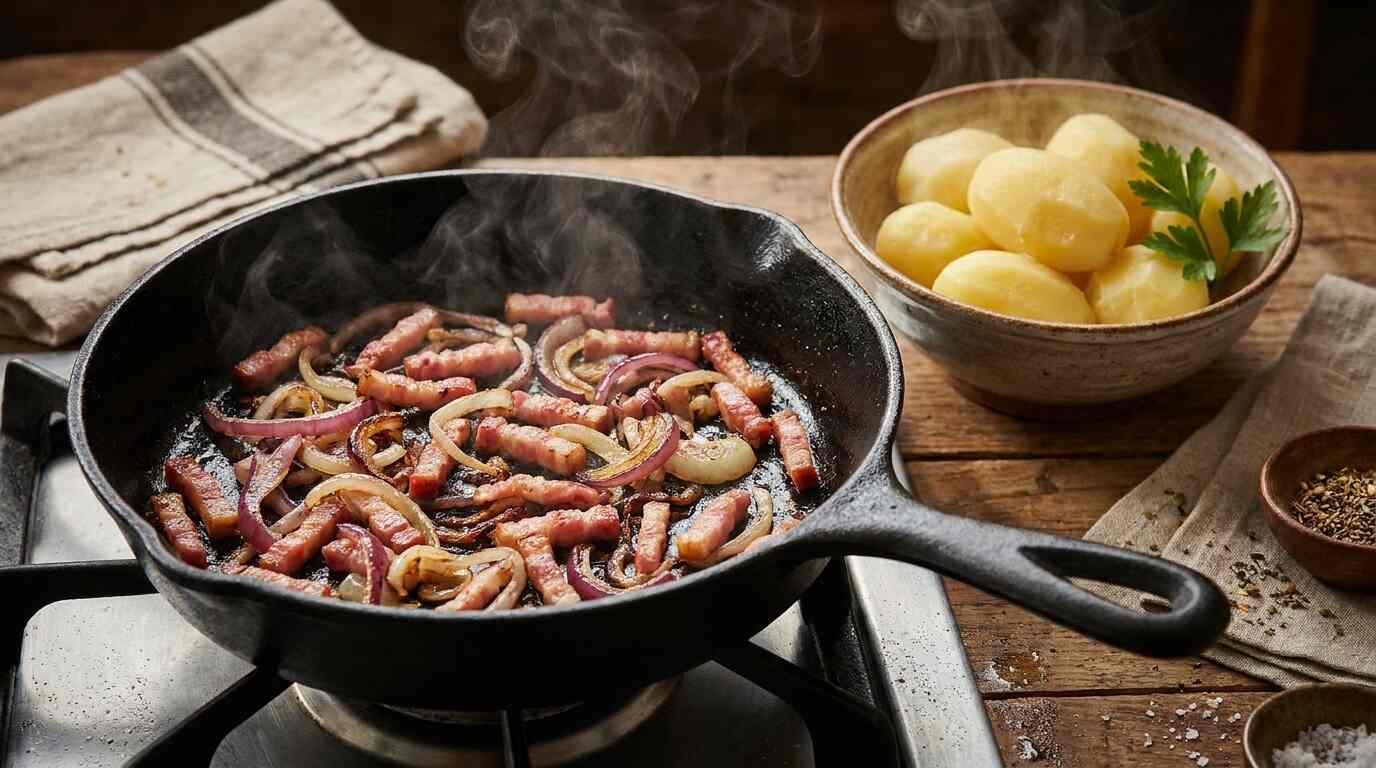
The recipe
The card below follows the tartiflette recipe published by Savoie Mont Blanc, the region’s tourism board. It uses one farmhouse Reblochon over a kilo of potatoes and gives no servings, times or oven temperature, so those are left off the card. For the oven, the Reblochon producers’ site gives 15 to 20 minutes at 200°C (about 400°F). In the United States, the Cook’s Illustrated substitutes, Camembert or Taleggio, stand in for the Reblochon.
Tartiflette
Ingredients
Method
- Boil the potatoes whole in salted water until cooked.
- Slice the onions thinly and fry them with the lardons.
- Spread half the onion and lardon mixture in a baking dish. Peel and slice the potatoes and layer them on top, then add the rest of the onion and lardon mixture. Season with pepper.
- Scrape the rind of the Reblochon and cut the cheese horizontally into two equal discs. Lay them on top of the dish with the cut side facing up toward the heat.
- Warm the dish gently in the oven until the Reblochon has completely melted over the potatoes.
Notes
Tartiflette sits with the other Alpine melted-cheese dishes, raclette and cheese fondue. The Gruyère that National Geographic Traveller lists as a substitute has its own post on GrillCheesy.

For the oven
The dish and the substitute cheeses mentioned above.
- Emile Henry 11in x 8in Medium Rectangular Baker – Modern Classics Collection | Sugar: an 11-by-8-inch ceramic baker, close to the 8-inch dish Cook’s Illustrated sized its recipe for. See it on Amazon (affiliate link)
- Le Chatelain Camembert Cheese, 8.8 Oz – Authentic French Camembert, Creamy Texture, Light Salty Flavor, Perfect for Gourmet Pairin: a French Camembert, one of the two Reblochon substitutes Cook’s Illustrated recommends. See it on Amazon (affiliate link)
- Ca De Ambros Taleggio: an Italian Taleggio, the other washed-rind substitute in the Cook’s Illustrated recipe. See it on Amazon (affiliate link)
As an Amazon Associate I earn from qualifying purchases. A commission may be earned if you buy through this link, at no extra cost to you.
Frequently asked questions
What is tartiflette?
A gratin from Savoie of potatoes, smoked lardons and onions, topped with Reblochon cheese and baked until the cheese melts.
Is tartiflette a traditional dish?
The modern version dates to the 1980s. It descends from the much older péla, a Savoyard dish of potatoes, cheese and onions.
Who invented tartiflette?
It is disputed. Christian Millau credited the Reblochon producers’ guild; the guild’s director denies it; other experts point to a restaurateur in La Clusaz.
What can replace Reblochon?
Cook’s Illustrated recommends ripe Camembert or Taleggio, since raw-milk Reblochon isn’t sold in the United States.
Sources
- Emily Monaco, “What Is Tartiflette?,” Food52 (December 13, 2022): https://food52.com/blog/27708-what-is-tartiflette
- Reblochon de Savoie, “La Tartiflette”: https://www.reblochon.fr/en/savouring-reblochon/tartiflette/
- Caroline Morrish, “Everything you need to know about tartiflette,” National Geographic Traveller (January 2025): https://www.nationalgeographic.com/travel/article/everything-to-know-about-tartiflette
- Cook’s Illustrated, “Après-Ski Supper” (September 28, 2021): https://www.cooksillustrated.com/articles/3753-apres-ski-supper
- Savoie Mont Blanc, “Tartiflette”: https://savoie-mont-blanc.com/en/gastronomy/recipes/tartiflette