In this story
Oil and water don’t mix. Mayonnaise is the everyday exception, a jar of mostly oil that stands up on a knife and spreads like frosting. The trick is an egg yolk and a lot of motion: the oil gets beaten into droplets so small and so crowded that they can’t move, and something in the yolk keeps each droplet from touching its neighbor. When that arrangement fails, the jar turns into a greasy puddle in seconds.
Video: The Science Behind Mayonnaise, Science@Home, from the Tech Dome Penang YouTube channel
Droplets that never touch
An emulsion is one liquid broken into tiny droplets and held inside another. America’s Test Kitchen puts mayonnaise in the same family as cream, butter and ice cream, and describes a close-up of mayo as tiny oil droplets packed tightly together without actually touching. Its summary of the whole craft is that “the key to making a stable mayonnaise is to break the oil into tiny droplets.”
The droplets also explain the color. Christina Blais, a nutrition lecturer at the Université de Montréal writing for Ricardo, notes that the microscopic oil droplets reflect light, which is why the sauce turns white, and that smaller droplets make it both thicker and whiter.
Mostly oil, by law
In the United States the proportion is set in the federal rulebook. The Code of Federal Regulations defines mayonnaise as “the emulsified semisolid food prepared from vegetable oil(s),” an acid such as vinegar or lemon or lime juice, and one or more egg yolk-containing ingredients, and requires “not less than 65 percent by weight of vegetable oil.” Salad dressing, a separate standard, needs only 30 percent oil. GrillCheesy’s comparison of mayonnaise and Miracle Whip covers that split.
What the yolk does
A droplet of oil on its own wants to merge with every other droplet it meets. Emulsifiers stop that. America’s Test Kitchen names the two in mayonnaise as the lecithin in egg yolks and the polysaccharides in mustard, which form thin barriers around each oil droplet so they can sit side by side without pooling.
Lecithin works because it has two ends. According to ATK, one end is attracted to fat and the other to water; the fat-loving ends line up on the outside of each droplet while the other ends stick out into the water. Blais adds that emulsifiers lower the water’s surface tension, so water can flow between droplets and keep them apart.
Mustard helps, but not the same way
Mustard shows up in most recipes, and the sources describe its role slightly differently. ATK counts mustard’s polysaccharides as emulsifiers. Blais writes that mustard is not a true emulsifier, but that its fine particles help keep the droplets separated. Either way, it supports the yolk rather than replacing it.

Why it gets thicker
More oil makes stiffer mayonnaise, which seems backward for a liquid. ATK’s explanation is crowding: as more oil droplets get packed into the small amount of water, the liquid around them has a harder time flowing, so the whole mixture thickens. Its science editor, Paul Adams, compares it to bikers trying to ride through a crowd of elephants.
The water budget matters. Blais writes that about half the water in a yolk mayonnaise comes from the yolk and the rest from the vinegar, and that a yolk-based mayo needs at least a tablespoon of liquid for every cup of oil. With less than that, the droplets run out of room and the sauce risks separating.
Why it breaks
A broken mayonnaise is an emulsion whose droplets have found each other. ATK says the droplets are attracted to one another, and if they merge, the emulsion fails. The most common cause is speed. Both ATK and Cook’s Illustrated single out adding the oil too quickly, and ATK adds whisking too weakly by hand.
Blais lists three ways it goes wrong:
- Oil added too fast, before stable droplets can form
- Blending too long or too hard, which can disrupt the emulsifier layer
- Too little water for the amount of oil, which leaves droplets crowded and ready to merge
Olive oil is harder
Oil choice changes the odds. Blais writes that olive oil makes emulsifying harder, because certain molecules in unrefined oils, monoglycerides, make it separate more easily. She recommends neutral oils such as canola, sunflower or corn. Ari LeVaux, writing in the Shepherd Express in December 2018, found the same limit at the whisk: his single yolk handled about three cups of light oil, but only about two of olive oil. GrillCheesy’s post on aioli versus mayonnaise covers the olive oil sauce that comes out of that problem.
How much oil one yolk can hold
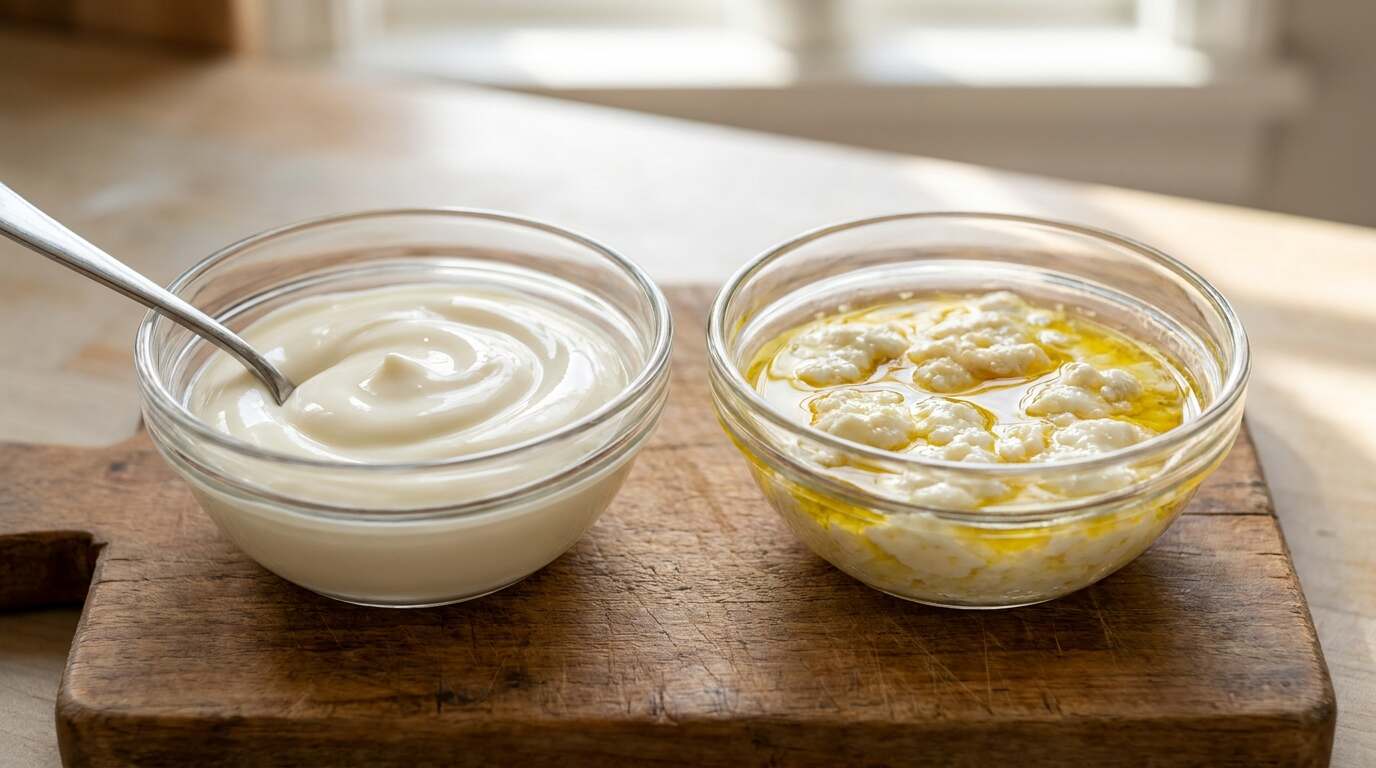
Here the advice splits sharply. A Food52 guide says one egg yolk can emulsify only about 7 ounces of oil, and that much more risks breaking. LeVaux pushed one yolk to about three cups. Blais goes much further, writing that a single egg yolk has enough emulsifying power to make several liters of mayonnaise.
Blais’s own water rule points to one reason the numbers differ. A yolk supplies only part of the liquid an emulsion needs, and her minimum of a tablespoon of liquid per cup of oil applies whatever the number of yolks, so a recipe that adds little water or acid reaches its limit far sooner than one that keeps adding liquid with the oil.
Temperature: another split
Food52 tells cooks to bring ingredients to room temperature, saying cold ingredients reduce the emulsifiers’ effectiveness. Blais says temperature isn’t critical, and that cold, room-temperature or mixed ingredients all work.
Rescuing a broken batch
The fix is to start a new emulsion and feed the broken one into it. Blais’s method is to begin again with a teaspoon or two of water and add the broken mixture drop by drop while whisking. Food52 describes the same approach: whisk a small amount of the broken mayo with a little water, and once it starts to come together, slowly drizzle in the rest. If the problem was too little liquid, Blais suggests simply whisking in a teaspoon or two of water, vinegar or lemon juice before adding any remaining oil.
A base emulsion first
Prevention is mostly patience at the start. Blais says the first third of the oil should go in drop by drop, each addition fully absorbed before the next. Cook’s Illustrated’s more reliable method whisks the first quarter cup of oil in by hand before moving to the food processor for the remaining cup and a quarter, added in a slow, steady drizzle.
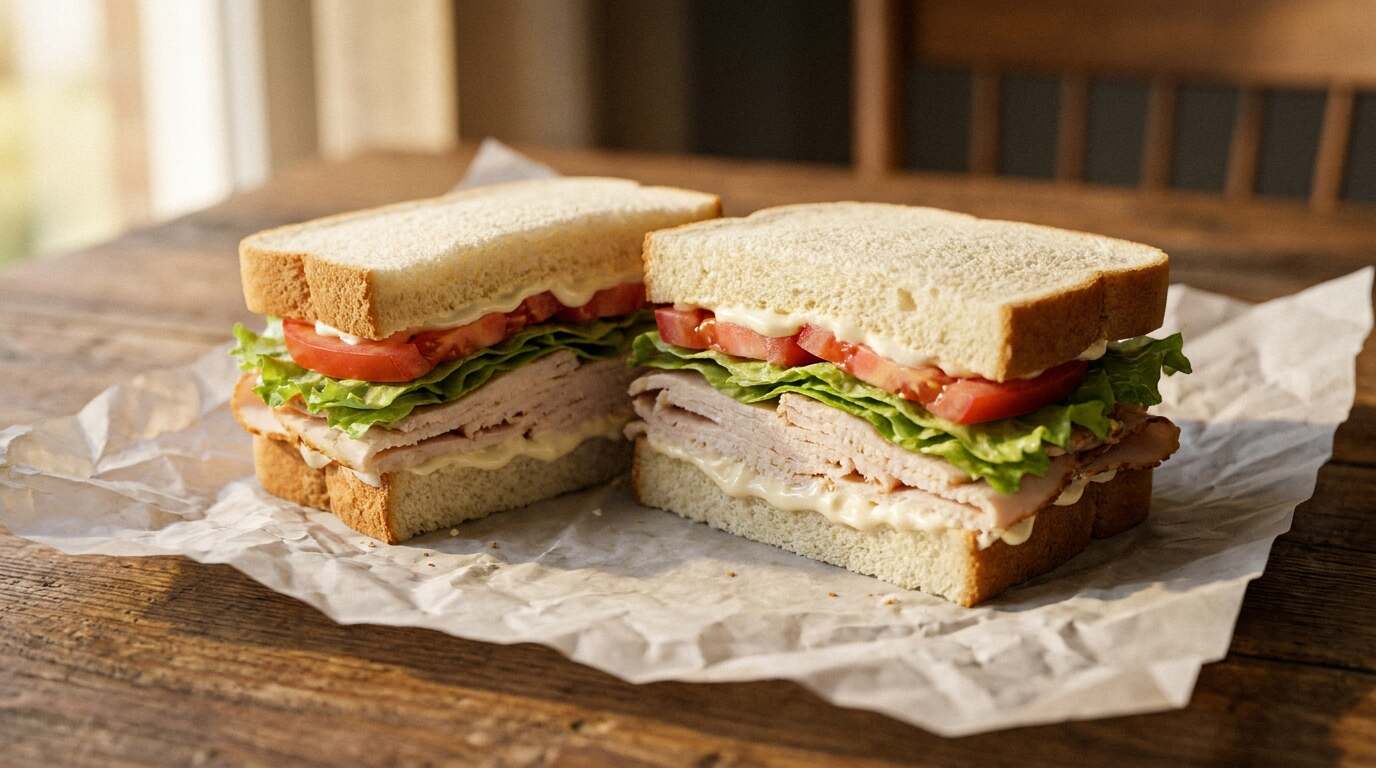
That finished emulsion is what makes mayonnaise useful on a sandwich, and on the outside of one. GrillCheesy has compared butter and mayonnaise on grilled cheese, and covered Japan’s richer yolk-only Kewpie and the Southern favorite Duke’s.
For the next batch
The tools and the jar mentioned above.
- Cuisinart Smart Stick 2-Speed Hand Blender, Immersion Blender, CSB-175SVP1: a two-speed immersion blender, one of the machine methods for building an emulsion quickly. See it on Amazon (affiliate link)
- Duke’s Real Mayonnaise Jar – Original Smooth & Creamy Taste, 30 Ounce (Pack of 1): a 30-ounce jar of Duke’s, the commercial benchmark for a Southern-style mayo. See it on Amazon (affiliate link)
As an Amazon Associate I earn from qualifying purchases. A commission may be earned if you buy through this link, at no extra cost to you.
Frequently asked questions
What makes mayonnaise an emulsion?
Oil is broken into tiny droplets and held in a small amount of water from the yolk and acid. Lecithin in the yolk coats each droplet so they don’t merge.
Why did my mayonnaise break?
The usual causes are adding oil too fast, blending too hard or too long, or too little water for the amount of oil.
Can broken mayonnaise be fixed?
Yes. Start with a teaspoon or two of water, or a fresh yolk, and whisk the broken mixture in drop by drop.
How much oil can one egg yolk emulsify?
Sources disagree: Food52 says about 7 ounces, one columnist reached about three cups, and Christina Blais says a yolk has enough emulsifying power for several liters if enough water is added.
Sources
- America’s Test Kitchen, “The Science of the World’s Greatest Sauce: Mayonnaise”: https://www.americastestkitchen.com/articles/7391-how-to-make-mayonnaise
- Christina Blais, “Ready, Set, Mayo!,” Ricardo: https://ricardocuisine.com/en/articles/food-chemistry/324-ready-set-mayo
- Electronic Code of Federal Regulations, 21 CFR Part 169 Subpart B: https://www.ecfr.gov/current/title-21/chapter-I/subchapter-B/part-169/subpart-B
- Cook’s Illustrated, “Homemade Mayo That Keeps”: https://www.cooksillustrated.com/articles/2106-homemade-mayo-that-keeps
- Ari LeVaux, “One Yolk Mayo,” Shepherd Express (December 7, 2018): https://shepherdexpress.com/food/flash-in-the-pan/one-yolk-mayo/
- Food52, “How to Make Mayonnaise”: https://api.food52.com/blog/3621-how-to-make-mayonnaise