In this story
Bread can be made from flour, water and yeast alone. It rises fast, comes out pale and tastes like almost nothing. Salt is the fourth ingredient in nearly every loaf, and bakers use a remarkably consistent amount of it, about 2 percent of the flour’s weight. What that small pinch does inside the dough is less settled than the number suggests.
Video: This is How Salt Affects Bread Dough, from the ChainBaker YouTube channel
About 2 percent
The working figure is close to universal. King Arthur Baking, in its professional reference on salt, gives the correct amount as 1.8 to 2 percent of the flour weight, or 1.8 to 2 pounds of salt per 100 pounds of flour. The Canadian textbook Understanding Ingredients for the Canadian Baker, published under an open license by the BC Cook Articulation Committee, puts the range at about 1.75 to 2.25 percent, and notes that some authorities measure by water instead, at about 30 grams per liter.
In baker’s percentages, flour is always 100 percent and every other ingredient is a share of it. For a loaf made with 500 grams of flour, 2 percent is 10 grams of salt.
What salt does to yeast
The classic explanation is osmosis. King Arthur’s reference says salt pulls water out of yeast cells, which slows fermentation. Without salt, it says, the yeast quickly consumes the available sugars.
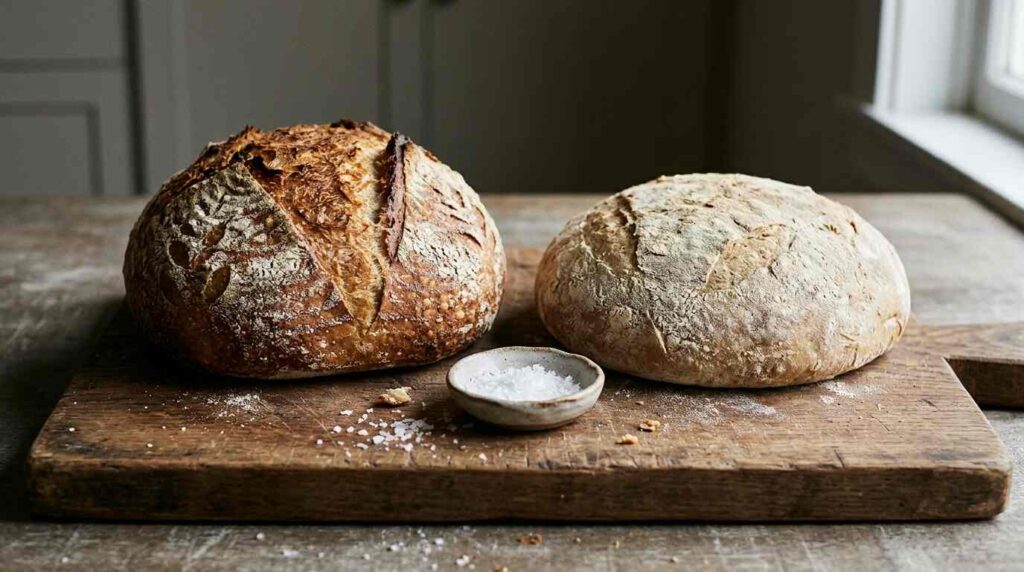
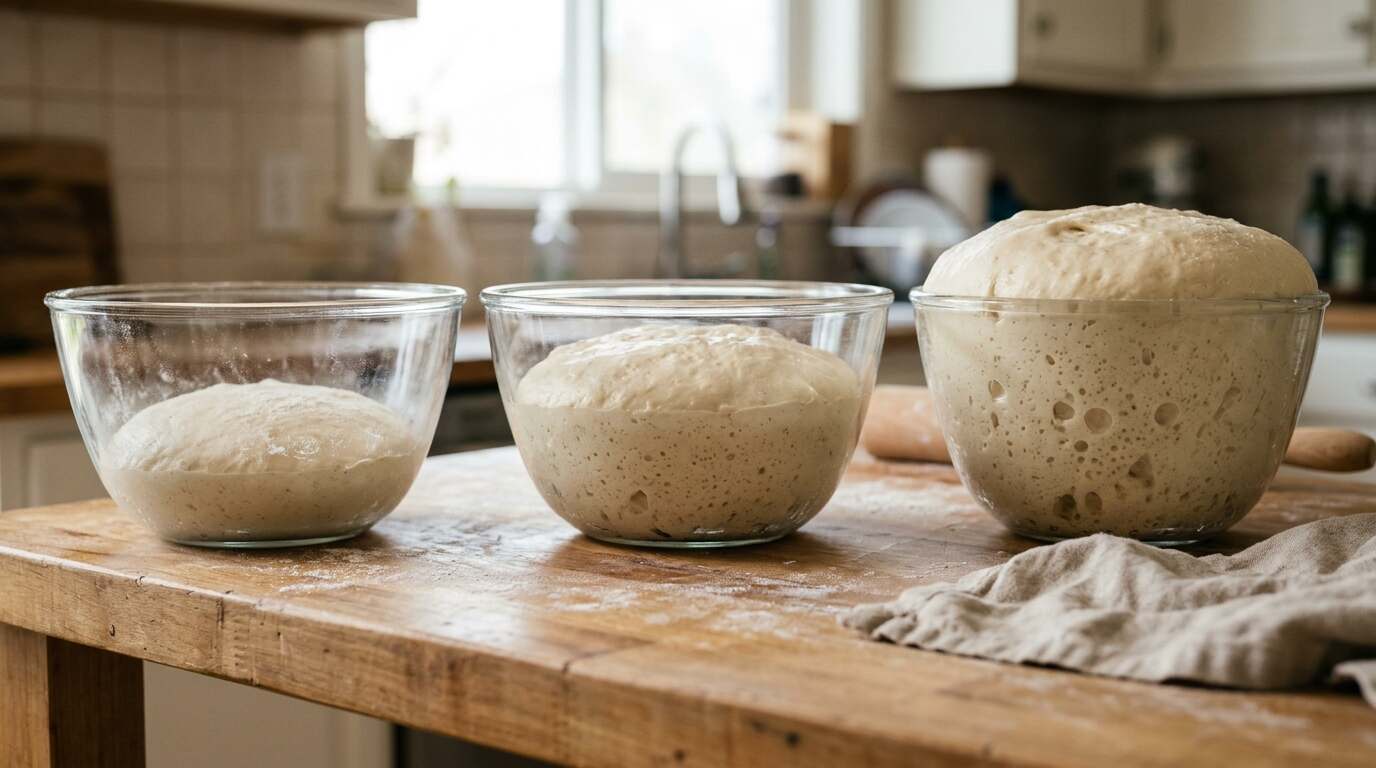
Rossi Anastopoulo tested that at home for the King Arthur blog in July 2020, baking three versions of the company’s hearth bread with different amounts of salt. The two doughs with less salt proofed more than the normal-salt dough.
How much it actually matters
Not everyone weights the yeast effect so heavily. Maggie Glezer, in an article for the Bread Bakers Guild of America reprinted by Cargill, calls the dehydration effect minor. She writes that at 2 percent of flour weight or less, salt alone does not significantly change the yeast’s gassing power or the bacteria’s acid production, and cites a study in which 1.5 percent salt cut gas production by about 9 percent. Too much salt, she adds, can eventually kill the yeast and bacteria outright.
The textbook takes a more cautious line on timing. It warns bakers never to dissolve salt in the same water as the yeast, because salt can dehydrate and kill some of the cells.
What salt does to gluten
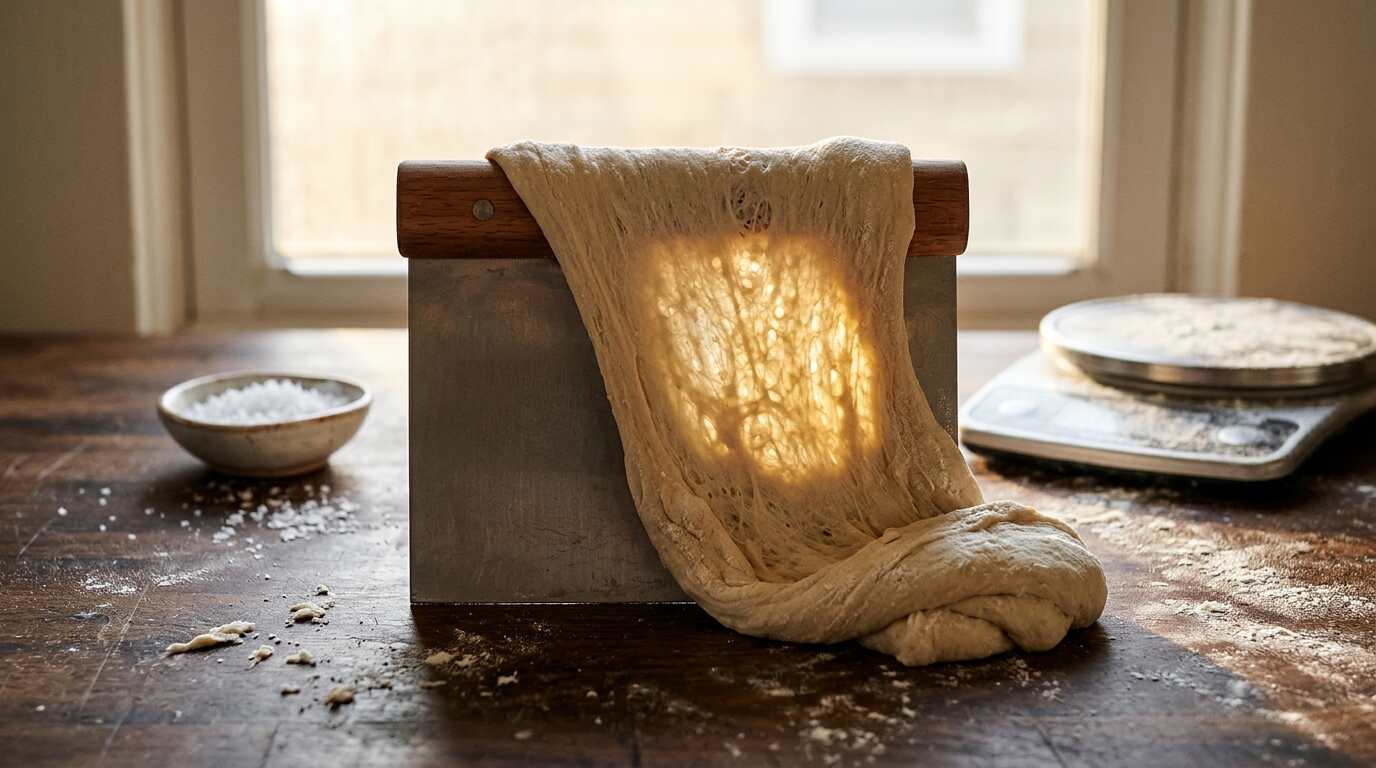
The second job is structural. King Arthur’s reference says salt tightens and strengthens the gluten, so the dough can hold the carbon dioxide the yeast produces. Left out, the dough turns slack and sticky, hard to shape, and bakes into a loaf with poor volume.
The chemistry nobody has nailed down
Exactly how salt does this is an open question. Glezer writes that the leading theory is that salt neutralizes positive charges on the gluten proteins, letting them pack into a tighter web, but she calls bread dough chemistry “a huge puzzle” with no real molecular-level understanding yet. In practice, she says, salted dough resists stretching during mixing but is stronger, and once stretched it extends further without tearing.
Salt in the pre-ferment
The sources split on starters and sponges. Glezer says salt is left out of pre-ferments such as sponges and poolish so they produce as much flavor as possible. The Canadian textbook says that in sponge and liquid-ferment methods, a small amount of salt in the first stage strengthens the gluten.
Crust color and flour color
Salt also changes the outside of the loaf. King Arthur’s reference explains that because salt slows the yeast’s sugar consumption, more residual sugar is left at baking time for the crust to brown. Anastopoulo’s no-salt loaf, by comparison, got reasonable color but looked duller and flatter than the salted loaves. GrillCheesy’s post on the Maillard reaction and bread browning covers the chemistry of that crust.
King Arthur’s reference adds a less obvious effect. Salt delays oxidation of the dough during mixing, which helps preserve the carotenoids that give flour its creamy color and some of its flavor. For that reason, the reference recommends adding salt at the start of mixing rather than later.
Flavor, and a history of going without
For all the chemistry, Glezer says flavor is salt’s primary purpose in bread. Salt brings out a sweetness in the loaf that would otherwise be missing. She also notes that medieval bread was rarely salted, because salt was expensive, and that French bread formulas began including salt only at the end of the 18th century.
Cutting it back
King Arthur’s blog advises against leaving salt out entirely, but says it can generally be cut by half with little noticeable change in texture or browning.
How much salt is in American bread
All that 2 percent adds up across a sandwich-eating country. A 2017 study in Public Health Nutrition by Kasey Coyne and colleagues, comparing bread products in the United States and Britain, found American bread averaged 455 milligrams of sodium per 100 grams, against 406 in the U.K., about 12 percent more. White bread ran 471 milligrams in the U.S. and 421 in the U.K.
Only 21 percent of U.S. bread products met the National Salt Reduction Initiative’s target of 360 milligrams or less per 100 grams, compared with 31 percent of U.K. products meeting the matching British target. The authors note that bread is a major contributor to sodium in the American diet and that U.S. adults average about 3,400 milligrams of sodium a day.
GrillCheesy’s breads, from rye to the Kaiser roll and the pain de mie, all start with that same small measure. The post on why bread goes stale covers what happens to the loaf afterward.

For weighing the salt
A 2 percent measure is easiest to hit by weight.
- Escali Primo Digital Food Scale Multi-Functional Kitchen Scale and Baking Scale for Precise Weight Measuring and Portion Control, 8.5 x 6 x 1.5 inches, Chrome: a digital kitchen scale for weighing flour and salt in grams, the basis of baker’s percentages. See it on Amazon (affiliate link)
- Diamond Crystal Kosher Salt – Full Flavor, No Additives – Pure and Natural Since 1886-3 Pound (New Packaging): a 3-pound box of kosher salt with no additives. See it on Amazon (affiliate link)
- King Arthur, Organic 100% Bread Flour, Unbleached, 5 lb (Pack of 1) – Non-GMO Project Verified, No Preservatives: a 5-pound bag of King Arthur’s unbleached bread flour, from the company whose reference sets the 1.8 to 2 percent figure. See it on Amazon (affiliate link)
As an Amazon Associate I earn from qualifying purchases. A commission may be earned if you buy through this link, at no extra cost to you.
Frequently asked questions
How much salt goes in bread?
About 1.8 to 2 percent of the flour weight, according to King Arthur Baking; a Canadian baking textbook gives 1.75 to 2.25 percent.
What happens if bread has no salt?
The dough rises faster, turns slack and sticky, and bakes into a paler, flatter, blander loaf.
Does salt kill yeast?
In large amounts. At around 2 percent of flour weight, Maggie Glezer writes, salt alone doesn’t significantly change gas production; a Canadian textbook still advises keeping salt and yeast out of the same water.
Why does salt strengthen dough?
The leading theory is that salt neutralizes charges on gluten proteins so they bond more tightly, but Glezer notes the chemistry isn’t fully understood.
Sources
- King Arthur Baking, “Salt” (professional reference): https://www.kingarthurbaking.com/pro/reference/salt
- BC Cook Articulation Committee, Understanding Ingredients for the Canadian Baker, “Using Salt in Fermented Doughs”: https://opentextbc.ca/ingredients/chapter/using-salt-in-fermented-doughs/
- Rossi Anastopoulo, “Why is salt important in yeast bread?,” King Arthur Baking (July 29, 2020): https://www.kingarthurbaking.com/blog/2020/07/29/why-is-salt-important-in-yeast-bread
- Maggie Glezer, “Salt in Bread Dough,” Bread Bakers Guild of America, via Cargill: https://www.cargill.com/salt-in-perspective/salt-in-bread-dough
- Kasey J. Coyne et al., “Differences in the sodium content of bread products in the USA and UK: implications for policy,” Public Health Nutrition (2017): https://cambridge.org/core/services/aop-cambridge-core/content/view/74F837C3122C14404330D2530371FDCE/S136898001700324Xa.pdf/differences_in_the_sodium_content_of_bread_products_in_the_usa_and_uk_implications_for_policy.pdf