
In this story
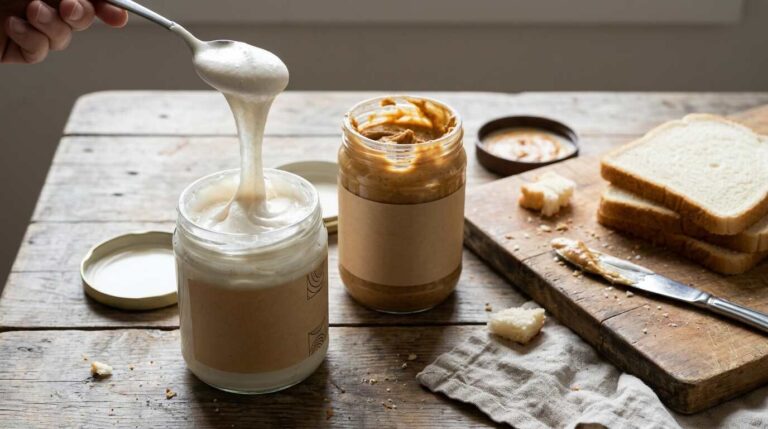
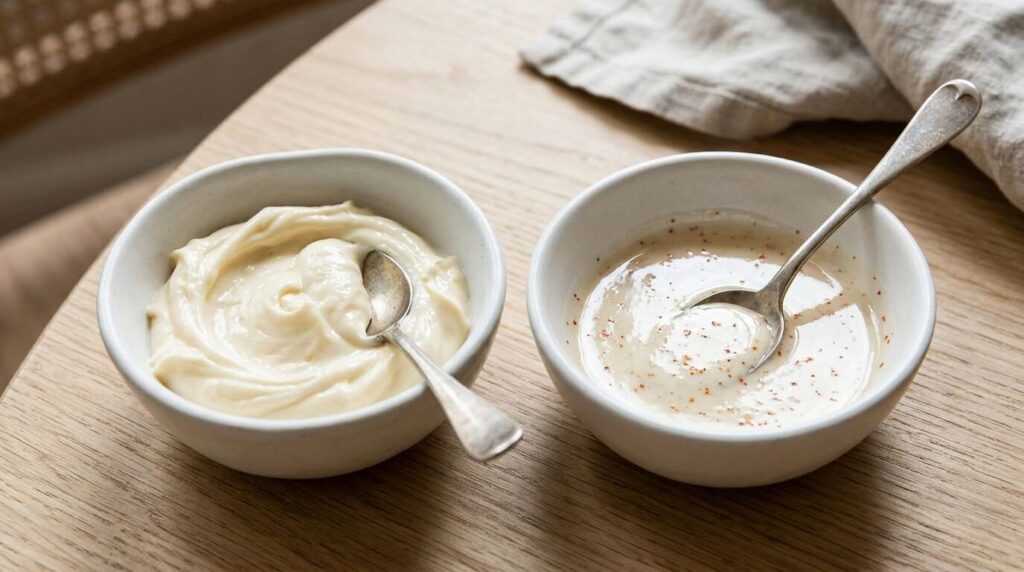
Miracle Whip is sold as a dressing and not as mayonnaise, and that single fact explains most of what separates the two. Federal rules require mayonnaise to contain at least 65 percent vegetable oil by weight. Miracle Whip starts from a lower-oil base with water, sweetener and starch. Taste, price and loyalty followed from that gap, and so did a rivalry that has run since the Great Depression.
Video: We Finally Know The Difference Between Mayonnaise & Miracle Whip | Mashed
What federal rules require
The U.S. Food and Drug Administration sets a standard of identity for each. Under 21 CFR 169.140, mayonnaise is an “emulsified semisolid food prepared from vegetable oil(s),” combined with an acidifying ingredient, either vinegar or lemon or lime juice, and an egg yolk-containing ingredient. The regulation states: “Mayonnaise contains not less than 65 percent by weight of vegetable oil.” Salt, sweeteners, spices and a short list of other optional ingredients are allowed.
A second standard, 21 CFR 169.150, covers salad dressing. It requires “not less than 30 percent by weight of vegetable oil,” egg yolk-containing ingredient equivalent in yolk solids to 4 percent by weight of liquid egg yolks, and a starchy paste. The paste may be made from food starch, modified food starch, tapioca flour, wheat flour or rye flour, or a combination.
The two standards describe different foods. One is an oil-and-egg emulsion with a high minimum oil content. The other is a lower-oil product that is held together partly by cooked starch. Whether a given jar of Miracle Whip is formally labeled under the salad dressing standard was not confirmed in the sources fetched, which describe it only as a dressing. Mental Floss reports, citing Taste of Home, that the FDA classifies Miracle Whip as a dressing because water, sugar and spices bring its oil content below 65 percent, and that Kraft Heinz markets it as an “alternative mayo dressing.”
The ingredient lists
Retail listings that reproduce the label give a concrete comparison. A Food Lion listing for a 19-ounce squeeze bottle of Miracle Whip Mayo-Like Dressing gives the ingredients as: “Water, Soybean Oil, High Fructose Corn Syrup, Vinegar, Modified Cornstarch, Eggs, Salt, Natural Flavor, Mustard Flour, Potassium Sorbate As A Preservative, Spices, Paprika, Dried Garlic.” An H-E-B listing for Kraft Miracle Whip Original Dressing carries the same list and calls the product a “tangy and sweet spread with a creamy texture.”
Water leads both lists, and soybean oil comes second. Mental Floss makes the same contrast with Kraft’s mayonnaise, whose first ingredient it gives as soybean oil, and notes that Miracle Whip is sweeter and spicier while mayonnaise is more sour and egg-forward. Calorie figures vary by source and by product size: the Food Lion listing gives 35 calories per tablespoon, Cooksinfo gives about 40, and The Art of Doing Stuff gives about 60. The label on the specific jar is the only reliable reference.
The mayonnaise formula, by contrast, is short. The Art of Doing Stuff notes that mayonnaise contains no sweeteners, while Miracle Whip contains high fructose corn syrup, which matches the retail listings above.
Where mayonnaise came from
The story of mayonnaise is itself disputed. The most commonly repeated account places its origin in 1756. The NIBBLE says the “leading belief” is that the sauce came to France from Mahón, on Minorca, after forces under the duc de Richelieu captured the town, and that the duke’s chef, lacking cream, used olive oil and named the result “Mahónnaise.” History News Network also reports the 1756 story as the most commonly cited while noting that “theories on the origins of mayo differ.” The Daily Meal adds that a Frenchman argued for Bayonne and the name “bayonnaise” instead.
The American commercial story has its own date conflicts. The NIBBLE places Richard Hellmann’s arrival in New York in 1903, a delicatessen in 1905 and a blue-ribbon label in 1912, with acquisition by Best Foods in 1932. History News Network says mayonnaise became a staple of American kitchens after Hellmann “started bottling his wife’s mayonnaise in 1912.” The Daily Meal dates Hellmann’s first jars to 1920 and the blue ribbon to 1925. The sources do not reconcile these dates.
The Daily Meal adds that mayonnaise was a luxury before it was a pantry staple. It says Delmonico’s in New York served “chicken mayonnaise” and “mayonnaise of lobster” in 1838, and that few home cooks kept the sauce on hand until factories began producing it.
Kraft and the Depression-era dressing
Miracle Whip belongs to a different tradition. Mental Floss traces it to boiled salad dressing, a Depression-era staple of eggs, vinegar, water or milk, sugar and spices, thickened with starch, which gave cooks a mayonnaise-like texture without scarce oil. Mashed reports that Kraft’s mayonnaise business began in 1926, that the Depression cut mayonnaise sales because many households made it at home, and that Kraft wanted a mayo-like product with a higher profit margin. Kraft says Miracle Whip first appeared at the 1933 Century of Progress Exposition in Chicago, according to the same article.
Cooksinfo credits a Kraft employee named Charles Chapman with inventing an emulsifying machine, whose rights Kraft bought. The product took its name from the machine, which the inventor had called the Miracle Whip. The page says it was outselling bottled mayonnaise within six months and lists 1933 jar prices of 10, 18 and 30 cents for small, medium and large sizes. Delighted Cooking says the product was introduced at the 1933 fair, where visitors could watch it made in a glass-enclosed kitchen, and that Kraft says the name comes from a machine an engineer developed to blend the ingredients. Chowhound adds that Kraft first sold the product only in New England before it became a nationwide bestseller, and says Kraft patented a machine that whipped the ingredients together, which the article credits for the name. The article presents Miracle Whip as a blend of mayonnaise-style ingredients and homemade salad dressing, with more water and less oil than mayonnaise, which lowers the cost, and with added sugar and spices that make it sweeter and tangier. Mashed agrees with Cooksinfo that Charles Chapman, a Kraft employee, reportedly invented a machine that emulsified ingredients into a creamy mixture and that the machine was also called the Miracle Whip. Mashed also says the product became the nation’s best-selling salad dressing within half a year of its 1933 debut, a claim Cooksinfo phrases as outselling bottled mayonnaise. Both are retellings of company history, and no independent sales record turned up in the sources checked.
Salem, Illinois, and the competing recipe story
A rival origin story comes from Salem, Illinois. The Illinois Times reports that Salem claims to be the birthplace of Miracle Whip. In that account, the product began as “X-tra Fine Salad Dressing,” made by Max Crosset at his Main Street café, who sold the recipe to Kraft Foods in 1931 for $300, after which Kraft renamed it. Chowhound, which spells the name “Crossett,” repeats the story with the same 1931 date and price and frames it as something Kraft allegedly did.
Kraft disputes it. Delighted Cooking states that Kraft says it developed the recipe in-house, and Mashed reports that the Dining Chicago site calls the café story a myth. Mashed adds that Kraft did buy several recipes from smaller businesses while developing its jarred mayonnaise, so the story has some basis. The Illinois Times author suspects large companies buy similar recipes to head off competitors. None of the fetched sources includes a bill of sale, a patent or a Kraft record, so the claim stays unverified.
How the two are used and marketed
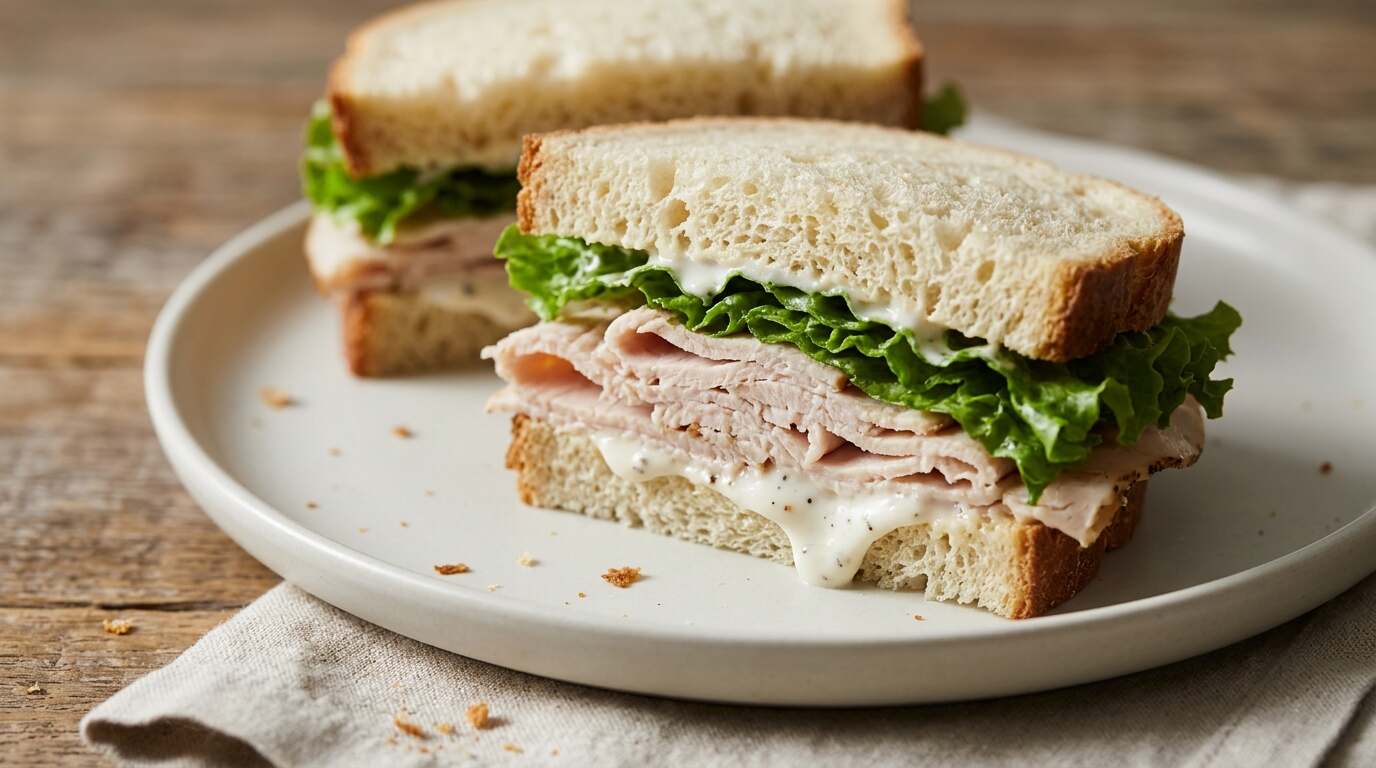
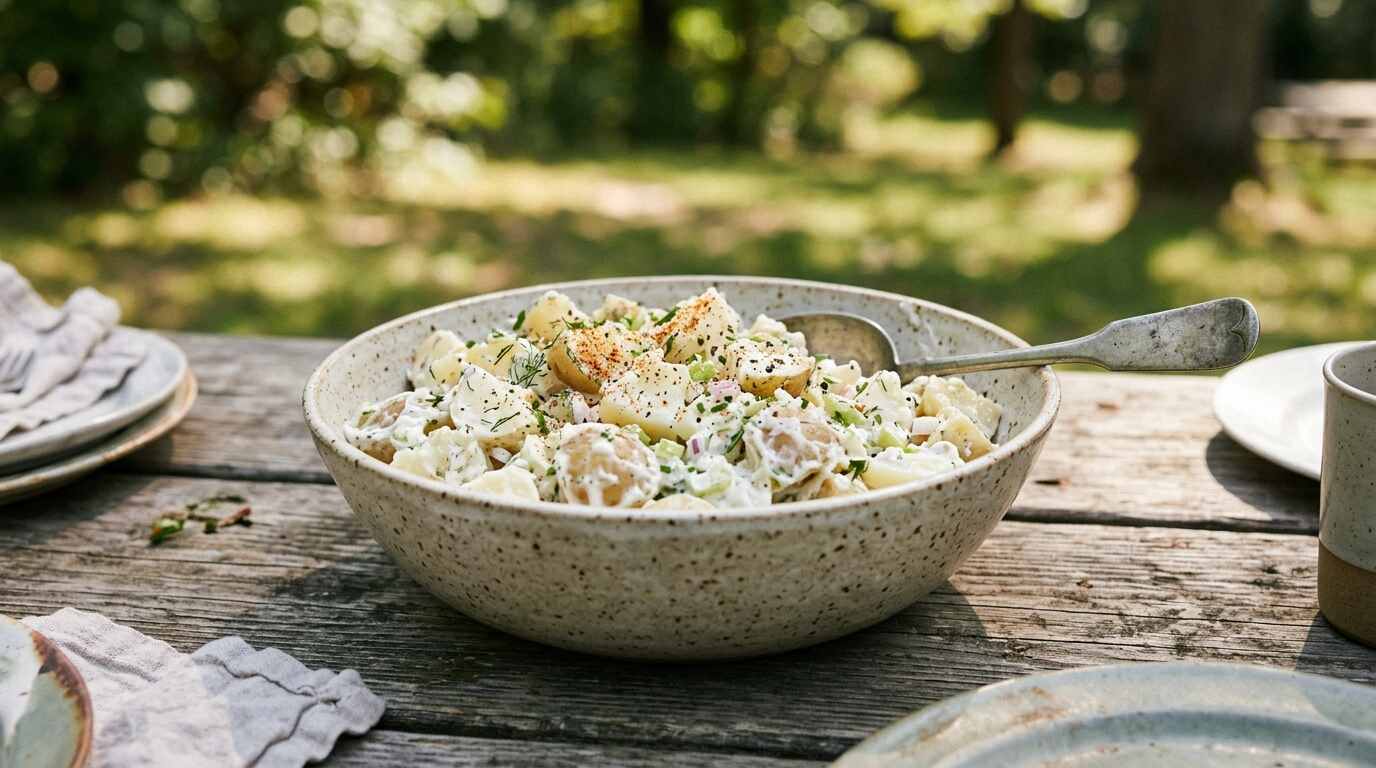
Mashed says Miracle Whip can be used “in pretty much any context you would use mayonnaise in, from spreading on sandwiches to dressing potato salad,” though the sweeter, spicier flavor changes the result. The Art of Doing Stuff describes mayonnaise as “creamy, rich, delicate” and Miracle Whip as sweeter and more assertive, and asserts that Miracle Whip is more popular in states such as Ohio and Alabama. That regional claim comes without a cited survey, and the sources checked here offered no sales data to confirm it.
Delighted Cooking describes Miracle Whip as working both as a salad dressing and a sandwich spread, with a “naturally sweet flavor” that is noticeable when the two are tasted side by side, and says it is often used as a replacement for mayonnaise because it is lower in fat. Mashed also mentions a mid-twentieth-century Texas homemaker’s recipe that used it in a chocolate cake in place of butter or oil.
Kraft has marketed the difference as a matter of personality. Mashed reports a 2009 commercial that cast Miracle Whip as a fun alternative to mayonnaise with the line “Don’t be so mayo,” which Stephen Colbert parodied on The Colbert Report. In a stunt the article leaves undated, Kraft paid up to $25,000 to rename the town of Mayo, Florida, as Miracle Whip, with a plan to film residents’ reactions when asked to swap their jars. The secrecy fell apart, and the city council may have violated state law by meeting with Kraft in private, Mashed reports.
In 2010, according to the same article, Miracle Whip paid an undisclosed sum to appear in the video for Lady Gaga and Beyoncé’s “Telephone,” matching the slogan “We will not tone it down” and debuting redesigned packaging.
Sources:
- eCFR, 21 CFR 169.140, Mayonnaise: https://www.ecfr.gov/current/title-21/chapter-I/subchapter-B/part-169/subpart-B/section-169.140
- eCFR, 21 CFR 169.150, Salad dressing: https://www.ecfr.gov/current/title-21/chapter-I/subchapter-B/part-169/subpart-B/section-169.150
- Mental Floss, “What Is Miracle Whip?”: https://www.mentalfloss.com/food/what-is-miracle-whip
- Food Lion product listing, Miracle Whip Mayo-Like Dressing: https://foodlion.com/groceries/product/miracle-whip-mayo-like-dressing-19-oz-sqz/311729
- H-E-B product listing, Kraft Miracle Whip Original Dressing: https://www.heb.com/product-detail/kraft-miracle-whip-original-dressing/81412
- The NIBBLE, “Mayonnaise History”: https://www.thenibble.com/reviews/main/cheese/eggs/mayonnaise-history.asp
- History News Network, mayonnaise at 250: https://www.hnn.us/article/29160
- The Daily Meal, “The Time Mayo Was Considered A Luxury Food”: https://www.thedailymeal.com/1085471/the-time-mayo-was-considered-a-luxury-food
- Mashed, “The Untold Truth Of Miracle Whip”: https://mashed.com/206199/the-untold-truth-of-miracle-whip
- Cooksinfo, “Miracle Whip”: https://www.cooksinfo.com/miracle-whip
- Delighted Cooking, “What Is Miracle Whip?”: https://www.delightedcooking.com/what-is-miracle-whip.htm
- Chowhound, “The Great Depression’s Push For Affordable Food Gave Us One Of Today’s Most Divisive Condiments”: https://www.chowhound.com/1915442/miracle-whip-great-depression-condiment
- Illinois Times, Salem and Miracle Whip: https://www.illinoistimes.com/?p=36867
- The Art of Doing Stuff, “Difference Between Mayonnaise and Miracle Whip”: https://www.theartofdoingstuff.com/difference-mayonnaise-miracle-whip/
- Mashed (YouTube), “We Finally Know The Difference Between Mayonnaise & Miracle Whip”: https://www.youtube.com/watch?v=ZY_w-RS6fTs