In this story
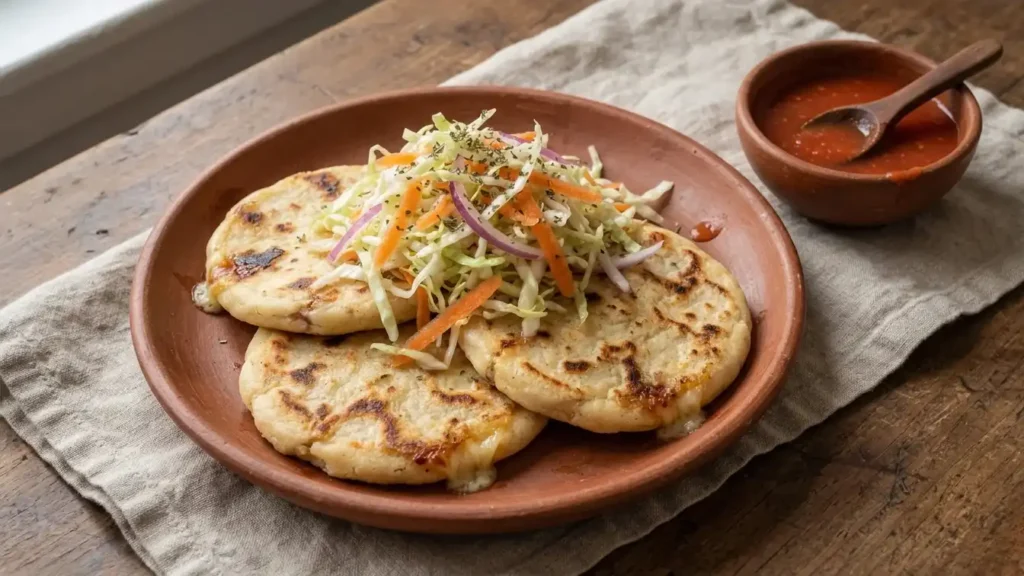
Curtido is shredded cabbage, carrot and onion, soured and seasoned with oregano, and it is the relish that traditionally comes with a pupusa, in El Salvador and wherever Salvadorans have settled. It is a condiment with a job. A pupusa is a thick, griddled corn cake filled with cheese, beans or pork, and the cold, sharp relish piled on top cuts through all that warm masa and fat. Whether curtido counts as a pickle or a ferment depends on who makes it and how long they wait.
Video: Salvadoran Curtido for Pupusas, Pastelitos and More, from the Rocio Recetas (El Sazón De Mi Cocina) YouTube channel
What goes in the jar
Cabbage first
The base is constant. Kathy Phung, foodways coordinator for the Smithsonian Folklife Festival, published two versions on the festival’s blog, and both start with a head of finely sliced cabbage and grated carrot. The older of the two came from Rita Torres Gonzales, a local guest chef who made pupusas de chicharrón and curtido for visitors on the National Mall at the 1985 Folklife Festival program Cultural Conservation.
Her recipe softens the cabbage, carrots and a grated radish under hot water for 30 minutes, drains them, then folds in onion and green pepper sautéed with oregano and salt. A small hot pepper is optional.
The vinegar is the ferment
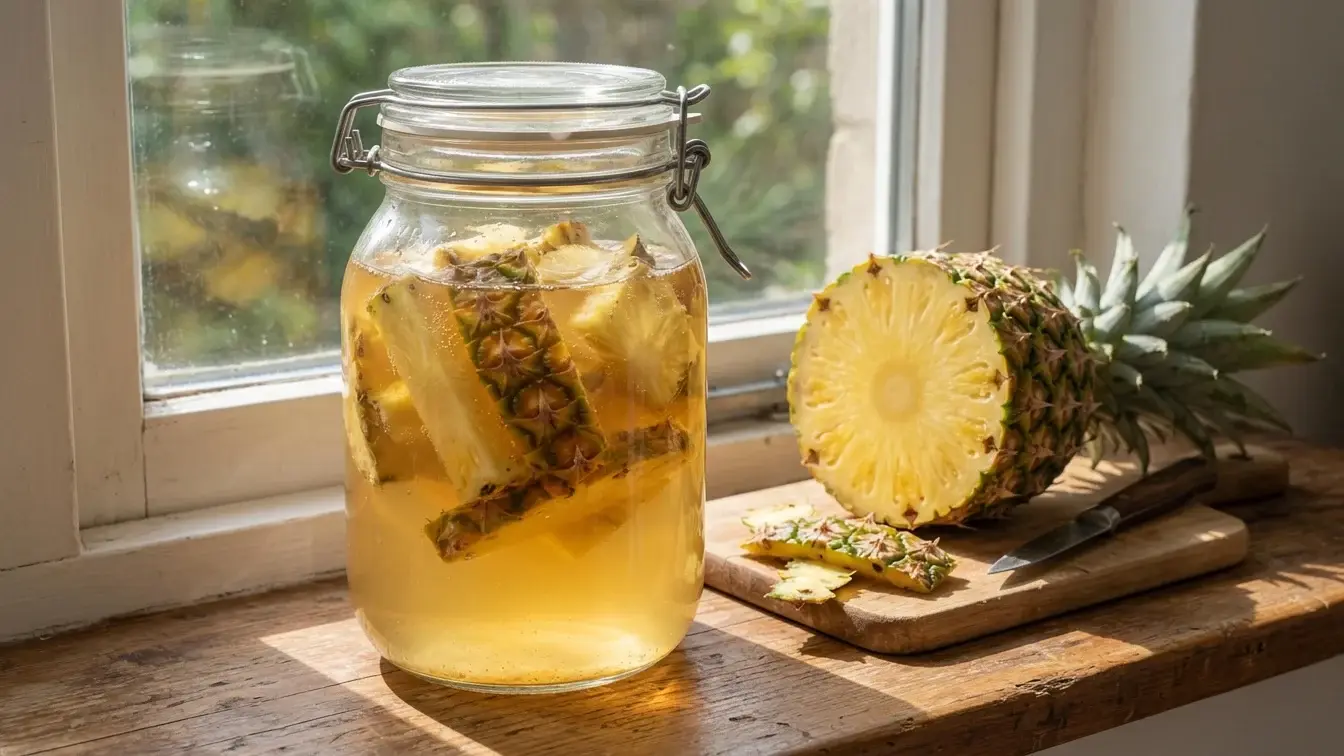
What sets the Torres Gonzales recipe apart is the souring liquid. Instead of store-bought vinegar, she used pineapple vinegar made at home, and the blog gives two ways to make it. One dries pineapple peel for several days and then soaks it in a jar of water for several weeks. The other covers pineapple chunks, rind included, with water, optionally adding grapes, a peach and oregano, and lets the jar sit for several days. Either way, the liquid that comes out is a product of fermentation.
Pickle or ferment
A relish that sits in the middle
That homemade vinegar explains why curtido gets described both ways. Tasting Table’s September 2022 explainer laid out the distinction: pickling sours vegetables with an added acid, while fermentation relies on the sugars and bacteria already present. The article called curtido technically fermented but hard to classify, since most versions include vinegar, and noted that the more vinegar goes in, the closer the result moves to a plain pickle.
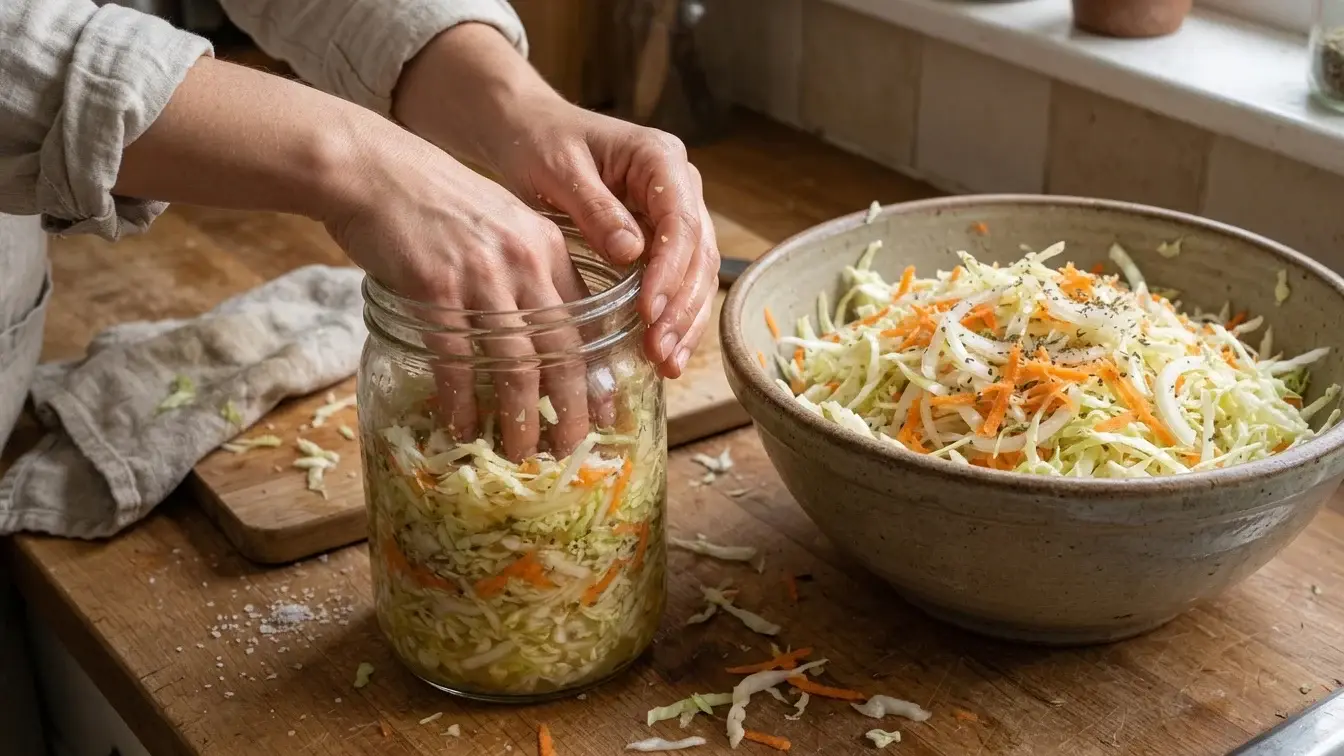
Phung’s own quick version shows the pickle end of the range. She salts and drains the cabbage, tosses it with carrots, red onion, jalapeño or serrano and dried oregano, then adds a cup of white distilled vinegar and a cup of water. It rests at room temperature for about an hour before serving. Longer versions are left for days, which pushes them toward the sour depth of sauerkraut or kimchi.
Cabbage, carrot, onion and nothing fancy
The ingredients are cheap and keep well, which suits a relish that is served in quantity. At sit-down restaurants it often sits on the table, and roadside stands hand it out in plastic bags, according to the Smithsonian post, which also notes that one head of cabbage makes nearly two quarts.
Origins nobody has pinned down
Older than the name, younger than the corn
Curtido’s own history is thin on documents. Tasting Table said its origin is hard to trace and that it is eaten across Central America while being best known as Salvadoran. Citing Texas A&M’s Aggie Horticulture, the same article said cabbage reached the Americas from Europe in the mid-16th century, with the French explorer Jacques Cartier. No source checked here gives a date for the first curtido.
The pupusa it accompanies is older. Luis Panameño, director of the specialized library at El Salvador’s Museo Nacional de Antropología, told the ACAN-EFE wire service that the dish’s origin is pre-Columbian, though no precise period has been set. The same report noted that El Salvador’s Legislative Assembly decreed in 2005 that the pupusa is the national dish and that its day falls on the second Sunday of November.
From San Salvador to Washington
A D.C. staple since the 1980s
The relish traveled with the people who made it. Saveur’s June 2016 report on Washington’s pupusa trail traced the city’s Salvadoran community to arrivals that began in the late 1960s and swelled after 1979, when El Salvador’s civil war began. José and Betty Reyes started selling pupusas in 1982 at El Tamarindo in Adams Morgan, and the magazine singled out Pupusería San Miguel in Mount Pleasant for a curtido it described as sour, with a grassy bite from Mexican oregano.
NBC Washington’s November 2019 report gave the diaspora some credit for the dish’s status at home. Historian José Centeno-Meléndez told the station that the pupusa was not recognized as El Salvador’s national dish until after it became popular in cities such as Washington and Los Angeles. Gio Silva, owner of the Savor Salvadoreño food truck, kept the focus on the side dish: “A good curtido is essential.”
Beyond the pupusa
On sandwiches and handhelds
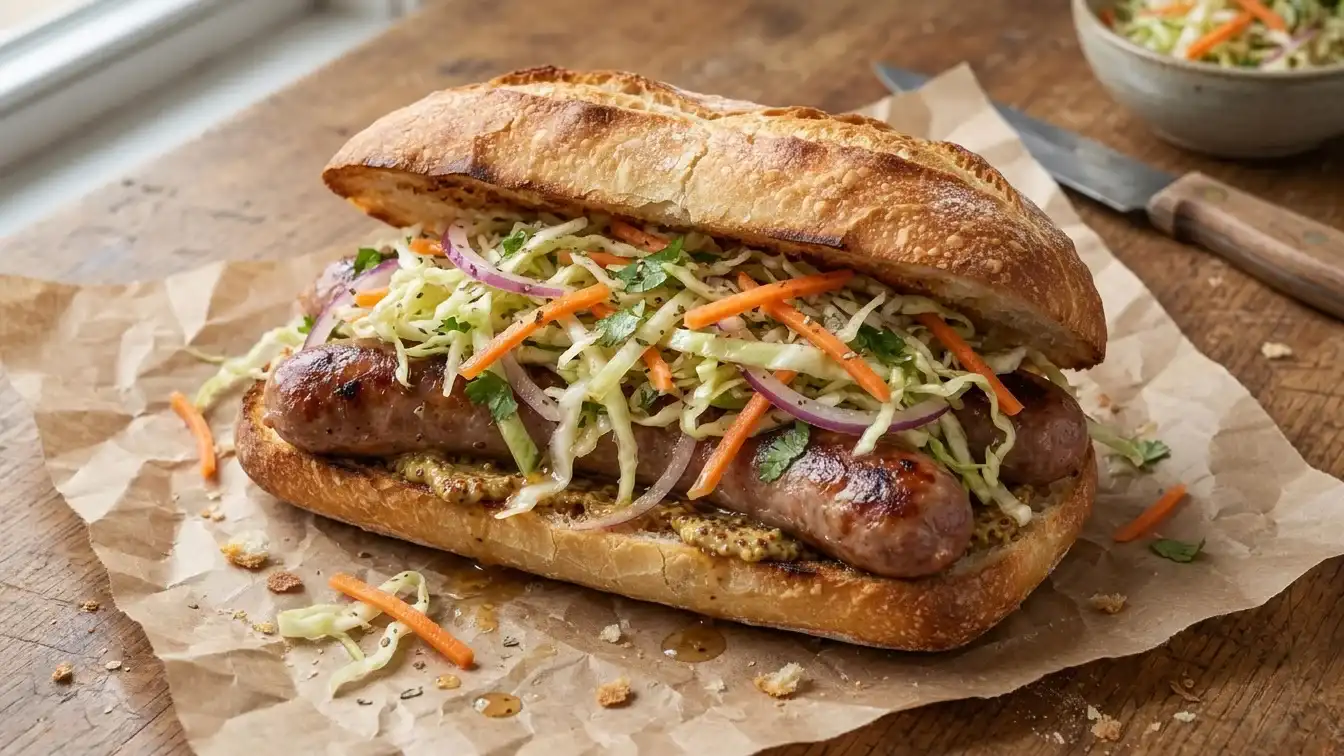
The Smithsonian post suggests using leftover curtido on rice, sausages or breakfast sandwiches. It does the job giardiniera and half-sour pickles do on a deli plate: something cold, crunchy and acidic against something hot and rich. It works on a quesadilla, beside empanadas or under a pork filling like the one in tacos al pastor. Next to American coleslaw, it is the version without mayonnaise, built on acid instead of cream.
Two things make a home batch easier: oregano with the right flavor, and a jar with a wide enough mouth to pack cabbage down below the liquid.
- McCormick Gourmet Collection Mexican Oregano, Organic, 0.5 oz: Mexican oregano, the variety Saveur credited for the grassy bite in a D.C. curtido. See it on Amazon (affiliate link)
- Ball Wide Mouth Glass Mason Jars with Lids and Bands, Quart Size 32 Ounce (Pack of 6): quart jars with a wide opening for packing and storing shredded vegetables. See it on Amazon (affiliate link)
Video: Honest Review of Ball 24 oz Jar, Wide mouth, from the Cole Schwartz YouTube channel
As an Amazon Associate I earn from qualifying purchases. A commission may be earned if you buy through this link, at no extra cost to you.
Sources
- Smithsonian Folklife Festival, Salvadoran Recipes: Pupusas de Chicharrón and Curtido: https://festival.si.edu/blog/salvadoran-recipes-pupusas-de-chicharron-and-curtido
- Tasting Table, Curtido: The Salvadoran Cabbage Slaw (2022): https://tastingtable.com/1033434/curtido-the-salvadoran-cabbage-slaw-that-will-ignite-your-taste-buds
- La Prensa (ACAN-EFE), Los salvadoreños le rinden culto a la pupusa, su plato nacional: https://www.prensa.com/cultura/salvadorenos-rinden-culto-pupusa-nacional_0_3250174974.html
- Saveur, Follow D.C.’s Pupusa Trail to Cheesy Griddled Happiness (2016): https://www.saveur.com/washington-dc-pupusas
- NBC Washington, Praising the Pupusa: DC’s Love for an Iconic Salvadoran Dish (2019): https://www.nbcwashington.com/news/local/the-pupusa-iconic-salvadoran-dish-is-a-dc-mainstay-national-pupusa-day/2106358/?amp=1