In this story
A plumbing contractor cooking for his crews in the Alaska Territory put the problem plainly: “It’s tough to feed men up in those bush jobs.” Steve Henson, born in Nebraska, answered it with a buttermilk-and-herb sauce that followed him and his wife, Gayle, to a guest ranch in the mountains above Santa Barbara, California, and that Clorox bought in 1972 for $8 million, by Slate’s count and several others. The Santa Barbara Independent calls the dressing “the brainchild of one Steve Henson.” Nearly every other detail of the story, from the year he began to the year of the sale, depends on which account is consulted.
Video: Visit the real birthplace of ranch dressing — from the CBS Sunday Morning YouTube channel
A plumber cooking for work crews in Alaska
The recipe predates the ranch, the name and the brand
Kenneth Henson, known as Steve, was a Nebraska cowboy turned Alaska cook, in Chowhound’s telling, and the Santa Barbara Independent gives his birthplace as Thayer, Nebraska, and his birth year as 1918. The Independent says he worked in Alaska as a plumbing contractor around Anchorage. A profile carried by ABC4 places him in the Alaska Territory, before statehood, cooking for the men on his bush jobs.
The sauce that came out of that kitchen was creamy, tangy and herb-heavy. Chowhound describes an improvised mix of mayonnaise, buttermilk, and herbs and spices, while Food Republic lists an early version that also included sour cream, dried parsley, onion and garlic, MSG, salt and pepper. The Alaska years rest on family and press accounts, not on any document from the time.
Gayle Henson’s part is described unevenly. A Tasting Table account says she handled the guest-ranch operations, grilling steaks for events, and the Santa Barbara Independent names her as the partner who moved with him from Alaska to Santa Barbara.
Hidden Valley Ranch in Santa Barbara County
A real place, bought and renamed
Hidden Valley was a physical ranch before it was a brand. The Hensons bought a property on San Marcos Pass, in the mountains behind Santa Barbara, and renamed it Hidden Valley Ranch, according to the Santa Barbara Independent, which identifies the former name as Sweetwater Ranch. The company’s own history page says the couple bought 120 acres outside Santa Barbara and started a dude ranch, and that guests asked for jars of the dressing to take home.
The ranch offered fishing, riding, hiking and home-cooked meals. The salads were the part guests remembered. The first business outside the ranch to serve the dressing, in the telling of the family that owns it, was Cold Spring Tavern on the same mountain road. Fortune attributes that claim to Debbie Wilson Potts, whose family owns the tavern, and the Santa Barbara Independent says Henson gave a batch to the tavern’s owner, Audrey Ovington. The tavern’s own history page traces the building to a stagecoach stop in the 1860s and names Audrey Ovington as sole proprietor until her death in 2005, but it does not mention the dressing.
The guest ranch itself did not last. Chowhound relays a 1987 Los Angeles Times letter from Alan Barker saying the ranch “promptly went broke,” one man’s recollection. By the mid-1960s, per the Independent, mail order had replaced the guest business.
From mail-order packets to a Clorox purchase
Seasoning in an envelope, sold for 75 cents
The product that spread was a dry mix. Buyers combined the packet with their own mayonnaise and buttermilk. The Santa Barbara Independent reports a price of 75 cents per package and says a Santa Barbara store, Kelley’s Korner, was selling the mix by 1957. Orders reached all 50 states and more than 30 countries by the late 1960s, according to the same article, and production moved offsite in the early 1970s, with blending at Griffith Laboratories in San Jose and packaging in a 65,000-square-foot Los Angeles facility.
Nola Henson, Steve’s daughter, told The New York Times that “It was all dry ingredients the way my dad made it,” a line Chowhound quotes in its account of the packet era.
Clorox bought the business in 1972 for $8 million, according to Slate, KQED, Chowhound and Food Republic. Henson later reflected on the outcome in words Fortune attributes to a Los Angeles Times piece: “What started out almost as a lark became a multimillion-dollar industry.”
Clorox changed the product in two ways. Slate reports that the company added a flavoring to the seasoning so the packet could be mixed with ordinary milk, since few households kept buttermilk on hand. In 1983, shelf-stable bottled Hidden Valley Ranch reached stores, with preservatives that gave it a shelf life of about 150 days, per the same article. Slate also dates ranch’s passage of Italian as the best-selling salad dressing in the country to 1992.
What goes into ranch dressing
Buttermilk, an emulsified base and a stack of dried herbs
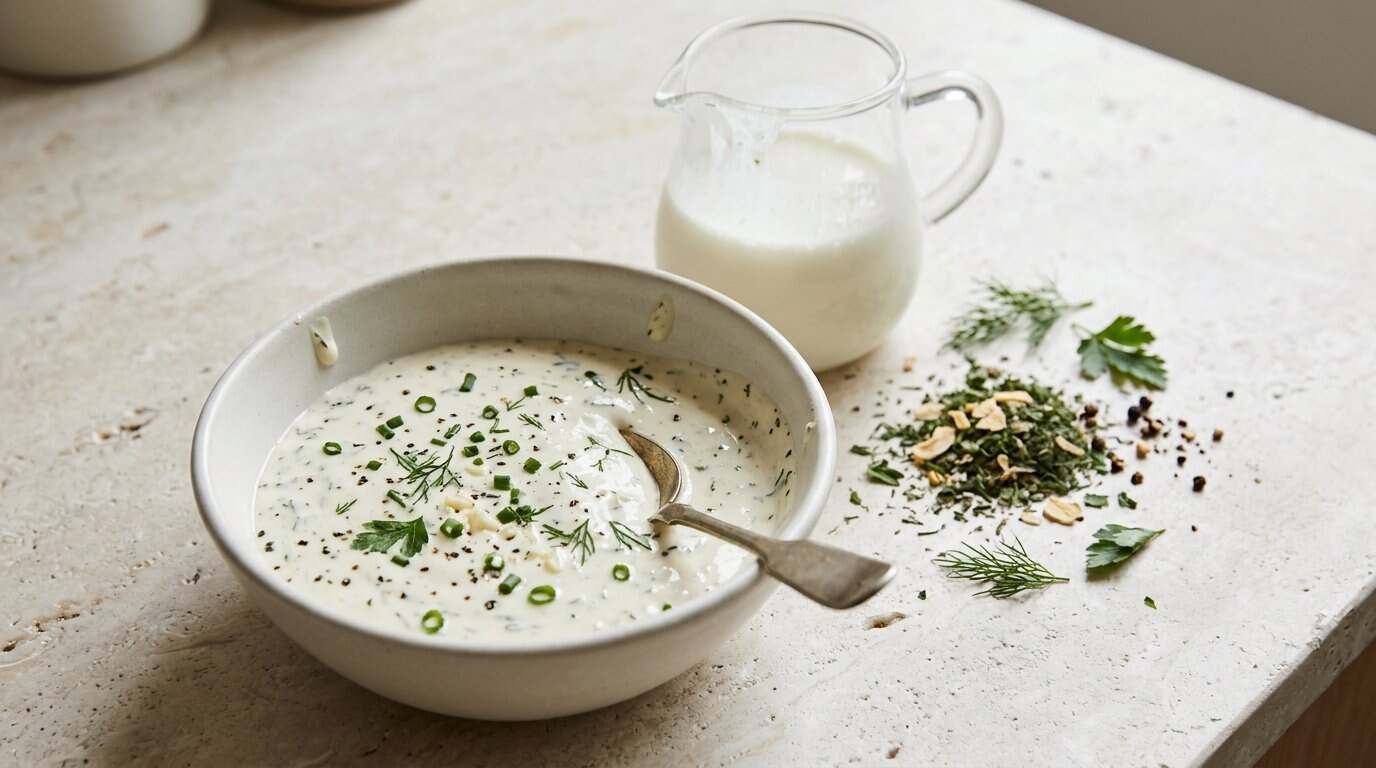
The company’s history page describes the original as “a tangy blend of buttermilk, savory herbs and spices.” Home versions follow the same outline. History Cooperative lists a buttermilk and mayonnaise base, with dill, chives, parsley, garlic and onion, salt and black pepper, and a splash of lemon juice or vinegar for acidity. Sour cream or yogurt appears as an optional way to thicken or sharpen the sauce.
The herbs carry more of the flavor than the dairy, at least in one writer’s estimate. In KQED’s reporting, food writer Katherine Spiers says, “A big part of it is all the herbs in it.”
The accounts give no quantities for Henson’s original. What survives is the outline: a cultured-dairy base, a creamy emulsion and a dry herb blend. Trademark practice also shaped the market. Food Republic reports that Henson trademarked “Hidden Valley Ranch” but not “ranch dressing,” which left the generic term open to competitors such as Ken’s, Kraft and Wish-Bone, all named by Fortune as later entrants.
Where the accounts disagree
Four dates and one ingredient that move from source to source
The same story, retold, changes shape.
The year Henson began working on the dressing varies. The Santa Barbara Independent places his move to Alaska in 1949, while Grub Americana also gives 1949 for the Alaska contract. A Tasting Table piece agrees with 1949, but KQED gives only the late 1940s or early 1950s, and History Cooperative says the creation year “is often debated” and settles on the early 1950s.
The ranch purchase carries two dates. Slate says the Hensons opened their dude ranch in 1954. The Independent, Chowhound and Tasting Table put the purchase of Sweetwater Ranch in 1956.
The Clorox sale is usually dated 1972, but Grub Americana says Clorox bought the dressing business in October 1973 and the Hensons sold the guest ranch in 1972. The ABC4 piece, for its part, says Henson sold the physical ranch in 1973.
The flavoring Clorox added is described two ways. Slate refers to a butter flavoring, while Grub Americana refers to a buttermilk flavor. The stated purpose, letting cooks skip buttermilk, fits the second wording better, though neither source is a company document.
The Independent’s headline gives the dressing a Santa Barbara origin, yet the body of the same article says Henson developed the recipe in Alaska. Tasting Table notes the sauce had no name in Alaska, so the invention appears to be a process more than a single moment: an improvised kitchen sauce, then a named product on a California guest ranch.
Ranch on sandwiches, subs and wraps
A moistening sauce that outgrew the salad bowl
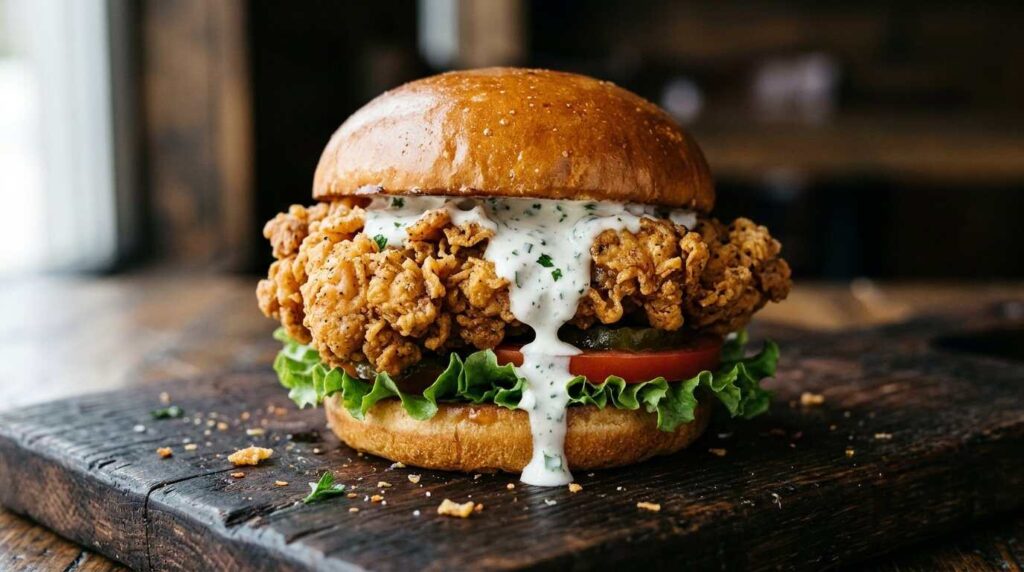
Ranch began as a salad dressing, and the move onto bread took decades. Slate reports that in the mid-to-late 1980s, chefs at casual-dining and fast-food chains began using ranch as a moistening agent on burgers and sandwiches, because it is thinner than mayonnaise but thicker than oil and vinegar, which can make bread soggy. During the 1990s wrap craze, the article adds, ranch became a key condiment on products such as KFC’s Twisters. (The soggy-bread problem has its own chemistry, covered in why sandwiches get soggy. Other American sauce histories sit close to this one, among them comeback sauce, Thousand Island dressing and Duke’s mayonnaise.)
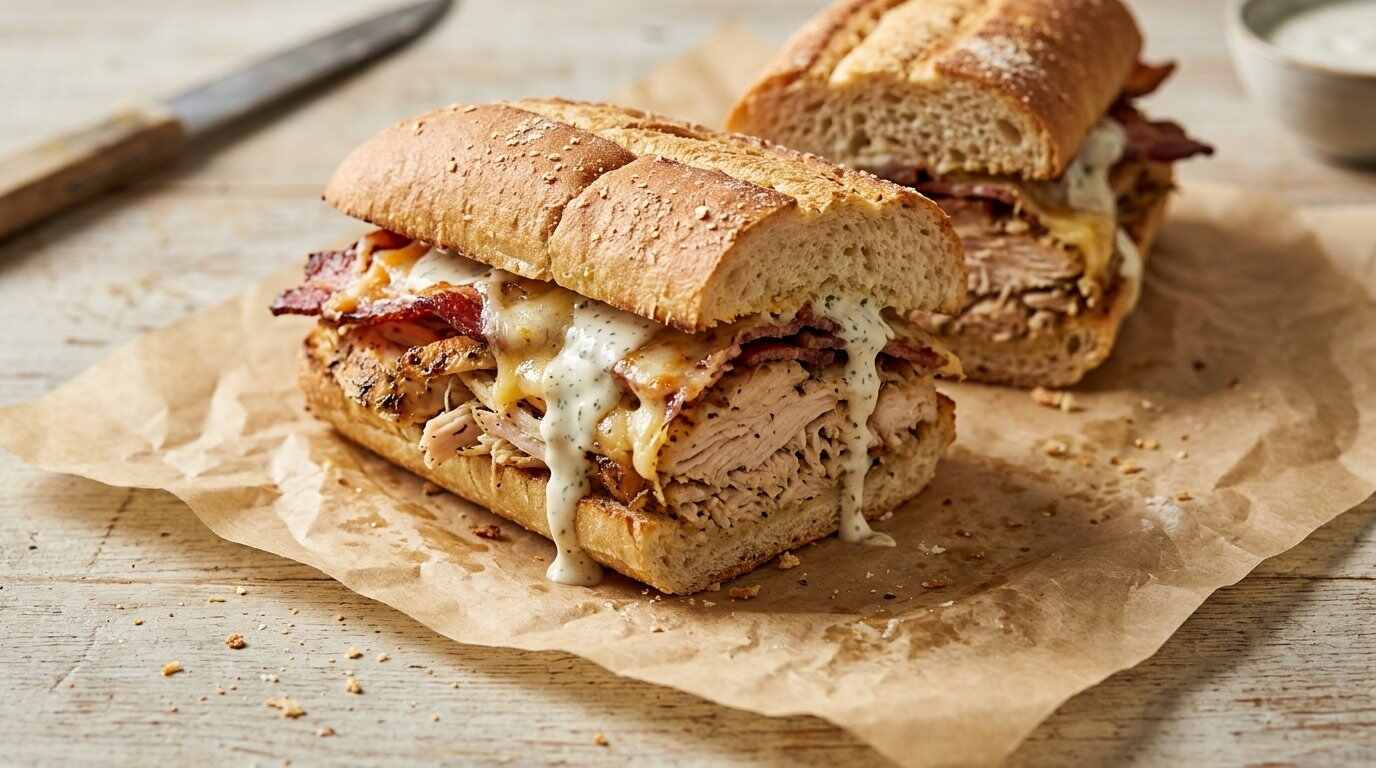
Current menus carry the pattern forward. Subway’s November 2021 press release lists a Chicken & Bacon Ranch sub made with hand-pulled rotisserie-style chicken, hickory-smoked bacon, Monterey cheddar and Peppercorn Ranch sauce. That is a sub in the hoagie, sub and hero family, with ranch standing in as the sauce.
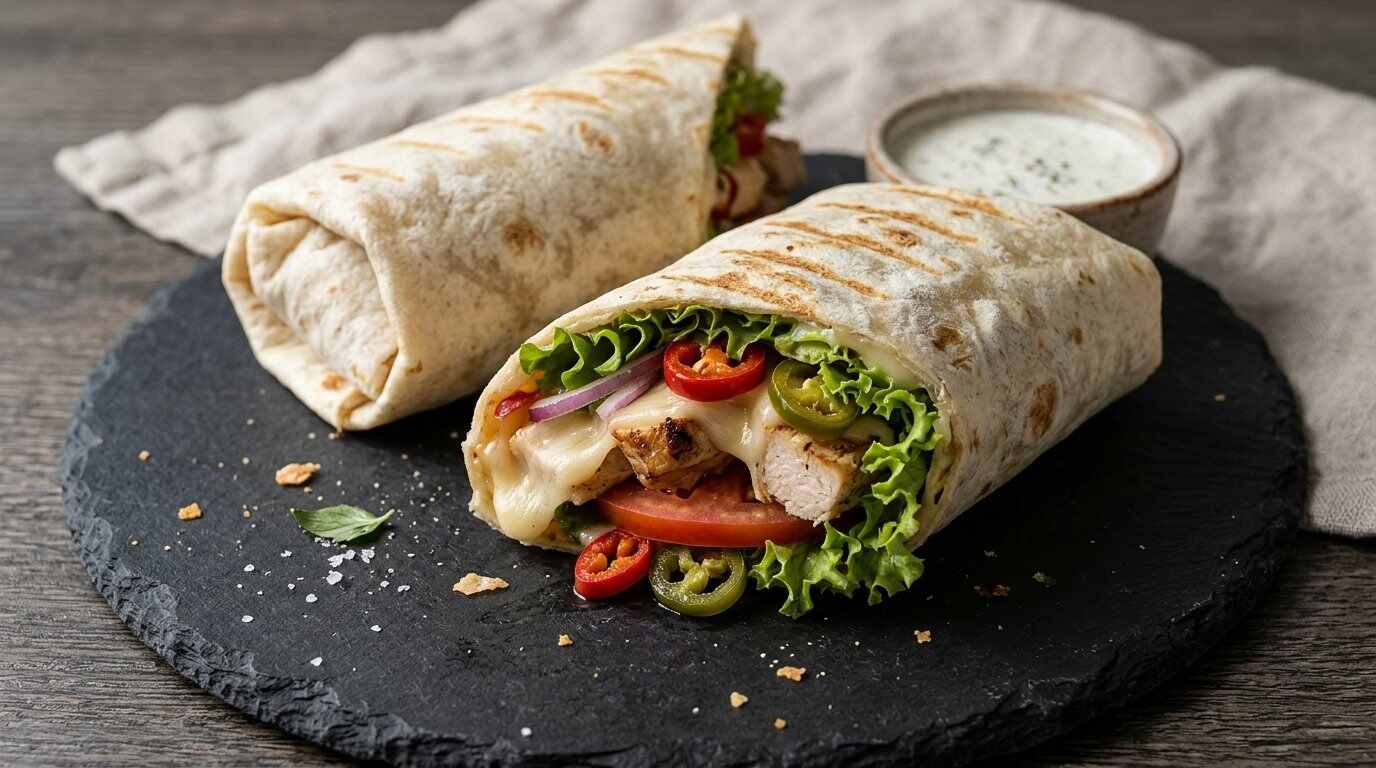
A January 2025 Nation’s Restaurant News survey of ranch-driven menu items describes Jimmy John’s Kickin’ Ranch Chicken Wrap, with grilled chicken, provolone, onions, lettuce, tomato, a hot cherry pepper mix and Kickin’ Ranch in a flour tortilla, and a test of a Ranch Fire Chicken Sandwich at Wings Etc. The article cites Technomic’s Ignite Menu data showing ranch on 32.3 percent of U.S. menus.
Hidden Valley’s own page lists wings, fries, pizza and popcorn among the foods that fans dip in ranch, and names no sandwiches. The sandwich habit came out of restaurant kitchens, by Slate’s account, and Technomic’s data now puts ranch on 32.3 percent of U.S. menus, a long way from a cook stove on an Alaska bush job.
Common questions
Who invented ranch dressing?
Ranch is credited to Steve Henson, a Nebraska-born plumbing contractor who is said to have first made it for work crews in Alaska before settling on a guest ranch above Santa Barbara, California. Nearly every other detail depends on which account is consulted.
What is in ranch dressing?
The company’s history page describes the original as “a tangy blend of buttermilk, savory herbs and spices.” History Cooperative lists a buttermilk and mayonnaise base with dill, chives, parsley, garlic and onion, salt and black pepper, and a splash of lemon juice or vinegar.
How did ranch spread?
The product that spread was a dry mix that buyers combined with their own mayonnaise and buttermilk. The Santa Barbara Independent reports a price of 75 cents per package and says a Santa Barbara store was selling the mix by 1957.
Sources
- Santa Barbara Independent, “Ranch Dressing Originated in Santa Barbara’s Mountains” (2015): https://www.independent.com/2015/11/25/ranch-dressing-originated-santa-barbaras-mountains/
- Chowhound, “Hidden Valley Ranch Was A Real Place, And It Was A Serious Hot Spot”: https://chowhound.com/1613887/hidden-valley-ranch-dressing-history
- Fortune, “Ranch Dressing’s Secret History Literally Includes a Hidden Valley” (April 17, 2026): https://fortune.com/2026/04/17/ranch-dressings-secret-history-literally-includes-a-hidden-valley/
- KQED, “What Makes Your Salad Taste Like California: Hidden Valley Ranch”: https://kqed.org/news/11720665/what-makes-your-salad-taste-like-california-hidden-valley-ranch
- Food Republic, “Ranch Dressing Was Actually Invented By A Cowboy On A Dude Ranch” (2024): https://www.foodrepublic.com/1496610/ranch-dressing-cowboy-origin/
- Slate, “America’s Love Affair With Ranch Dressing” (2005): https://slate.com/culture/2005/08/america-s-love-affair-with-ranch-dressing.html
- Hidden Valley, company history: https://www.hiddenvalley.com/about-us/
- History Cooperative, “Who Invented Ranch Dressing?”: https://historycooperative.org/who-invented-ranch-dressing/
- ABC4, “Ranch dressing wouldn’t exist without plumbers, MSG and the Alaska Territory”: https://www.abc4.com/news/ranch-dressing-wouldnt-exist-without-plumbers-msg-and-the-alaska-territory/amp/
- Grub Americana, “Ranch Dressing: America’s Favorite” (2017): https://grubamericana.com/2017/02/26/ranch-dressing-americas-favorite/
- Tasting Table, “You Can Thank California For The Dressing Americans Put On Everything”: https://www.tastingtable.com/1903400/hidden-valley-ranch-origin-california-local
- Cold Spring Tavern, history page: https://www.coldspringtavern.com/history
- Nation’s Restaurant News, “Ranch dressing is on a roll as chains introduce new versions of the condiment” (January 2025): https://nrn.com/menu-trends/ranch-dressing-is-on-a-roll-as-chains-introduce-new-versions-of-the-condiment
- Subway press release, November 16, 2021: https://newsroom.subway.com/2021-11-16-Subway-Rings-in-The-Holiday-Season-With-Latest-Menu-Refresh-and-Gift-Card-Bonus-Offer
Keep reading
- Aioli vs Mayonnaise: Where Garlic, Egg and Olive Oil Draw the Line
- Remoulade: French Origins, the New Orleans Red Version and Danish Hot Dogs
- Filet-O-Fish History: Lou Groen, Lent and the Hula Burger
More in this section: Sauces and Spreads guide.