In this story
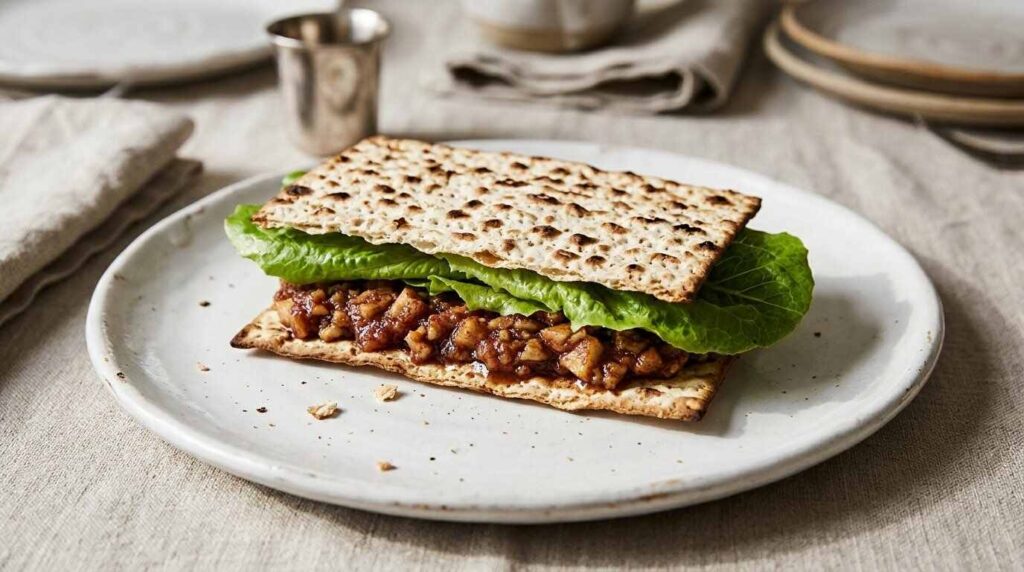
While the Temple still stood, the Talmud reports, Hillel the Elder ate the Paschal offering, matza and bitter herbs together: three foods, one bite. Jewish households still reproduce a version of that act every spring at the Passover seder, as a small sandwich of matzah and bitter herbs known in Hebrew as korech or korekh. The same sandwich turns up in a second kind of argument, the one about which culture made the first sandwich, long before the Earl of Sandwich.
Video: 18Doors Presents How to do a Passover Seder: Korech – Eating a Sandwich of Bitter Herbs and Matzah — from the 18Doors YouTube channel
Matzah, maror and a word that means wrap
Two foods, one bite, and a name that means “wrap”
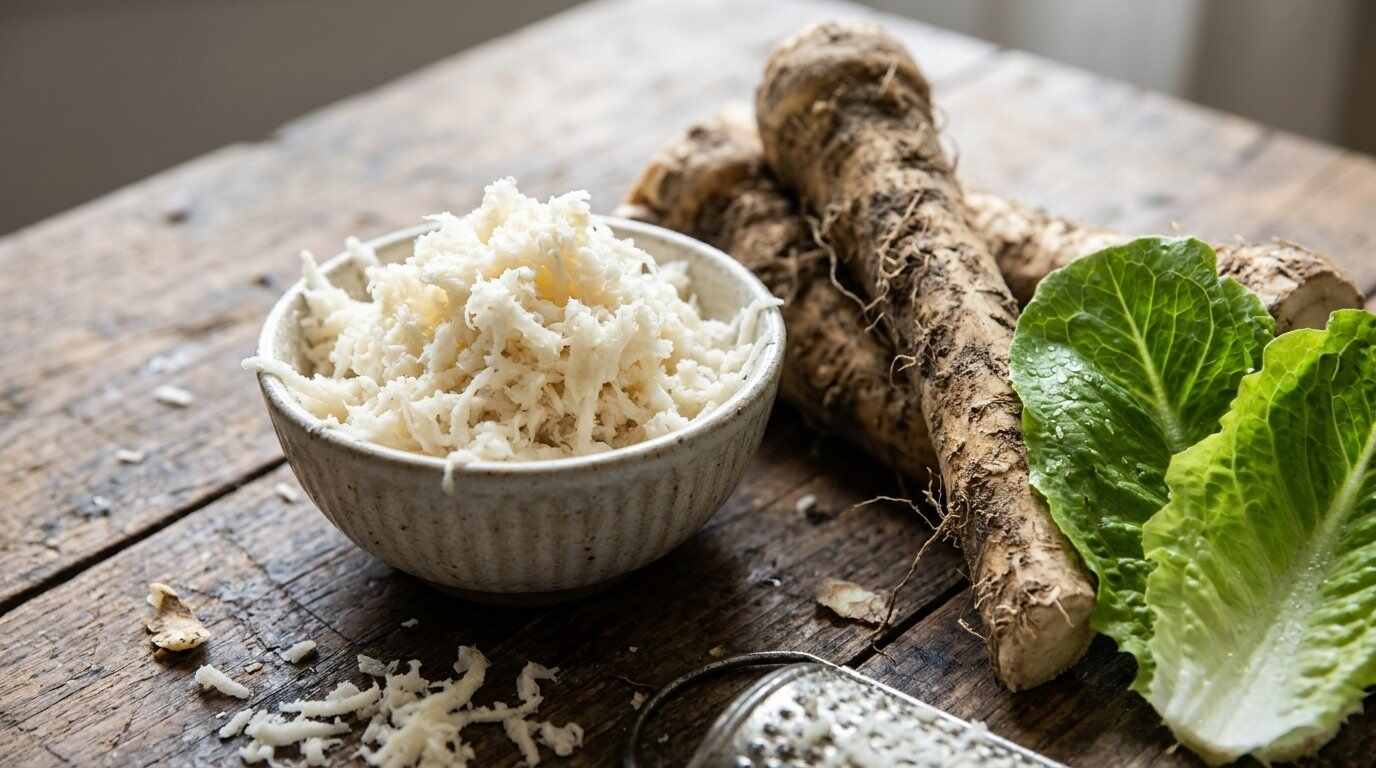
Korech combines matzah, the unleavened bread of the holiday, with maror, the bitter herb. OU Torah’s summary, adapted from a lesson by Shira Smiles, describes it as a sandwich of the two eaten before the festive meal, with no blessing of its own. Romaine lettuce and horseradish are the usual forms of the herb; the Aish.com guide to eating maror says the Talmud allows romaine lettuce, though many use horseradish.
The Hebrew word itself points toward a wrap. Rabbi Eliyahu Fink, quoted in The Christian Science Monitor, notes that korech means “to wrap,” so the dish is “more of a wrap than a sandwich.” Fink also suggests Hillel likely used soft matzah on a flatbread such as laffa and calls the result a proto-shawarma. Spit-roasted meat wrapped in flatbread is the subject of the post on doner kebab.
As for Hillel, Britannica places him between the first century BCE and the first quarter of the first century CE, born in Babylonia, a master of biblical commentary who headed the school known as the House of Hillel.
The verses behind the sandwich
Exodus 12:8 and Numbers 9:11 pair the lamb with two other foods
The practice rests on a pairing in the Bible. The Revised JPS translation of Exodus 12:8 has the Israelites eating the roasted flesh “with unleavened bread and with bitter herbs.” The verse the Talmud cites for Hillel’s custom is Numbers 9:11, in the JPS Gender-Sensitive Edition: “They shall eat it with unleavened bread and bitter herbs.” That verse belongs to the passage about a second-month offering for those who missed the first, known as Pesach Sheni, and the OU Torah article notes that the sandwich’s source is presented as the laws of Pesach Sheni rather than the annual seder commandments.
The mishnaic account of the seder also stresses these three foods. Mishnah Pesachim 10:5, on Sefaria, reports Rabban Gamliel teaching that anyone who has not mentioned the Paschal lamb, matza and bitter herbs has not fulfilled the obligation, each with its reason: the lamb because God passed over the houses of the Israelites, the matza because they were redeemed, the bitter herbs because the Egyptians embittered their lives. The chapter does not describe Hillel combining them. That report comes from the Talmud.
Pesachim 115a and Zevachim 79a
A baraita on Hillel, and a Gemara that leaves the question open
The account sits in two places. At Pesachim 115a, as rendered in the William Davidson English edition on Sefaria, a baraita, a teaching attributed to the early rabbis, states: “They said about Hillel that he would wrap matza and bitter herbs together and eat them.” The cited verse is Numbers 9:11. Rabbi Yohanan then says “Hillel’s colleagues disagree with him,” and the opposing teaching reads the same verse as permitting the matza to be eaten by itself and the bitter herbs by themselves. The passage concludes that the halakha was stated neither in accordance with Hillel nor in accordance with the Rabbis.
At Zevachim 79a, in the Koren-Steinsaltz English text, the same practice is told in fuller form: Hillel the Elder, on the first night of Passover, wrapped the three foods and ate them together, and “was not concerned that the taste of the bitter herbs would nullify the taste of the matza.” The Gemara uses the story as evidence in a different argument, over whether items used in performing commandments cancel one another’s effect.
Neither passage settles whether the sages who disagreed considered Hillel’s custom a fault. Rav Yosef Zvi Rimon’s essay for Yeshivat Har Etzion lays out the split among medieval commentators. The Rashbam, the Me’iri and the Ba’al ha-Ma’or read the Gemara as holding that combining invalidates the mitzvah according to the Sages, while the Ramban holds that for the Sages combining makes no difference.
Lamb in the wrap or not
Two foods or three: the commentators disagree
The Zevachim text names the Paschal offering, matza and bitter herbs. The commentary tradition then divides. According to the Har Etzion essay, Maimonides (Hilkhot Chametz u-Matza 8:6-7) says Hillel wrapped only matza and maror, while Rashi and the Rashbam say the wrapping included the Paschal sacrifice as well.
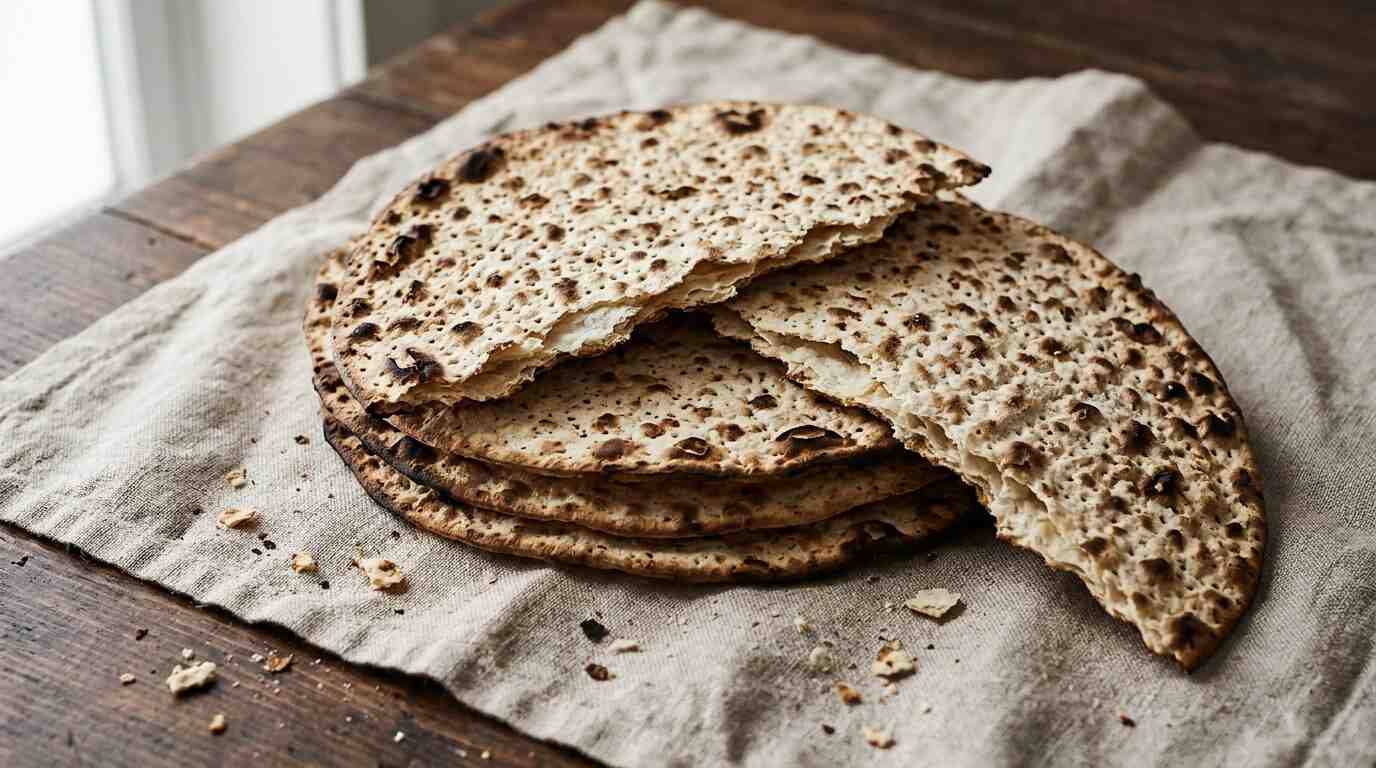
The practical consequence is that the original sandwich cannot be reproduced. The Paschal lamb was a Temple offering. Maimonides’ ruling for the present era, in the Touger translation, says that when there is no sacrifice, the matzah and maror are wrapped together, dipped in charoset and eaten without a blessing, in memory of the Temple.
A different question is whether the historical Hillel can be known at all. Rabbi Josh Yuter tells The Christian Science Monitor, “It’s certainly tradition that this is what he used to do,” and adds that what Hillel actually did cannot be verified historically.
How korech is eaten today
Matzah first, maror second, the sandwich third
The modern order is designed to honor both opinions. The Peninei Halakha chapter on korekh, published by the Har Bracha Institute, describes eating an olive-sized portion of matza alone, then a portion of maror alone, and only afterward combining them as a sandwich “in commemoration of Hillel.” The reason given is that matza is a Torah obligation today while maror is rabbinic, so mixing them at the start would let the lesser mitzvah diminish the greater. The Har Etzion essay adds that Hillel would agree on that point under present conditions.
The preparation is specific. In Rav Rimon’s short practical guide to the seder, the portion comes from the third matza, the lowest one not yet used. It is broken in two with a piece of romaine placed between the halves, and the lettuce is dipped in charoset first. A matza portion of about half a machine matza and lettuce of about 28 cubic centimeters are given as the standard, with smaller amounts allowed when needed. Eating is meant to be continuous, with the diner reclining; the guide says the obligation is still met if reclining is forgotten.
Custom attaches a sentence to the moment. The usual words, according to the essay, are a variant of “A remembrance of the Temple practice according to Hillel,” a formula traced to the Maharil. Whether the charoset belongs on the maror divides authorities: the Ra’avya and Rabbeinu Yona say no, since the matza already provides the dip, while Rashi, the Rosh and the Or Zaru’a say yes, because Hillel dipped. The Shulchan Arukh says to dip.
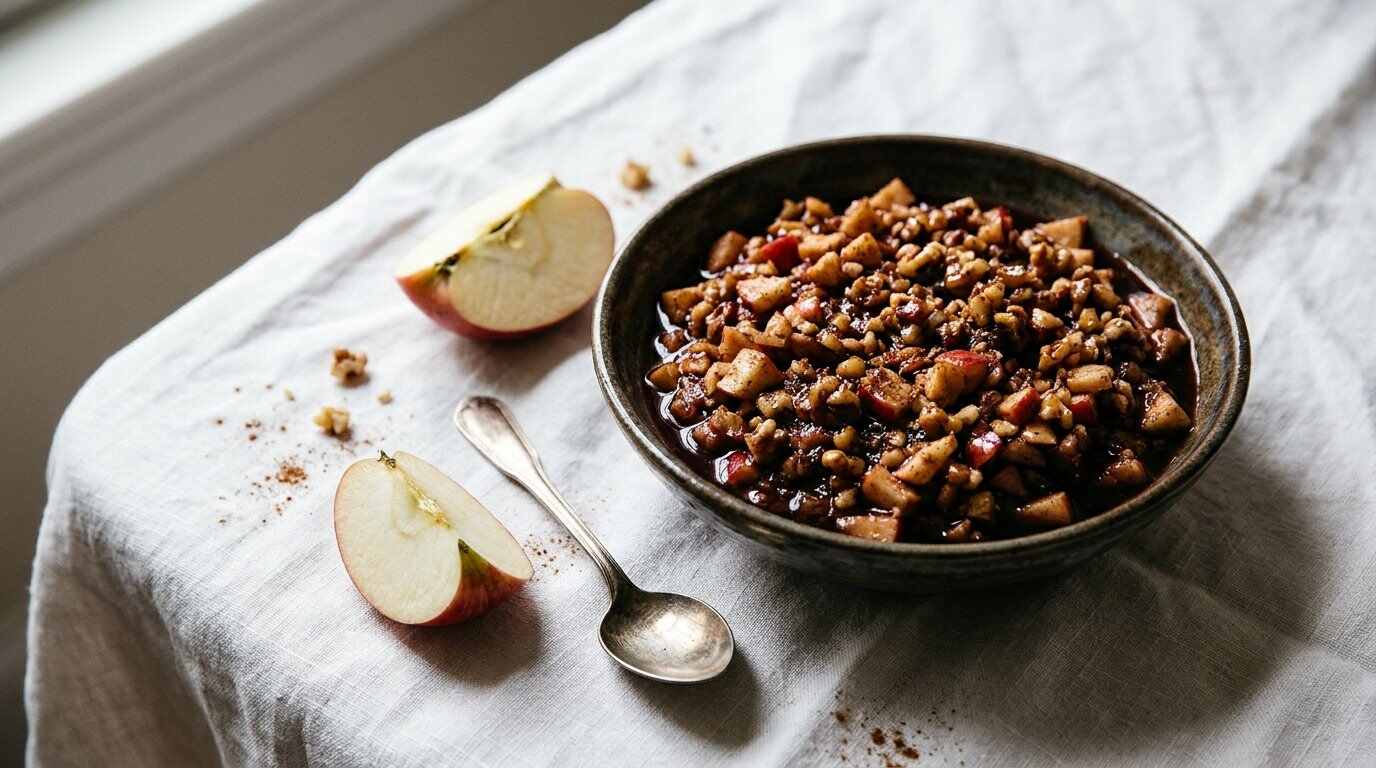
Fillings differ outside the strict form. The Monitor included a recipe from Joan Nathan’s The Jewish Holiday Kitchen in which chopped apples, nuts, honey, cinnamon, lemon zest and sweet red wine are spooned between two pieces of matzo.
Meaning at the table
Bitterness and freedom in a single mouthful
OU Torah’s collection of teachers on korech reads the combination as a deliberate joining of opposites. Rabbi Mattisyahu Salomon is cited there for describing the entire seder as “a night of contradictions.” Another contribution holds that korech brings together the freedom of the Exodus and the bitterness of slavery.
Rabbis quoted by Aish.com add several more readings. Rabbi Shimon Apisdorf sees matzah as the soul and maror as physicality, and korech as a blend of the two. Rabbi Shraga Simmons notes that the broken matzah held together by bitter herb and charoset can stand for a people that is divided and still held together by Torah and shared history.
The first-sandwich claim and the Earl of Sandwich
A popular comparison and its contested edges
Tori Avey, writing for PBS Food in 2013, called the korech the earliest recognizable form of a sandwich, crediting Hillel with first suggesting that bitter herbs be eaten inside unleavened matzo, and suggested the pairing may reflect a common Middle Eastern style of eating. The same article says the Earl of Sandwich, John Montagu, is credited with helping sandwiches gain “a name and popularity,” while the true history goes back much further. The question of the Earl’s own role is taken up in the post on the origin of the Earl of Sandwich.
The Monitor does the arithmetic. If the Hillel account is accurate, it says, the sandwich predates the 1762 story of the Earl by about eighteen centuries. It also notes that a 1454 Hebrew Haggadah on view at the Metropolitan Museum of Art carries the liturgy credited to Hillel and calls for eating the sandwich at the seder, which puts a written record about three centuries before the Earl.
The claim draws pushback. A Mosaic Magazine column responding to the PBS piece argues that it confused the holiday of Passover with the seder night, since the Haggadah’s instruction concerns the seder. The Pesach Sheni origin noted above and the unresolved question of whether Hillel’s lamb belonged in the wrap both weaken the label further. Then there is Fink’s reading of the word itself: if korech means “to wrap,” the contest for the world’s first sandwich may have been won by a wrap.
Common questions
What is a Hillel sandwich?
The Hillel sandwich, known in Hebrew as korech, is a small sandwich of matzah and bitter herbs eaten at the Passover seder in memory of a practice attributed to the sage Hillel the Elder.
What does the Talmud say about Hillel’s sandwich?
At Pesachim 115a, a baraita states that Hillel would wrap matza and bitter herbs together and eat them. The commentary tradition then divides: Maimonides says only matza and maror were wrapped, while Rashi and the Rashbam say the wrapping included the Paschal sacrifice as well.
How is korech eaten today?
The Peninei Halakha chapter on korekh describes eating an olive-sized portion of matza alone, then a portion of maror alone, and only afterward combining them as a sandwich in commemoration of Hillel.
Sources
- Sefaria, Pesachim 115a (William Davidson English edition): https://www.sefaria.org/Pesachim.115a
- Sefaria, Zevachim 79a (Koren-Steinsaltz): https://www.sefaria.org/Zevachim.79a
- Sefaria, Mishnah Pesachim 10:5: https://www.sefaria.org/Mishnah_Pesachim.10.5
- Sefaria, Mishneh Torah, Leavened and Unleavened Bread 8:8: https://www.sefaria.org/Mishneh_Torah%2C_Leavened_and_Unleavened_Bread.8.8
- Sefaria, Exodus 12:8: https://www.sefaria.org/Exodus.12.8
- Sefaria, Numbers 9:11: https://www.sefaria.org/Numbers.9.11
- Yeshivat Har Etzion, Rav Yosef Zvi Rimon, “Halakhot of the Seder: Korekh”: https://etzion.org.il/en/holidays/pesach/halakhot-seder-korekh
- Yeshivat Har Etzion, Rav Yosef Zvi Rimon, “Short Practical Guide to the Seder”: https://etzion.org.il/en/short-practical-guide-seder
- Har Bracha Institute, Peninei Halakha, “Korekh”: https://ph.yhb.org.il/en/04-16-28/
- OU Torah, “Special Sandwich”: https://outorah.org/p/148876
- Aish.com, “Bitter Herbs and Korech Sandwich”: https://aish.com/bitter-herbs-and-korech-sandwich/
- The Christian Science Monitor, “An ancient matzo sandwich for Passover”: https://csmonitor.com/The-Culture/Food/Stir-It-Up/2014/0414/An-ancient-matzo-sandwich-for-Passover
- PBS Food, Tori Avey, “Discover the History of the Sandwich”: https://dipsy.pbs.org/food/stories/history-sandwich
- Britannica, “Hillel”: https://www.britannica.com/biography/Hillel
- Mosaic Magazine, “Did the Ancient Sage Hillel Really Invent the Sandwich?” (partial text): https://ideas.tikvah.org/mosaic/columns/observations/did-the-ancient-sage-hillel-really-invent-the-sandwich?welcome=mosaic
Keep reading
- Tea Sandwiches: History, Fillings and How They Are Made
- Who Invented Sliced Bread? Otto Rohwedder and the First Pre-Sliced Loaf
- Filet-O-Fish History: Lou Groen, Lent and the Hula Burger
More in this section: Sandwich History guide.