In this story
Coleslaw is cabbage salad with a Dutch name and a Roman ancestry, and in large parts of the United States it is not a side dish at all. In the Carolinas, in Pittsburgh and in the delis of northern New Jersey, slaw goes inside the bread. The word itself came ashore in colonial New York, where Dutch settlers called their dressed, shredded cabbage koolsla. English speakers heard “cold slaw,” then wrote “cole slaw,” and the name settled into the form printed on deli menus today. The dish changed far less than its spelling: shredded cabbage, something sour, something rich, eaten cold.
Video: The Perfect BBQ Side Dish (Carolina Red Slaw), from the Food Wishes YouTube channel
Cabbage salads before the Dutch
Greek physicians and Roman cooks dressed raw cabbage first
Britannica traces the idea back more than two thousand years. A Greek medical writer named Mnesitheus, working in the 4th century BCE, recorded an “Athenian cabbage” dish with coriander, rue, honey vinegar and silphium. Pliny the Elder’s Natural History, finished in 77 CE, collected cabbage preparations prized more for medicine than for flavor.
The first version that reads like food appears in De re coquinaria, the Roman cookbook attached to the name Apicius and probably compiled in the 4th century. Britannica describes its recipe as cabbage dressed with vinegar, eggs and spices, which is closer to a modern slaw than most medieval cooking would get.
The line from there to an American barbecue plate is not a straight one, and no source draws it directly. What can be traced is the name, and the name English speakers use came from the Dutch.
Koolsla in New Amsterdam
A two-part Dutch word that English speakers misheard
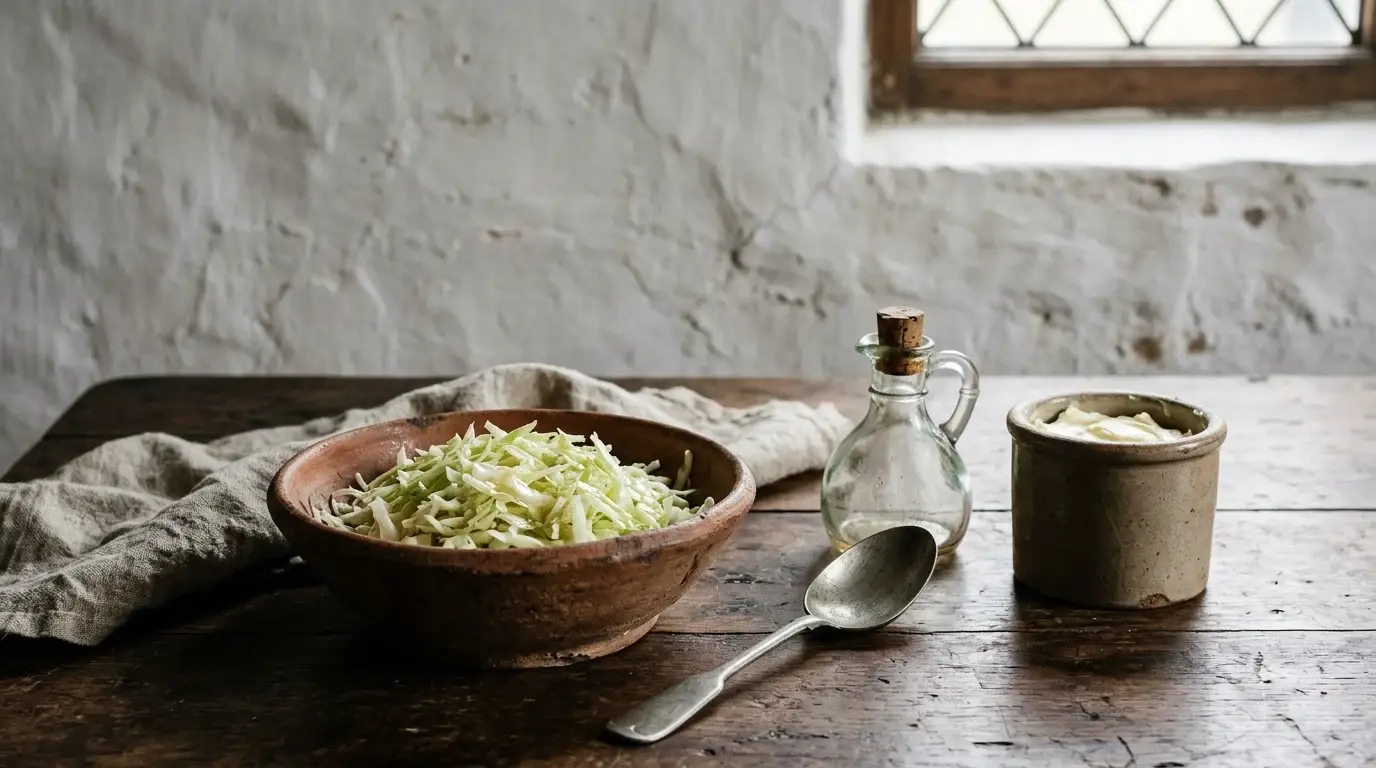
Dutch colonists brought cold cabbage salad to what is now New York state in the early 17th century. According to Britannica, their version was finely chopped cabbage dressed with vinegar and oil or melted butter. The name was a compound: kool, cabbage, and sla, a shortened Dutch form of salad.
Merriam-Webster’s editors say the earliest English evidence dates to the late 18th century, and the early records call the dish “cold slaw.” That spelling may have been helped along by the fact that the salad was served cold. James Fenimore Cooper used “cold-slaw” in The Spy in 1821, listing it alongside potatoes, onions, beets and rice. By 1839 Lettice Bryan’s The Kentucky Housewife was spelling it “slaugh.”
The “cole” spelling won because it describes the ingredient instead of the temperature. The dictionary traces cole to Old English cāl and ultimately to the Latin caulis, meaning stem or cabbage. “Cold slaw” survived in speech for a long time but has dropped out of standard use, which is just as well for anyone serving the warm slaws of the South.
Carolina, where slaw is a condiment
On a barbecue sandwich, it goes on top of the meat
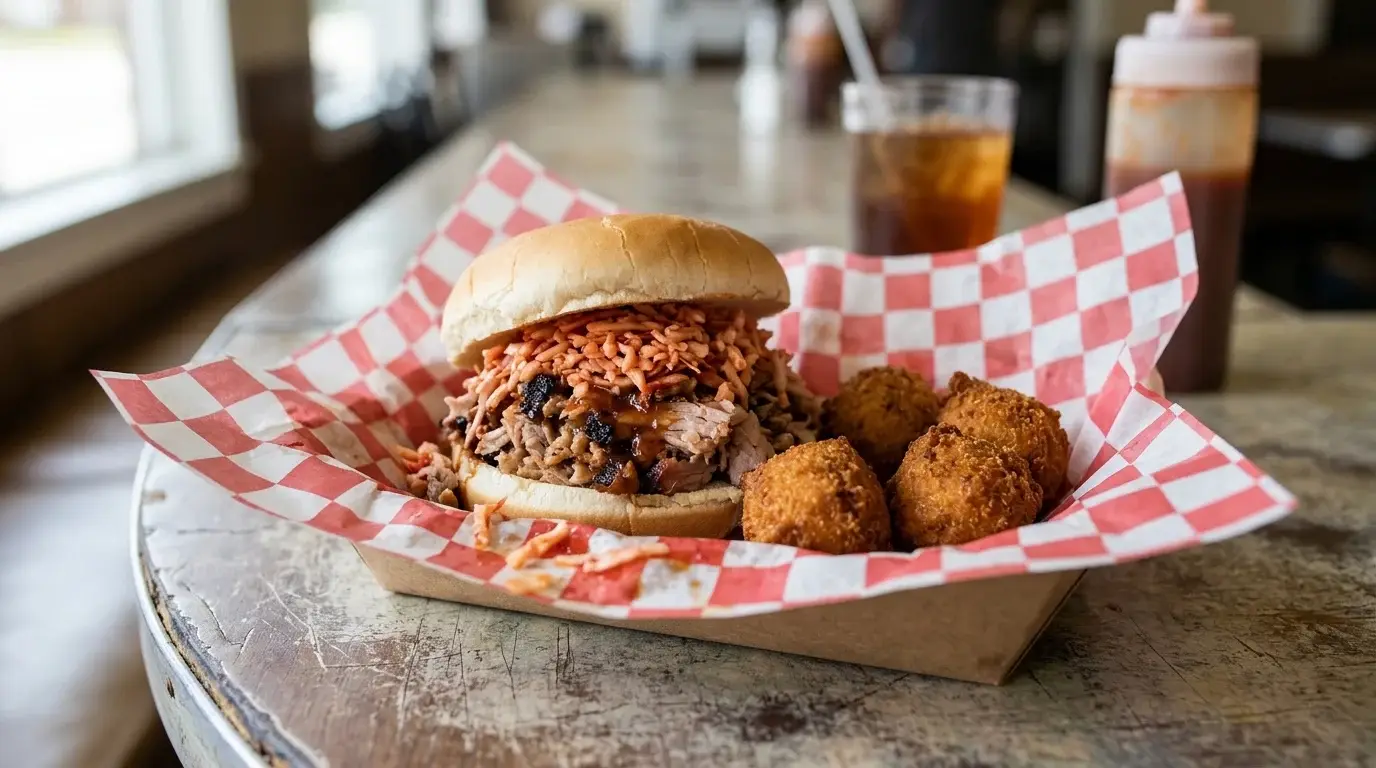
North Carolina treats slaw as part of the barbecue itself. America’s Test Kitchen puts the regional rule in one line: “Carolina coleslaw isn’t a side dish. It’s a condiment.” Carolina slaw is chopped very fine, close to a paste, and goes on top of the pork rather than beside it. A barbecue sandwich without it is considered incomplete. The same slaw tops Carolina-style burgers and hot dogs, usually with chili.
The state splits on color. Eastern North Carolina barbecue is whole hog in a vinegar and red pepper sauce with no tomato, and the Museum of Durham History notes that white, mayonnaise-based slaw is served with eastern-style barbecue to balance the heat of the chopped pork. In the Piedmont around Lexington, pork shoulder gets a vinegar sauce with a little tomato, and the slaw follows the sauce. Saveur describes Lexington red slaw as coleslaw made with a ketchup-based dressing sharpened with apple cider vinegar and hot sauce.
ATK names three barbecue restaurants where the tradition holds: Red Bridges Barbecue Lodge in Shelby, the Skylight Inn in Ayden and Lexington Barbecue No. 1 in Lexington. Even without a bun, the plate arrives half barbecue and half slaw, meant to be eaten together.
Tennessee made its own claim recently. Britannica reports that Tennessee named hot slaw its first official state food in 2024, a version whose heat comes from yellow mustard and pickled jalapeños and which is tied to the Star Vue drive-in in Cleveland, Tennessee.
Slaw inside the bread up north
Pittsburgh and northern New Jersey built famous sandwiches around it
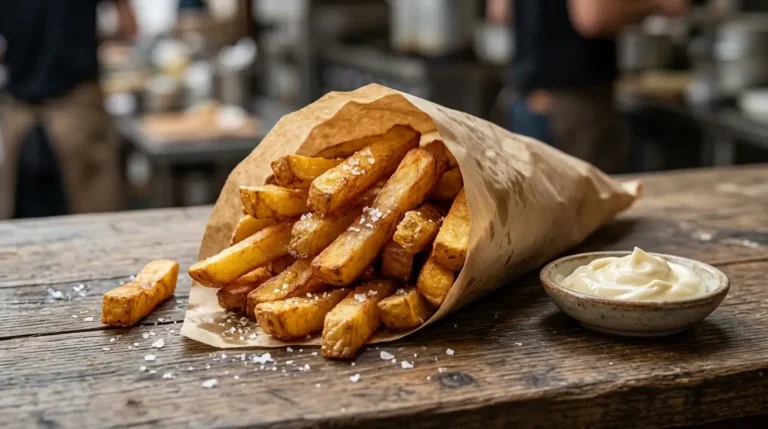
Pittsburgh’s best-known sandwich puts slaw and French fries between the bread. Primanti Bros. opened in 1933 in the Strip District, and WPXI describes the founder, Joe Primanti, starting with a sandwich cart during the Great Depression. The finished sandwich is grilled meat, provolone, tomato, fresh-cut fries and an oil-and-vinegar slaw on thick Italian bread. Food Republic notes that the shop’s customers, many of them truck drivers coming through the Strip, could eat a full meal with one hand because the sides were already inside.
Northern New Jersey took a different route to the same idea. The New Jersey Sloppy Joe is a cold, layered deli sandwich with no relation to the loose-meat version, and Town Hall Deli in South Orange claims it. NJ Monthly reports that in the 1930s Maplewood mayor Thomas Sweeney came back from Havana raving about a sandwich at Sloppy Joe’s Bar, and the deli rebuilt it: ham, tongue, Swiss cheese, coleslaw and Russian dressing on thin rye. Competing origin stories exist, and NJ Monthly mentions one that credits a now-closed deli in Madison.
Town Hall’s slaw is not the creamy kind. Taste reports that the deli’s coleslaw is dry-brined for three days, then strained of excess liquid, with no mayonnaise, because the Russian dressing supplies the richness.
Why slaw goes watery, and how cooks stop it
Salt pulls water out of cabbage whether the cook wants it or not
Every slaw has the same problem. Cabbage is mostly water, and the salt in any dressing draws that water out of the shreds over time, thinning the dressing into a puddle at the bottom of the bowl. America’s Test Kitchen explains it as osmosis: water inside the cabbage cells migrates out as salt and water move toward equilibrium.
The fix is to let that happen before dressing. ATK’s method is short:
- Shred the cabbage and toss it with salt in a colander.
- Let it sit for about an hour, until it softens slightly and has released liquid.
- Rinse off the surface salt and pat the shreds dry.
- Dress as usual.
The step does two jobs. The slaw stays crisp on the plate instead of going limp, and the brief softening makes raw cabbage less fibrous and easier to chew. For a sandwich, that matters more than it does on the side, because a wet slaw soaks straight into the bread. Town Hall’s three-day dry brine is the same principle taken further.
ATK’s second suggestion lightens the dressing itself: half a cup of buttermilk and only 2 tablespoons of mayonnaise per pound of cabbage, with sour cream for tang.
Red, white, mustard and beyond
The base stays cabbage; the dressing changes with the region
Most American slaw falls into a few families. Britannica notes that modern recipes often use mayonnaise, especially in American barbecue culture. Vinegar slaws, with oil or without, dominate the Carolinas and turn up on the Primanti sandwich. Red or barbecue slaw borrows its dressing from Lexington’s barbecue sauce. ATK also lists yellow mustard slaws among the Carolina variations, and Tennessee’s hot slaw belongs to the mustard family.
Outside the United States, Britannica notes that Caribbean slaws tend to be sweeter, built with pineapple, mango, coconut or raisins and a lime-heavy dressing, sometimes with Scotch bonnet chilies. The Dutch original, with its butter or oil and vinegar, is closer to the Carolina vinegar slaw than to the creamy deli version most Americans picture.
For sandwich purposes the useful line runs between wet and dry. A creamy slaw belongs on a sandwich that will be eaten immediately. A drained vinegar slaw, like the ones on Carolina pork or a Pittsburgh steak sandwich, holds up longer and cuts through fat, which is the whole reason it ended up between the bread in the first place.

Frequently asked questions
Where does the word coleslaw come from?
From the Dutch koolsla, meaning cabbage salad. English records from the late 18th century spell it “cold slaw,” and the “cole” spelling took over later.
Is coleslaw supposed to go on a barbecue sandwich?
In the Carolinas, yes. America’s Test Kitchen describes Carolina slaw as a condiment that goes on top of the pork.
Why does coleslaw get watery?
Salt in the dressing draws water out of the cabbage by osmosis. Salting and draining the shredded cabbage before dressing removes that water in advance.
What sandwiches have coleslaw inside?
Carolina barbecue sandwiches, the Primanti Bros. sandwich in Pittsburgh and the New Jersey Sloppy Joe are three well-known examples.
Sources
- Britannica, “Coleslaw”: https://www.britannica.com/topic/coleslaw
- Merriam-Webster, “‘Coleslaw’ vs. ‘Cold slaw'”: https://www.merriam-webster.com/wordplay/coleslaw-vs-cold-slaw
- America’s Test Kitchen, “Coleslaw Is a Condiment in the Carolinas”: https://www.americastestkitchen.com/articles/3588-coleslaw-is-a-condiment-in-the-carolinas
- America’s Test Kitchen, “Two Coleslaw Techniques to Win Over Slaw Skeptics”: https://www.americastestkitchen.com/articles/3488-two-coleslaw-techniques-to-win-over-slaw-skeptics
- Museum of Durham History, “F is for Food: Slaw”: https://www.museumofdurhamhistory.org/?p=1073
- Saveur, “Lexington-Style Red Slaw”: https://www.saveur.com/article/Recipes/Lexington-Style-Red-Slaw/
- WPXI, “Primanti Bros. a Pittsburgh sandwich legend”: https://www.wpxi.com/station/search/primanti-bros-a-pittsburgh-sandwich-legend/666304294
- Food Republic, “What Makes Primanti Bros. Sandwiches An Icon In Pittsburgh”: https://www.foodrepublic.com/1568124/primanti-bros-sandwich-pittsburgh/
- NJ Monthly, “Food Fight”: https://njmonthly.com/articles/eat-drink/food_fight/
- Taste, “The New Jersey Sloppy Joe”: https://tastecooking.com/new-jersey-sloppy-joe-not-sloppy-joe-know/