In this story
Pork roll and Taylor Ham are two names for the same kind of product, a processed pork roll from Trenton, New Jersey, and the argument is over which word is correct. The generic name is pork roll. “Taylor” is a brand, and Word Origins notes that the full name of the Taylor product is “Original Taylor Pork Roll” even though nearly everyone shortens it to Taylor Ham. At least two Trenton companies claim a founding date in the nineteenth century, a federal food law forced a relabeling in 1906, and a 2015 poll found the state almost evenly split.
Video: PORK ROLL VS. TAYLOR HAM: A Documentary | James Felcon
What the product is
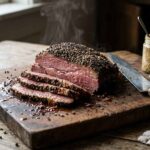
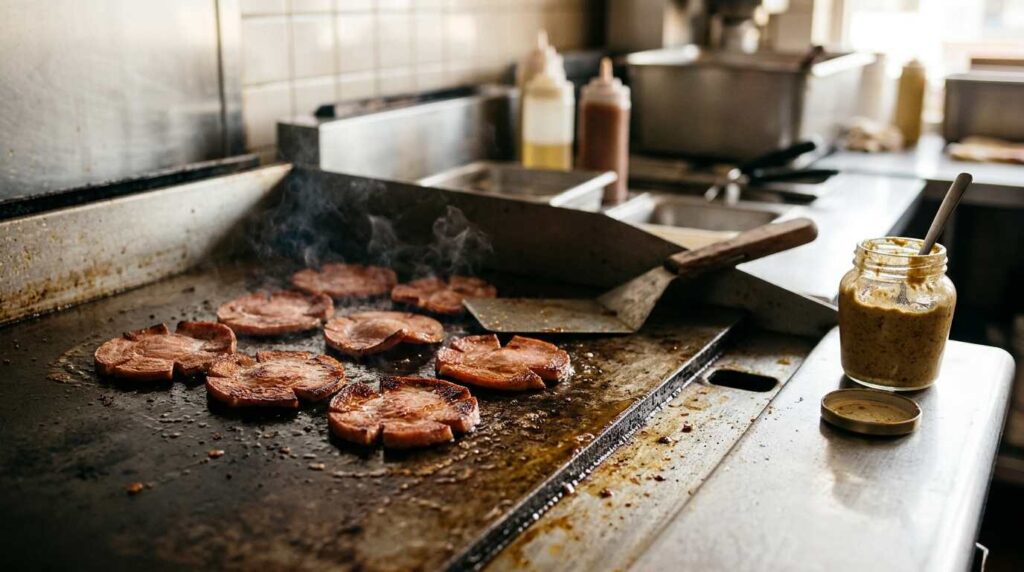
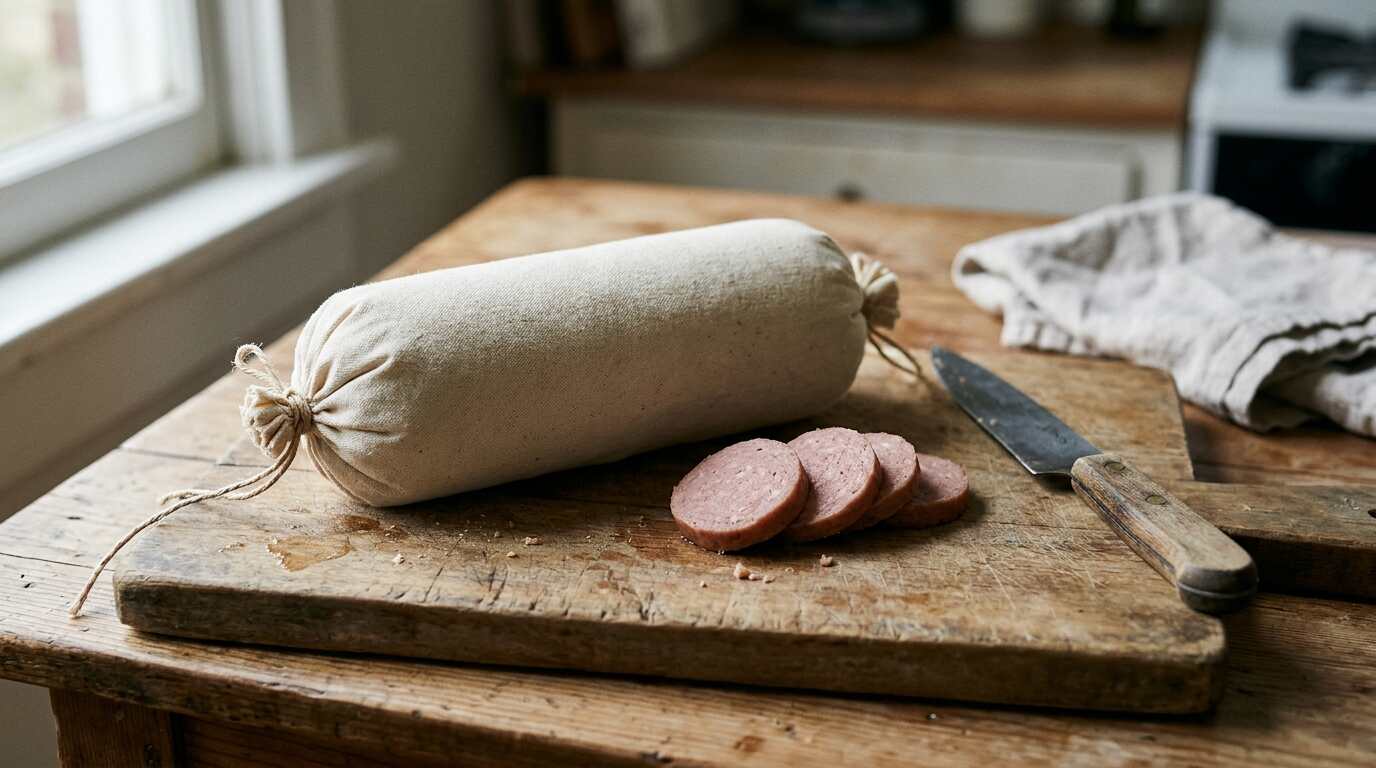
Word Origins describes pork roll as a processed, pork-based meat that resembles Canadian bacon but tastes different. Atlas Obscura reports that its original selling point was the package: John Taylor sold it in a cloth sack, so the roll could be carried, sliced and fried without unwrapping, which set it apart from the German and Polish sausages that dominated the market. George Washington Case’s version was originally wrapped in corn husks and is now vacuum-packed, according to the same article. A profile of the Case family business says the cylindrical shape lets customers slice it without removing the casing.
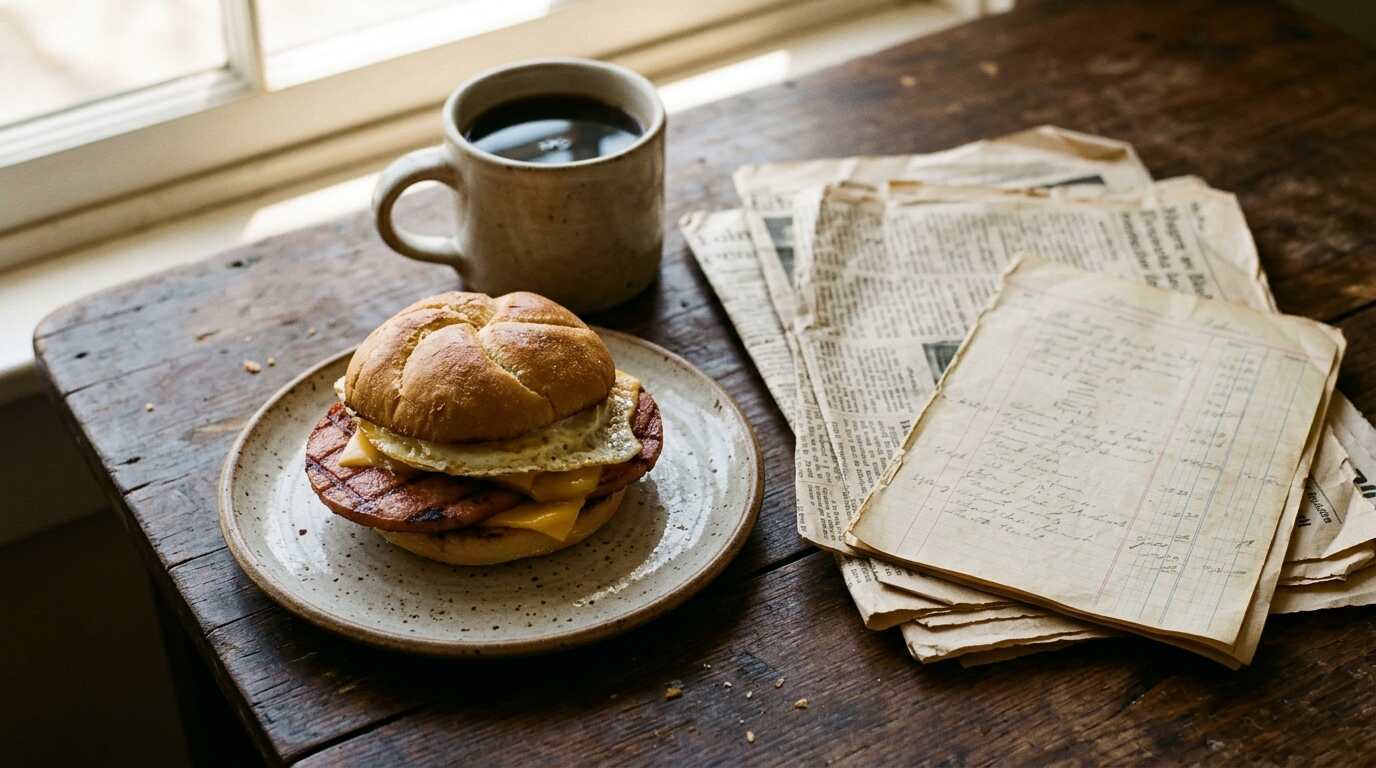
Outside its home state the product is harder to find. Atlas Obscura says pork roll is mostly found in New Jersey and nearby states such as Pennsylvania, though New Jersey companies now ship it nationwide, and the article notes that Miller started the New Jersey Pork Roll Festival in 2014 to celebrate it. The Case profile counts diners among its main customers, which fits the product’s standing as a breakfast sandwich meat.
What the first batches contained is not recorded. Atlas Obscura says the contents of the original product are unknown and that it may not have held any ham. The company that sold it had a reason to care about that point, as the 1906 section below shows.
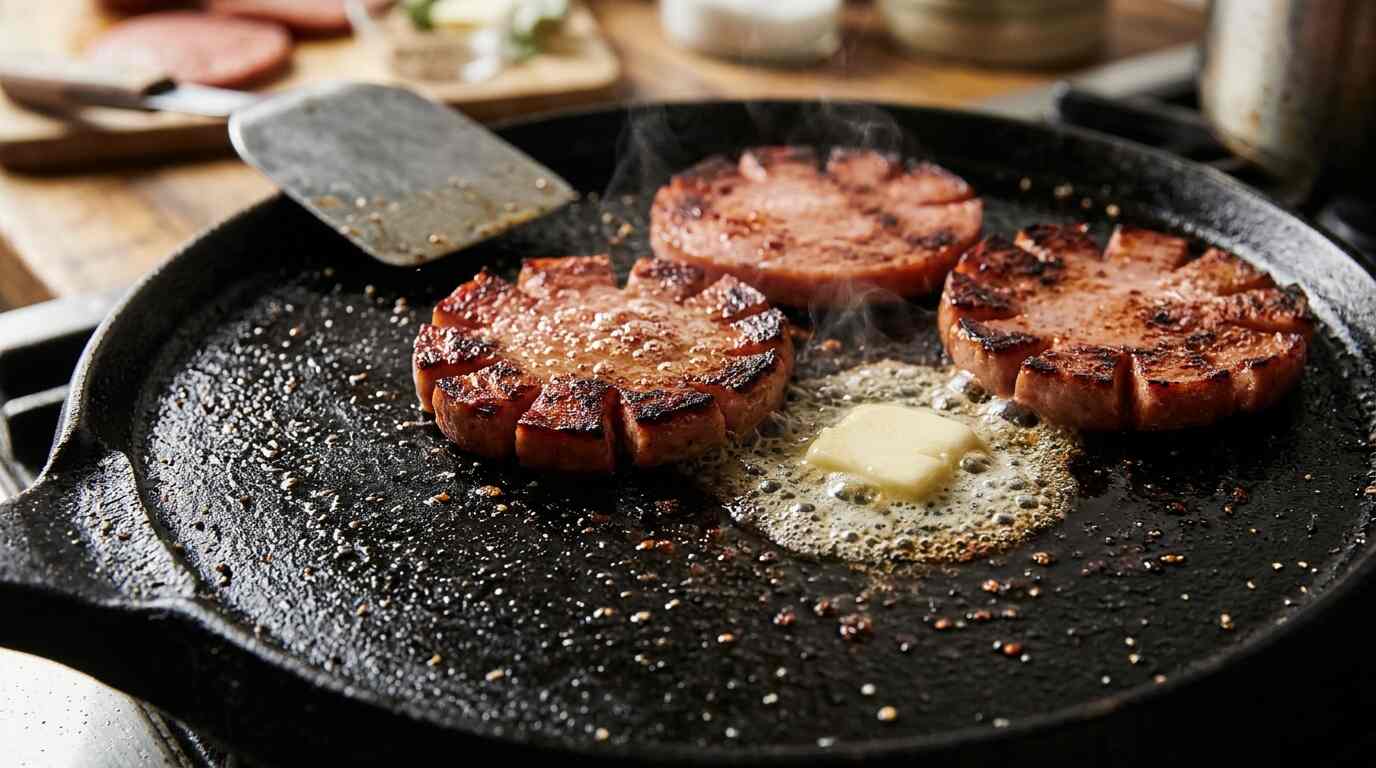
Two Trenton companies and their founding claims
The Taylor Provisions Company’s own history page gives John Taylor’s birth as October 6, 1836, in Hamilton Square, New Jersey, and dates his refined “Sugar Cured” ham to 1856. The same page says Taylor’s pork-packing business was renamed The Taylor Provisions Company in 1888, and that he served as a state senator from Mercer County from 1880 to 1883. It also ties the family recipe to the Revolutionary War, saying the minced ham went to George Washington’s troops at Trenton in 1776 and Princeton in 1777. The page offers no document for that last claim, and the state’s own legislative text treats it more cautiously, describing the story as state folklore about soldiers carrying pork roll as field rations at the Battle of Trenton.
Case’s side of the story starts later by the company’s account. Atlas Obscura reports that Case founded The Case Pork Pack Co. in 1870, selling pork roll in Belle Mead, New Jersey. The company is now the Case Pork Roll Company in Trenton. Trenton Daily’s profile places the start in the 1870s on the family farm, where Case minced, smoked and cured the pork, and says the business moved to Trenton in the 1930s. The sixth generation still uses his recipe, the profile reports, and the company sold more than $11 million of product in 2017 through diners, grocery stores and school cafeterias in New Jersey, Pennsylvania, Maryland, Connecticut and New York.
Case’s current website is a placeholder reading “Launching Soon” at the time of writing, so the company’s own account of its history could not be consulted.
Taylor’s 1856 date comes from the company itself. Word Origins looked for support and found references to a Trenton provisions seller from that period but no direct link to the product.
What the earliest documents show
Word Origins also searched old newspapers. The earliest appearance of the phrase “pork roll” it found is a 7 November 1878 advertisement in the Montreal Gazette that reads “Pork Rolls!”, and the article cautions that nothing shows it refers to the New Jersey product. The earliest unambiguous reference is a 31 October 1896 advertisement in the Baltimore Sun for “Taylor’s Prepared Ham.”
That wording points to where the nickname came from. The product was sold as ham, under Taylor’s name, a decade before the law intervened. New Jersey’s 2016 sandwich bill tells the same story in outline: Taylor Provisions began selling “Taylor’s Prepared Ham” in the late nineteenth century, which led to the nickname “Taylor Ham,” and the company later had to switch names.
The 1906 law and the courtroom
The federal Pure Food and Drug Act of 1906 is the point where the sources agree that the name had to change. Taylor Provisions says its product could no longer be called Taylor Ham because it used more than the ham cut of the pig, and it became Taylor’s Pork Roll. Word Origins found a Trenton Evening Times advertisement of 18 October 1906 marketing “Pork Roll” as a sugar-cured product, and a competitor’s advertisement of 1 November 1906 for its own pork roll, “formerly called prep. ham.”
The competitors mattered, because the new name was a generic one. Word Origins cites a 1910 case, Taylor Provision Co. v. Gobel, in which Taylor sought an injunction for trademark violations and lost. Atlas Obscura also reports a 1910 suit and says the court held that “pork roll” could not be trademarked, and a Greater Trenton history says Taylor could not protect the name because it was too general.
A separate reported decision points the other way on the outcome. In Taylor Provision Co. v. Edwards, decided by New Jersey’s Court of Chancery on December 17, 1911, Vice Chancellor Walker ruled that the company was entitled to a permanent injunction. The court found that Taylor had to give up “prepared ham” under the Federal Pure Food law and treated the change as equivalent to putting out a new brand. The injunction rested on protection from unfair competition and was not, the opinion says, for the protection of a registered trademark. It also questioned whether the product had been sold under the name “pork roll” for long enough, if at all, to claim the name itself.
The accounts therefore describe two different outcomes. Taylor lost its bid to own the words “pork roll,” and Taylor won a ruling that a rival could not imitate its relabeled product. The sources fetched for this post do not reconcile whether Gobel and Edwards were one dispute or two.
Where each name is used
The geography of the argument is one of the few things everyone concedes. Atlas Obscura quotes Steve Chernoski, director of the film New Jersey: the Movie, who mapped the dividing line from Union County west through Warren: “No one disputes that it’s Jersey’s meat.” He adds that residents cannot agree on what to call it. Word Origins says Taylor Ham is more common in the northern and northwestern counties and pork roll in central and south Jersey, but warns that those patterns come from unscientific surveys.
A scientific one exists. The Rutgers-Eagleton Poll interviewed 843 adults by landline and cell phone between November 30 and December 6, 2015, with a margin of error of 3.8 percentage points, and NJ 101.5 reported the results in May 2016. Statewide, 38 percent said pork roll and 35 percent said Taylor Ham. Thirteen percent used neither name, 12 percent were not sure and 2 percent used both interchangeably. In northern New Jersey 59 percent said Taylor Ham, and in southern New Jersey 65 percent said pork roll. Central New Jersey leaned toward pork roll, 45 percent to 25.
The same Atlas Obscura piece quotes Scott Miller, founder of the New Jersey Pork Roll Festival, who prefers “pork roll” and calls “Taylor ham” a misnomer. He suggests either Taylor’s wider distribution or restaurant menus that used the name to separate it from other meats may explain why it stuck in the north.
Why both names survive
The brand name outlasted the label that replaced it. Word Origins observes that despite the official change, the public still calls the product Taylor Ham. The Taylor Provisions history page itself closes with “Taylor Ham or Taylor Pork Roll,” treating the two as one product, though it reserves “Taylor Ham” for the early recipe and uses “pork roll” for the current one.
Case’s company name uses the generic term, the Case Pork Roll Company, while “Taylor Ham” preserves the original maker’s name from before 1906. Each side of the argument therefore keeps a piece of the product’s history: the north holds the old brand name, and the south uses the word that the 1906 law pushed the original maker toward.
New Jersey’s legislature has taken up the matter. Assembly Bill 3666, introduced on April 14, 2016, by Assemblyman Tim Eustace of Bergen and Passaic counties, would designate the pork roll, egg and cheese sandwich as the New Jersey State Sandwich. Its findings say pork roll has been a state fixture for more than 150 years and that the 1906 renaming fueled the north-south argument over what to call it. The sandwich it names is pork roll, egg and cheese. What became of it was not checked for this post.
Sources:
- Word Origins, “pork roll / Taylor Ham”: https://wordorigins.org/big-list-entries/pork-roll-taylor-ham
- Atlas Obscura, “That’s Not Mystery Meat, It’s New Jersey’s Beloved Pork Roll”: https://www.atlasobscura.com/articles/thats-not-mystery-meat-its-new-jerseys-beloved-pork-roll
- Trenton Daily, “Case’s Pork Roll: A New Jersey Staple”: https://www.trentondaily.com/cases-pork-roll-a-new-jersey-staple
- The Taylor Provisions Company, company history: https://originaltaylorporkroll.com/history/
- Greater Trenton, “Historic Happenings: The Great Pork Roll Debate”: https://www.greatertrenton.org/?p=6452
- Taylor Provision Co. v. Edwards (N.J. Ch. 1911), 79 N.J. Eq. 142: https://law.counselstack.com/opinion/taylor-provision-co-v-edwards-njch-1911
- New Jersey Legislature, Assembly No. 3666 (2016): https://pub.njleg.gov/bills/2016/A4000/3666_I1.HTM
- NJ 101.5, “Taylor Ham vs Pork Roll poll shows NJ almost evenly split on what to call it”: https://nj1015.com/taylor-ham-vs-pork-roll-poll-shows-nj-almost-evenly-split-on-what-to-call-it/
- James Felcon (YouTube), “PORK ROLL VS. TAYLOR HAM: A Documentary”: https://www.youtube.com/watch?v=9L8Xsjfq9QI