In this story
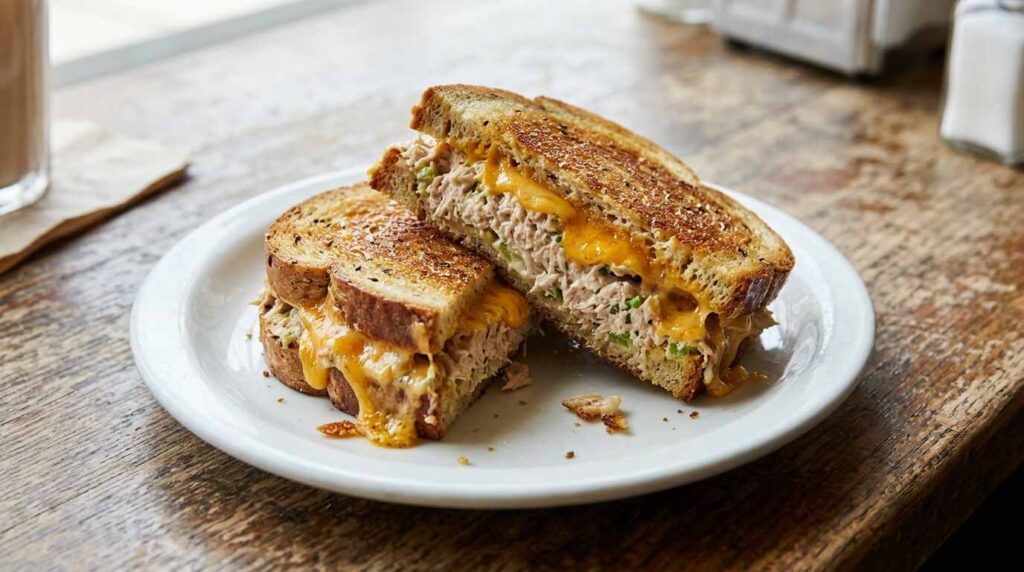
The tuna melt is a tuna salad sandwich topped or layered with cheese and heated until the cheese runs, either under a broiler or in a buttered skillet. Its origin is usually told as an accident at a Woolworth’s lunch counter in Charleston, South Carolina, where a cook let tuna salad spill onto a grilled cheese sandwich. Cookbook and menu evidence points to an older and less tidy history.
Video: The Tuna Melt | Kenji’s Cooking Show, J. Kenji López-Alt
What goes into a tuna melt
The Sword and the Sandwich reduces the sandwich to four ingredients: tuna, mayonnaise, bread and cheese. Food Republic fills in the classic version with canned tuna mixed with mayonnaise, a layer of melted American cheese, two slices of bread and some form of pickle, chopped into the salad or served alongside. Tasting Table summarizes the standard build as a grilled sandwich of tuna, celery, a generous amount of mayonnaise and a veil of gooey cheese.
Recipes fill in the details differently. Budget Bytes calls for sourdough, sliced cheddar, and canned tuna in water mixed with celery, red onion, dill pickle and mayonnaise, toasted in butter on both sides. Saveur’s version uses oil-packed tuna with the oil kept in the mix, lemon juice, celery, chives and parsley, spread on lightly toasted caraway rye or multigrain bread, then topped with Swiss, cheddar or Monterey Jack and broiled for about a minute.
Two formats exist side by side. Food Republic says the bread can be buttered and toasted in a lightly greased skillet or the sandwich served open-faced, and that a grilled version has a charcoal flavor compared with the traditional broiler method.
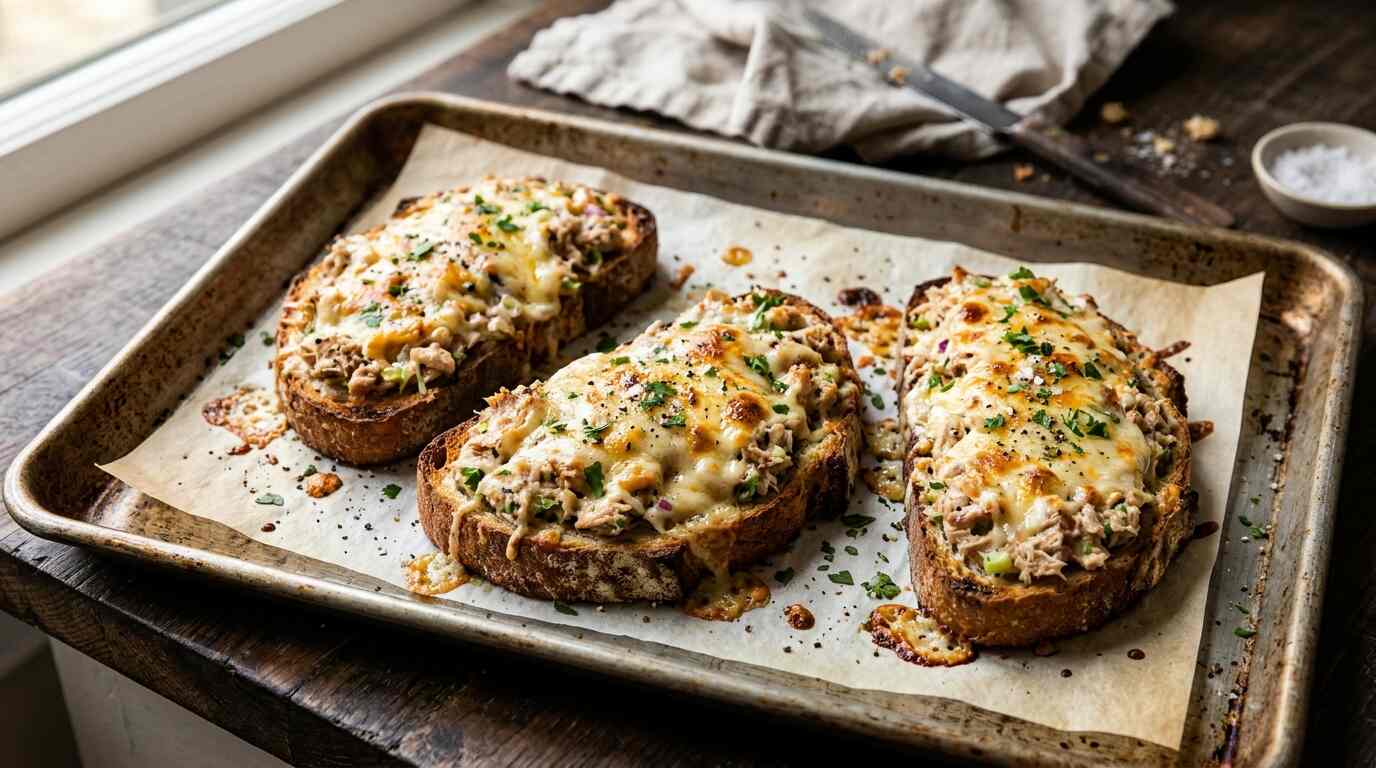
Canned tuna and the tuna salad sandwich
The melt depends on a pantry product that did not exist at industrial scale until the early 1900s. Tasting Table reports that the southern California sardine catch in 1903 was exceptionally poor, which pushed West Coast canners toward other fish. Albert P. Halfhill began packing local albacore in empty sardine cans, selling about 700 cases in the first year and more than 400,000 cases by 1914.
Before that, tuna had little market in the United States. The Takeout notes that it was mostly used for animal feed and bait until canners marketed it as comparable to white-meat chicken, with free tastings and giveaways. The Sword and the Sandwich adds that the Southern California Fish Co., under Joseph Lapham and Halfhill, concluded that the flaked flesh tasted agreeably like chicken, and that canned tuna took off during World War I as cheap, portable protein for troops.
The sandwich form followed. The Takeout traces mayonnaise-bound “salads” made from leftovers to the late 1800s, served at lunch spots often frequented by women, and says the tuna salad sandwich arrived in the early twentieth century as more women worked outside the home and needed quick lunches. By mid-century canned tuna had become the country’s top seafood. Tasting Table puts its run as most popular seafood at roughly 1950 to 2000, with more than 85 percent of households keeping a can in the pantry.
The Woolworth’s lunch counter story
The best-known account places the invention at a Woolworth’s department store in Charleston, South Carolina. Tasting Table credits NYT Cooking for the tale and calls it supposed: an unnamed cook, filling orders, let tuna land on a grilled cheese, and instead of cleaning up saw the appeal. The same article describes the result as a total fluke. TASTE puts the discovery in the 1960s.
The year changes with the teller. Food Republic gives 1960, and adds, “There’s no way to strictly fact check this tale.” Gothamist writer Joshua David Stein places the story in South Carolina in 1965. Chowhound traces a 1965 version to a 2015 Chewing the Fat piece quoting author Warren Bobrow, which the Chowhound writer calls unsubstantiated and promoted to legend.
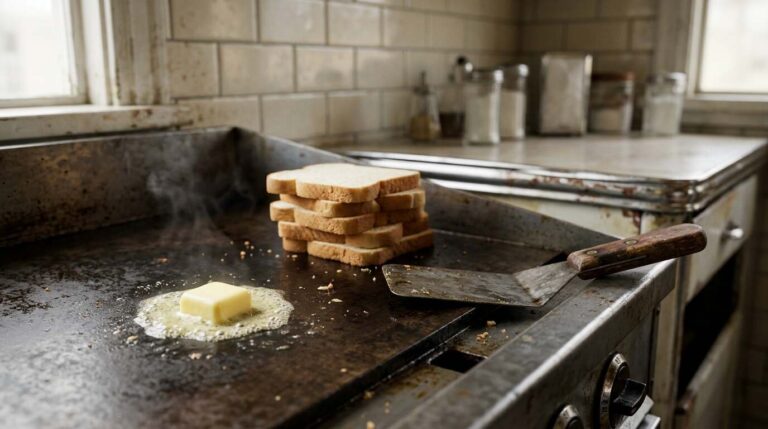
Bobrow himself appears to hedge. Chowhound reports that he lived in Charleston in the 1980s and loved the Woolworth’s tuna melts, but told the site, “I don’t believe it was invented there, only perfected.” The Chowhound writer suspects the earlier claim misrepresented him. Chowhound’s rendering of the Woolworth’s sandwich has tuna salad with diced celery and Georgia sweet onions on white bread browned on a flattop grill.
Evidence that predates the accident
Several writers reject the single-inventor story. The Sword and the Sandwich says the melt has many fathers and suspects the cook acted on purpose, with the accident added later to give the sandwich a sense of destiny. Stein calls the 1965 story “demonstrably false” and credits canned tuna’s popularity in the 1910s, home ovens with broiler rods in the 1920s and post-war sliced bread, though he does not name a source for the debunking.
The cookbook record is more specific but contested. Chowhound attributes to food researcher Lynne Oliver the finding that the first cookbook with a broiled, open-faced tuna sandwich with cheese was The Joy of Cooking in 1936, and adds that many 1940s and 1950s broiled, toasted and fried versions exist, none called a “melt.” Stein goes further and states that the tuna melt itself appeared in a 1936 edition of the book. The two readings differ on whether the name or only the dish was there.
A 2005 message to the American Dialect Society mailing list sides with the narrower reading. Linguist Arnold Zwicky checked his 1946 Joy of Cooking and found no “tuna melt”, only a recipe titled Tuna Fish Sandwiches with Cheese that says to broil them until the cheese is melted. He suspected the name came from diner and luncheonette menus. Chowhound reaches a similar place, citing food historian Jean Anderson’s view that the earliest evidence of the term is on family restaurant menus such as iHOP and Howard Johnson’s in the mid-1970s. The same article reports a 1964 Ceylon cookbook with an “American Sardine Toast” that follows the same pattern. Chowhound’s own conclusion is that the origin is unknown and the sandwich emerged somewhere between 1920 and 1960.
One loose end remains. The mailing list thread carries a 1968 New Yorker reference in its subject line, but the message text gives no citation, so that date is not treated here as a confirmed first use of the term.
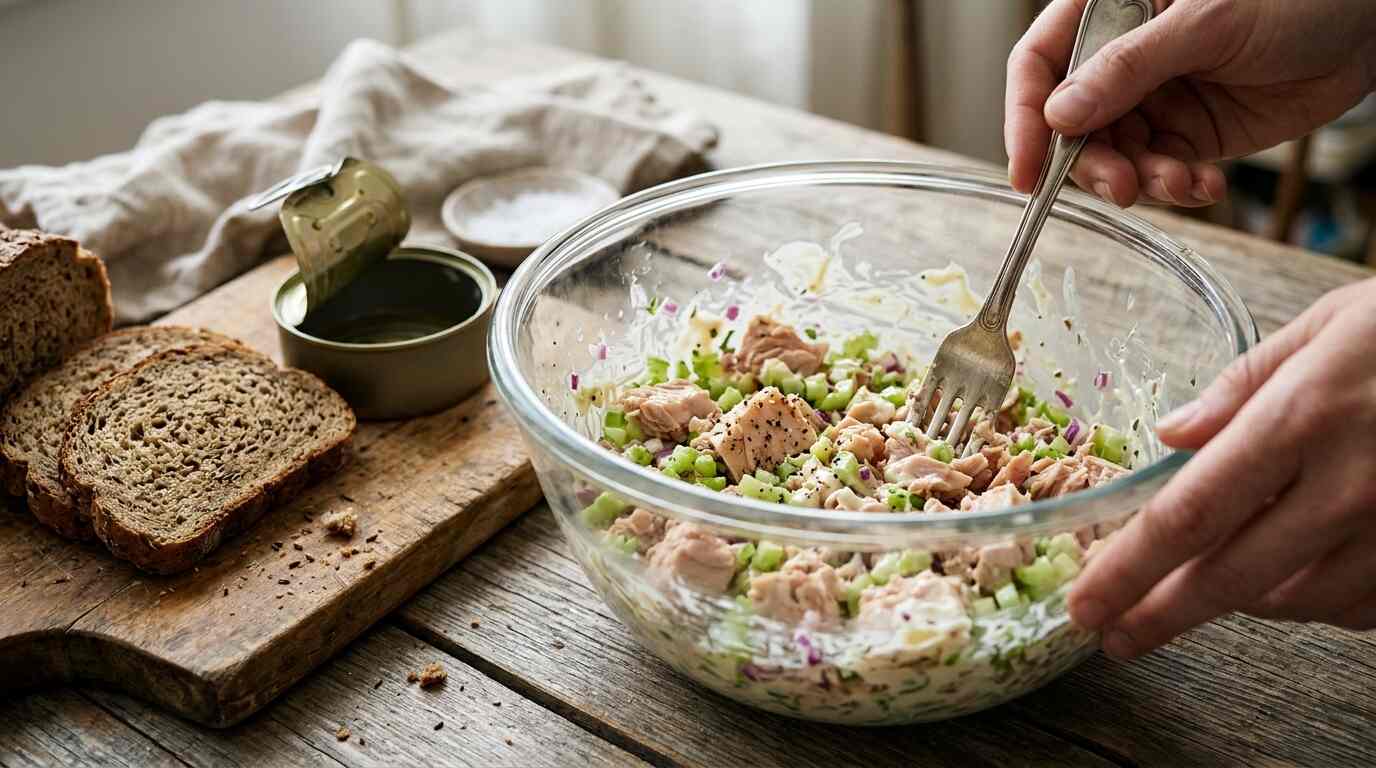
Relatives: the patty melt and the tuna rarebit
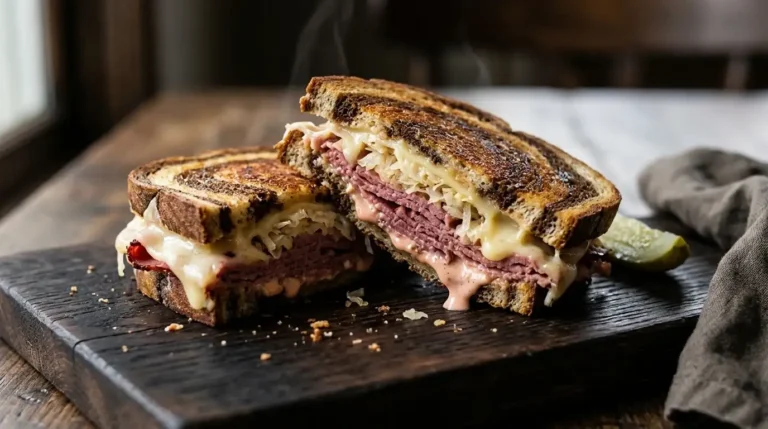
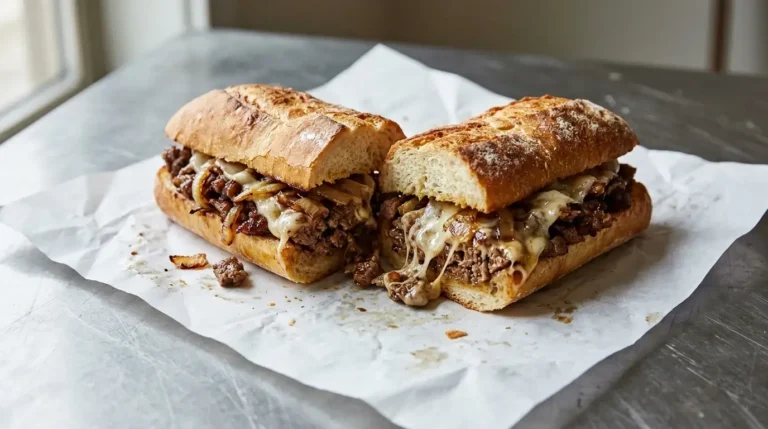
The tuna melt sits within a family of hot, cheese-topped diner sandwiches. English Wikipedia, used here only as a pointer to a general definition, describes a melt as a hot sandwich with a meltable cheese and a meat or fish filling, and notes that patty melts were commonly on menus by the 1940s. Chowhound suggests the patty melt, served at the California drive-ins Biff’s and Tiny Naylors, may have inspired the tuna melt. The beef version has its own page here: patty melt.
A second candidate is the tuna rarebit. Tasting Table describes it as a creamy, cheesy open-faced tuna sandwich built on Welsh rarebit and says it may be a precursor to the melt, appearing about a decade earlier in mid-century American cooking. The method differs. A rarebit melts milk, butter and cheese in a double boiler and folds the tuna in, while a melt puts sliced or grated cheese over the tuna salad and broils it.
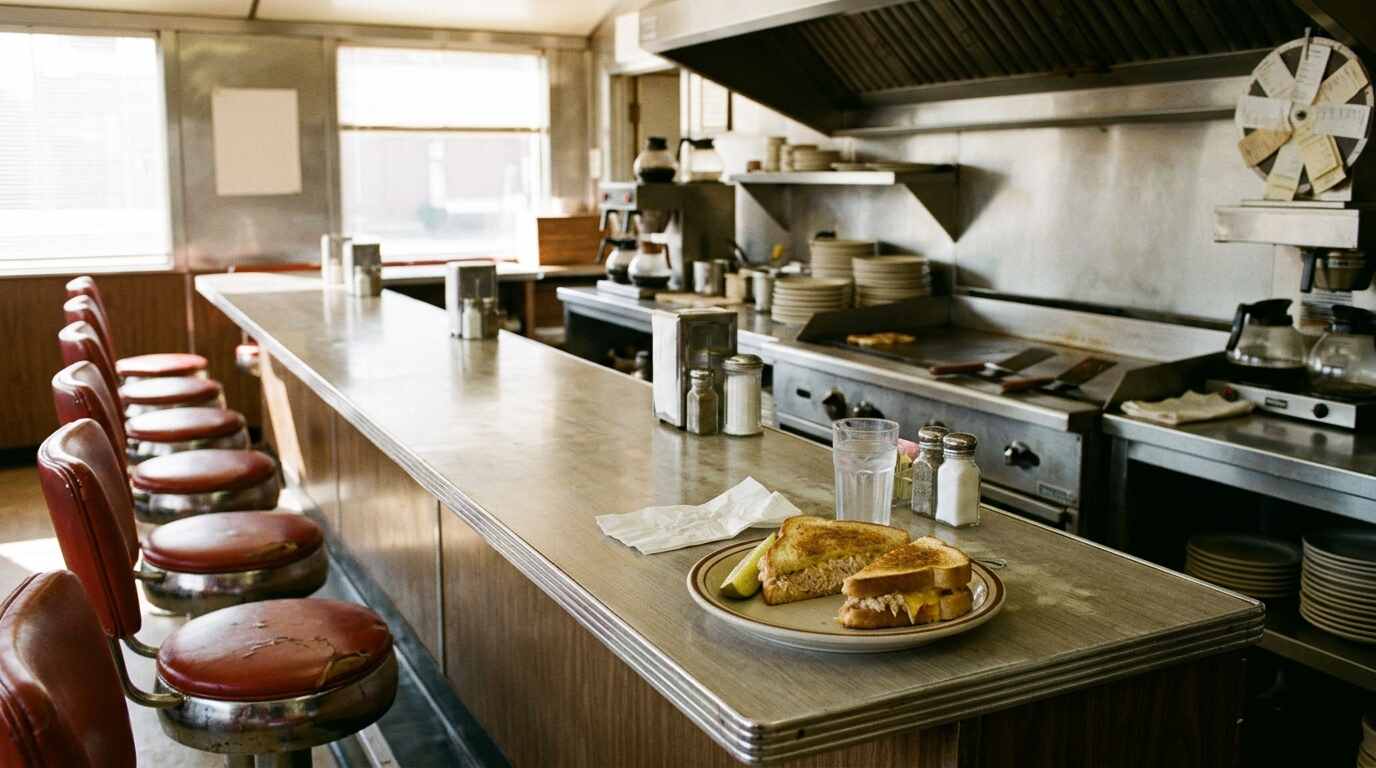
Bread, cheese and where the sandwich is made today
Rye toast is the traditional base in New York. Stein writes that “the classic bread is rye toast” for its caraway flavor and crunch, while newer versions use croissants, focaccia and sesame-heavy Jerusalem bagels. Food Republic names sourdough and rye as bread options. The reasoning behind sturdy slices is covered in best bread for grilled cheese.
Cheese choices split along the same lines. Stein says the traditional cheese is cheddar, with chefs now often choosing Cooper Sharp, fontina or a Swiss and cheddar blend. Food Republic lists sharper cheddar or milder Swiss as the usual pair, alongside American cheese in its classic version. Melting behavior for each is laid out in best cheese for grilled cheese, and the processed slice that diners favor has its own history under American cheese.
New York diners and delis anchor the sandwich’s modern reputation. Gothamist says originalists such as Veselka and B&H keep the classic version alive, while chefs at places including Golden Diner in Chinatown and Don Angie in the West Village have rebuilt it, some with fried capers or swordfish in place of tuna. Tasting Table, citing Bloomberg, describes the melt as one of the most supermarket-driven of sandwiches because it needs no fresh produce or meat, a point that fits its rise alongside the pantry staple it depends on.
Sources:
- Food Republic, “The Original Tuna Melt Was A Happy Mistake”: https://www.foodrepublic.com/1638128/origin-tuna-melt/
- Chowhound, “The Mysterious Origins Of The Tuna Melt”: https://www.chowhound.com/1700203/tuna-melt-origin/
- Tasting Table, “The Accidental Origin Story Of The Tuna Melt”: https://tastingtable.com/893401/the-accidental-origin-story-of-the-tuna-melt
- The Sword and the Sandwich, “Notable Sandwiches #143: Tuna Melt”: https://buttondown.com/theswordandthesandwich/archive/notable-sandwiches-143-tuna-melt/
- Gothamist (Joshua David Stein), “In praise of the tuna melt, the ultimate NYC sandwich”: https://gothamist.com/food/in-praise-of-the-tuna-melt-the-ultimate-nyc-sandwich
- TASTE (Zola Gregory), “You Don’t Need Tuna to Do the Melt”: https://tastecooking.com/you-dont-need-tuna-to-do-the-melt/
- Arnold Zwicky, American Dialect Society mailing list, January 15, 2005: https://listserv.linguistlist.org/pipermail/ads-l/2005-January/044683.html
- Tasting Table, “The Economical Origin Of The Canned Tuna Industry”: https://www.tastingtable.com/972416/the-economical-origin-of-the-canned-tuna-industry
- The Takeout, “When Was The Tuna Salad Sandwich Invented?”: https://thetakeout.com/1812696/when-was-tuna-salad-sandwich-invented
- Tasting Table, “A Tuna Rarebit Is The Retro Melty Sandwich You Should Try”: https://www.tastingtable.com/1382591/tuna-rarebit-forgotten-vintage-sandwich
- Saveur, “Tuna Melt Sandwich”: https://www.saveur.com/article/Recipes/Tuna-Melt
- Budget Bytes, “Classic Tuna Melt”: https://www.budgetbytes.com/tuna-melt/
- Wikipedia, “Tuna melt” (pointer only): https://en.wikipedia.org/wiki/Tuna_melt
- Kenji’s Cooking Show (YouTube), “The Tuna Melt”: https://www.youtube.com/watch?v=CfnlQFTmbsY