In this story
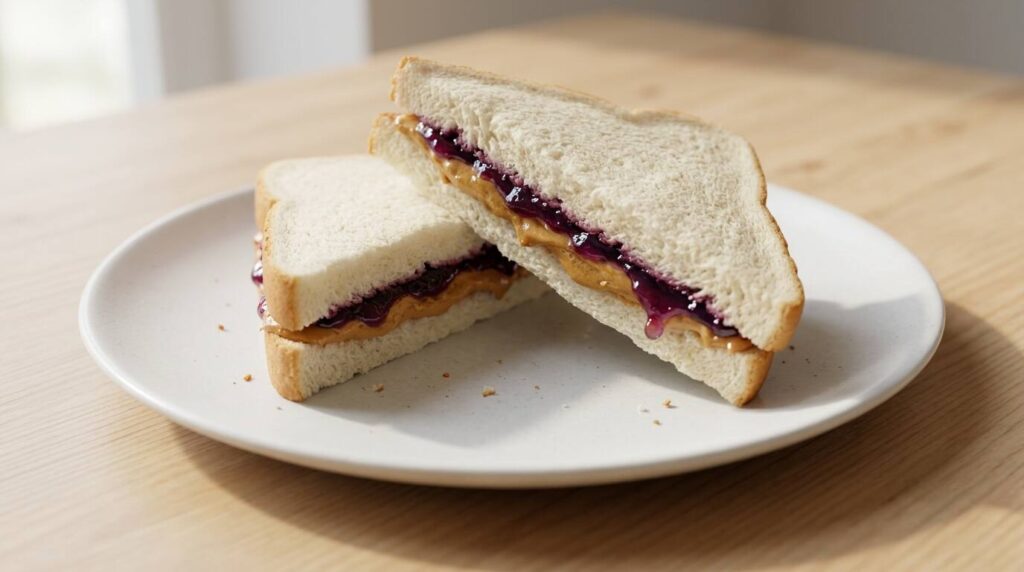
The peanut butter and jelly sandwich has a paper trail that starts in a Boston cooking magazine in 1901, though no source can say who first put the two spreads between bread. The earliest known printed recipe is credited to Julia Davis Chandler, and Mental Floss reports that she called the combination “delicious, and, so far as I know, original.” Everything after that date, from grape jelly to wartime rations to the sealed supermarket version, was built by manufacturers, soldiers and households rather than by one inventor.
Video: Peanut Butter and Jelly Sandwich (1901) on Sandwiches of History | Sandwiches of History
Peanut butter before the sandwich
Peanut butter came first, and its own origin is unsettled. The National Peanut Board credits Marcellus Gilmore Edson of Canada with an 1884 patent for peanut paste made by milling roasted peanuts between heated surfaces. John Harvey Kellogg followed in 1895 with a patented process for making peanut butter from raw peanuts, which he sold as a protein substitute for people who had trouble chewing solid food. A third patent, granted in 1903, covered a peanut-butter-making machine built by Ambrose Straub of St. Louis. The same page notes that the Incas and Aztecs ground roasted peanuts into a paste long before any of them.
History News Network gives Kellogg a strong claim to the invention while conceding that the true inventor is unknown. What’s Cooking America puts Straub’s first paste at 1880, made for elderly patients with poor teeth, and says Bayle Food Products of St. Louis bought the commercial rights in 1903. The National Peanut Board’s separate article on the sandwich dates Straub’s work only to “the 1880s” and has him getting a food company to develop the spread in 1904, the year of the St. Louis World’s Fair. The patents and the fair dates are consistent across sources; the order in which Straub, Kellogg and Edson actually began grinding peanuts is not.
George Washington Carver is often named as the inventor. The National Peanut Board states that he did not invent peanut butter, though he found more than 300 uses for the peanut.
Julia Davis Chandler and the 1901 recipe
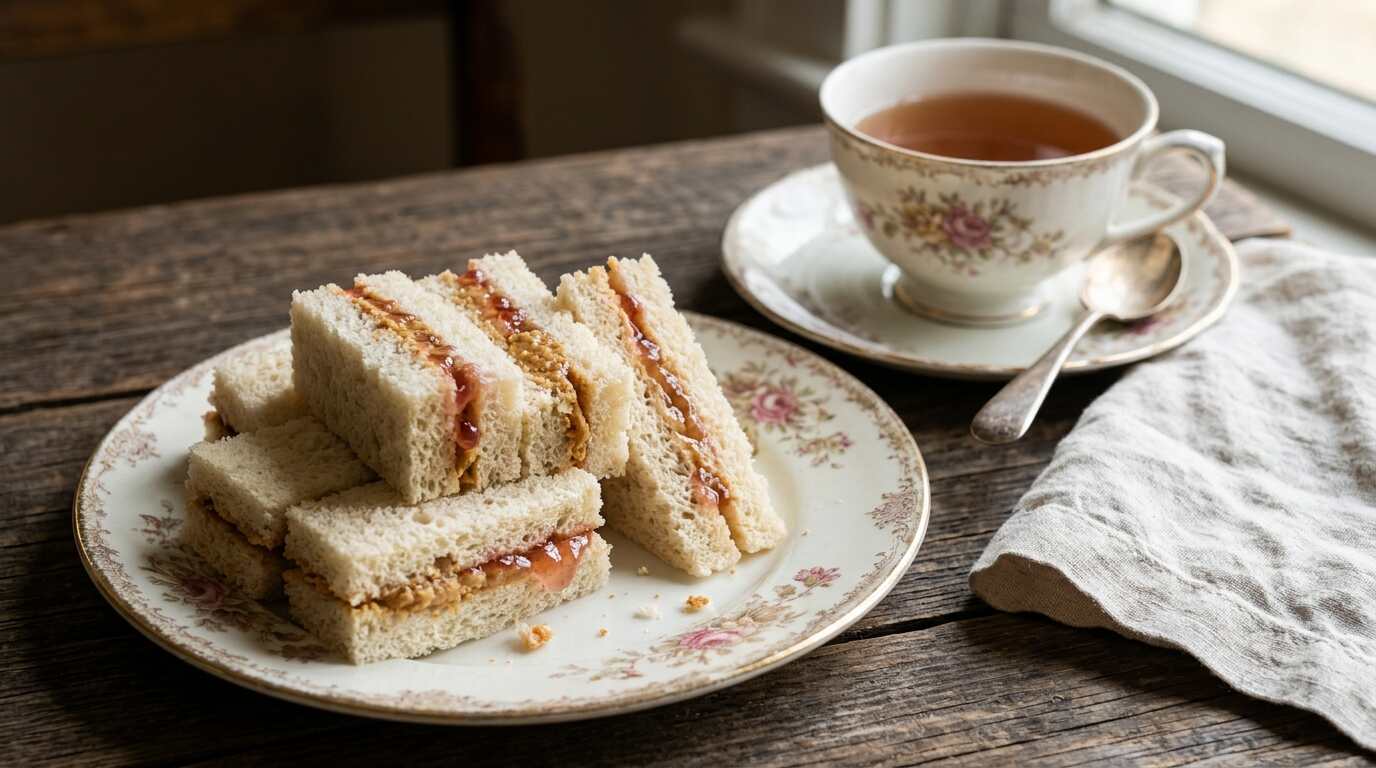
Peanut butter at the turn of the century was not lunchbox food. Food52, drawing on Andrew F. Smith’s history of the peanut, says it was a delicacy in high-end tea rooms, often served with pimento, cheese, celery or meat. New York tea rooms named in What’s Cooking America include Ye Olde English Coffee House, which offered a pimento sandwich, the Vanity Fair Tea-Room, which paired it with watercress, and the Colonia Tea-Room, which served it on toast triangles and soda crackers. Sandwiches of the tea-room kind have a separate history in the post on tea sandwiches.
Chandler’s recipe appeared in the November 1901 issue of the Boston Cooking School Magazine of Culinary Science and Domestic Economics, in an article titled “Peanuts and Pralines.” Food52 quotes her suggestion: “For variety, some day try making little sandwiches, or bread fingers”. The filling was peanut paste with currant or crab-apple jelly. Tasting Table points out that both fruits are known for tart and often bitter flavors, so the first documented PB&J tasted nothing like a grape-jelly lunch.
Her name is spelled differently across sources. Food52 and What’s Cooking America print “Julia David Chandler,” while Mental Floss and the National Peanut Board use “Julia Davis Chandler.”
What the record does and does not show
Chandler is described as the first person to write the sandwich down, a narrower claim than first to make it. The page Hormel Foods carries from Teen Vogue says she wrote it down as a recipe rather than invented it. The U.S. Army’s commissary agency states flatly that no one knows who invented the PB&J.
WBUR’s April 2026 history quotes food historian Susan Benjamin, who traces the sandwich to Boston and says that in the late 1800s peanut butter was promoted as a health food while newspapers printed recipes for jelly sandwiches. Benjamin adds that early cooks tried peanut butter with pickles, cheese, onions and anchovies before jelly took over.
One source contradicts itself on the point. What’s Cooking America cites the Chandler recipe, then says food historians have found no ads or mentions of PB&J sandwiches before the 1940s. The page does not reconcile the two statements. The more defensible reading is that a recipe exists from 1901 and that the sandwich was probably made at home long before it was advertised, though no fetched source documents home use in those decades.
Grape jelly, sliced bread and cheaper peanut butter
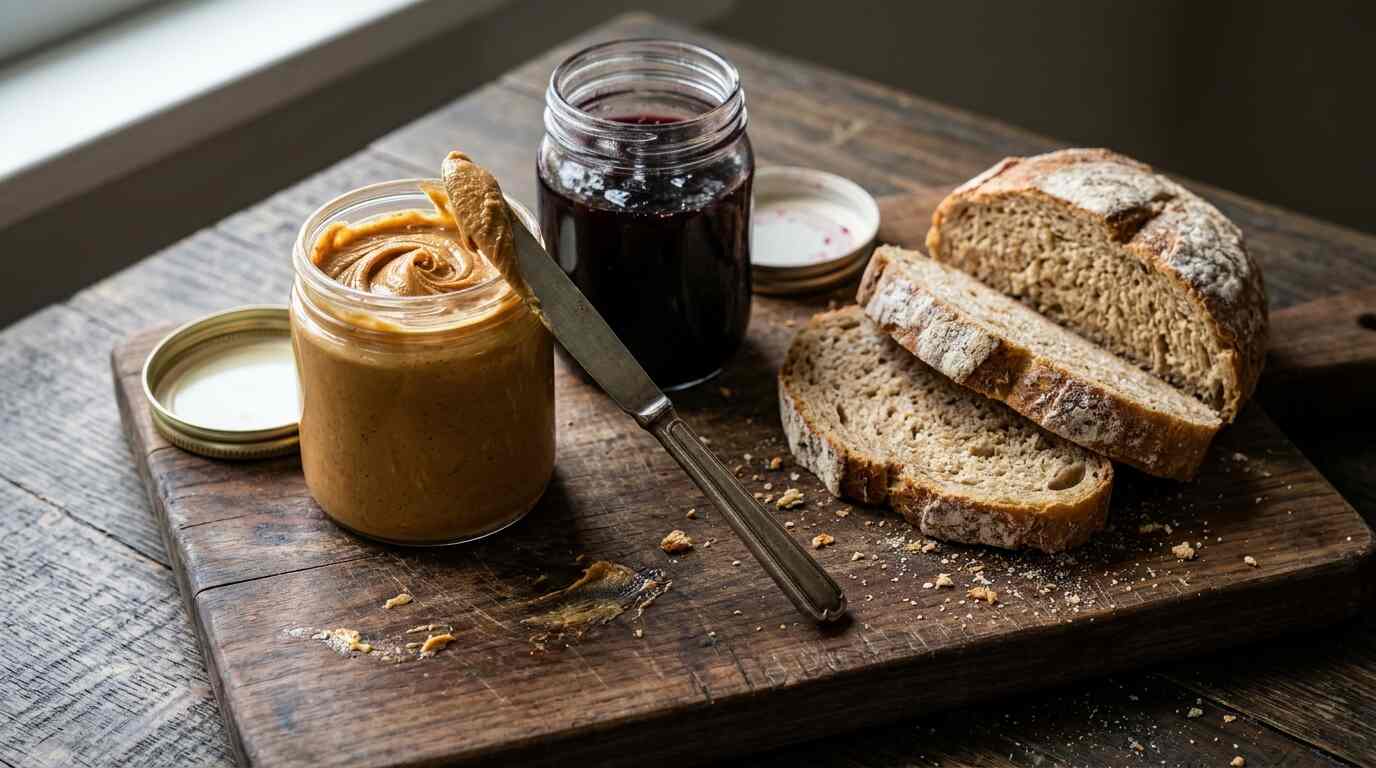
Three industrial changes in the early twentieth century made the sandwich practical. The first was jelly. In 1917, Paul Welch received a patent for pureeing grapes into jelly, and the Concord-grape product he advertised as Grapelade was popular with American troops in World War I. Chowhound’s account of the sandwich also dates the patent to 1917 and notes that soldiers ate it.
The second was a better jar. Early peanut butter separated and clung to the roof of the mouth. Hormel’s page credits chemist Joseph Rosefield with a 1922 change to the oil that slowed spoilage and stopped the sticking, and with naming the product Skippy. History News Network describes the fix as adding hydrogenated vegetable oil, says Skippy competed in the 1920s with Peter Pan and Heinz, and suggests the name came from a popular comic strip. Tasting Table adds that mass production in the 1920s brought prices down and that Skippy marketed heavily to children.
The third was bread that arrived already cut. The National Peanut Board reports that Otto Rohwedder invented a bread slicer in the early 1900s and that bakers at first saw no market for it. Rohwedder’s machine and the loaf it produced are covered in the post on the invention of sliced bread. WBUR notes that Benjamin sees the 1920s as the decade when children began making their own lunches, a job the three-ingredient sandwich suited.
Rations, the Depression and the postwar spread
The sandwich’s military history is told two ways. The Army commissary article says that in World War I many soldiers combined the bread ration, peanut butter and Concord grape jelly to stretch what they were issued, and that soldiers in both world wars, Korea and Vietnam received a 1.5-ounce can of creamy peanut butter, mostly in B-ration kits. The National Peanut Board instead puts the emphasis on World War II, when peanut butter and jelly were on military ration menus and peanut butter was high in protein, shelf-stable and easy to carry. Mental Floss says that “some believe” soldiers began pairing the two to make peanut butter more appetizing. It attributes the idea to unnamed believers, not to a document.
Between the wars, the Depression made the sandwich a household staple. The National Peanut Board describes peanut butter in the 1930s as a satisfying, high-protein and inexpensive meal for families, and WBUR says mothers relied on PB&J to feed theirs. During the war, Mental Floss notes, peanut butter was not rationed the way butter and sugar were. What’s Cooking America puts the 1943 price at 24 cents a jar.
Postwar demand followed. Tasting Table says the sandwich became popular after World War II when returning soldiers, familiar with it from their ration packs, shared it with their families, and the National Peanut Board reports that sales afterward soared. Benjamin told WBUR that the sandwich never carried the guilt homemakers felt about convenience foods in the 1950s, because they assembled it themselves, and that it endured because it “never, ever became expensive”.
What counts as jelly
The label on the jar carries a legal definition. Under the federal standard for fruit jelly, 21 CFR 150.140, the mixture must contain not less than 45 parts by weight of fruit juice ingredients for every 55 parts of sweetener, and the finished jelly must reach at least 65 percent soluble solids. That section covers jelly only. Separate standards for jam, preserves and marmalade were not checked for this post.
The regulation says nothing about flavor. Concord-grape jelly is the one tied to the sandwich by the historical sources above, through the jelly soldiers received, while Smucker’s first grocery-shelf sandwiches paired peanut butter with grape jelly and with strawberry jam. Variants named by Chowhound include almond butter in place of peanut butter and bananas or marshmallow fluff in place of jelly.
The sealed version and its disputed origin
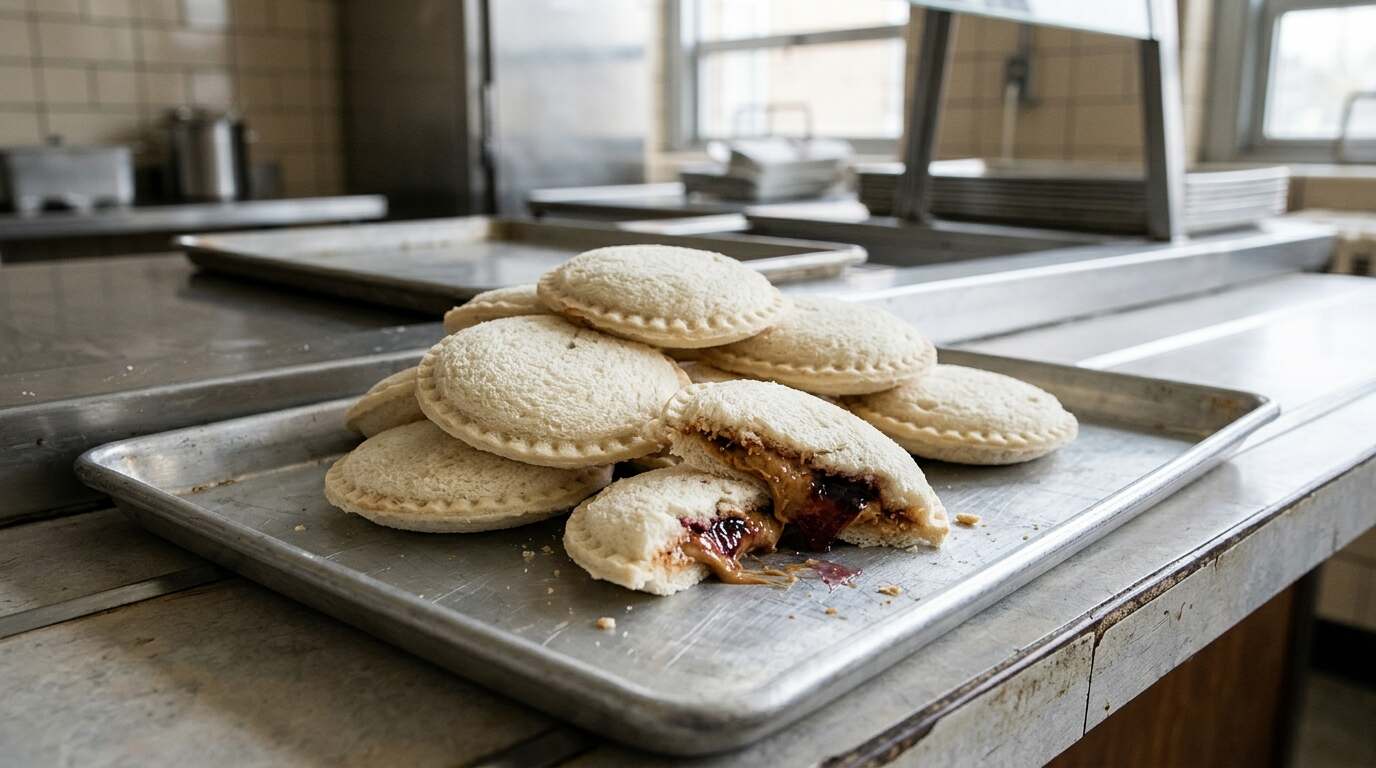
The most recent chapter belongs to the Uncrustables, a sealed, crustless sandwich. Smucker’s own history says the idea began in 1995, when David Geske and Len Kretchman were asked by their children for PB&J with the crusts trimmed off, and that production started in 1996 in Fergus Falls, Minnesota. Mental Floss places the creation in Fargo, North Dakota, and reports that the pair sold the Incredible Uncrustables to schools, reaching about 35,000 a day in eight states by 1998.
The sources agree that Smucker acquired the business in 1998 and secured a patent for a sealed crustless sandwich in 1999. Mental Floss reports a price of $1 million for the company, Menusaver, which Smucker’s page does not mention. The sandwich reached grocery shelves in 2000 as Peanut Butter and Grape Jelly and Peanut Butter and Strawberry Jam. Mental Floss adds that Smucker later sent a cease-and-desist letter to Albie’s Foods, whose owner sued in 2003, and that in 2005 the Federal Circuit ruled against Smucker on two further patents. It does not state how the original suit ended. Smucker expected the brand to reach $1 billion in annual sales in 2024, per the same article.
Consumption figures show how thoroughly the sandwich settled in. The National Peanut Board says the average adult eats a PB&J about three times a month, according to WBUR, and the Army article reports that Americans eat more than six pounds of peanut butter per person each year. A 2002 estimate cited by History News Network held that the average American child eats about 1,500 of them before finishing high school.
Sources:
- Mental Floss, “Peanut Butter and Jelly Sandwich History”: https://www.mentalfloss.com/food/peanut-butter-and-jelly-sandwich-history
- National Peanut Board, “Who Invented Peanut Butter?”: https://nationalpeanutboard.org/news/who-invented-peanut-butter/
- National Peanut Board, “Who Invented the Peanut Butter and Jelly Sandwich?”: https://nationalpeanutboard.org/news/who-invented-the-peanut-butter-and-jelly-sandwich/
- History News Network, “A Brief History Of: Peanut Butter”: https://www.historynewsnetwork.org/article/62153
- What’s Cooking America, “Peanut Butter and Jelly Sandwich History”: https://whatscookingamerica.net/history/sandwiches/peanutbutterjellysandwich.htm
- Food52, “A History of PB&J”: https://food52.com/blog/8853-a-history-of-pb-j
- Tasting Table, “The First Known PB&J Sandwich Used A Little Known Jelly Flavor”: https://www.tastingtable.com/1728146/first-peanut-butter-jelly-sandwich-flavor
- Tasting Table, “Peanut Butter And Jelly Sandwiches Were Once Considered A Fancy Treat”: https://tastingtable.com/1175807/peanut-butter-and-jelly-sandwiches-were-once-considered-a-fancy-treat
- Hormel Foods newsroom, “History of Peanut Butter and Jelly Sandwiches” (text credited to Teen Vogue): https://www.hormelfoods.com/newsroom/news/history-peanut-butter-jelly-sandwiches/
- WBUR, “History of peanut butter and jelly”: https://www.wbur.org/news/2026/04/02/history-peanut-butter-jelly
- U.S. Army (Defense Commissary Agency), “Minute of History: the PB&J and US military”: https://www.army.mil/article/262565/minute_of_history_the_pbj_and_us_military
- Chowhound, “PB&J: The History Of The Peanut Butter And Jelly Sandwich”: https://www.chowhound.com/food-news/206062/the-history-and-evolution-of-the-peanut-butter-and-jelly-sandwich/
- eCFR, 21 CFR 150.140, Fruit jelly: https://www.ecfr.gov/current/title-21/chapter-I/subchapter-B/part-150/subpart-B/section-150.140
- Smucker’s Uncrustables, “History of an All-Around Great Idea”: https://www.smuckersuncrustables.com/articles/brand-history
- Mental Floss, “Uncrustables History”: https://www.mentalfloss.com/food/uncrustables-history
- Sandwiches of History (YouTube), “Peanut Butter and Jelly Sandwich (1901)”: https://www.youtube.com/watch?v=GQzWRbRZB24