
In this story
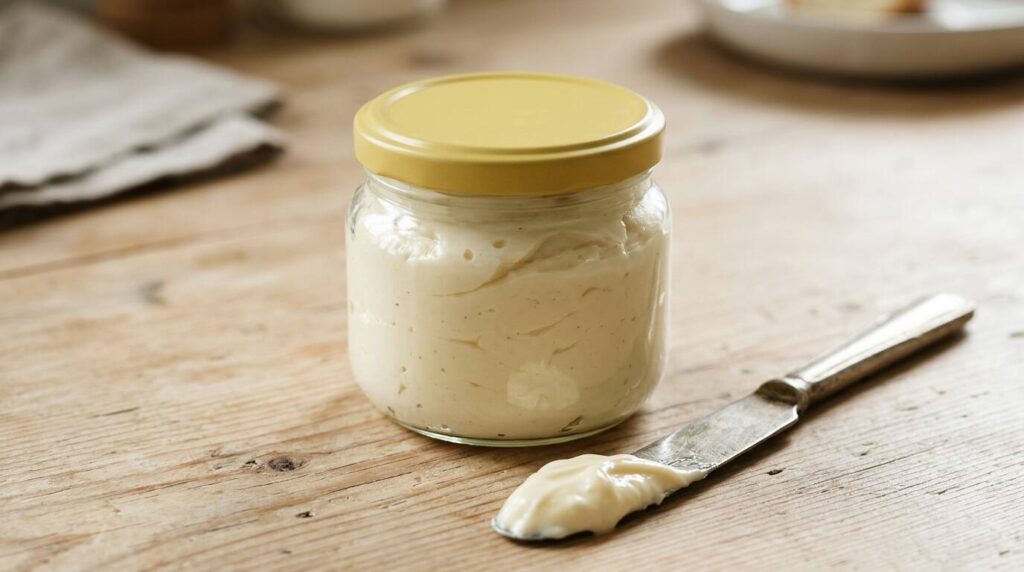
Duke’s Mayonnaise began as a filling for sandwiches. In 1917, Eugenia Duke of Greenville, South Carolina, started selling sandwiches made with her homemade mayonnaise to soldiers training at nearby Camp Sevier, and the company’s own history page puts the sale of the business to the C.F. Sauer Company of Richmond, Virginia, on February 9, 1929. The outline is agreed on almost everywhere. The details are not: sources give different years for her first factory, different buyers for her recipes, and very different sandwich counts.
Video: The Amazing History of Duke’s mayonnaise and Eugenia Duke #shorts | Hot For History
A Greenville kitchen and a wartime customer base
Eugenia Thomas Duke was born in 1881. The company’s history page says she was the tenth of ten children, born in Columbus, Georgia, while a South Carolina legislative resolution calls her the youngest of ten, with a tailor for a father. She married Harry Duke in 1900, and the couple moved to Greenville in 1910 for his job with Southern Power Company, according to the same company page.
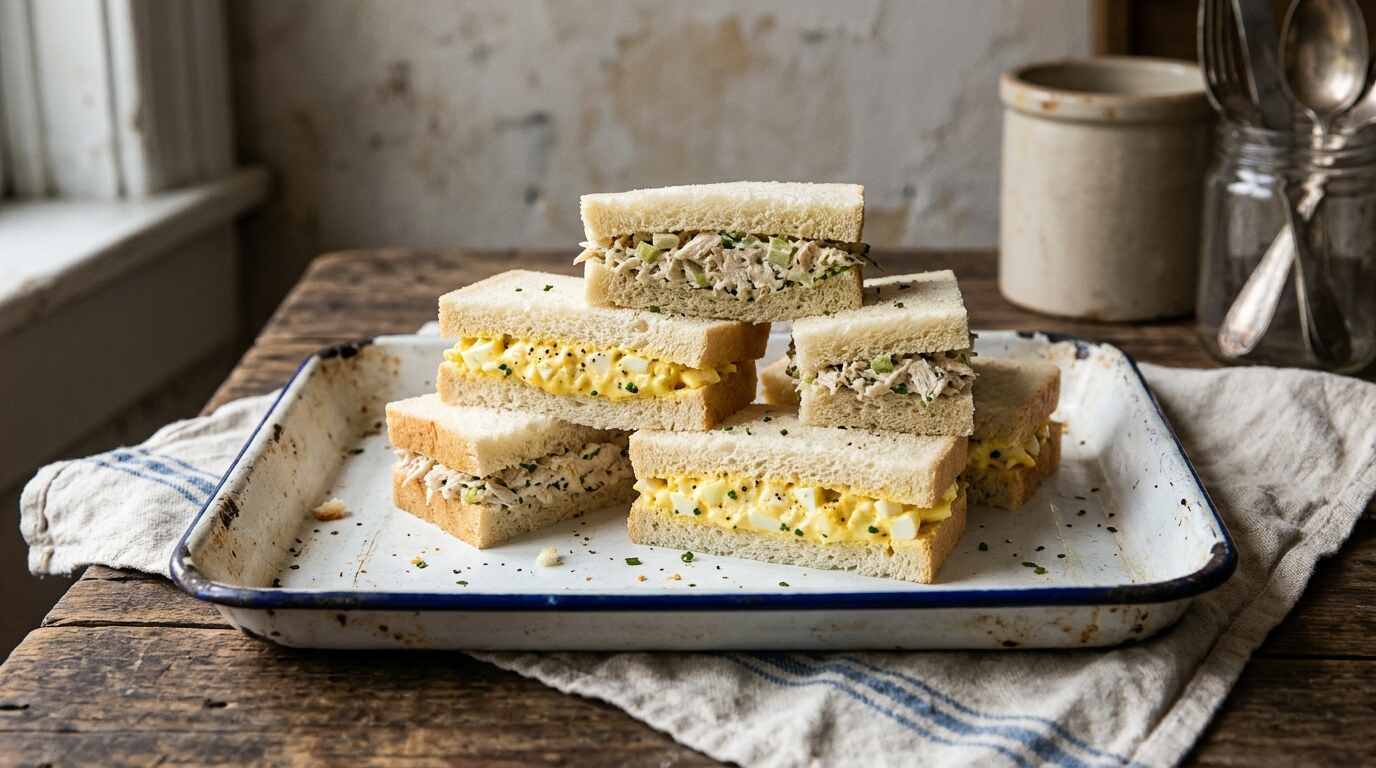
With the country newly at war in 1917, soldiers were training at Camp Sevier near Greenville. The same legislative resolution says the camp operated from 1917 until early 1919. A KCUR and NPR account of her life says Duke and her daughter Martha made egg salad, chicken salad and pimento cheese sandwiches in a rented house and sold them for a dime to infantrymen. The profit was about two cents a sandwich, per the South Carolina resolution. Another version, from the South Carolina Encyclopedia, has her selling to local drugstore soda fountains and corner groceries and baking her own bread and roasting her own meat. StudySC adds that the mother and daughter sold sandwiches at YMCA-run Army canteens.
Soldiers, the South Carolina Encyclopedia reports, asked her to ship jars of the mayonnaise to Georgia and Virginia, and the mayonnaise business expanded quickly from there.
How many sandwiches, and when
The sandwich count depends on the teller. According to the company’s history page, she had sold 11,000 sandwiches by 1918 and bought her first delivery truck. A Duke’s blog post says that by 1919 she was selling over 10,000 sandwiches a day. Edible Upcountry, an essay by an unnamed Upstate resident, places a 10,000-sandwich day at Camp Sevier in 1918. The KCUR account calls it local lore and dates it to spring 1919.
Eleven thousand in a year and ten thousand in a day describe different scales of business. Upstate Business Journal records that her great-granddaughter, Laura McGinnis, doubts the daily figure, saying that unless she “had an army of people working for her” it could not be done. The same article calls it a popular legend.
The documents fetched for this post do not settle the matter. The claim that a woman running a home kitchen produced ten thousand sandwiches in one day rests on lore, and the total of 11,000 by 1918 rests on the company’s own history page.
From sandwiches to a jar on the shelf
Both the company page and the legislative resolution describe a salesman who suggested bottling the mayonnaise on its own. The company page names him C.B. Boyd and dates the idea to 1923, after which Duke stopped the sandwich business to focus on the mayonnaise. KCUR calls him C.D. Boyd, her top salesman, and says he told her the mayonnaise was what made the sandwiches sell.
The first factory is dated three ways. The company history says she moved production from her property into her first official plant in 1926. Upstate Business Journal says that in 1923 she opened a bottling operation in an old coach factory building beside the Reedy River in downtown Greenville. Edible Upcountry puts the opening in 1925, in the empty Markley Carriage paint shop on the same river. The South Carolina Encyclopedia gives 1923 for a plant in Greenville.
The sandwich side of the business has its own set of dates. The South Carolina Encyclopedia says she sold the sandwich operation to her bookkeeper, Alan Hart of Mauldin, in 1920. Upstate Business Journal says Hart received her recipes and the Duke name in 1929 and ran the Duke Sandwich Company from 1929 to 1964. KCUR gives the bookkeeper’s name as J. Allen Hart. Duke Sandwich Company still operates in Greenville, according to the resolution.
The 1929 sale to C.F. Sauer
The buyer of the mayonnaise was the C.F. Sauer Company. The Library of Virginia’s Uncommonwealth blog describes Sauer as a Richmond firm founded in 1887 that already made extracts and spices. Virginia Business adds that its founder, Conrad Frederick Sauer, was a 21-year-old pharmacist when he began selling flavoring extracts in 1887.
The legislative resolution says that in 1929 Eugenia was struggling to keep up with demand for her mayonnaise, and that after the sale she worked as Sauer’s mayonnaise spokeswoman. The company page and the Library of Virginia agree that she stayed on, as chief salesperson in one telling and as a salesperson in the other. The Library of Virginia reports that Sauer then increased production and advertising, often promoting its extracts and spices alongside the mayonnaise, and that only one of the advertisements it found mentioned Mrs. Duke. Sales representatives demonstrated Duke’s Mayonnaise, Relish and Russian Dressing in Virginia communities during the 1920s, and a 1931 contest offered cash prizes for the best answers to “Why I Prefer Duke’s Mayonnaise.”
Her later years are told with a discrepancy of two decades. The company page says the Dukes moved to California in 1950 to be near their daughter Martha, where Eugenia started the Duchess Sandwich Company, and that she died in 1968 at age 90. KCUR says the same about the Duchess Sandwich Company and the 1950 move. Edible Upcountry has the move to the San Francisco Bay area happening in 1929, and the South Carolina Encyclopedia mentions a California catering business after the sale.
Why the recipe has no sugar
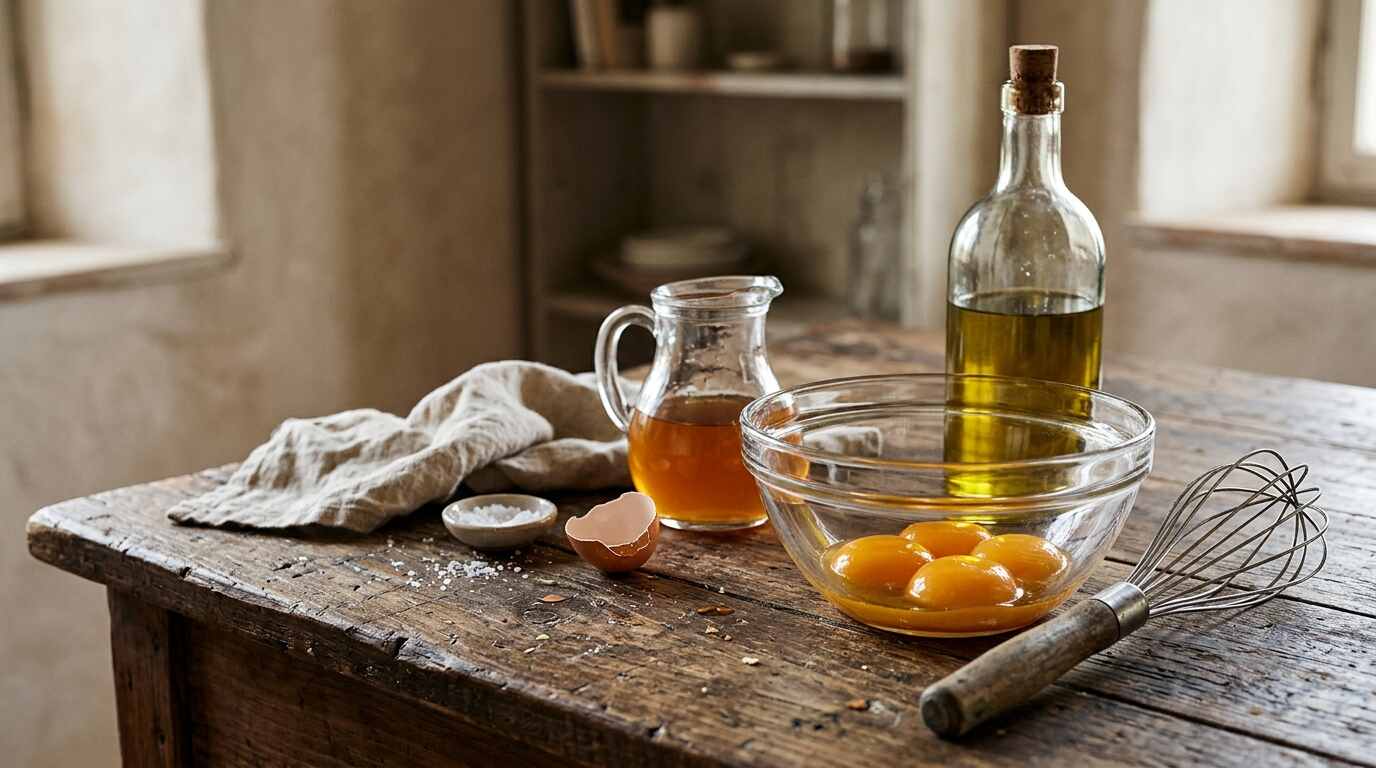
The formula is the most repeated fact about the brand. Duke’s contains no sugar, and the company’s brand director, Rebecca Lupesco, told WHRO that most other mayonnaises add sugar to their formula while Duke’s does not. The same report lists eggs, soybean oil, water, spices and apple cider vinegar as the ingredients and says the yolks are what make the texture thick and creamy. The South Carolina Encyclopedia adds that the original used cider vinegar for a “pleasing tartness” and left out the whipped egg-white filler some makers used.
The reason for the missing sugar is given only once in the sources fetched. Upstate Business Journal says Eugenia Duke made the choice because sugar was scarce during the war years. Edible Upcountry says the original notes called for lots of egg yolks, no sugar of any kind, and proportions kept secret to this day, though that essay is narration rather than a documented record.
A sugar-free mayonnaise is not a departure from the federal definition. Under 21 CFR 169.140, mayonnaise must contain not less than 65 percent vegetable oil by weight, along with vinegar or lemon or lime juice and an egg-yolk-containing ingredient. Sugar and other nutritive carbohydrate sweeteners appear only in the list of optional ingredients. A comparison of mayonnaise with salad dressing products is in the post on mayonnaise and Miracle Whip.
The KCUR account quotes chef John Fleer of Asheville, North Carolina, describing the flavor as having “the right balance of richness and acidity”.
Production and the Duke’s culture today
Duke’s is made near Greenville, in Mauldin, South Carolina, according to the Library of Virginia and the South Carolina Encyclopedia. WHRO reports that the plant fills 365,000 jars a day and uses a cold process, with the quality and food safety director, Jason Chesney, explaining that “colder oil breaks into microscopic particles easier than a warm oil.” Upstate Business Journal gives a different measure, 2.3 million cases a month. The two figures are in different units and are not compared here.
The company that owns the brand is itself recent history. Virginia Business reports that the family-owned Sauer company was bought in 2019 by Falfurrias Capital, a private equity firm in Charlotte that renamed it Sauer Brands, and the company history page gives the same year.
WHRO also reports that Lupesco calls Duke’s the top mayonnaise in Virginia and the Carolinas, and that the product line has grown to include light, olive oil, lime, bacon-and-tomato and spicy habanero mayonnaises along with mustards, barbecue and seafood sauces and a tartar sauce.
Fans have turned the product into a regional identity. WHRO quotes the company’s digital content manager, Sarah DiPeppe, saying that fans post slogans online, and one of them is “Duke’s Before Dishonor.” The company sponsors the Duke’s Mayo Bowl, a college football game in Charlotte, where the winning coach is doused with mayonnaise in place of sports drink. The Library of Virginia adds that Hot Tomato Summer, a promotion pairing ripe tomatoes with the mayonnaise, began in Richmond in 2021 and spread to Greenville, Charleston, Charlotte, Raleigh and Knoxville, with Virginia Beach joining in 2025.
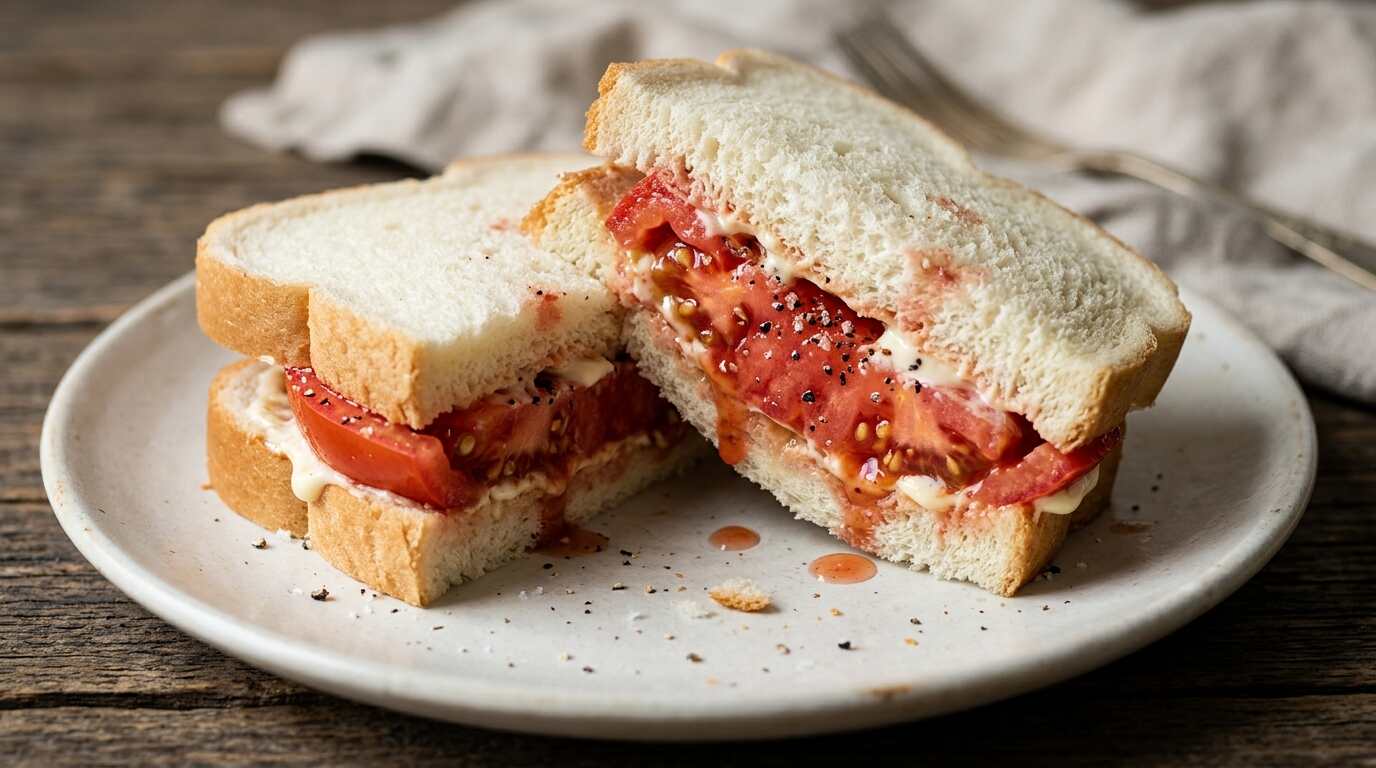
One sandwich keeps coming up in those stories. A fan letter described by WHRO told of a couple who shared tomato sandwiches throughout their marriage. The sandwiches Eugenia Duke sold in 1917 were egg salad, chicken salad and pimento cheese, per KCUR, and the company’s official site, dukesmayo.com, dates the start of the business to those sales.
Sources:
- Duke’s Mayo, “Duke’s History”: https://dukesmayo.com/pages/history
- Duke’s Mayo blog, “Why Southerners Have an Obsession With Duke’s Mayonnaise”: https://dukesmayo.com/blogs/news/why-southerners-have-an-obsession-with-duke-s-mayonnaise
- South Carolina General Assembly, resolution honoring Duke’s Mayonnaise (2017): https://www.scstatehouse.gov/sess122_2017-2018/prever/4147_20170419.htm
- South Carolina Encyclopedia, “Duke’s Mayonnaise”: https://www.scencyclopedia.org/sce/?p=6511
- StudySC, “Eugenia Duke”: https://www.studysc.org/sc-people/eugenia-duke
- KCUR / NPR, “Worth The Whisk: How The Woman Behind Duke’s Mayo Became A Tycoon”: https://www.kcur.org/2018-06-07/worth-the-whisk-how-the-woman-behind-dukes-mayo-became-a-tycoon
- Upstate Business Journal, “The Duke’s Century”: https://upstatebusinessjournal.com/economic-development/the-dukes-century/
- Edible Upcountry, “Ode To: Mayonnaise”: https://edibleupcountry.ediblecommunities.com/eat/ode-mayonnaise
- Library of Virginia, Uncommonwealth, “Of Maters and Mayo”: https://uncommonwealth.lva.virginia.gov/blog/2025/07/25/of-maters-and-mayo/
- Virginia Business, Sauer Brands and Duke’s history: https://virginiabusiness.com/sauer-brands-dukes-mayo-name-change/
- WHRO Public Media, “Duke’s Mayonnaise: a food that unites Virginia”: https://www.whro.org/arts-culture/2024-12-23/dukes-mayonnaise-a-food-that-unites-virginia-and-inspires-its-fans
- eCFR, 21 CFR 169.140, Mayonnaise: https://www.ecfr.gov/current/title-21/chapter-I/subchapter-B/part-169/subpart-B/section-169.140
- Hot For History (YouTube), “The Amazing History of Duke’s mayonnaise and Eugenia Duke #shorts”: https://www.youtube.com/watch?v=hYiGdxxj6A0