In this story
Remoulade is a cold sauce built on mayonnaise or oil, with herbs, capers, pickles and spices added in combinations that change from country to country. Its roots are French, and Masterclass notes that it is usually served with seafood, cold meats and fried foods. Two descendants have grown far from the original: the red, paprika-colored Creole sauce of New Orleans, and the yellow, pickle-flecked condiment spread on Danish hot dogs. Where the French sauce ends and these begin is partly a matter of record and partly a matter of dispute.
Video: Shrimp Remoulade from Chef Warren LeRuth | GreatChefs
The French sauce
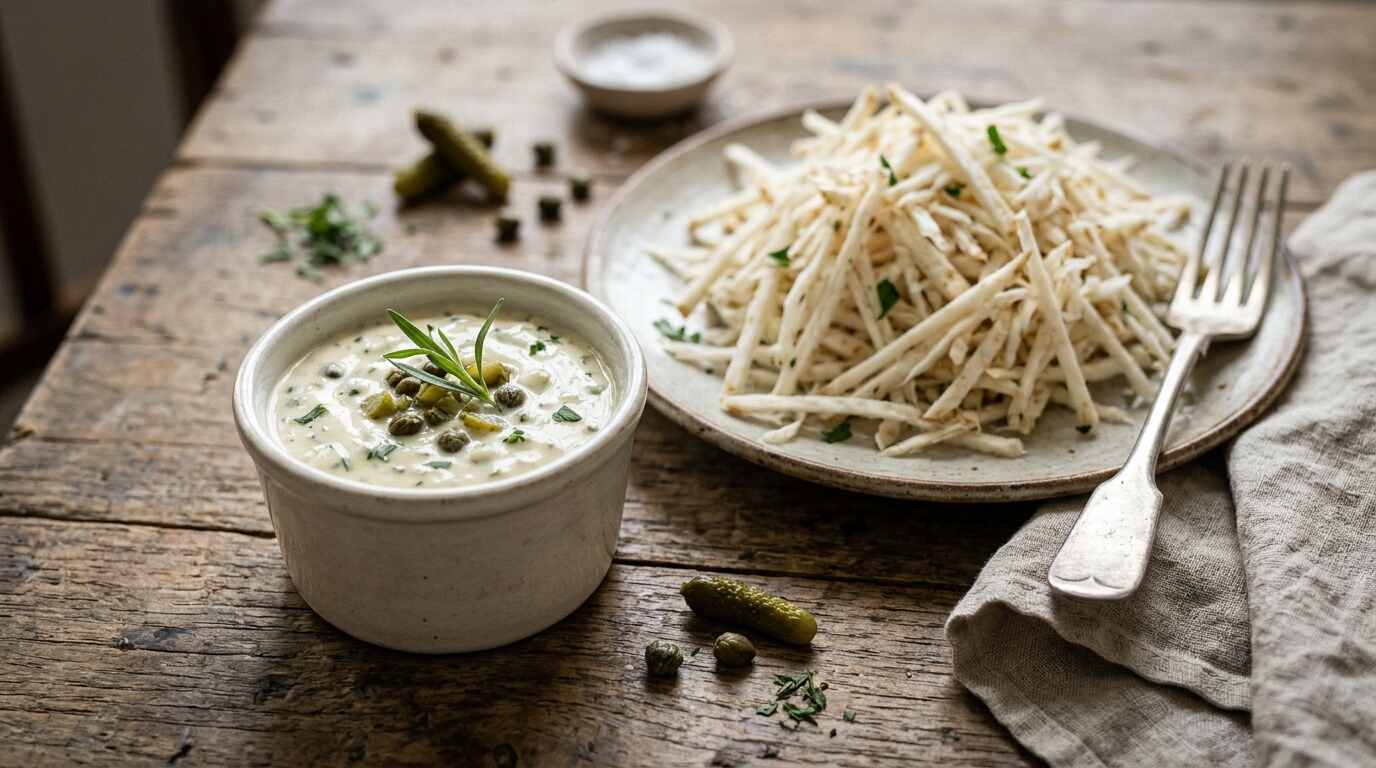
Masterclass describes the French version as mayonnaise with herbs such as parsley, chives, chervil and tarragon, plus capers and diced cornichons, with anchovy essence or paste optional. Saveur cites the 1938 Larousse Gastronomique for a white sauce made by “adding mustard, gherkins, capers, and chopped herbs to mayonnaise”, sometimes with anchovies, and says it was and still is used in France as a dressing for julienned celery root. Wikipedia, used here only as a pointer, attributes a similar recipe to Prosper Montagné’s 1961 Larousse Gastronomique and gives an Occitan form of the word, “salsa remolada.”
Tasting Table’s list of traditional French ingredients differs slightly: mayonnaise with mustard, capers, tarragon, chervil and shallots, and some modern French-style versions add both mustard and horseradish. The lists agree on the mayonnaise base and on capers and fresh herbs.
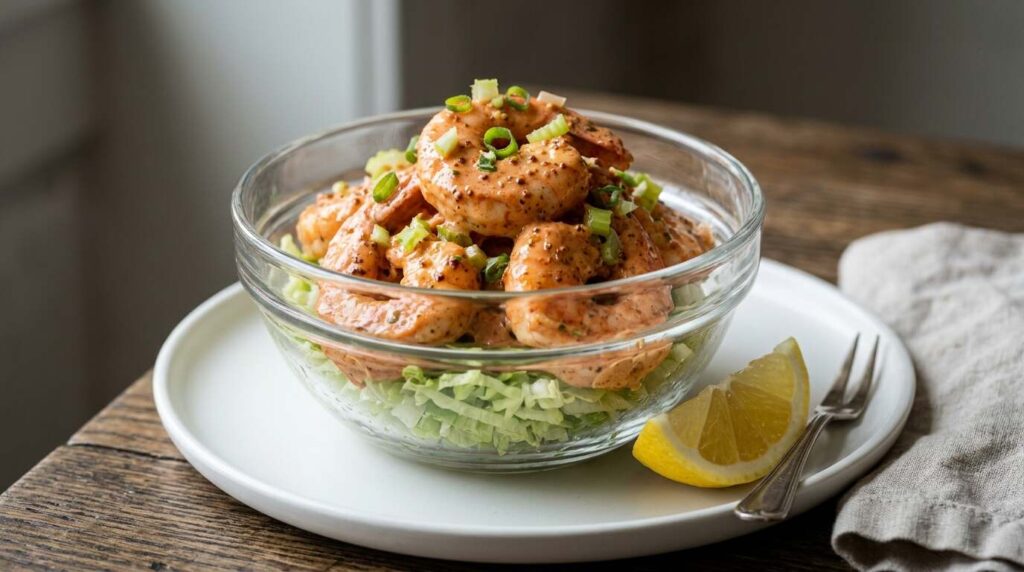
The Daily Meal’s comparison keeps the French sauce simple: a mayonnaise base, capers, dried cornichons, herbs, and sometimes a little anchovy for savor. Its Louisiana counterpart adds salt, paprika, cayenne, Worcestershire sauce and chili powder, along with lemon juice, Creole or stone-ground mustard, scallions, hot sauce, celery and parsley, and ends up darker with a pinkish hue.
Where the name comes from
Sources split on the word itself. Tasting Table says the sauce originated in Picardy in northern France around the 1600s and that the name comes from the French “rémolat,” meaning horseradish, which may once have been part of the base. Garden & Gun also traces it to seventeenth-century France and to the northern French dialect word for horseradish, but adds that the simplest early form contained no horseradish and mixed mayonnaise with herbs, capers and cornichons.
Saveur offers another derivation. It says the word may come from “rémola,” meaning black radish, possibly because the sauce has a radish-like kick, and it adds that other theories exist. Horseradish and black radish are different roots, and none of the pages reached for this post cites an early French text for either explanation. The etymology is therefore reported as unsettled.
Mayonnaise in a hot climate
Tasting Table says the sauce reached Louisiana with French settlers in the early 1700s. Garden & Gun gives a practical reason for what happened next: the French mayonnaise base struggled in the heat of New Orleans. By the early 1900s, according to both Garden & Gun and Tasting Table, an oil-based version had emerged, built on oil and vinegar with Creole mustard and paprika, which gave it a reddish color.
Tasting Table describes the oil-based New Orleans sauce as using finely ground hard-boiled egg yolks along with mustard, vinegar, horseradish, lemon juice, garlic and Worcestershire sauce. Both bases, mayonnaise and oil, can carry red ingredients such as ketchup, Tabasco, cayenne or paprika. The article calls the resulting salmon color unique to New Orleans.
Diners there divide into camps. Garden & Gun says people in the city argue over “red” and “white” remoulade, and that many red versions include finely chopped celery and green onion, sometimes with boiled egg for texture.
Arnaud’s and the date question
The most specific account of when the sauce turned red concerns one restaurant. Saveur cites the 2009 University Press of Mississippi book New Orleans Cuisine: Fourteen Signature Dishes and Their Histories for the claim that the shift from white French sauce to red New Orleans sauce occurred around 1920, when Arnaud’s opened. In that telling, the chefs there built a remoulade base into a dish called shrimp Arnaud and, by adding celery, paprika, horseradish and Creole mustard, produced the modern Creole remoulade.
Arnaud’s own site gives a slightly different date for the opening. The restaurant’s history page says it was founded in 1918 by Arnaud Cazenave, a French wine salesman, and is located at 813 Rue Bienville in the French Quarter. That page does not mention remoulade or shrimp Arnaud, so the restaurant’s role in the sauce rests on the book as relayed by Saveur and on Tasting Table’s statement that Arnaud’s opened in 1918 and its shrimp remoulade became famous. The two dates, 1918 and about 1920, are close but are not the same, and the sources do not reconcile them.
Tasting Table adds that a Bourbon Street restaurant named Remoulade, a sister to Arnaud’s, takes its name from the sauce.
One sauce, many house recipes
Saveur, relaying a chart from the Tulane University Culinary History Project, lists how individual kitchens differ. Antoine’s uses ketchup seasoned with horseradish. The Gumbo Shop adds pimentos. Paul Prudhomme adds Worcestershire sauce. Galatoire’s white remoulade gets its heat from Creole mustard, horseradish and cayenne pepper. Chef Warren Leruth of the celebrated southern Louisiana restaurant LeRuth’s made a red, paprika-laced version, which Saveur says is shown in a video.
Tujague’s, at 429 Decatur Street in the French Quarter, sits firmly in the red camp. The restaurant’s own history page says it opened in 1856 under Guillaume and Marie Abadie Tujague, who had sailed from Bordeaux, France, and that its first location was 811 Decatur Street. It calls the restaurant the second-oldest in New Orleans, and it calls “spicy shrimp remoulade” a signature dish that predates the chicken bonne femme special the restaurant later became known for. Garden & Gun says Tujague’s has served cold shrimp in remoulade over shredded lettuce since its five-course menu began in 1856, and owner Mark Latter said that “The original recipe was more like a cocktail sauce.” Cooks at some point switched to red, and the current recipe has been in use for almost 45 years. It combines olive oil, Zatarain’s Creole mustard and lemon juice with chopped celery, parsley, and white and green onion, and it is served over lettuce with chopped hard-boiled egg.
Galatoire’s, at 209 Bourbon Street, counts remoulade among the sauces its kitchen is known for. The restaurant’s official history says Jean Galatoire, who came from the French village of Pardies, founded it in 1905, that his descendants have run it for five generations, and that its menu is rooted in French Creole cooking and Gulf seafood. The page lists the sauce alongside meunière, béarnaise and hollandaise. A Tulane-hosted history page on Vianolavie includes shrimp remoulade among the traditional Creole dishes Galatoire’s became a prime source for in the 1950s and 1960s, and says the restaurant reportedly buys about 600 pounds of shrimp a week. That page gives no ingredients or method for the sauce, and notes that many of the kitchen’s recipes come from memory or handwritten accounts, with chefs adding their own touches over time.
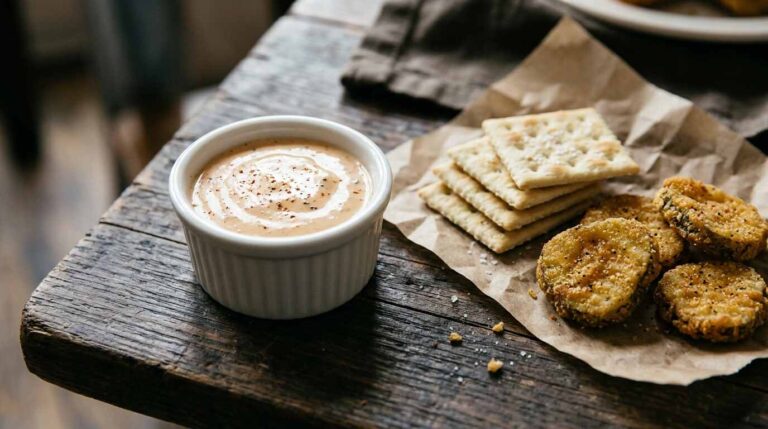
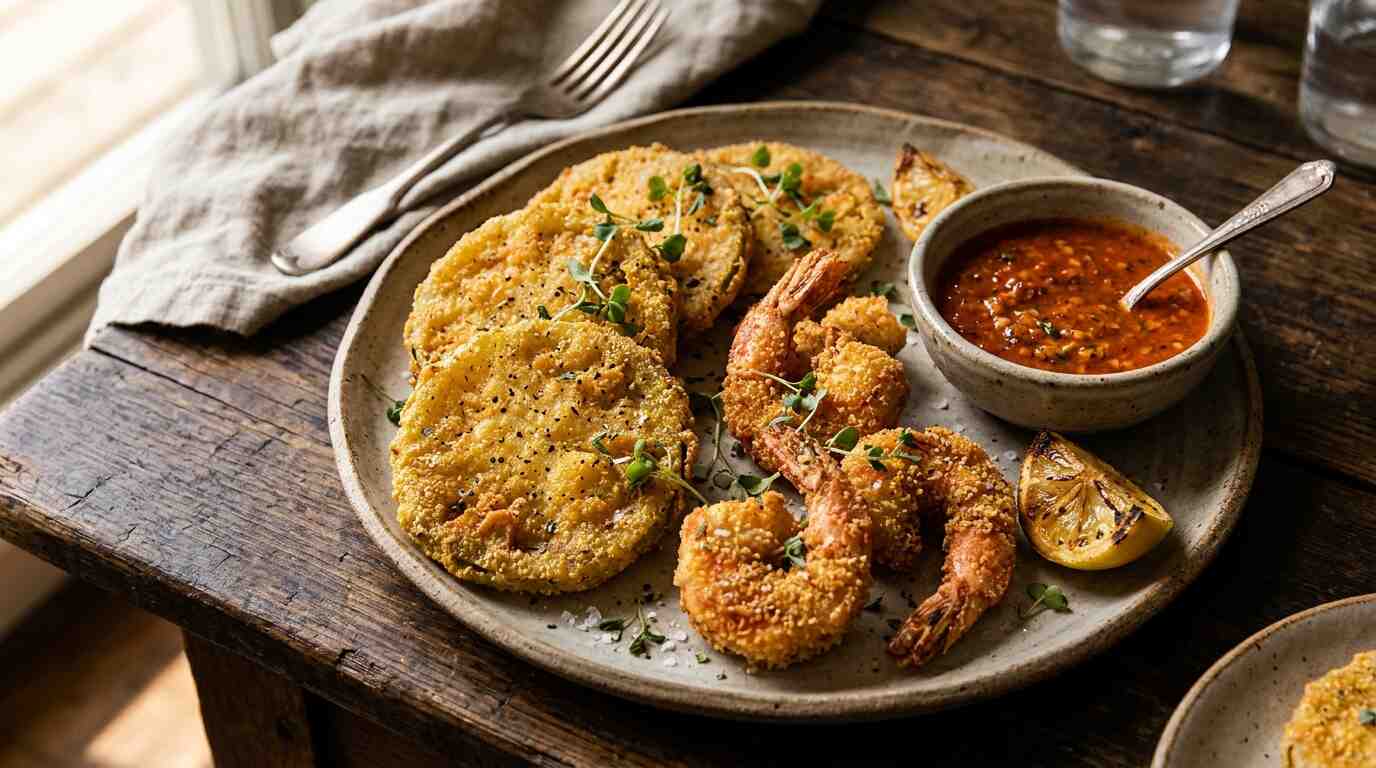
Pairings in New Orleans go beyond shrimp. Tasting Table lists po’boys, crab cakes, crawfish, fried shrimp, catfish bites and fried green tomatoes, while Masterclass adds fried dill pickles and fried fish. The cool, tangy sauce works against hot, crisp coatings.
The Danish version
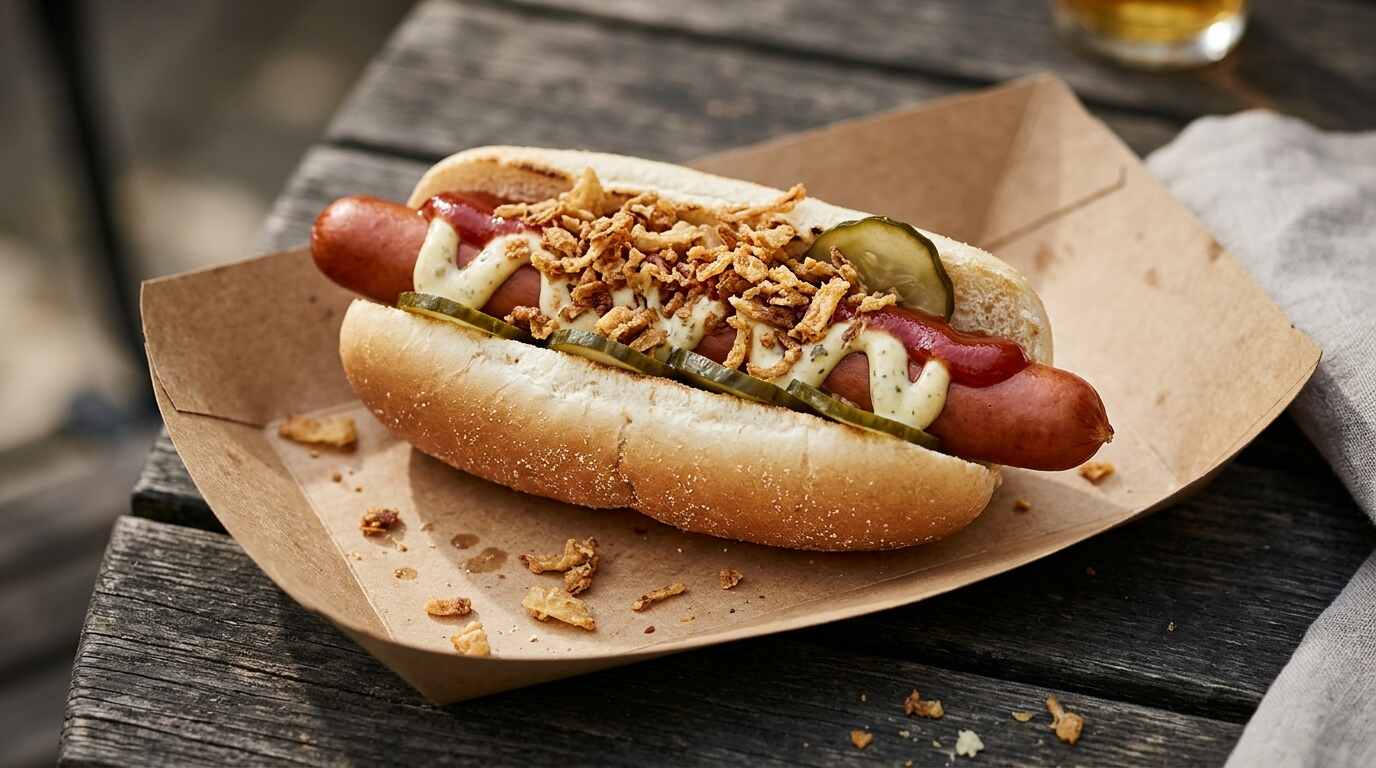
In Denmark the word names a different condiment. Masterclass says Danish remoulade omits garlic and includes finely chopped cauliflower, cabbage and cucumber pickles, with turmeric giving it a yellow color. It is served with french fries and ketchup on hot dogs and on roast beef sandwiches.
A UK-based recipe site, Hygge Style, calls it a “thick, yellow and utterly ubiquitous Danish condiment” and lists mayonnaise, chopped sweet gherkin, capers, white cabbage, Dijon mustard, sugar and turmeric, served with breaded fried fish, hot dogs, burgers and open-faced sandwiches. A Danish-food site describes remoulade as a standard topping for the Danish sausage, with the classic order being a “ristet pølse with remoulade, ketchup and onions”. Its home version mixes mayonnaise with piccalilli, curry powder and mustard. Neither page gives a history for the Danish sauce, and the route from France to Denmark was not documented in the sources reached. The same pointer article on Wikipedia mentions a related Icelandic condiment, remúlaði, served with fried fish and hot dogs alongside mustard, ketchup and raw and fried onions, though it says nothing about how the two names are connected.
Remoulade, tartar sauce and aioli
Tartar sauce is the closest cousin. Tasting Table says tartar is sweeter because of its sweeter pickles, while remoulade is more savory, with anchovies and plenty of herbs. Masterclass says tartar sauce is often described as a type of remoulade, with mustard replacing the anchovy, and that tartar is simpler: mayonnaise, chopped capers and sweeter pickles such as cornichons.
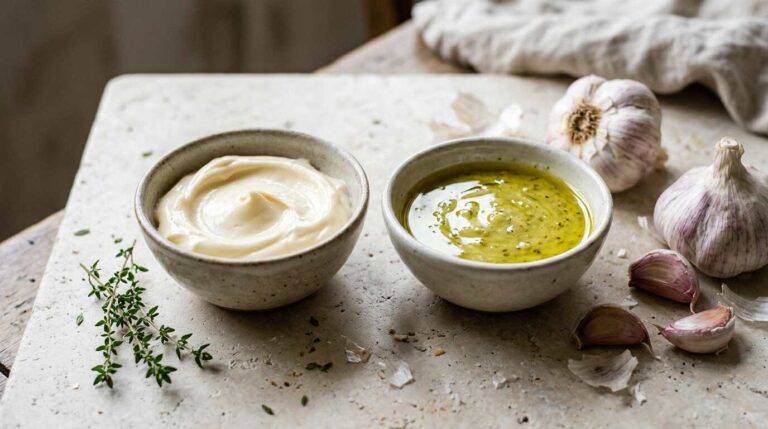
Aioli sits further away. Masterclass defines it as mayonnaise mixed with crushed garlic, salt and black pepper, whereas remoulade is assembled from many components, including capers, pickles, spices, hot sauces, vinegars and herbs.
Sources:
- Masterclass, “Learn About Remoulade”: https://www.masterclass.com/articles/learn-about-remoulade-easy-remoulade-recipe-and-tips
- Saveur, “Special Sauce”: https://www.saveur.com/article/travels/special-sauce
- Tasting Table, “How Remoulade Sauce Became A New Orleans Classic”: https://tastingtable.com/1630251/remoulade-sauce-new-orleans-history
- Garden & Gun, “Anatomy of a Classic”: https://gardenandgun.com/?p=231855
- Tujague’s Restaurant, history page: https://tujaguesrestaurant.com/history/
- Galatoire’s, history page: https://galatoires.com/history
- Vianolavie (Tulane), Galatoire’s history and shrimp remoulade: https://vianolavie.org/?p=623
- The Daily Meal, “What’s The Difference Between French And Louisianan Remoulade Sauce?”: https://www.thedailymeal.com/1464859/louisiana-french-remoulade-sauce
- Arnaud’s Restaurant, “Our Legacy”: https://www.arnaudsrestaurant.com/about/
- Hygge Style, “How to make Danish remoulade”: https://www.hyggestyle.co.uk/how-to-make-danish-remoulade/
- Table Journey, “Pølse”: https://tablejourney.com/dish/polse/
- Wikipedia, “Remoulade” (pointer only): https://en.wikipedia.org/wiki/Remoulade
- GreatChefs (YouTube), “Shrimp Remoulade from Chef Warren LeRuth”: https://www.youtube.com/watch?v=UNEMy53Oq6Q