In this story
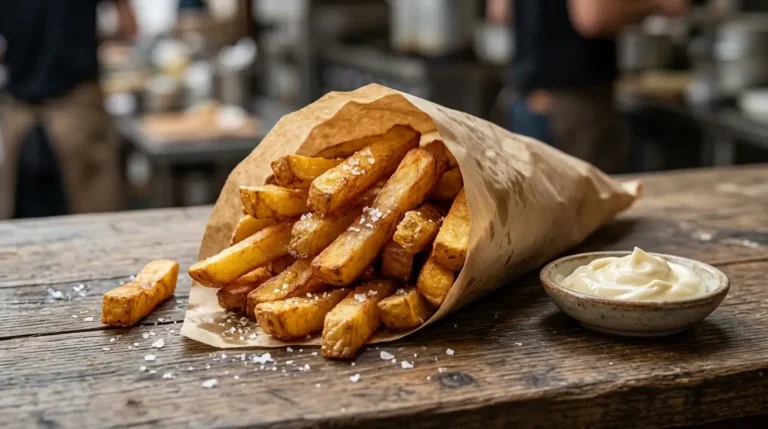
Hash browns are potatoes cut small and fried in fat until a brown crust forms. On a diner flat-top that usually means a thin layer of shredded potato, pressed down, left alone and flipped once. The dish is older than the diner, older than the shredder and older than its own short name. It started as “hashed brown potatoes,” a way of using up cold boiled potatoes, and turned up in cooking classes and New York lunch orders in the 1880s. Within a few decades lunch-counter cooks had clipped the name, and the dish settled onto breakfast plates across the country.
Video: How to Make Hash Browns, from the Food Wishes YouTube channel
Hashed brown potatoes
A cooking-class dish of the 1880s
The earliest citations point to the food author and cooking teacher Maria Parloa. The word researcher Barry Popik, collecting newspaper evidence, finds “hashed brown potatoes” in a February 3, 1887 report in the Brooklyn Daily Times titled “Miss Parloa’s Cooking Class”. A year later the Hartford Courant ran “HASHED BROWN POTATOES” as a headline in its coverage of another Parloa lesson.
The dish was not shredded potato. Recipes from the period start with cooked potatoes chopped fine. Popik quotes Sarah Tyson Rorer’s 1898 book Left Overs, which begins: “Chop two cold boiled potatoes rather fine.” Fannie Farmer’s 1896 Boston Cooking-School Cook Book starts its version by rendering cubes of fat salt pork. A dictionary definition that Popik reproduces describes the dish as boiled, diced potatoes mixed with chopped onions and shortening and fried until they form a browned cake.
From hotel breakfast to lunch-counter slang
How “hashed brown potatoes” became “hash browns”
The name moved through New York first. Popik writes that hashed brown potatoes were a popular breakfast dish in the city in the 1890s, served in the finest hotels, and he finds them in a November 1888 New York World piece reprinted in Current Literature, part of a heavy lunch order.
The shortening came in stages. The Idaho Potato Commission’s “Dr. Potato” column lays out the sequence: “hashed brown potatoes” in 1888, “hash brown potatoes” by 1895, “hash browns” by 1911 as part of lunch-counter slang, and “hashed browns” by 1920. Popik’s 1911 examples include a restaurant order for “hash browns” in the Logansport, Indiana Pharos that January. The same column dates the earliest notes on processed hash browns to 1956.
Short orders needed short words. By the time diners spread across the country, the full name was gone.
The Swiss cousin
Rösti and the cold-boiled-potato method
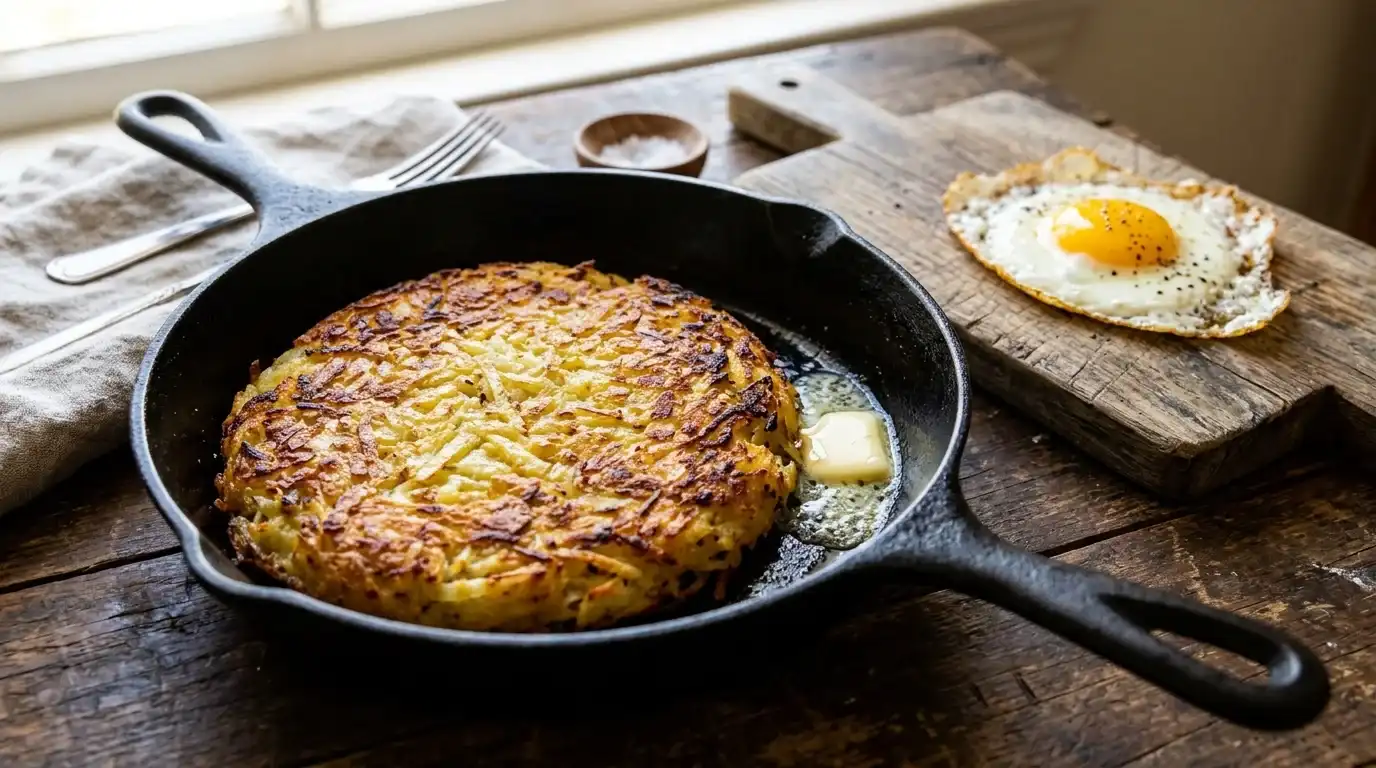
Switzerland has its own version. The Swiss national tourism site describes rösti as a breakfast eaten by farmers in German-speaking Switzerland, now a national dish on both sides of the language border. Its basic recipe calls for about a kilo of waxy potatoes boiled in their skins the day before, then peeled and coarsely grated, fried in clarified butter, pressed into a flat cake and browned on both sides. Bern’s version is known for being especially crisp.
The Dr. Potato column cites James Beard’s Menu Mystique for a rösti recipe from 1598 and treats rösti as a possible ancestor of the American dish. That link is the column’s suggestion rather than a documented line of descent, but the method is the same one the 1880s cooks used: cook the potato first, cool it, cut it small, then fry it hard.
Getting them crisp
Starch, water and heat
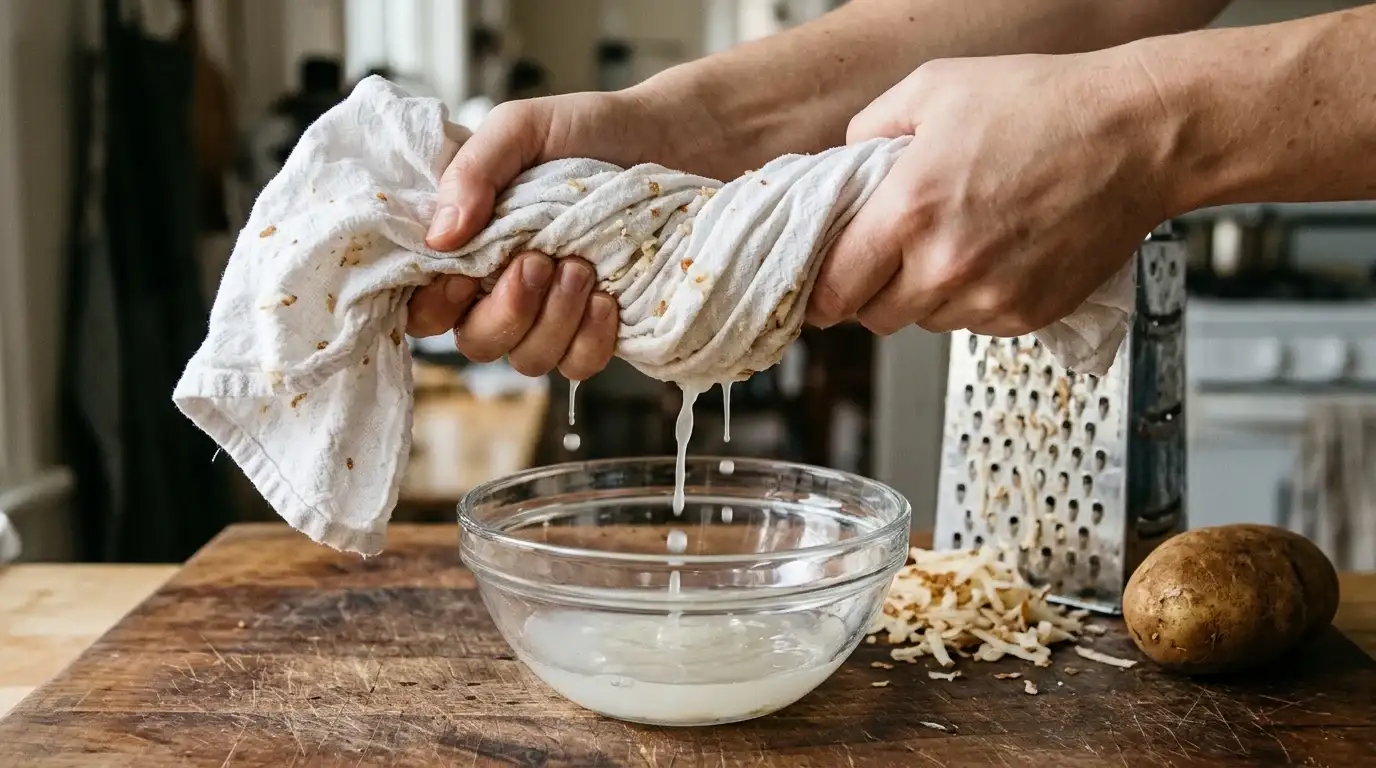
Shredding raw potatoes changed the problem. Raw shreds carry surface starch and a lot of water, and water steams instead of browning. America’s Test Kitchen, describing its recipe for better hash browns, rinsed the grated potatoes in salted water, which it says prevented discoloration and seasoned the potatoes while lowering the gelatinization temperature of the starch so the shreds stuck together. Then it squeezed out the excess water and parcooked the shreds in the microwave, which drove off more moisture and started the starch gelling before the potatoes reached the pan.
That parcooking step does what the old recipes did with cold boiled potatoes. Dr. Potato makes the same point from the other side: shreds from cooked whole potatoes fry more evenly, and leftover baked potatoes chilled overnight can be grated straight into a cast-iron pan.
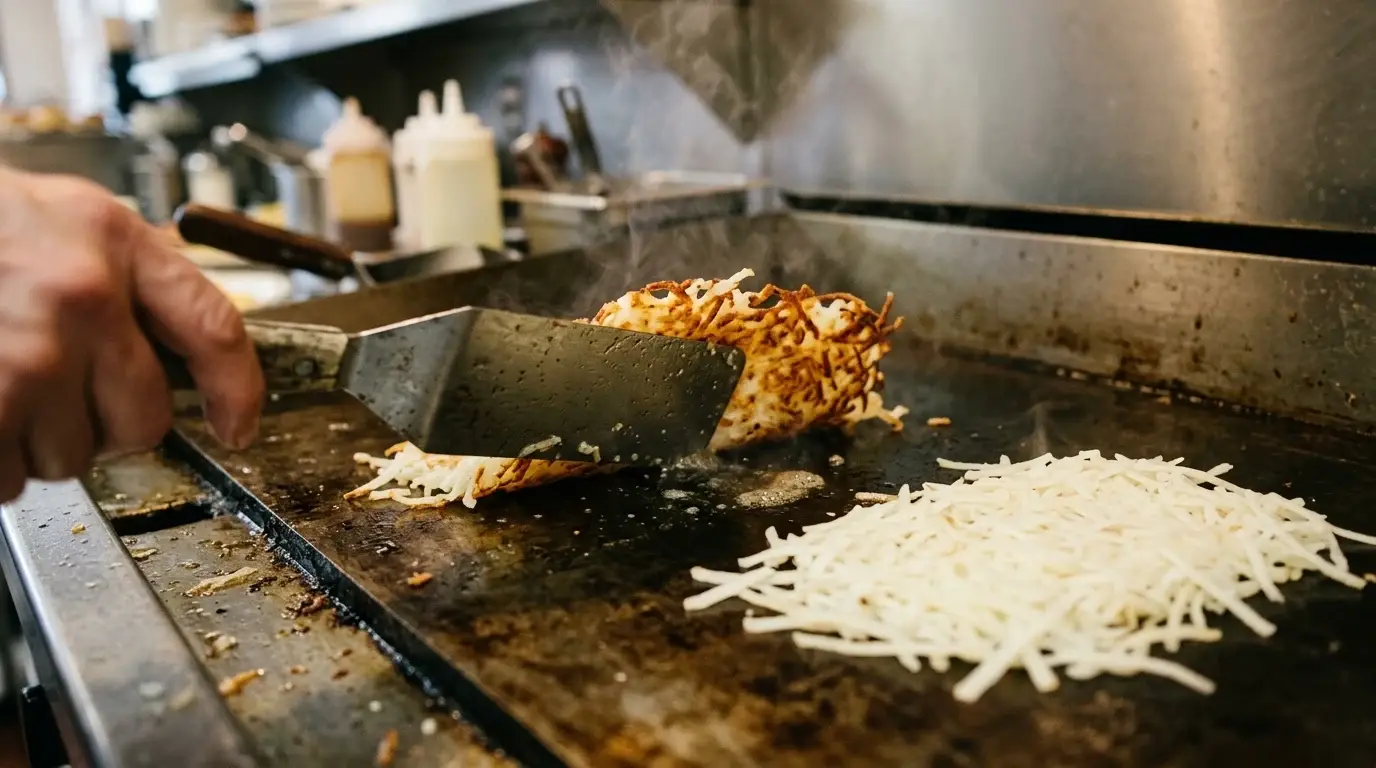
The rest is heat and patience. The shreds go into hot fat in a thin layer, get pressed for contact and stay put until a crust forms. A well-seasoned flat-top gives the room to spread them thin, the same reason it suits a smash burger.
Scattered, smothered and covered
The diner chain that built a vocabulary around one side
No chain made more of the hash brown than Waffle House. The company says its trademarked line “Scattered, Smothered & Covered” first appeared on its menu in February 1984, and that its potatoes come from Basic American Foods, which works with farmers in southeast Idaho.
“Scattered” is the base order, the potatoes spread out on the grill, according to the Atlanta Journal-Constitution’s guide. Smothered adds sautéed onions and covered adds melted American cheese. Chunked brings grilled hickory-smoked ham, diced brings grilled tomatoes, peppered brings jalapeños, capped brings grilled mushrooms, topped brings chili and country brings sausage gravy. Mental Floss, in its rundown of the chain’s kitchen slang, lists one more: “in a ring,” for potatoes cooked in a compact shape. “All the way” means all eight toppings. The AJC reports that, according to the chain, the lingo took off in the mid-1980s.
The language works the way the 1911 lunch-counter shorthand did. A cook hears a string of words and knows exactly what goes on the griddle.
On the plate
Breakfast side, sandwich partner
Hash browns sit next to eggs and bacon, but they also crowd onto the plate beside a patty melt or a grilled cheese. A browned potato cake and a griddled sandwich come off the same flat-top, cooked by the same principles: dry surface, hot metal and enough time for a crust. Waffle House’s own page pairs hashbrowns “All the Way” with a patty melt.
Frequently asked questions
Who invented hash browns?
No single inventor is documented. The earliest citations for “hashed brown potatoes” come from reports on Maria Parloa’s cooking classes in 1887 and 1888.
When did “hash browns” become the name?
The short form “hash browns” appears by 1911 as lunch-counter slang, according to Barry Popik and the Idaho Potato Commission.
Why rinse and squeeze the potatoes?
Rinsing removes surface starch and squeezing removes water, which would otherwise steam the shreds instead of browning them.
What is the difference between rösti and hash browns?
Rösti is a Swiss potato cake made from coarsely grated potatoes, traditionally boiled the day before and pressed into one large cake fried on both sides.
Sources
- Barry Popik, “Hashbrowns (Hash Brown Potatoes; Hashed Brown Potatoes; Hash Browns),” The Big Apple (July 28, 2006): https://barrypopik.com/blog/hashbrowns
- Idaho Potato Commission, “Ask Dr. Potato”: https://idahopotato.com/dr-potato/36
- Switzerland Tourism, “Recipe for Rösti”: https://myswitzerland.com/en-us/experiences/food-wine/recipe/recipe-for-roesti
- America’s Test Kitchen, “Better Hash Browns”: https://www.americastestkitchen.com/cooksillustrated/recipes/9471-better-hash-browns
- Waffle House, “Waffle House Hashbrowns”: https://wafflehouse.com/?p=340
- Fiza Pirani, “Waffle House hash browns: Many ways to order your ‘browns,” Atlanta Journal-Constitution (updated February 1, 2023): https://www.ajc.com/entertainment/dining/your-guide-waffle-house-hash-browns/u6FvGwLoPboYIaz6hFukGP
- Rudie Obias, “6 Bits of Waffle House Kitchen Slang,” Mental Floss (January 14, 2019): https://www.mentalfloss.com/language/slang/waffle-house-kitchen-slang