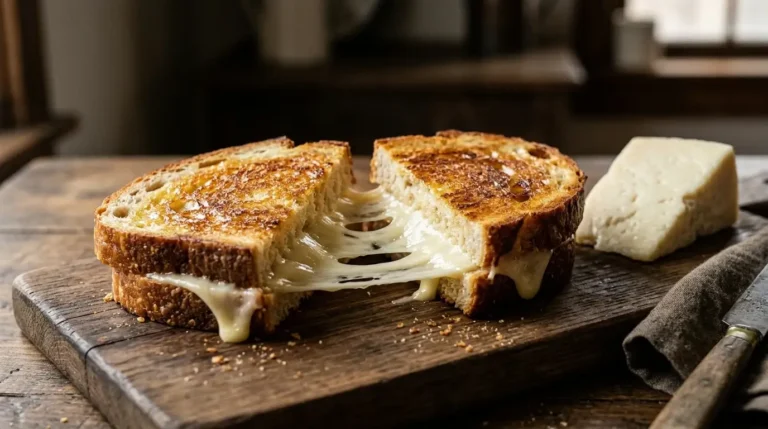
In this story
Brie is a soft cow’s milk cheese with a white, velvety rind and a pale interior that turns creamy as it ripens. The name belongs to a region east of Paris, and the most famous version, Brie de Meaux, is protected under French law with rules about milk, size and aging. American rules make that cheese hard to sell in its traditional form, because of a 1949 federal rule about raw milk.
Video: How Brie De Meaux Cheese Is Made In France, from the Insider Food YouTube channel (Regional Eats)
Brie de Meaux under French rules
Raw milk, a big wheel and at least four weeks
The French National Institute of Origin and Quality, INAO, sets the terms. Its summary of the Brie de Meaux appellation describes a large, flat cheese 36 to 37 centimeters across, made exclusively from raw cow’s milk and aged at least four weeks. The milk must come from cows in a defined area centered on Seine-et-Marne, with parts of the Aube, Loiret, Marne, Haute-Marne and Meuse departments. Each wheel is shaped by hand with a traditional brie shovel, the pelle à brie. The cheese has been a protected designation since 1980.
INAO also sketches the history. Brie was originally made on farms and sold at the market in Meaux to Parisian affineurs, the specialists who age cheese. In the early nineteenth century, production spread toward the Meuse as large dairies developed.
How a wheel is made
Ferments, a ladle and a Penicillium bloom
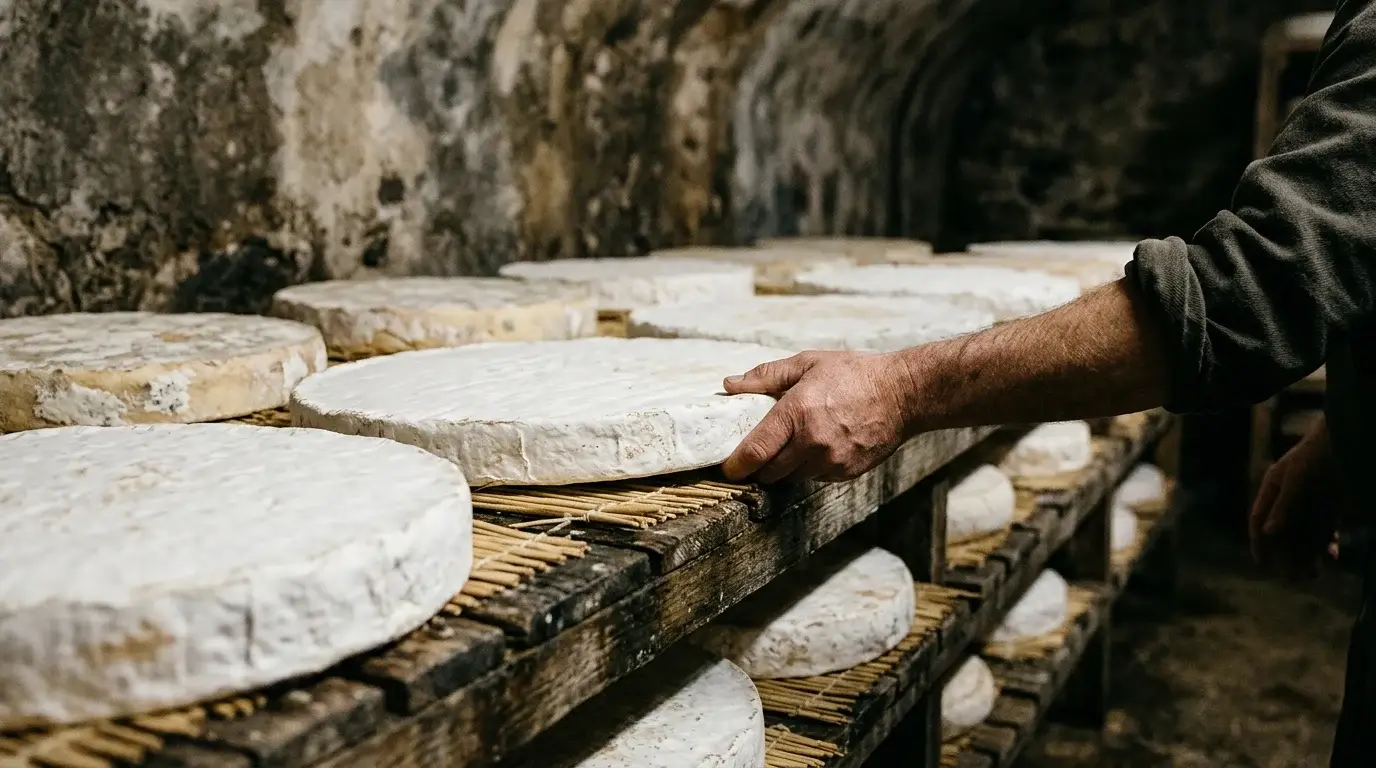
Taste France, the French government’s food promotion site, walks through production at Fromagerie Saint-Faron de Meaux. Local milk is mixed with selected ferments and matured for about 20 hours, with pH and bacteriological testing along the way. Rennet curdles it. The curd is cut and ladled by hand into molds with the pelle à brie, then drained and turned twice. The wheels are unmolded, set on racks and salted, which helps preserve the cheese and helps the white bloom form. Operations manager Marie Lavol puts it this way: “Salting is more than just adding flavour.”
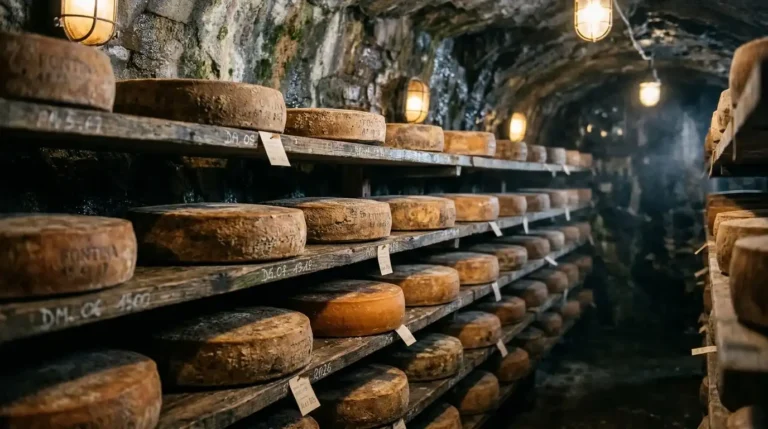
In the aging cellars, Penicillium mold grows into the velvety white rind while affineurs manage temperature and humidity. Saint-Faron, the article says, ages its wheels for up to 49 days.
Brie de Meaux has a sibling. Brie de Melun, also protected, spends more than 18 hours in the vat before molding, according to Taste France, which gives it a more acidic, tangier taste. Brie de Meaux is the nuttier and milder of the two.

The prince of cheeses
A tasting at the Congress of Vienna
Brie’s most repeated story is diplomatic. In 1815, as Europe’s powers redrew the map after Napoleon, the French statesman Charles Maurice de Talleyrand organized a cheese tasting at the Congress of Vienna. Taste France reports that 52 cheeses from across Europe were presented, that Austria’s Prince Metternich conceded defeat, and that Brie de Meaux was declared “the prince of cheeses.”
The title shifts in the retelling. Taste France’s own headline calls it the king of cheeses. Either way, INAO notes that the cheese’s reputation grew strongly in the nineteenth century.
Why American brie is different
The 60-day raw milk rule
James Andrews of Food Safety News explained in 2011 that the US Food and Drug Administration enacted a rule in 1949 requiring cheese made from unpasteurized milk to age at least 60 days before sale, on the reasoning that aging would neutralize pathogens, with 60 days chosen as a safety margin. The same article reported research questioning whether the rule fully works, and noted that the FDA was considering changes.
The conflict with brie is arithmetic. French rules require Brie de Meaux to be made from raw milk and aged at least four weeks, and a producer such as Saint-Faron ages it for up to 49 days. A raw-milk wheel sold at that age would fall short of the American 60-day minimum. Brie made in the same style from pasteurized milk is not bound by the rule.
Brie on the griddle
A soft cheese in a grilled sandwich
Brie behaves differently from the firm cheeses usually sliced for a grilled cheese. INAO classes Brie de Meaux as a soft-paste cheese, and its rind is the Penicillium bloom grown in the aging cellar, not a wax or a hard crust. On a sandwich, that means a cheese that is already creamy before it meets the heat, wrapped in a thin rind that stays on. GrillCheesy’s guides to Fontina, Monterey Jack and Gouda cover the firmer melting cheeses it is often paired with or swapped for, and raclette covers another French-speaking tradition of melted cheese.

Frequently asked questions
What is Brie de Meaux?
A protected French brie made exclusively from raw cow’s milk in a defined area east of Paris, 36 to 37 centimeters across and aged at least four weeks.
Can you buy Brie de Meaux in the United States?
Federal rules require raw-milk cheese sold in the US to age at least 60 days, longer than Brie de Meaux is usually aged in France.
Is the rind on brie edible?
Yes. The white rind is formed by Penicillium mold during aging and is part of the cheese.
What is the difference between Brie de Meaux and Brie de Melun?
Brie de Melun spends longer in the vat before molding and tastes tangier and more acidic; Brie de Meaux is milder and nuttier.
Sources
- INAO, “Brie de Meaux” appellation summary: https://inao.gouv.fr/node/5758/printable/pdf
- Taste France, “The King of Cheeses: Brie de Meaux”: https://www.tastefrance.com/magazine/meet-makers/king-cheeses-brie-de-meaux
- James Andrews, “Is 60-Day Rule Still Valid for Raw-Milk Cheese?,” Food Safety News (February 1, 2011): https://www.foodsafetynews.com/2011/02/is-the-60-day-rule-still-valid-for-raw-milk-cheese/