In this story
Monterey Jack is one of the few cheeses born in the United States, a pale, mild, high-moisture cow’s milk cheese that melts cleanly into quesadillas, burgers and grilled cheese. Its name joins a place and a person, and both halves of that name have rival explanations. The cheese itself is older than the name. It came out of the Spanish missions of California, passed through the hands of local dairy families and a famously ruthless landowner, and in 1915 produced an accidental offshoot that Italian San Franciscans grated over pasta.
Video: Monterey Jack with Ig Vella, Cheese Legends with Will Studd, from the Will Studd YouTube channel
What the law says Monterey Jack is
A federal standard of identity
Monterey Jack has a legal definition. Under the US Food and Drug Administration’s standard of identity, codified at 21 CFR 133.153, the cheese can be sold as either “monterey cheese” or “monterey jack cheese.” It may contain no more than 44 percent moisture by weight, and milkfat must make up at least 50 percent of the solids.
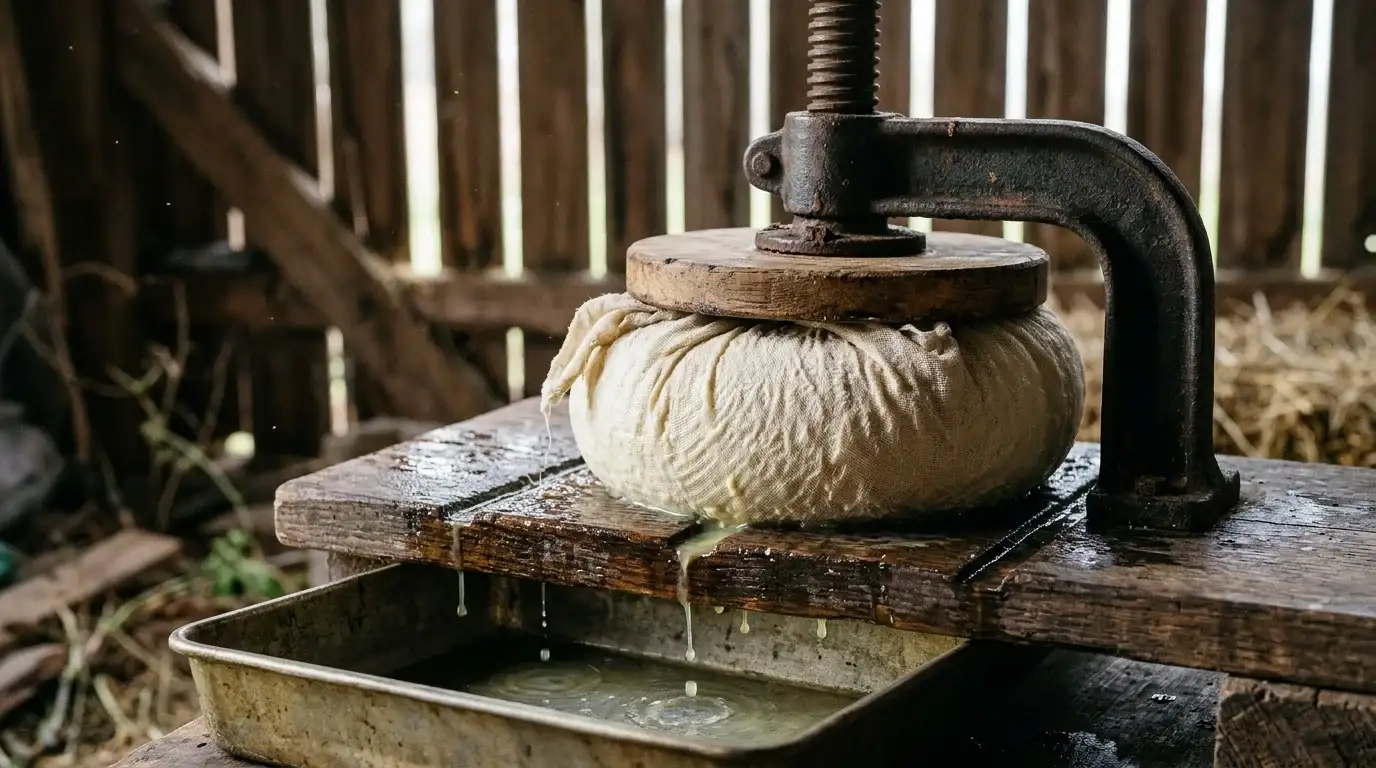
The standard also sketches the method. Pasteurized milk is ripened with a lactic acid culture and set with rennet or another clotting enzyme. The curd is cut, stirred and heated to separate it from the whey, part of the whey is drained, and water or brine may be added. Then the curd is either tied in muslin, formed into a ball and pressed, or packed into a hoop and pressed. The regulation sets no minimum aging period.
Mission cheese
Queso del país in Spanish California
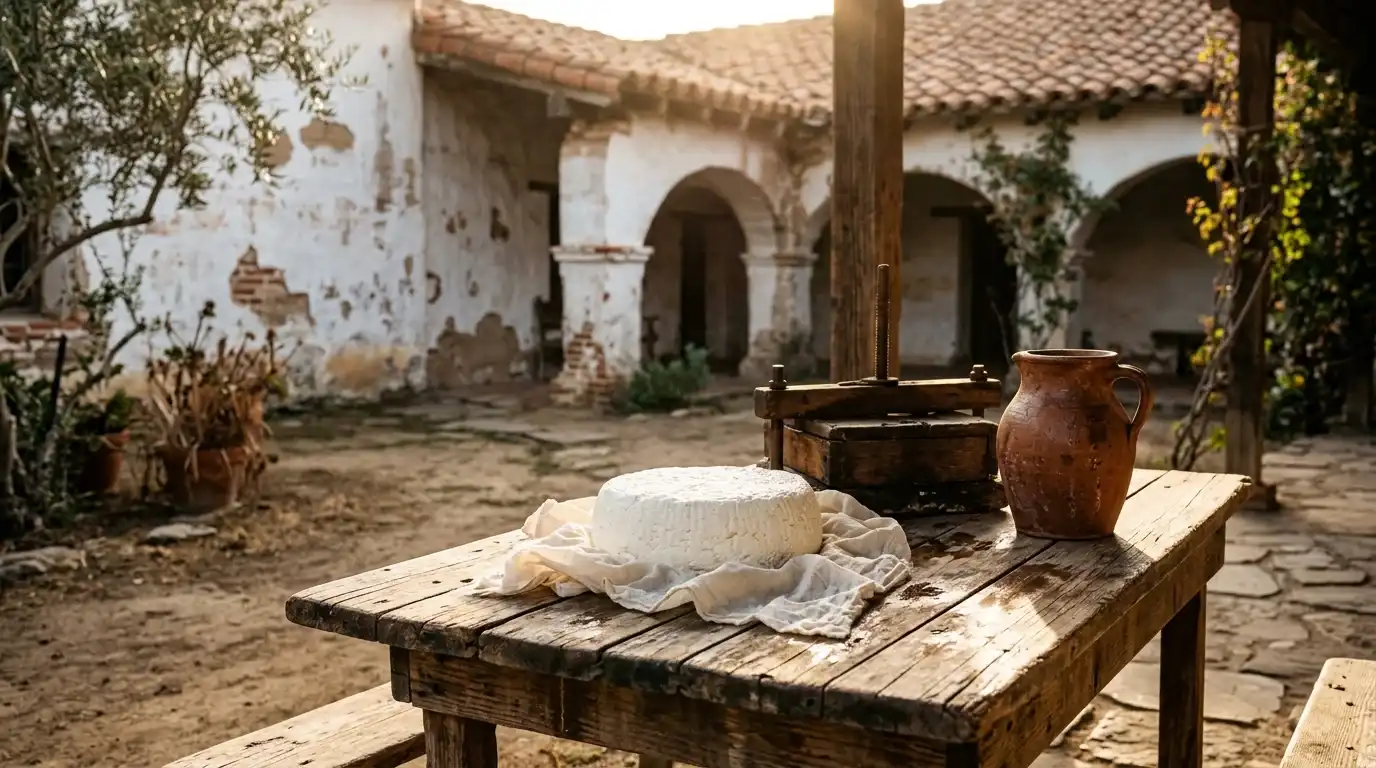
The roots run back to the missions. The California dairy industry’s press room, in its timeline of California cheese history, dates dairy cows and cheesemaking in the state to 1769, when Father Junípero Serra began founding the missions. The simple white cheese made there was called queso del país, country cheese. KQED, reporting on the cheese’s disputed origins in 2022, notes that some believe this mission cheese evolved into Monterey Jack, while cautioning that the line is not certain.
The same timeline credits Swiss and Portuguese dairymen with developing the cheese from old mission recipes.
David Jacks and the name
A Scottish landowner who marketed it
The “Jack” part is usually traced to David Jacks. KQED’s account says he was born in Scotland in 1822, reached California in 1849 during the Gold Rush, made money selling a shipment of guns, prospected without finding gold and then moved to Monterey. There, KQED reports, he acquired land through what historians describe as shady deals, lent money and foreclosed until he was effectively the region’s landlord. The city tried repeatedly to recover its land, in one case taking the matter to the US Supreme Court in 1906, and lost.
Jacks also had dairy interests. The dairy timeline names him as the first to market Monterey Jack, in 1882. KQED describes customers across California and beyond eventually asking for “Monterey” Jack’s cheese.
The rival claims
A wronged cheesemaker, a house jack and a Pacifica dairy
Jacks is the standard answer, not the only one. A 2023 history published on Medium and in Point Lobos Magazine collects several challenges. One comes from the Boronda family of Monterey: after José Manuel Boronda was hurt in a bullfighting accident, his wife sold her own queso del país, made from a recipe tied to his father’s home in Aragon, and the family later claimed Jacks took the recipe. Another comes from the family of Maria Rodrigues of Big Sur, whose daughter said Jacks sold her mother’s cheese as Monterey Jack.
A third theory skips Jacks entirely. The same piece cites S.F.B. Morse, founder of the Pebble Beach Company, who wrote that the Jacks family had nothing to do with the cheese and credited Domingo Pedrazzi, a Swiss-Italian dairyman in Carmel Valley, who pressed curds with a house jack. In Morse’s telling, the press gave the cheese its name.
Pacifica, south of San Francisco, has its own claim. KQED reports that a 1938 cookbook, Eating Around San Francisco, says a family friend named Baldocchi learned a recipe from Stephano Mori, who made cheese at Mori Point, then produced it commercially on the Jack ranch in Monterey. The Pacifica Historical Society supports that account and now sells its own Pacifica Jack.
None of these accounts has settled the matter. KQED’s own conclusion is that the origin of the name remains uncertain.
Dry Jack, the accident
A forgotten order and a wartime substitute for Parmesan
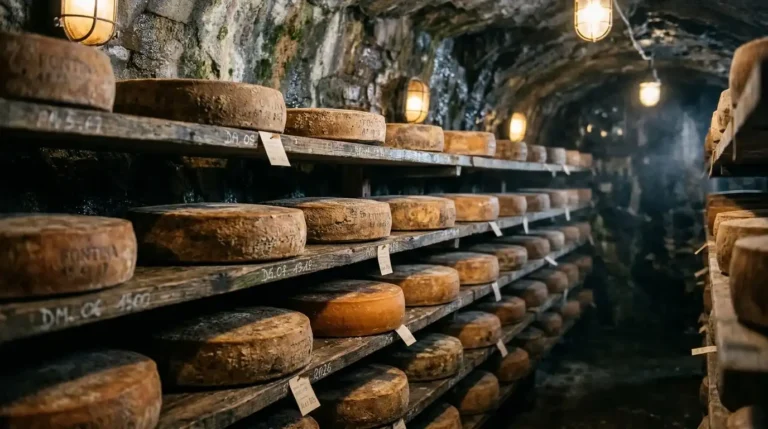
Aged Jack became its own cheese by mistake. The California dairy timeline says that in 1915 San Francisco cheese wholesaler D.F. DeBernardi left an order of fresh Monterey Jack in storage too long. The aging hardened it and gave it a sweet, nutty flavor. When World War I cut off imports of Parmesan and Romano, Italian American families took it up as a grating cheese, and by the 1930s about 60 California cheesemakers were producing Dry Jack.
Few remain. The best known is the Vella Cheese Company in Sonoma. Its history page says Tom Vella, who had worked at the Sonoma Mission Creamery, started his own cheese factory in 1931 in a stone building originally built as a brewery in 1904, after local dairymen offered to guarantee him quality milk. Dry Jack, the company says, was developed when Italian families asked for a quality grating cheese. Tom turned the business over to his children in 1981, and his son Ignazio “Ig” Vella carried on the work. Later generations of the family still run the company.
Jack in the kitchen
Why it melts and where it goes
Young Jack is soft and mild, and on the griddle it sits in the same company as Fontina and young Gouda, cheeses chosen for melt rather than sharpness. It also turns up inside the flour-tortilla foods of the borderlands, the quesadilla and the burrito among them.
Dry Jack works the other way. It was adopted as a stand-in for Parmesan and Romano, and it is used the same way, grated or shaved.

Frequently asked questions
Where does Monterey Jack cheese come from?
California. It developed from the white queso del país made at the Spanish missions and was commercialized in Monterey County in the nineteenth century.
Who named Monterey Jack?
Disputed. David Jacks is usually credited with marketing it; rival accounts credit a cheesemaker’s jack press, the Boronda family or a Pacifica dairy.
What is Dry Jack?
An aged, hard version of Monterey Jack that dates to 1915, when a San Francisco wholesaler left fresh Jack in storage too long.
What is the legal definition of Monterey Jack?
The FDA standard requires no more than 44 percent moisture and at least 50 percent milkfat in the solids.
Sources
- US eCFR, 21 CFR 133.153, “Monterey cheese and monterey jack cheese”: https://www.ecfr.gov/current/title-21/chapter-I/subchapter-B/part-133/subpart-B/section-133.153
- California Dairy Press Room, “Milestones in CA Cheese History”: https://californiadairypressroom.com/Press_Kit/Milestones/
- Christopher Beale, “Move Over Monterey? Pacifica Lays Claim to Iconic Jack Cheese,” KQED (June 9, 2022): https://kqed.org/news/11916538/move-over-monterey-pacifica-lays-claim-to-iconic-jack-cheese
- “Who Invented Monterey Jack Cheese?,” Sharing Food on Medium (2023): https://medium.com/sharing-food/who-invented-monterey-jack-cheese-cce3d4259d72
- Vella Cheese Company, “The History of Vella Cheese”: https://vellacheese.com/history.php