In this story
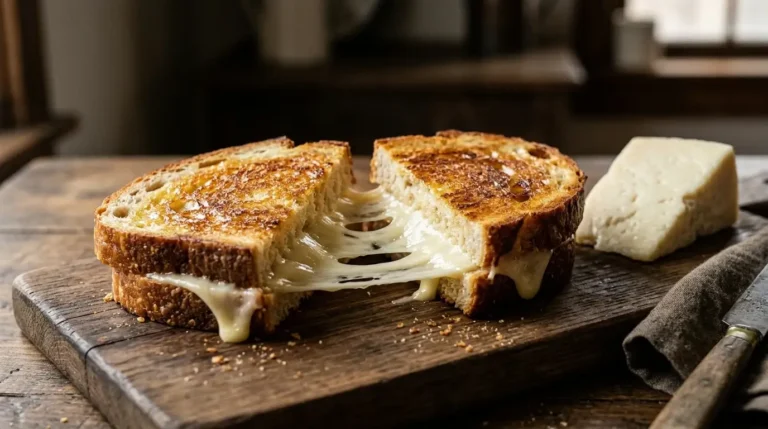
Fontina is a semi-soft cow’s milk cheese from the Aosta Valley, the small Alpine region in Italy’s far northwest that borders France and Switzerland. The real thing is made from raw milk taken at a single milking of local cattle, turned into cheese within hours, and aged for months before an inspector decides whether it earns its stamp. Outside the valley, the same name covers milder, waxed versions made in Denmark, Sweden and the United States. Both kinds melt well, which is why fontina turns up in fonduta, in pressed sandwiches and in cheese blends meant for the griddle.
Video: Discover Fontina: Italy's Nutty Delight, from the CheeseHeavenTV YouTube channel
A name older than the cheese
Fontina was a family name and a place name before it meant cheese
The producers’ consortium, in an exhibit published with Italy’s agriculture ministry on Google Arts and Culture, traces the word through Aosta Valley records. A family called “De Funtina” appears from the mid-13th century, and “de Fontines” about a hundred years later. The name also marked meadows, estates and villages. The consortium says it attached itself to the cheese only gradually, displacing an older term, “vacherinus,” and that by the 18th century it referred unambiguously to the cheese.
The cheese itself began in the high pastures. For centuries, the consortium writes, families in the valley kept only one to three cows each, so cheese was made where milk could be pooled: on summer pastures with large herds. Communal dairies, where neighbors combined their milk, appeared only in the 19th century. The Consorzio Produttori e Tutela della DOP Fontina, which now oversees the cheese, was founded in 1957, according to the Aosta Chamber of Commerce.
What the rules require
Valley milk, valley cows, one milking, no pasteurization
The European Union granted Fontina a protected designation of origin in 1996. The Aosta Valley tourism board summarizes the core definition from the rules: a fatty, semi-cooked cheese made from whole milk of the valley’s own cattle breed, “obtained in one milking.” Production, aging and cutting must all take place inside the region.
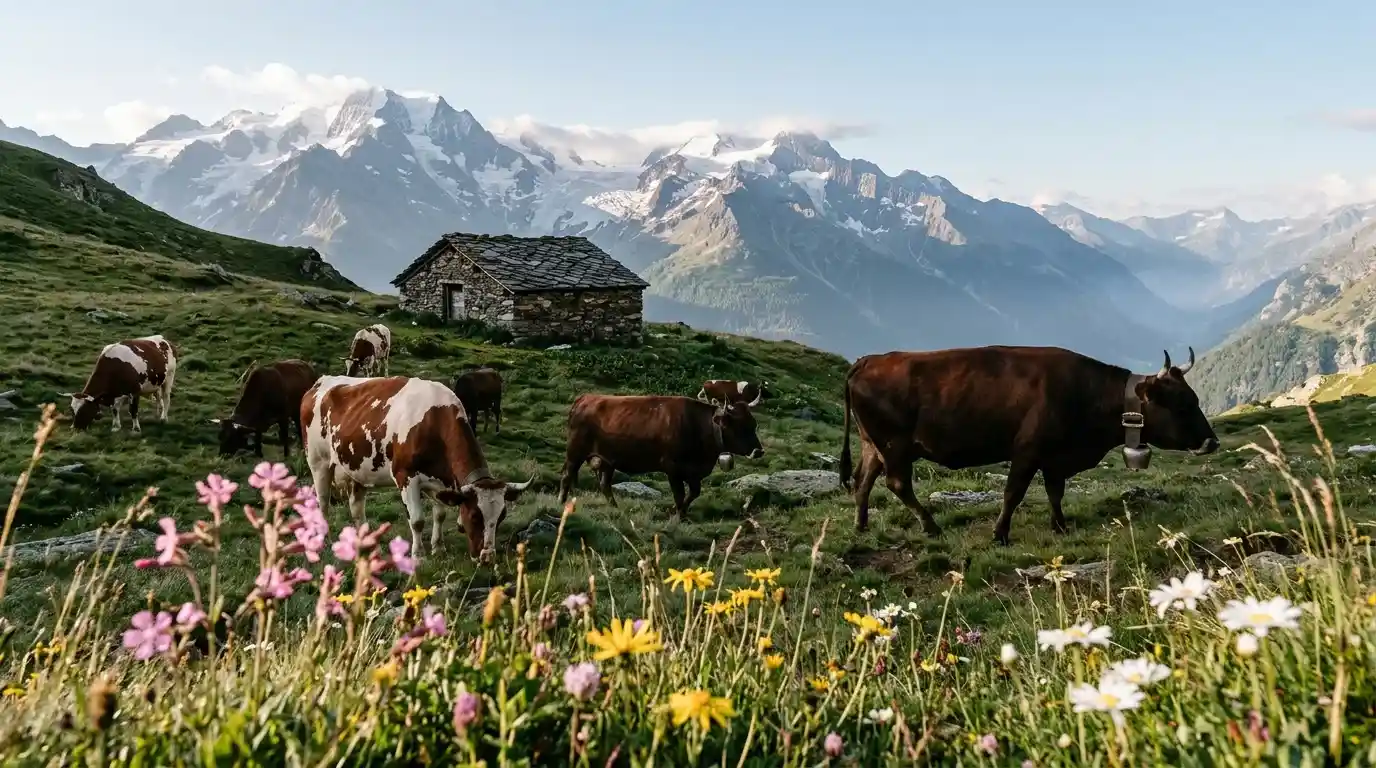
The official product specification, reproduced by Australia’s trade department in a published summary, spells out the details. The milk must be produced in the Valle d’Aosta and be raw, whole and from a single milking of Valdostana cattle, in three color varieties: Pezzata Rossa (red pied), Pezzata Nera (black pied) and Castana (chestnut). The specification ties the breed to the land, describing cattle that move to mountain pastures, graze the available forage and make the most of the local hay.
The single-milking rule shapes the whole schedule. Fontina’s milk goes into the vat fresh, twice a day, and the consortium notes that the process is designed not to alter the characteristics of milk straight from the cow.
From vat to cellar
Curd cooked to 48°C, pressed for 12 hours, aged on spruce boards
The consortium’s exhibit walks through each step:
- Milk is made into cheese within hours of milking, at about 36°C, with calf rennet.
- The curd is cut to roughly the size of a corn kernel and gently heated, while stirred, to about 48°C.
- After the whey is removed, the curd goes into bow-sided hoops and is pressed for about 12 hours, turned several times.
- Each wheel gets a consortium identification number and a casein plate for traceability.
- The cheese is salted and aged for at least three months. In the first month it is turned daily and brushed and salted on alternate days, then it finishes aging on spruce boards.
The finished wheel is a flattened cylinder about 43 centimeters across and 8 to 12 kilograms, with a rind from light to dark brown and an ivory to pale yellow interior dotted with small holes. The tourism board adds that summer wheels, made when cows eat fresh grass, are a deeper yellow than winter wheels made from hay-fed milk.
Inspection is the last step. Consortium technicians examine each matured cheese under the supervision of an authorized control body, and only wheels that meet the standard receive the DOP mark.
Three kinds of Fontina DOP
Standard, summer pasture and long-aged wheels
The tourism board distinguishes three versions within the protected name. The standard wheel, averaging about 9 kilograms, is aged for at least 80 days before the DOP stamp goes on, a slightly shorter minimum than the three months the consortium’s exhibit describes. Fontina DOP Alpeggio is made from June to September on the valley’s mountain pastures, at altitudes up to 2,700 meters, where the cows graze fresh grass and wildflowers. Fontina DOP long seasoning is aged in caves for at least 180 days, which the board says gives it a more intense, aromatic flavor.
The alpeggio wheels are the closest link to the cheese’s history. They are made in the same high pastures where, according to the consortium, Fontina was made for centuries before the valley’s communal dairies existed.
Fontina outside the valley
Danish and Swedish versions share the name, not the rules
The name Fontina is protected in the EU only when it carries the DOP designation, and cheeses called fontina are made in several other countries. Culture magazine’s cheese library describes one Danish version, made by a company called Denmark’s Tradition, as milder and more cream-like, aged for less time than the Italian original.
For a shopper, the label is the only reliable guide. A wheel or wedge of the Italian original carries the consortium’s mark, applied only after inspection. A cheese simply labeled “fontina” may come from anywhere and follow none of the valley’s rules.
The tourism board’s description of the Italian cheese gives the benchmark: a compact, thin brown crust, a soft, elastic paste with a few small holes and a sweet flavor whose aroma intensifies as it matures.
Fonduta, the valley’s melted-cheese dish
Fontina, milk, butter and egg yolks, without the wine of Swiss fondue
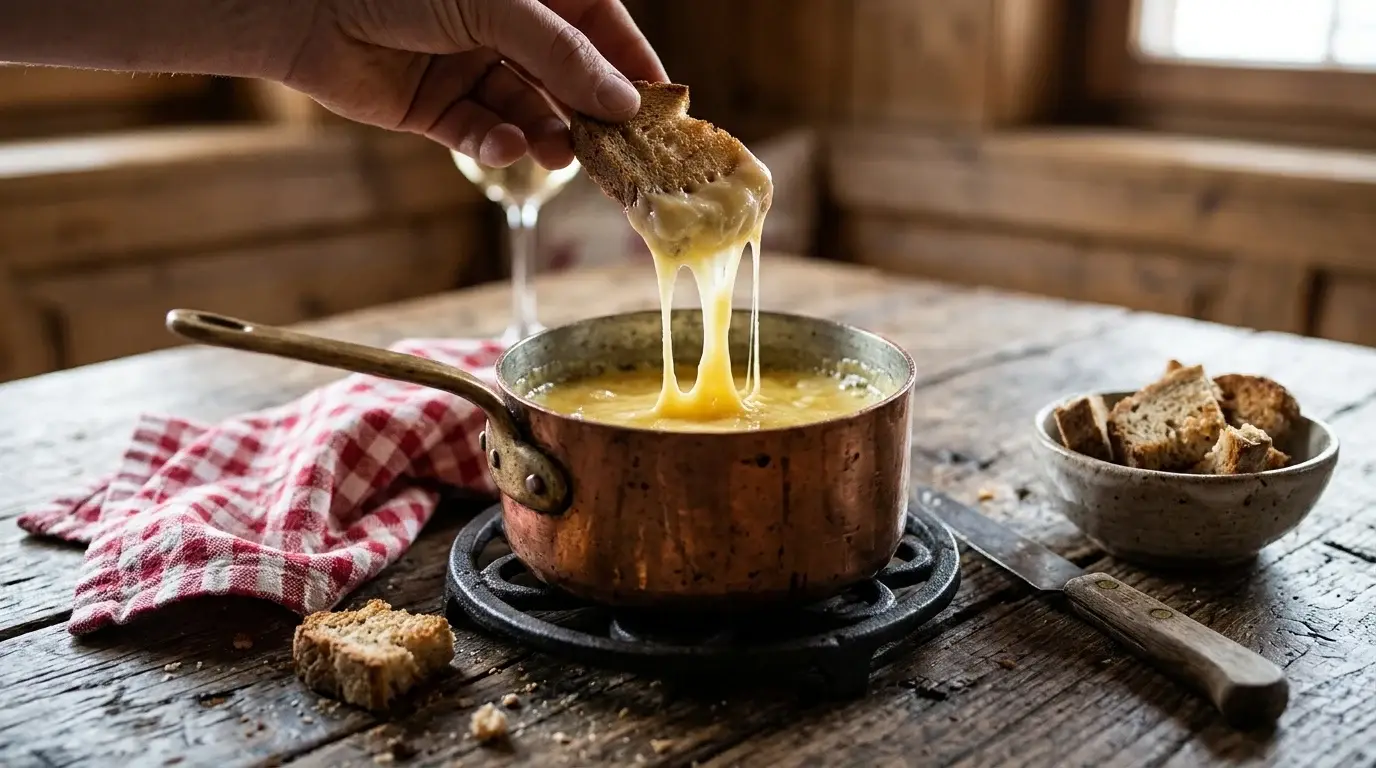
The Aosta Valley’s signature use for its cheese is fonduta. Italy’s national tourism site describes it as Fontina cut into slices, soaked in milk and then melted with butter and fresh egg yolks. The result is a thick, glossy sauce served hot.
It is a cousin of Swiss fondue rather than a copy. The Nibble, a specialty food magazine, sets out the differences: the Italian version is made with Fontina instead of Gruyère and does not include alcohol, garlic, or a cornstarch or flour thickener. The egg yolks do the thickening.
No emulsifying salts are involved. Fonduta relies on milk, butter and yolk to carry the melted cheese, where processed cheese relies on sodium citrate or phosphates, the chemistry covered in GrillCheesy’s history of macaroni and cheese.
Fontina on the griddle
A semi-soft cheese that melts without turning greasy
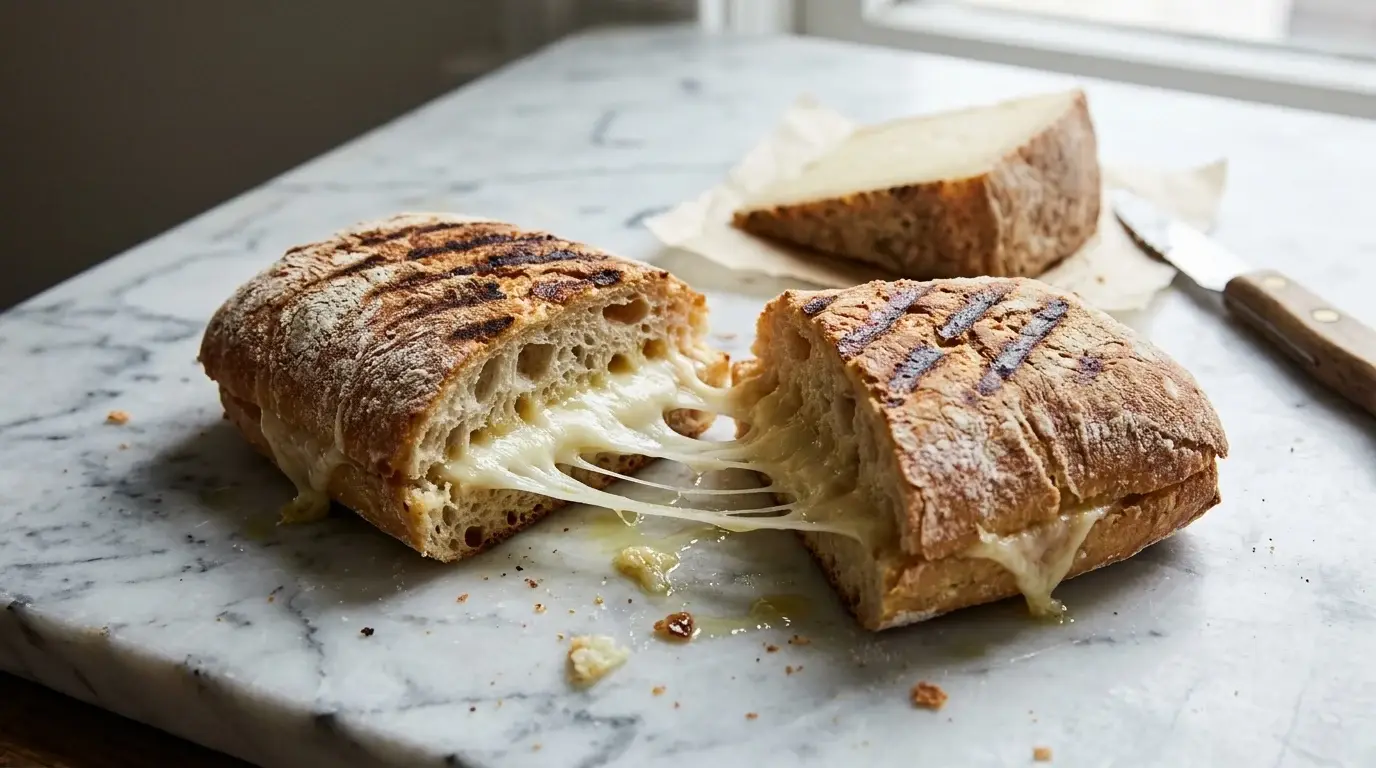
Fontina’s structure suits a hot pan. The DOP rules define it as a fatty, semi-cooked cheese with a soft, elastic paste, and the youngest wheels go to market after about three months. Those are the same traits that make young Gouda a reliable melter, as GrillCheesy’s guide to Gouda explains. Culture magazine’s cheesemonger column gives the general rule: higher fat, higher moisture and younger cheeses are best for melting, while older, drier cheeses need more heat.
The flavor follows age. The tourism board describes Fontina as sweet when young, with an aroma that intensifies as it matures, so a three-month wheel and a longer-aged one behave differently between two slices of bread. The younger cheese gives a softer, milder melt; the older one brings more of its own character and needs a little more heat to get there.
Frequently asked questions
Where does fontina cheese come from?
The Aosta Valley in northwestern Italy. Fontina with the DOP designation must be made, aged and cut entirely within the region.
What makes Fontina DOP different?
It uses raw, whole milk from a single milking of Valdostana cattle, is aged at least three months and is inspected before it receives the consortium’s mark.
Is Danish fontina the same cheese?
No. Danish fontina is inspired by the Italian original but is milder, creamier and aged for less time.
What is fonduta?
The Aosta Valley’s melted-cheese dish: Fontina soaked in milk, then melted with butter and egg yolks, without the wine or starch of Swiss fondue.
Sources
- Consorzio Produttori e Tutela della DOP Fontina, via Google Arts and Culture: https://artsandculture.google.com/story/HAXhgWpuuRsA8A
- Aosta Valley tourism board (lovevda.it), “Fontina”: https://www.lovevda.it/en/food-and-wine/products/cheese/fontina
- Fontina PDO product specification summary, via DFAT Australia: https://www.dfat.gov.au/sites/default/files/121f.docx
- Aosta Valley tourism board (lovevda.it), “Cheese”: https://lovevda.it/en/food-and-wine/products/cheese
- Aosta Chamber of Commerce, Consorzio Produttori e Tutela della DOP Fontina: https://www.ao.camcom.it/en/node/4538
- Culture magazine, “Fontina (Danish)”: https://culturecheesemag.com/cheese-library/Fontina-Danish
- Italia.it, “The Valle d’Aosta region by way of Roberto Caporuscio’s pizza”: https://italia.it/en/aosta-valley/things-to-do/pizza-roberto-caporuscio-history-fontina-valdostana-cheese
- The Nibble, “Fondue Vs. Fonduta” (April 11, 2021): https://blog.thenibble.com/2021/04/11/fondue-vs-fonduta-the-difference/
- Culture magazine, “What Makes a Good Melting Cheese?”: https://culturecheesemag.com/cheese-iq/ask-the-monger/makes-good-melting-cheese/