In this story
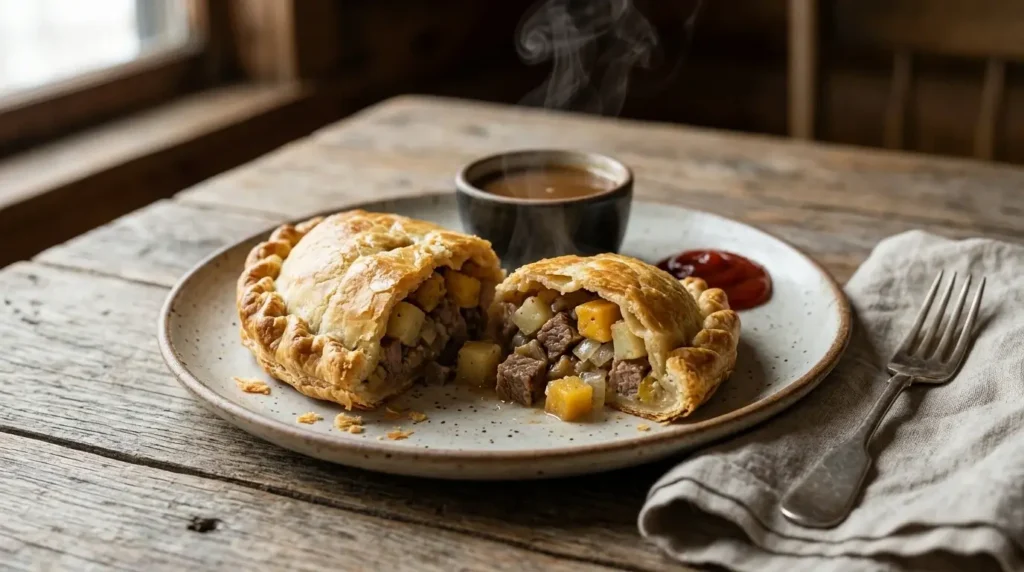
Michigan’s Upper Peninsula eats two things that came down the mine shafts with immigrants. The pasty, a crimped pastry pocket of meat and diced root vegetables, arrived with Cornish miners in the 1840s. Cudighi, a spiced sausage served on a long bun with mustard and onions, arrived with northern Italians about ninety years later. Both outlived the mines, and both have arguments attached.
Video: The Pasty: History and Tasting Michigan's Iconic Staple, from the Road Less Traveled YouTube channel
Cornish miners and the Cliff Mine
The 1840s pasty
The pasty came for work. Randy Bell of Michigan State University Extension, writing in December 2012, describes D-shaped pockets of meat and vegetables that Cornish tin miners could carry underground and eat without utensils, and dates the Cornish and Finnish arrival in the Upper Peninsula’s copper and iron country to the 1860s. Michigan Tech’s pasty history archive, a chronological file of newspaper clippings, cites a 1980 Daily Mining Gazette item tying the pasty’s arrival to the 1843 opening of the Cliff Mine.
The dates for the Cornish arrival therefore run from the 1840s to the 1860s, depending on whether the count starts with the first copper mines or the wider wave.
Folklore attached itself to the crust. A Healthier Michigan, a Blue Cross Blue Shield of Michigan site, repeats the stories of miners’ initials scratched into the crust, crusts left for mine ghosts that kept arsenic-dusted fingers away from food, and pasties reheated on a shovel over a candle. It presents those as tradition, not documented practice.
Finns, Italians and the first shops
Church sales to Hurley, Wisconsin
The pasty changed owners. Bell writes that as Finnish immigration rose around the turn of the century, the pasty became associated with the region’s Finnish culture. The first pasties sold outside the home were at church sales. The first commercial shops opened just before World War II: an Italian American in Hurley, Wisconsin, on the Michigan border, peddled pasties bar to bar before opening a shop around 1938, and Ironwood shops followed after the war.
Then came the bridge. Bell credits the 1957 opening of the Mackinac Bridge with the tourist traffic that multiplied pasty stands and fixed the pasty as the U.P.’s food. The Michigan Tech clippings track that trade: a Laurium supermarket reported more than 250,000 pasties sold in three years in 1978, and pasty maker Bill Lohela estimated in 1992 he had made at least 3.5 million over 20 years.

What goes in
Rutabaga, carrot, gravy, ketchup
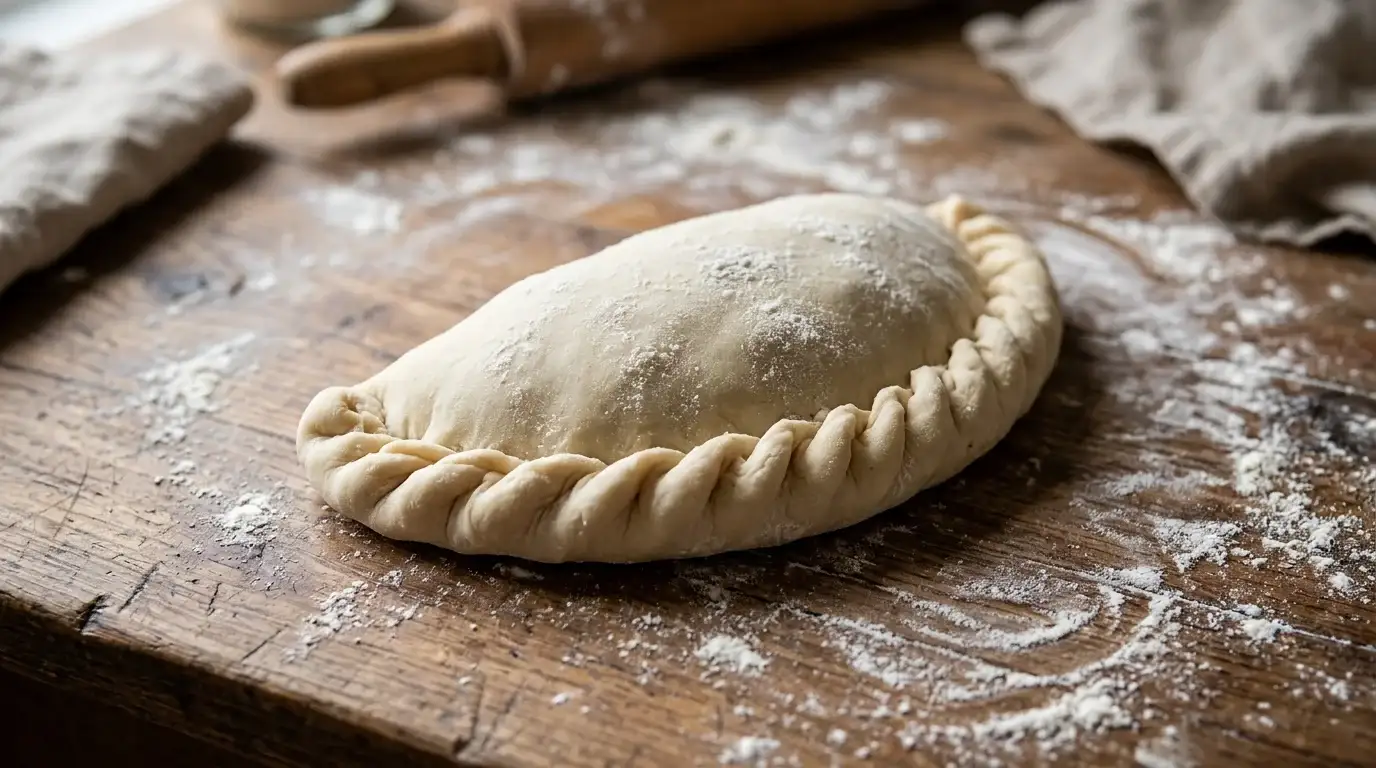
No two cooks agree. Bell writes that experts disagree on what makes a pasty authentic, though recipes often include potato, carrot, onion, turnip or rutabaga. A Healthier Michigan says the Yooper version dices its vegetables where the Cornish slice them, that a pasty runs about two pounds, and that both ketchup and gravy are common, which is where most of the arguments start. Calumet’s PastyFest, held in late June, turns the debate into an event, per Bell.
The hand-pie principle is shared with Latin America’s empanadas.
Pasty Day, three ways
1967, 1968 or 1972
Michigan honors the pasty with a day, and the record disagrees on who started it. A Healthier Michigan says Governor George Romney declared May 24, 1968, a statewide day celebrating the link between Lower and Upper Peninsula cultures. The Michigan Tech clippings complicate that: a Daily Mining Gazette piece titled “So It Is – Pasty Day” ran on May 24, 1967, a year before Romney’s date, and an April 28, 1972, Gazette item reported Cornish Pasty Day set for May 25 by Governor William G. Milliken. The archive contains no copy of a Romney proclamation.
Cudighi
Mario Gallizioli and a word not in the dictionary
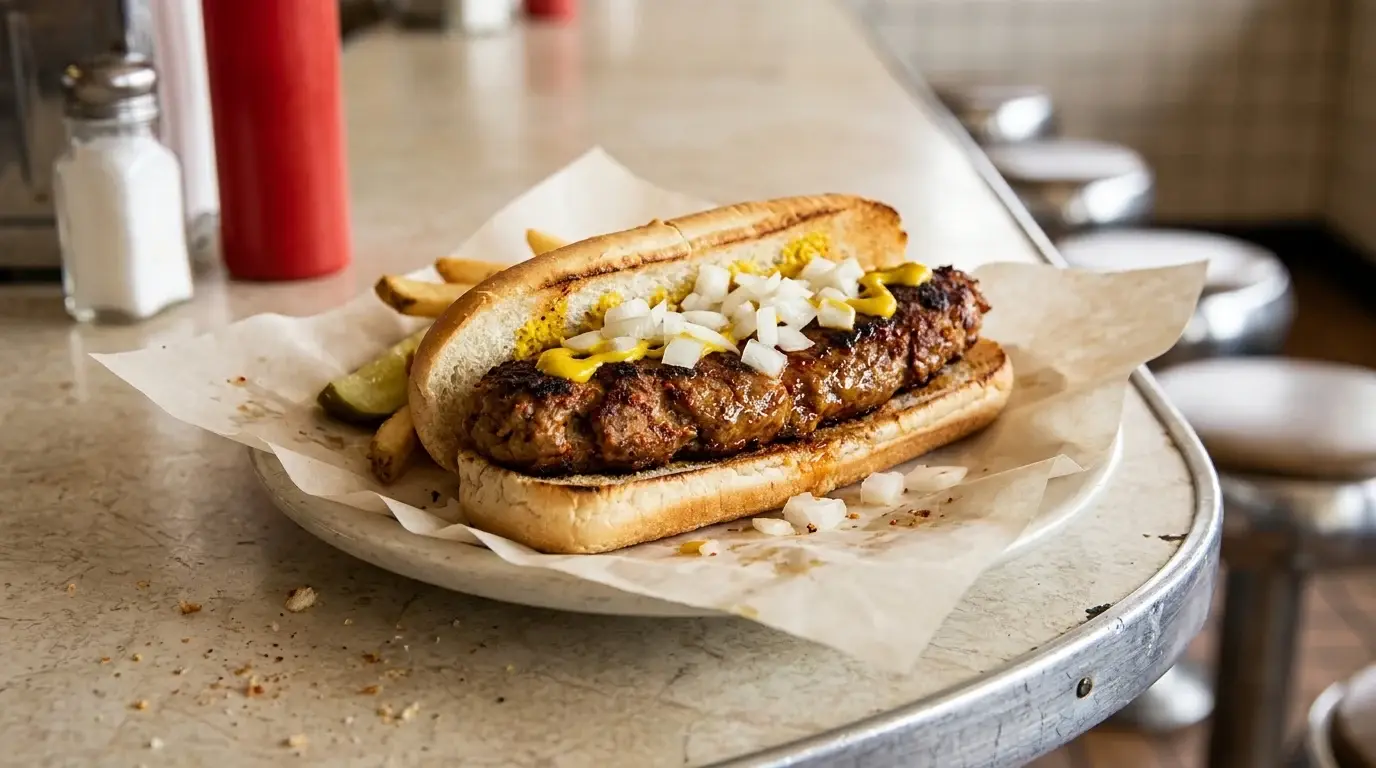
The U.P.’s sausage has a named father. Northern Michigan University’s summary of historian Russell Magnaghi’s 2022 book Classic Food and Restaurants of the Upper Peninsula says northern Italian immigrants first served cudighi in the 1930s, and that Mario Gallizioli, billed as the “father of the cudighi,” made a version with 20 percent venison or lean beef rather than pork alone.
The word puzzled historians because it is not in Italian dictionaries. Magnaghi’s answer, per NMU, came in 2017 from Gallizioli’s granddaughter, and points to the Bergamasque dialect, likely as a local form of coteghino, a type of Italian sausage. In Ishpeming, the Barbiere and La Freniere families helped popularize it; Felice Barbiere started selling fried cudighi after a mining injury. It was served on a bun with mustard and fresh onions, and ground versions went onto pizza and into egg dishes.
Video: Cudighi provides uniqueness and deliciousness to Yoopers, from the My UP Now YouTube channel
Italian sausage sandwiches elsewhere on Grill Cheesy run through capicola and Genoa salami, and the Italian pickled vegetables in giardiniera.
Where to find them
Pasty shops named by Michigan Tech
Michigan Tech’s alumni office lists Keweenaw pasty sources on its pasties page: Amy J’s Pasty and Bake Shop, Roy’s Pasties and Bakery, Suomi Home Bakery and Restaurant, and Toni’s Country Kitchen. Hours and availability change; checking ahead is the safer plan.
Questions people ask
What is a Yooper pasty? A crimped pastry filled with meat and diced vegetables such as potato, onion and rutabaga, about two pounds, eaten with ketchup or gravy.
Who brought the pasty to Michigan? Cornish miners, from the 1840s, with Finnish immigrants later adopting it, per MSU Extension.
When is Michigan Pasty Day? Commonly given as May 24, from a 1968 Romney declaration; Michigan Tech’s clippings show a 1967 Pasty Day article and a 1972 Milliken proclamation for May 25.
What is cudighi? A spiced Italian sausage brought by northern Italian immigrants in the 1930s, served on a bun with mustard and onions.
Where does the word cudighi come from? Likely the Bergamasque dialect, as a local form of coteghino, per Russell Magnaghi.
Further reading
- Classic Food and Restaurants of the Upper Peninsula (American Palate): Russell M. Magnaghi’s history of the pasty, cudighi and U.P. restaurants. See it on Amazon (affiliate link)
As an Amazon Associate I earn from qualifying purchases. A commission may be earned if you buy through this link, at no extra cost to you.
Sources
- Randy Bell, Michigan State University Extension, The pasty has a long-standing tradition of nourishing people and community (Dec. 28, 2012): https://www.canr.msu.edu/news/the_pasty_has_a_long-standing_tradition_of_nourishing_people_and_community
- Michigan Technological University, pasty history archive (newspaper clippings): https://hu.mtu.edu/vup/pasty/iteration1.htm
- A Healthier Michigan, The History of a Michigan Staple: Pasties: https://ahealthiermichigan.org/2019/08/14/the-history-of-an-up-north-staple-pasties
- Northern Michigan University, New Book Explores Classic U.P. Food and Restaurants: https://news.nmu.edu/new-book-explores-classic-food-and-restaurants
- Michigan Technological University Alumni, Pasties: https://www.mtu.edu/alumni/favorites/pasties/index.html