In this story
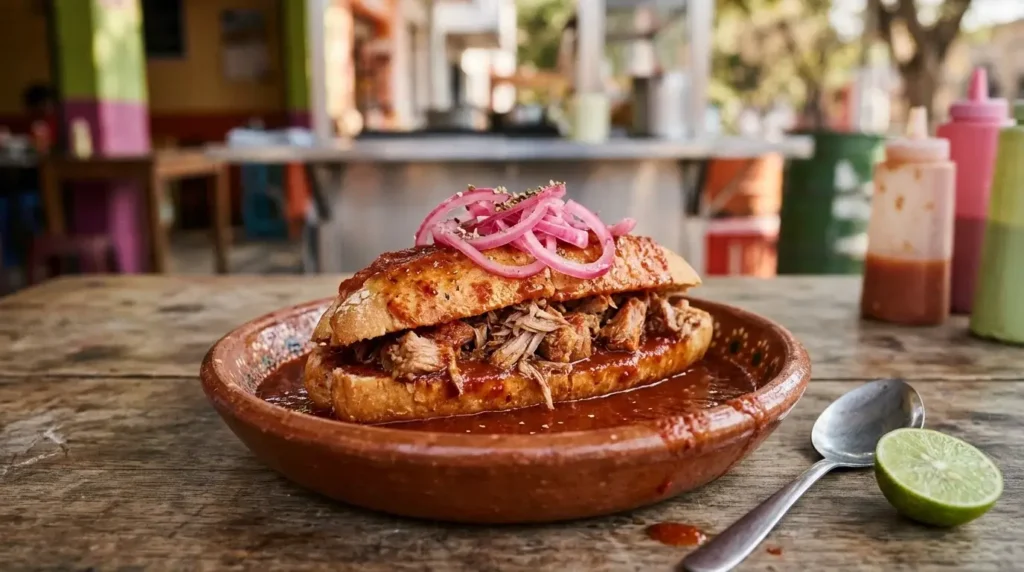
The torta ahogada is a sandwich designed to fail as a sandwich. A crusty birote roll is split, packed with pork, and then drowned, ahogada, in salsa, so that it has to be eaten from a bowl, a plate or, in Guadalajara’s oldest stands, a plastic bag. It is the signature street food of the capital of Jalisco, and its invention is credited to one vendor whose dates and family tree nobody quite agrees on.
Video: Guadalajara's Iconic Tortas Ahogadas (Drowned Tortas), from the Pati Jinich YouTube channel
El Güero drops a torta
Luis de la Torre and the salsa bucket
The story starts with a slip. John Pint, writing for Mexico News Daily in August 2021, says Don Luis de la Torre created it by accident in the 1930s, dropping a pork sandwich into a container of salsa while handing it to a customer. The customer, in Pint’s telling, wanted to try it that way and asked for a spoon.
The date is not fixed. Mariel Caballero of La Razón, writing in September 2024, says the dish dates back more than 100 years and credits Luis de la Torre, known as “güero,” as the first to sell it, near what is now the Jardín de San Francisco, where Guadalajara’s old train station stood. El Financiero, in July 2025, citing the magazine of Jalisco’s state statistics institute, IIEG, also puts the first sales more than a century back at the Jardín de San Francisco. Pint’s 1930s and the century-old claims cannot both be right.
Who came after
Son, helper or employee
The succession is the second dispute. Pint writes that Don Luis had two helpers, Don Ignacio “El Güero” and Don José “Él de la Bici,” who later opened their own stands, starting a rivalry that tapatíos still argue about. El Financiero tells it differently: Ignacio Saldaña, “El Güerito,” was Luis de la Torre’s son, and he opened a restaurant on Madero street at the corner of Puerto in the San Juan de Dios neighborhood. Don José worked for Ignacio, sweeping, washing dishes and eventually making tortas, then left because he felt underpaid, earning at most 115 pesos for six or seven days a week.
In 1960, per El Financiero, Don José began selling tortas from a bicycle on streets near Calzada Independencia. He first wrapped them in brown paper bags and later switched to plastic, which the business still uses. It has since grown to three more branches.
The birote salado
A Belgian baker’s name on a Mexican roll
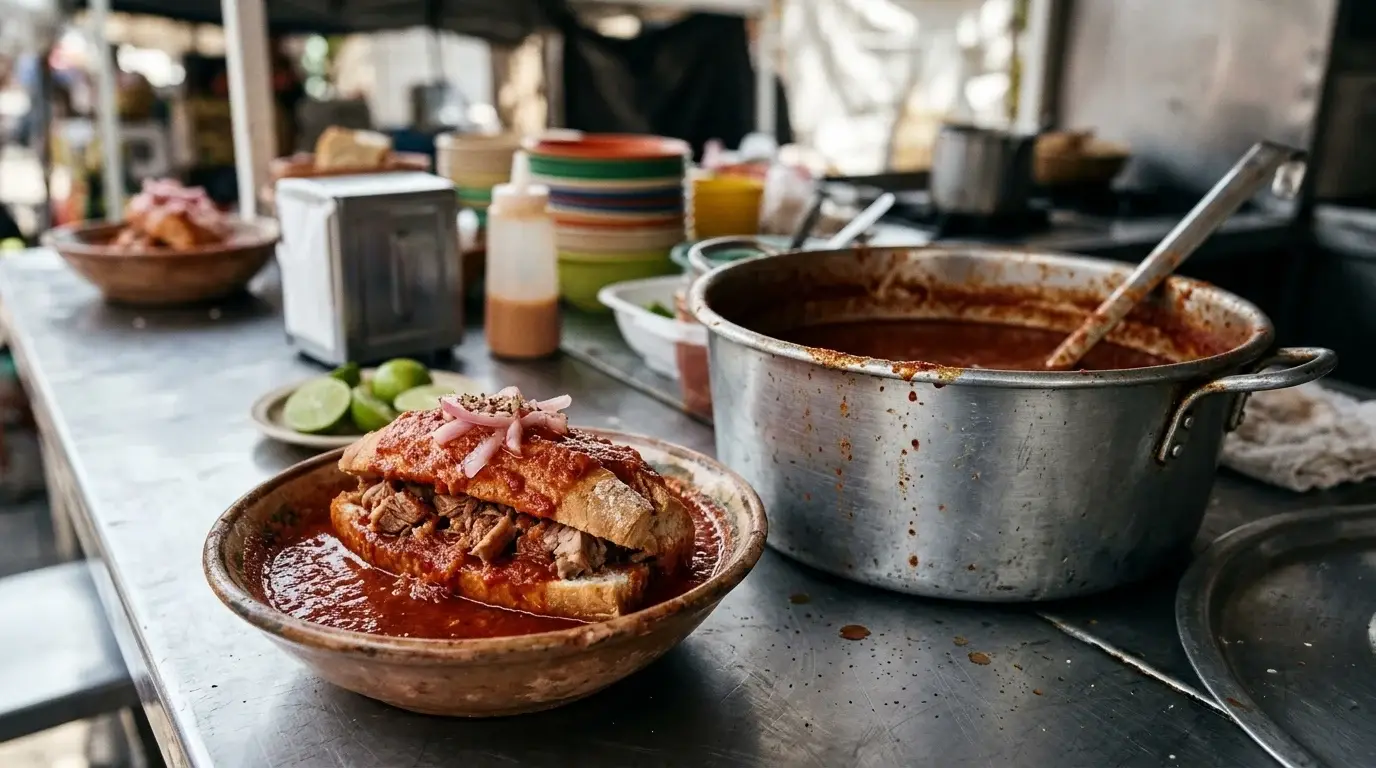
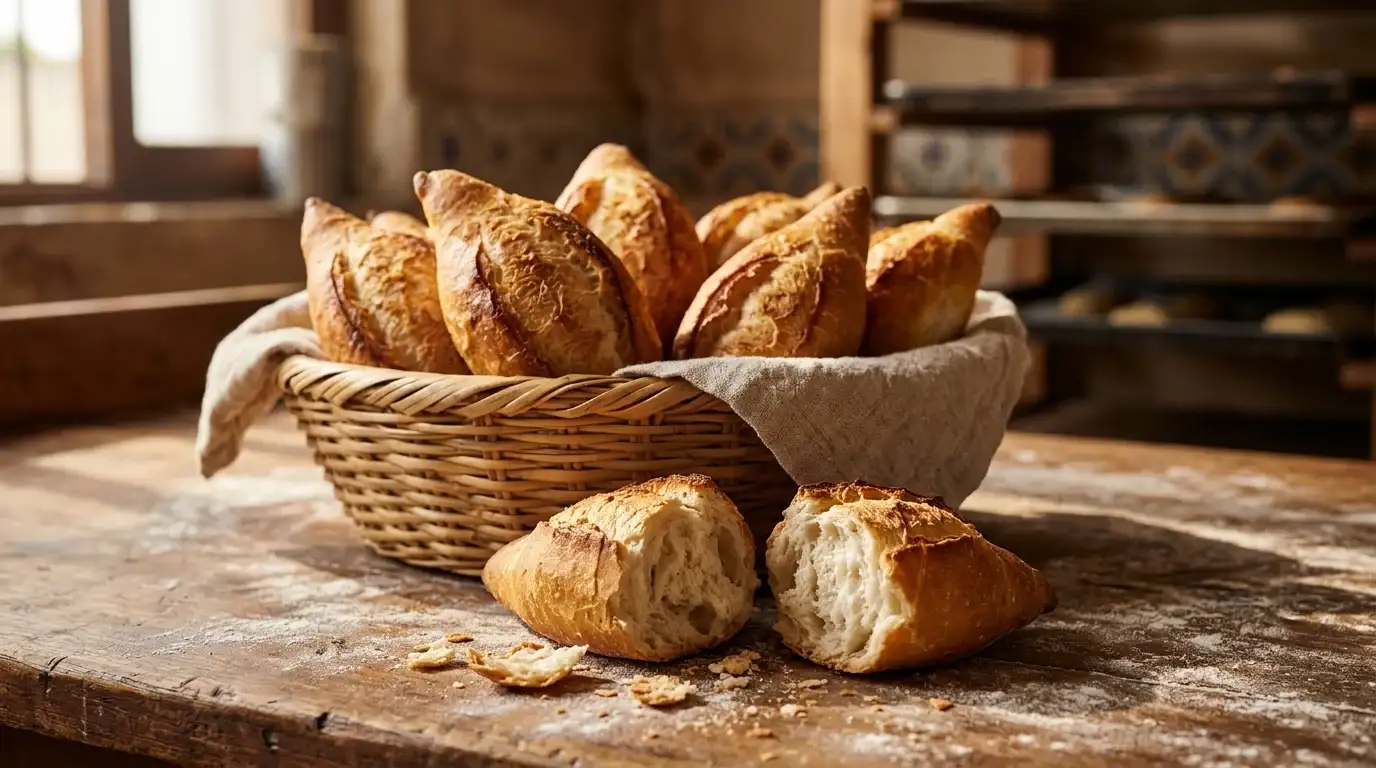
The bread is what keeps it from dissolving. Pint describes the birote as similar to a baguette but about 15 centimeters long, crisp outside and soft inside, and traces the name to Camille Pirotte, a Belgian baker who arrived with the French army in 1864. Only the salted version, birote salado, is used for tortas ahogadas. Caballero calls it a bread exclusive to Guadalajara and frames the whole dish as mestizaje: French bakery technique, local chile.
How a crusty roll survives a soaking is the same problem covered in Grill Cheesy’s why sandwiches get soggy.
Two salsas
Tomato and chile
The drowning has layers. El Financiero describes Don José’s tortas as topped with two sauces: one of raw tomato and one made with chile de Yahualica. Caballero describes a tomato and hot sauce mixture in which diners choose their heat level. Pint lists tomato, onion, cilantro and chile in the salsa at Los Güeros, whose owner credits his mother with the chile, and warns that some competitors’ salsas run much hotter.
The fillings go beyond carnitas. El Financiero lists Don José’s tortas with meat, buche, lengua, cachete, panza or riñón, finished with onion and chile, at 65 pesos in 2025.
Where to eat one
Guadalajara’s named stands
Pint names two in Guadalajara: Tortas y Tacos “Los Güeros” and Tortas Ahogadas “Don José,” where the torta comes in a bowl with a spoon and more salsa at the table. El Financiero places Ignacio Saldaña’s El Güerito restaurant on Madero at Puerto in San Juan de Dios, and describes Don José el de la Bicicleta, founded 1960, with its branches. The city also celebrates the dish every September 10, the Día de la Torta Ahogada, created by the Guadalajara municipal government to promote tapatío food, per La Razón.
Other Mexican street classics on Grill Cheesy include tacos al pastor and the quesadilla.

Questions people ask
What is a torta ahogada? A birote salado roll filled with pork, usually carnitas, and drowned in salsa, from Guadalajara.
Who invented the torta ahogada? Luis de la Torre, “El Güero,” is credited. The date is disputed: the 1930s per Mexico News Daily, more than 100 years ago per La Razón and El Financiero.
Why is it served in a plastic bag? Don José el de la Bicicleta switched from paper to plastic bags, and the tradition stuck, per El Financiero; plates and bowls are also common.
What bread is used? Birote salado, a crusty Guadalajara roll named after Belgian baker Camille Pirotte.
When is Torta Ahogada Day? September 10, in Guadalajara.
For the salsa
- Dried Chile de Arbol Peppers 8oz Whole Hot Red Chili for Salsa & Cooking: whole dried chiles de árbol for a hot salsa roja. See it on Amazon (affiliate link)
As an Amazon Associate I earn from qualifying purchases. A commission may be earned if you buy through this link, at no extra cost to you.
Sources
- John Pint, Mexico News Daily, The popular “drowned sandwich” created in Guadalajara — by accident (Aug. 13, 2021): https://mexiconewsdaily.com/mexico-living/the-drowned-sandwich-created-in-guadalajara-by-accident/
- Mariel Caballero, La Razón de México, Día de la torta ahogada, ¿de dónde viene este platillo? (Sept. 10, 2024): https://www.razon.com.mx/estados/2024/09/10/dia-de-la-torta-ahogada-de-donde-viene-este-platillo/
- El Financiero, La historia de José, el de la bicicleta (July 23, 2025): https://www.elfinanciero.com.mx/food-and-drink/2025/07/23/la-historia-de-jose-el-de-la-bicicleta-local-de-tortas-ahogadas-con-65-anos-donde-comio-adan-augusto/