In this story
Piadina is a thin, round flatbread cooked on a hot griddle along the Adriatic coast of Romagna, then folded around a filling. It is older than most sandwiches and simpler than nearly all of them: flour, fat, salt, water. In 2014 it became a protected European product, and the question of who could legally call a flatbread “romagnola” went all the way to the EU courts.
Video: Piadina Romagnola (Romagna-style flat bread): the perfect recipe, from the Giallozafferano Italian Recipes YouTube channel
Two piade a year
Cardinal Anglic’s 1371 survey
The word is medieval. Roberto Roveda, writing for Focus in August 2025, dates the earliest known use of “piada” to 1371, in the Descriptio Provinciae Romandiolae of the French cardinal Anglic de Grimoard, which recorded that the town of Modigliana owed two piade per inhabitant each year, made of wheat flour, water and salt, sometimes with milk and lard. He links the name, possibly, to the ancient Greek plàthanon, a baking pan, a legacy of Byzantine rule in Romagna.
The official specification agrees on the age. The IGP disciplinare says the product’s reputation is documented from the early 14th century, and describes it for centuries as a bread substitute eaten between weekly bakings, the “pane dei poveri,” bread of the poor. Roveda adds that maize from the Americas was later mixed into the flour to stretch it.
Pascoli’s national bread
Piè becomes piada
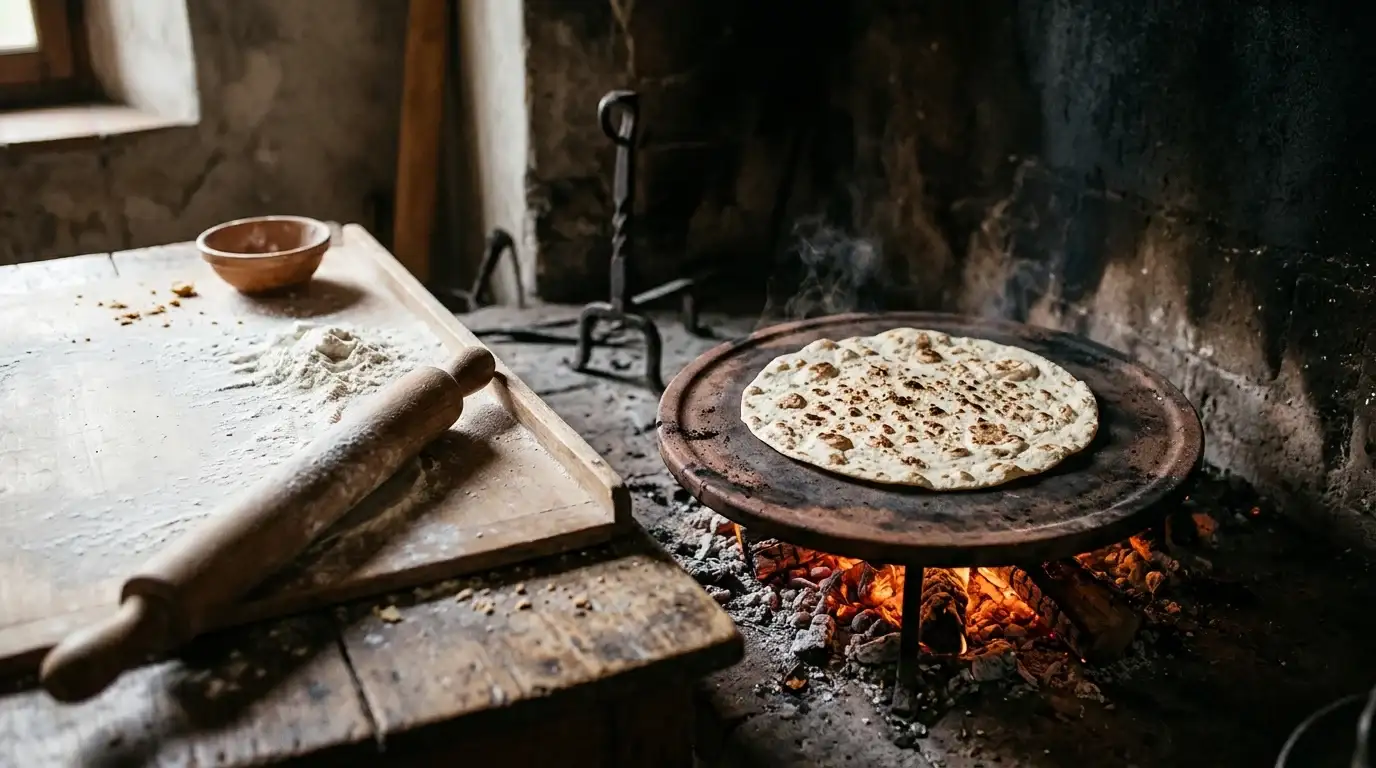
A poet gave it its standard name. The disciplinare credits Giovanni Pascoli with Italianizing the dialect word piè into piada, and quotes him calling it the national bread of the Romagnoli. Roveda gives a longer version of the line: “il pane, anzi il cibo nazionale dei Romagnoli,” the bread, or rather the national food. Pascoli wrote it in connection with his poem La Piada, published in Vita Internazionale, and in his note described the flatbread as made without yeast and cooked in a clay pan called a testo.
The specification also lists later written references: Antonio Sassi in 1913, Alfredo Panzini’s dictionary in 1918, a 1920 editorial in the paper La Piê and Adelmo Masotti’s dialect dictionary in 1996.
The rules
Two shapes, four ingredients, one griddle
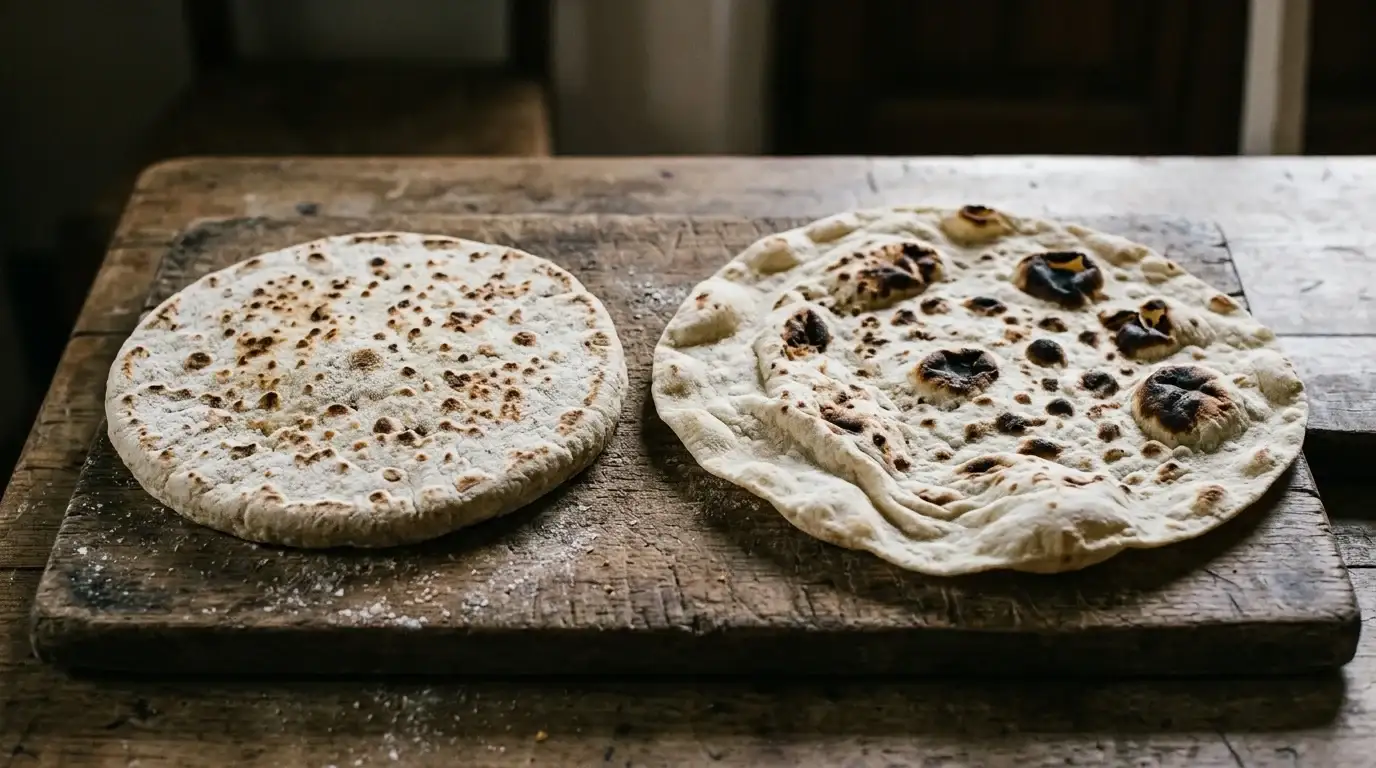
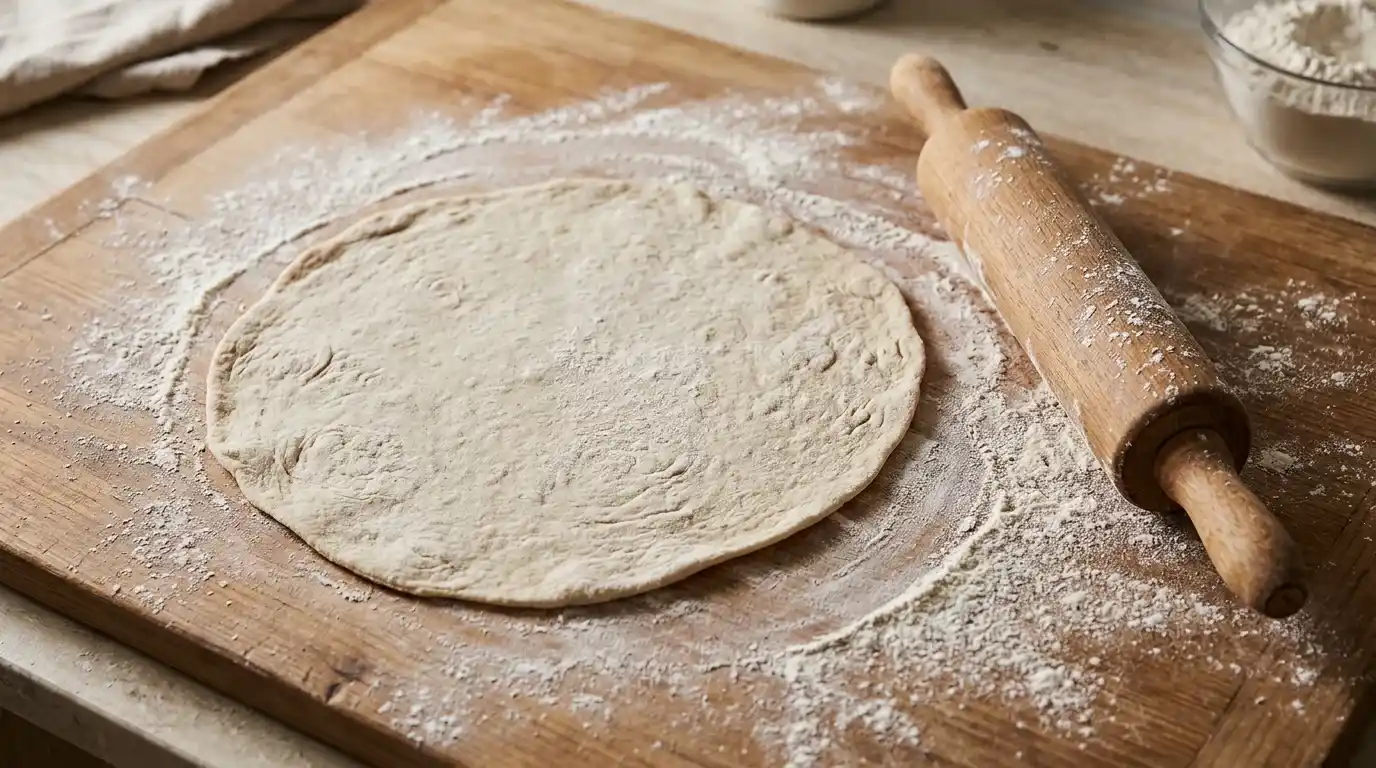
The IGP defines two products. The standard Piadina Romagnola is compact, rigid and crumbly, 15 to 25 centimeters across and 4 to 8 millimeters thick, with small, even amber spots. The Piadina alla Riminese is soft and flexible, 23 to 30 centimeters across and no more than 3 millimeters thick, with large uneven blisters, and must say “alla Riminese” on the pack.
Per kilogram of soft wheat flour, the 2014 specification allows water, up to 25 grams of salt, up to 250 grams of fat as lard and/or olive oil, and up to 20 grams of optional raising agents such as sodium bicarbonate. Preservatives, flavorings and other additives are banned. The dough must be flattened only by rolling, by hand or machine, and each disc cooked on both sides at 200 to 250°C for no more than four minutes total, traditionally on a testo. Production must take place in most of the provinces of Rimini, Forlì-Cesena and Ravenna and the part of Bologna up to the historic course of the Sillaro river.
The court fight
CRM, the TAR and the EU General Court
The IGP was contested before it was even registered. The news agency Dire reported in April 2018 that a consortium applied in 2011, and that CRM, a bakery company based in Modena, outside the protected area, challenged the process. On May 15, 2014, Lazio’s regional administrative court sided with CRM, holding that the protectable reputation belonged to artisanal production rather than industrial, and ordered the specification rewritten.
The Commission registered the name anyway, by Regulation (EU) No 1174/2014. Italy’s Council of State overturned the regional court on May 13, 2015. On April 23, 2018, the EU General Court dismissed CRM’s challenge, finding that even industrial piadina’s reputation was tied to Romagna through human factors such as recipes passed down through generations. It faulted the Commission for an incomplete investigation that ignored the regional ruling, but because that ruling had been annulled, the flaw did not void the registration. CRM could no longer sell Modena-made piadine as romagnole.
Filling a piadina
What goes inside
The filling tradition is regional rather than codified; the IGP rules cover only the bread. The cured ham is covered in Grill Cheesy’s prosciutto; Bologna’s sausage is in mortadella. Pressed Italian sandwiches on bread are in panini, and the cheese family that melts well in a folded flatbread includes fontina.
Questions people ask
What is piadina? A thin, unleavened or lightly leavened flatbread from Romagna, cooked on a griddle and folded around fillings.
What is the difference between piadina romagnola and riminese? The standard romagnola is thicker (4 to 8 mm) and stiffer; the riminese is wider and no more than 3 mm thick, soft and flexible.
When did piadina get IGP status? In 2014, by EU Regulation No 1174/2014.
What did Pascoli call piadina? The national bread of the Romagnoli; Focus quotes a fuller line, the bread or rather the national food.
What is a testo? The griddle, traditionally clay, on which piadina is cooked.
Sources
- Disciplinare di produzione IGP “Piadina Romagnola” (Nov. 4, 2014): https://www.agricultura.it/wp-content/uploads/2019/01/Disciplinare_piadina_romagnola_4.11.2014.pdf
- Roberto Roveda, Focus, La piadina è romagnola o riminese? (Aug. 23, 2025): https://www.focus.it/cultura/curiosita/la-vera-piadina-e-romagnola-o-riminese
- Dire, La piadina è solo quella romagnola (Apr. 23, 2018): https://www.dire.it/23-04-2018/195582-la-piadina-e-solo-quella-romagnola-lo-ha-deciso-corte-giustizia-ue/