In this story
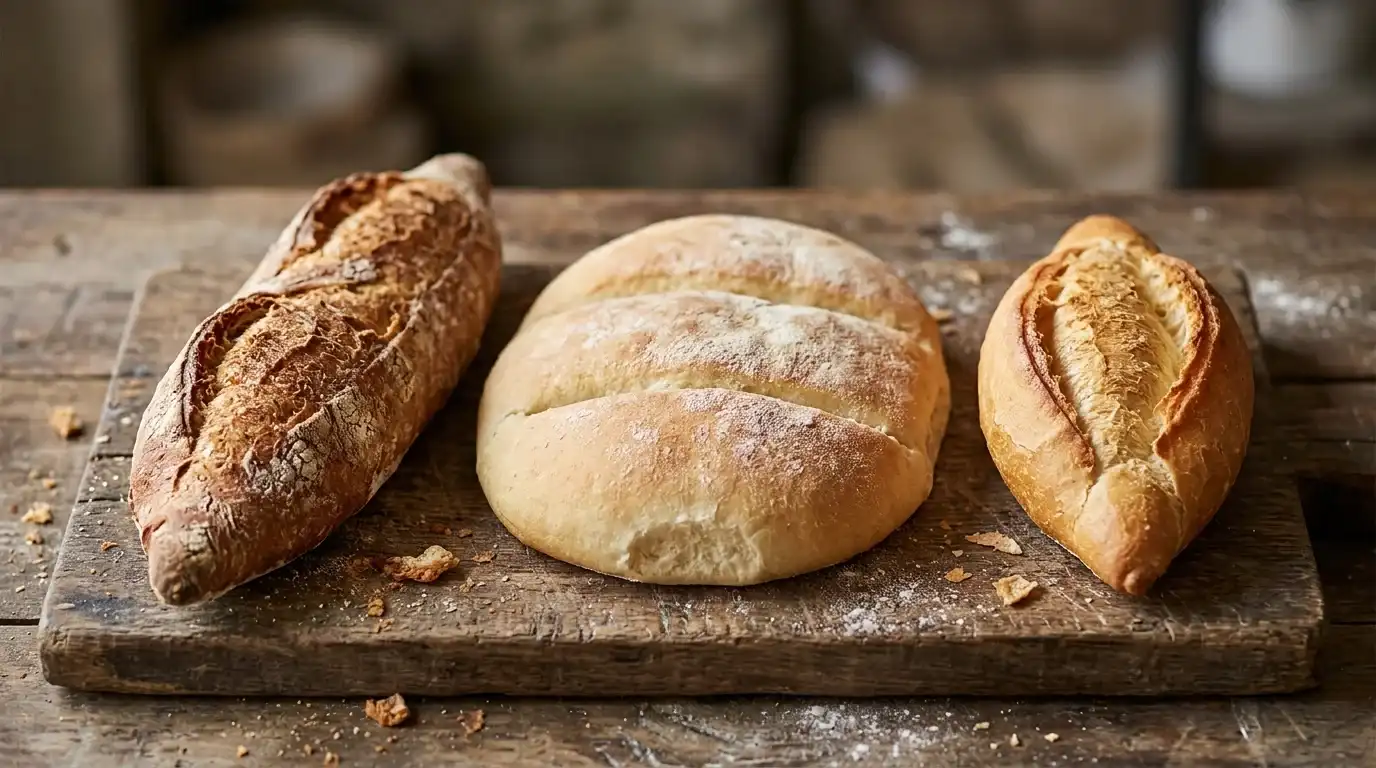
The bolillo is a small, oval, crusty white roll with a slit down the top, soft inside and crackling outside. It is the bread of the Mexican torta and the roll bakeries pull from the oven in batches all day. Its origin is usually traced to a single Belgian baker in the 1860s. Who he was, and where he baked, depends on the account.
Video: Traditional Mexican Bolillo Bread Recipe, from the Ana Regalado YouTube channel
Pan francés for the viceroy
Colonial wheat bread and pan basso
French-style bread was in Mexico long before the bolillo. Chilango, in a November 2023 history of the roll, writes that pan francés, its ancestor, existed in the colonial period but was reserved for the viceroy and his court. Everyone else ate pan basso, made from leftover or low-grade flour, a name Chilango connects to the later pambazo.
Camille Pirotte
Soldier, court baker, or both
The accepted origin story centers on one man. Chilango, drawing on Puratos’s Bibliothèque des levains, says that during the Second Mexican Empire, Emperor Maximilian I wanted European baking to spread and asked French troops of the Intervention to teach their trades, beginning in Guadalajara. There, Camille Pirotte, a Belgian-born soldier and baker without commercial yeast, made a sourdough starter but could ferment the dough only a few days. The result was an elongated roll with a golden, crisp crust and a denser crumb, sold fresh to French soldiers with leftovers going to locals.
Georgina Becerril of UnoTV, writing in February 2026 and citing a document from Mexico’s national university, UNAM, describes Pirotte differently: a Belgian baker at the court of Maximilian of Habsburg who, after several failed attempts, let his dough ferment naturally. John Pint of Mexico News Daily has him arriving with the French army in 1864. Soldier or courtier, all three agree on the Belgian, the 1860s and the name.
The birote, the telera, the bolillo
How one roll became three
The name came from mispronunciation. Chilango and UnoTV both report that locals, unable to say Pirotte, called his bread birote, or virote. Guadalajara still bakes it, and its salted version is the roll for the torta ahogada, per Pint.
The bread changed as it traveled. Chilango describes two descendants in central Mexico: first the telera, divided into three sections with a little lard and sugar in the dough, then the smaller bolillo, with a thinner crust and softer interior than the birote.
UnoTV places the modern bolillo in the Porfiriato, when French influence shaped Mexican baking. Twentieth-century bakeries, Chilango notes, sold fresh batches every 20 minutes, a custom that continues. UnoTV ties the phrase “se vende como pan caliente,” it sells like hot bread, to those constant batches.

Shape and method
Diamond, slit, short fermentation
UnoTV describes the bolillo’s form: a diamond-like oval with a central slit, crisp outside and soft inside. Its ingredients, per UNAM, are wheat flour, yeast, water and salt. The browning of the crust is the chemistry covered in Grill Cheesy’s Maillard reaction and bread. A longer, slower relative is in sourdough bread, and the Austrian roll is in kaiser roll.
Nutrition and the susto
183 calories and a folk remedy
The roll has been measured. UnoTV, citing UNAM, gives a 60-gram bolillo 183 calories, 39 grams of carbohydrate, 5.7 grams of protein and 341.4 milligrams of sodium.
It also has a reputation as medicine. Chilango repeats the folk belief that a bolillo takes away the susto, the shock of a scare, and cites UNAM studies saying it works only on an empty stomach. Nothing in the articles explains the mechanism, and the belief is presented as tradition.
On the plate
Tortas and the Sonoran dog
The bolillo’s job is to be filled, split for tortas. Wikipedia’s bolillo entry, used here only as a pointer, notes regional names, including pan francés in El Salvador and birote and torcido in Sinaloa, and lists the bolillo as the typical bun for the Sonoran hot dog.

Questions people ask
What is a bolillo? A small, oval, crusty white roll with a slit on top, made from wheat flour, yeast, water and salt.
Who invented the bolillo? The most accepted account credits Belgian baker Camille Pirotte in the 1860s, described as a French-army soldier in Guadalajara (Chilango, Mexico News Daily) or a baker at Maximilian’s court (UnoTV, citing UNAM).
What is the difference between a bolillo and a telera? The telera is divided into three sections and contains a little lard and sugar; the bolillo is smaller, with a single slit, per Chilango.
How many calories are in a bolillo? About 183 in a 60-gram roll, per UNAM figures reported by UnoTV.
Does a bolillo cure a scare? It is a folk belief; Chilango cites UNAM studies saying it helps only on an empty stomach.
For scoring rolls
- “SAINT GERMAIN Premium Hand Crafted Bread Lame for Dough Scoring Knife, Lame Bread Tool for Sourdough Bread Slashing with 10 Blades Included with Replacement with Authentic Leather Protector Cover”: a handled razor lame for cutting the slit in bolillos and baguettes. See it on Amazon (affiliate link)
Video: Saint Germain Premium Hand Crafted Bread Lame Review, from the EmilytheHomeschooler's Reviews YouTube channel
As an Amazon Associate I earn from qualifying purchases. A commission may be earned if you buy through this link, at no extra cost to you.
Sources
- Chilango, Te juro que no es obsesión: La historia del bolillo en la CDMX (Nov. 17, 2023): https://www.chilango.com/comida-y-tragos/la-historia-del-bolillo-en-la-cdmx/
- Georgina Becerril, UnoTV, ¿Qué tan saludable es comer bolillo? UNAM responde (Feb. 19, 2026): https://www.unotv.com/salud/comer-bolillo-es-nutritivo-esto-dicen-especialistas/
- John Pint, Mexico News Daily, The popular “drowned sandwich” created in Guadalajara — by accident (Aug. 13, 2021): https://mexiconewsdaily.com/mexico-living/the-drowned-sandwich-created-in-guadalajara-by-accident/
- Wikipedia, Bolillo (pointer only): https://en.wikipedia.org/wiki/Bolillo