In this story
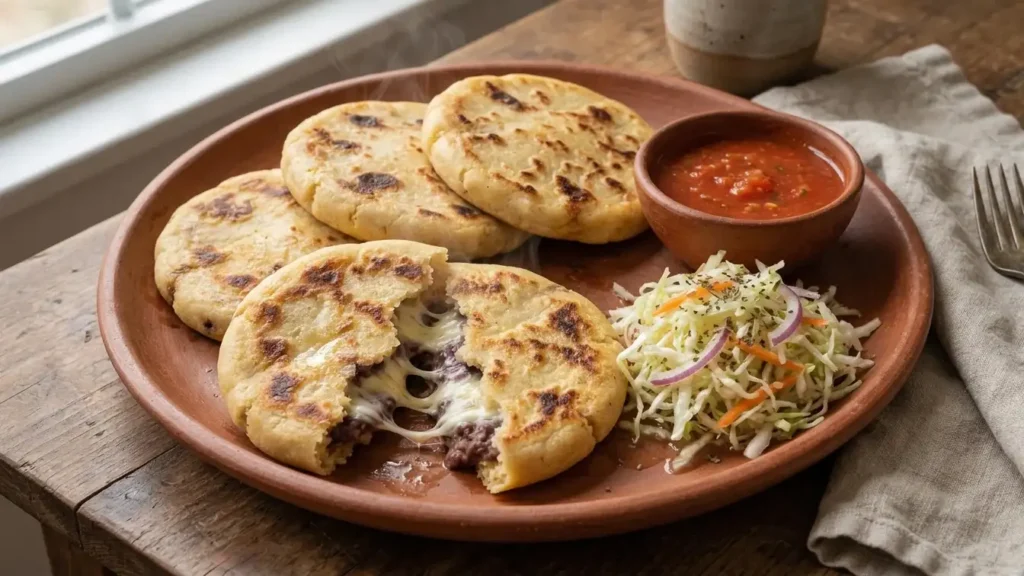
A pupusa is a thick round of corn dough wrapped around a filling, patted flat between the palms and cooked on a hot griddle until both faces are spotted brown and the cheese inside has turned to liquid. It is eaten by hand, with a heap of cabbage relish on top and thin tomato salsa on the side. El Salvador made it the national dish by law. Honduras has made its own claim, and the dish itself is older than any of the borders involved.
Video: Salvadoran Pupusas as Made by Curly and His Abuelita, from the Tasty YouTube channel
What goes inside
Cheese, beans, pork and a flower
The classic fillings are short and fixed. El Salvador’s El Diario de Hoy, in a November 2022 explainer by Georgina Martínez, described the traditional pupusa as corn dough filled with cheese, chicharrón, refried beans and loroco, the edible flower bud that gives some pupusas a green, slightly vegetal flavor.
Corn or rice
Not every pupusa is corn. The same article said rice pupusas were born when the Salvadoran civil war caused corn shortages, and named Olocuilta, in the department of La Paz, as their birthplace. Olocuilta still holds an annual pupusa festival around National Pupusa Day.
A contested origin
Mesoamerica, not a country
Who made the first pupusa has no documented answer. Martínez wrote that both El Salvador and Honduras had claimed it, and that the safest statement points to the Mesoamerican region, where neighboring peoples cooked closely related corn dishes. Luis Panameño, director of the specialized library at El Salvador’s Museo Nacional de Antropología, told the ACAN-EFE wire service that the pupusa’s origin is pre-Columbian, though no precise period has been established.
The village under the ash
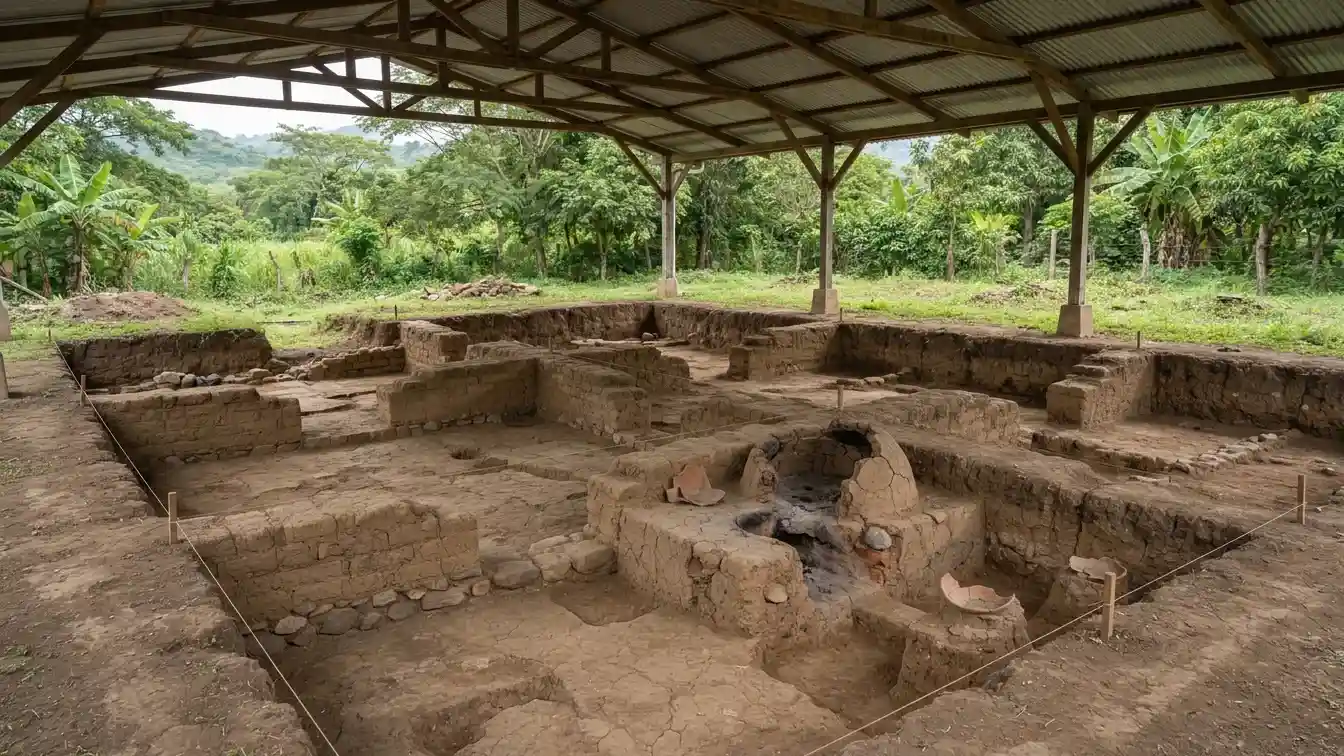
El Salvador’s strongest physical link to that deep past is Joya de Cerén. According to UNESCO’s World Heritage listing, an eruption of the Laguna Caldera volcano buried the farming village around AD 600, preserving houses, a kitchen, storehouses, storage pots filled with beans and maize fields with both young and mature plants. The site shows maize and beans at the center of daily food 1,400 years ago. It does not prove that anyone there was making pupusas, and claims that it does go further than the UNESCO record.
The national dish by decree
Second Sunday of November
The modern claim is legal. The same ACAN-EFE report noted that El Salvador’s Legislative Assembly decreed in 2005 that the pupusa is the national dish and set National Pupusa Day on the second Sunday of November. In March 2018, Martínez wrote, the World Trade Organization granted El Salvador a designation of origin for corn and rice pupusas.
Records on the griddle
National Pupusa Day has become an occasion for giant ones. UPI reported in November 2022 that more than three dozen cooks in Olocuilta made an 18-foot pupusa for the town’s festival, beating the 14-foot, 9-inch record set in the same town in 2015. The record then left the country. Guinness World Records lists the current largest pupusa at 6.15 meters, about 20 feet 2 inches across, made by Fiesta DC in Washington on September 28, 2024.
How the pupusa reached the United States
Washington’s adopted snack
That Washington record is not an accident. Saveur’s June 2016 report on the city’s pupusa trail traced the D.C. area’s Salvadoran community to arrivals that grew sharply after the civil war began in 1979, and to restaurants such as El Tamarindo in Adams Morgan, where José and Betty Reyes began selling pupusas in 1982. Salvadoran restaurants spread through the region from the mid-1980s.
Historian José Centeno-Meléndez went further in a November 2019 NBC Washington report, telling the station that the pupusa was not recognized as El Salvador’s national dish until after it had become popular in cities such as Washington and Los Angeles. The diaspora, in that telling, helped make the symbol.
On the comal
Dough, filling, pressure, heat
The Smithsonian Folklife Festival’s pupusa and curtido recipe post walks through the method behind the pupusas de chicharrón that guest chef Rita Torres Gonzales cooked on the National Mall in 1985. The dough is masa harina, salt, a little oil and hot water, rested for at least 15 minutes. The filling is pork shoulder browned in its own fat, ground with onion, green pepper and tomato until smooth, then cooked again until dry. That paste is what chicharrón means on a pupusa menu.
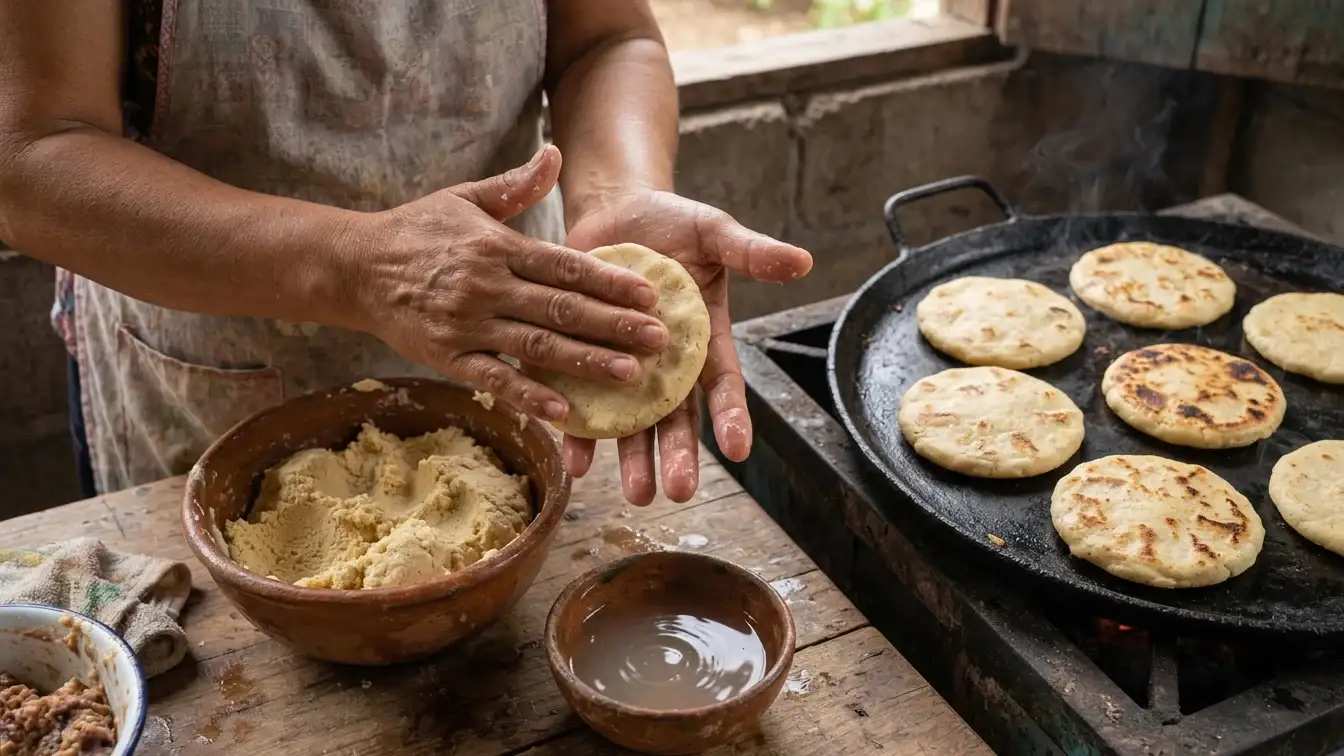
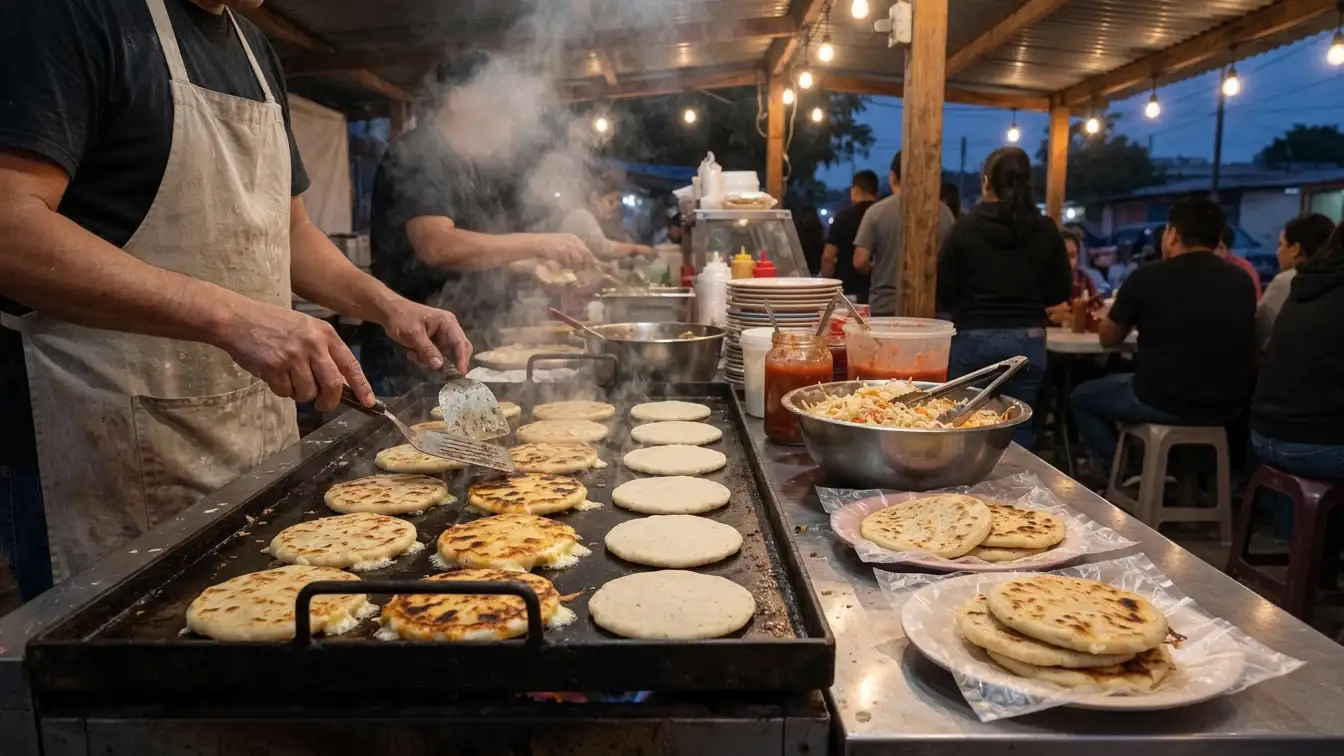
Shaping is done with hands wet with water and oil. A golf-ball-sized piece of dough is pressed into a cup, about 2 tablespoons of filling goes in, and the dough is pulled up and sealed, then flattened into a round about 4 inches across. The pupusas cook ungreased on a griddle or cast-iron pan over medium heat, and the post advises treating the first one like a test pancake.
What comes with it
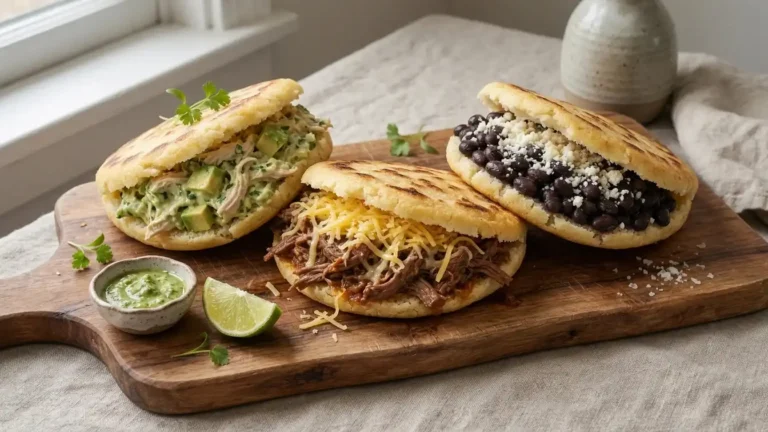
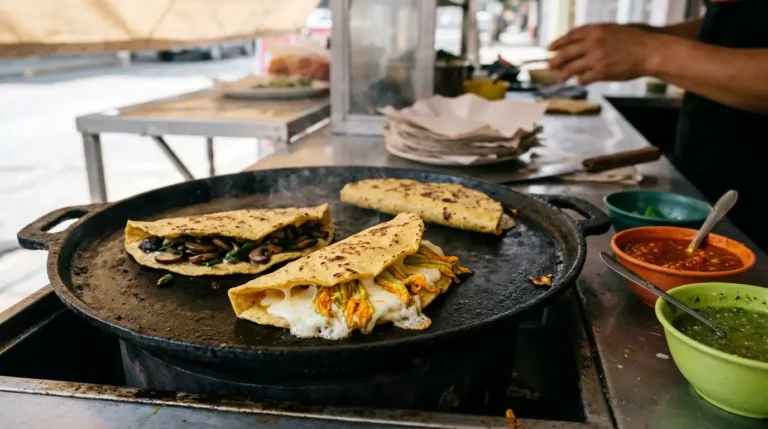
The standard companion is curtido, the cabbage, carrot and oregano relish covered earlier on GrillCheesy, plus a thin, unthickened tomato salsa. In the family of stuffed and griddled corn, the pupusa sits beside Venezuela’s arepas, which are split after cooking instead of filled before, and Mexico’s quesadilla, which folds its cheese inside a tortilla. A flat cast-iron surface works for all three, a point made in the griddle vs grill comparison.
Instant masa flour and a flat comal are the two tools that make pupusas possible in a home kitchen:
- Maseca Instant Yellow Corn Masa Flour 2.2lb: instant corn masa that becomes dough with water and salt. See it on Amazon (affiliate link)
- Uno Casa Cast Iron Comal Pan 11.5 Inch: a flat cast-iron comal for griddling pupusas, tortillas and arepas. See it on Amazon (affiliate link)
Video: Masa Vs Maseca – The Battle For The Freshest Tortilla, from the KQED Food YouTube channel
As an Amazon Associate I earn from qualifying purchases. A commission may be earned if you buy through this link, at no extra cost to you.
Sources
- El Diario de Hoy, pupusas explainer by Georgina Martínez (2022): https://www.elsalvador.com/?p=1015216
- La Prensa (ACAN-EFE), Los salvadoreños le rinden culto a la pupusa, su plato nacional: https://www.prensa.com/cultura/salvadorenos-rinden-culto-pupusa-nacional_0_3250174974.html
- UNESCO World Heritage Centre, Joya de Cerén Archaeological Site: https://whc.unesco.org/en/list/675/
- UPI via ArcaMax, El Salvador town’s 18-foot pupusa breaks world record (2022): https://www.arcamax.com/entertainment/weirdnews/s-2755389?print
- Guinness World Records, Largest pupusa: https://www.guinnessworldrecords.com/world-records/largest-pupusa
- Saveur, Follow D.C.’s Pupusa Trail to Cheesy Griddled Happiness (2016): https://www.saveur.com/washington-dc-pupusas
- NBC Washington, Praising the Pupusa (2019): https://www.nbcwashington.com/news/local/the-pupusa-iconic-salvadoran-dish-is-a-dc-mainstay-national-pupusa-day/2106358/?amp=1
- Smithsonian Folklife Festival, Salvadoran Recipes: Pupusas de Chicharrón and Curtido: https://festival.si.edu/blog/salvadoran-recipes-pupusas-de-chicharron-and-curtido