In this story
Teppanyaki means grilling on an iron plate. In practice it names a kind of restaurant where a cook stands behind a flat steel griddle built into the table and cooks steak, seafood and vegetables in front of the people who will eat them. The style looks ancient. It dates to the autumn of 1945, in a bombed-out Japanese port city, and it reached the United States less than twenty years later through a former wrestler who had been selling ice cream in Harlem.
Video: Oldest Kobe Beef Teppanyaki Restaurant, Misono, from the Unfiltered Japan YouTube channel
Kobe, autumn 1945
An okonomiyaki plate and an American officer
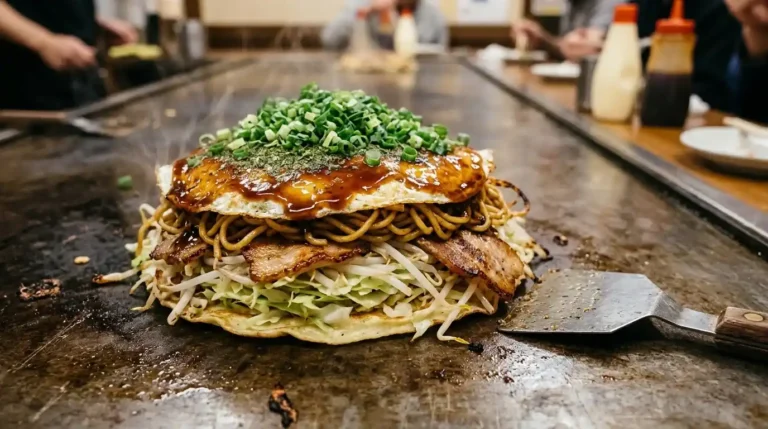
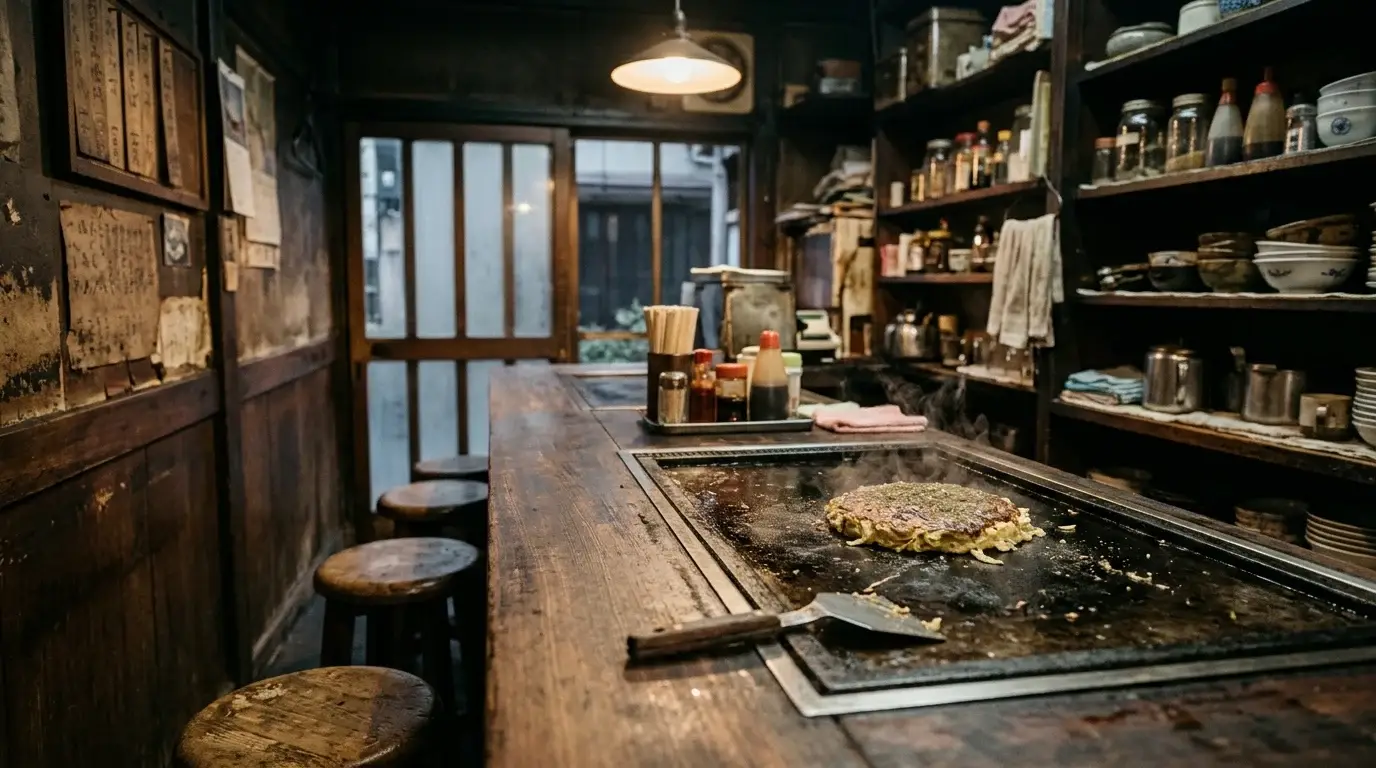
The usual starting point is Misono, in Kobe. The restaurant describes itself on its website as the first teppanyaki restaurant in the world, established in 1945. Nancy Snow, writing for Japan Today, recounts the story Misono tells. Its founder, Shigeji Fujioka (1909-1999), had run a café and coffee-bean wholesale business before the war. Afterward, in a city heavily bombed and full of occupying American troops, he collected an iron plate from the dockyards and used it to make okonomiyaki, the savory Japanese griddle pancake.
In the fall of 1945, the story goes, an American officer walked in. Snow writes that Misono credits the officer’s appetite with what followed: Fujioka swapped the pancake for beef steak, cooked on the same plate with the same spatula. Snow treats the officer’s reported line, a demand for beef, as literary license. The substance of the story is the swap.
Misono still operates. Snow reports branches in Osaka, Kyoto and Tokyo, and the restaurant’s own site describes Kobe beef cooked with light seasoning and fresh vegetables.
Why a flat plate worked
One surface for pancakes, steak and vegetables
The teppan was an okonomiyaki tool first. A flat iron plate holds what a grill grate cannot, from pancake batter to chopped vegetables, and in Fujioka’s story the steak simply joined them on the same surface, cooked where the customer could watch.
That is the same logic behind any diner flat-top. GrillCheesy’s guide to seasoning a flat-top griddle covers how the steel surface is built and maintained, and the smash burger and diner hash browns both depend on it.
Benihana opens in New York
Four tables on West 56th Street
Teppanyaki crossed the Pacific with Hiroaki “Rocky” Aoki. Mayukh Sen, writing a 2018 history of Benihana for The Ringer, traces the name to his parents’ Tokyo coffee shop, renamed Benihana after a red safflower that appeared in the ruined city in 1945. Aoki arrived in the United States around 1959 on a wrestling scholarship, Sen writes, and earned money as a dishwasher, busboy and Mister Softee ice cream seller, doing well by parking in Harlem, playing Japanese music and decorating the ice cream with paper parasols.
He opened Benihana in May 1964 on West 56th Street in Midtown Manhattan, at 25. Benihana’s own history calls it America’s first Japanese teppanyaki restaurant, with a Japanese farmhouse interior and food prepared on steel grills in front of customers. Sen reports it had four tables and lost money in its first months.
The turnaround came from a review. Sen writes that Clementine Paddleford, the New York Herald Tribune‘s restaurant critic, praised the restaurant in May 1964, press coverage followed, and a second location opened in May 1966 on East 56th Street. Benihana’s history adds a third in Chicago, and by 1972 there were six in the United States.
The show at the table
Flipped shrimp, onion volcanoes and shared tables
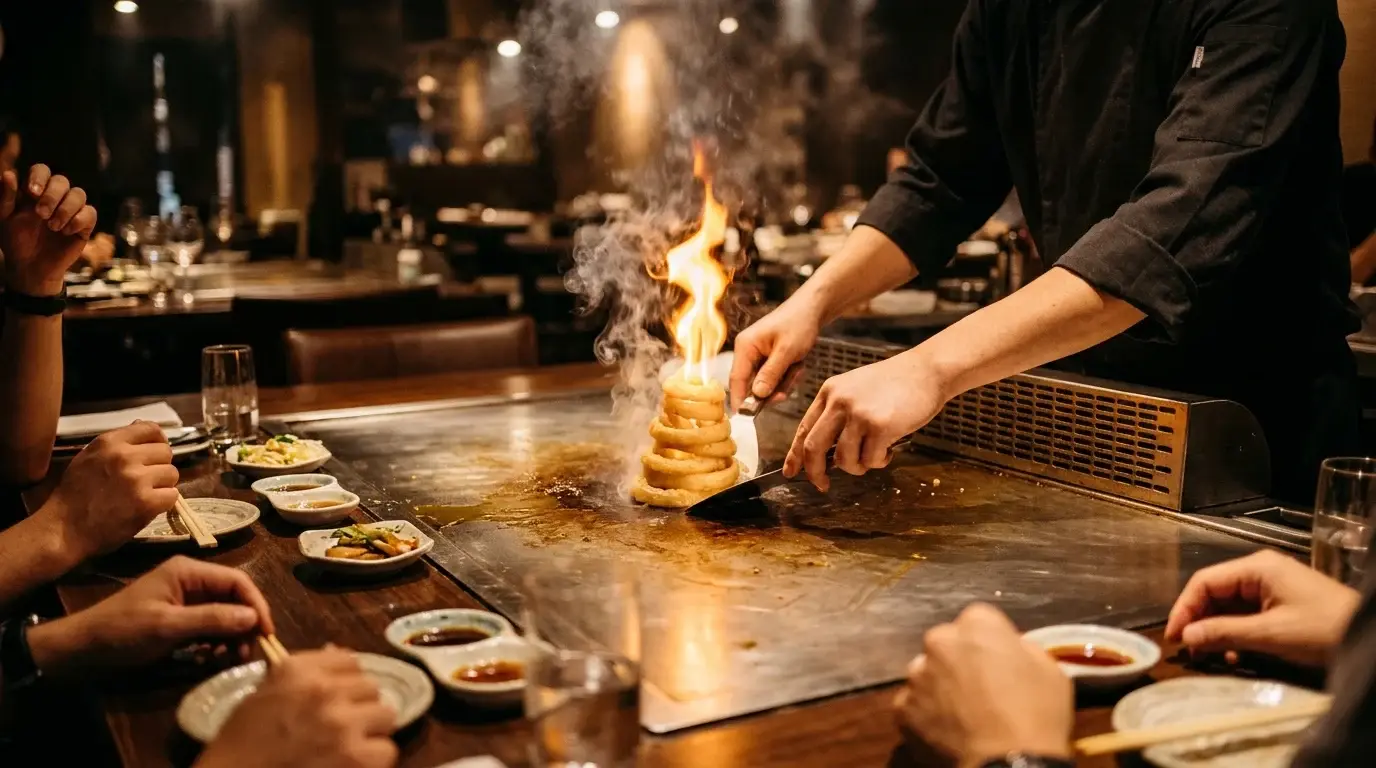
Benihana sold a performance. Sen lists the tricks that became the brand’s signature: flipping shrimp, shaping rice into a heart, stacking onion rings into a smoking “volcano” and tossing butter with puns. The early menu was short and familiar to American diners, with hibachi chicken listed at $5 and filet mignon at $6.75.
Not everyone approved. Sen quotes a 1979 Texas Monthly critic who compared the theatrics to a minstrel show, and he quotes Aoki himself: “The minute I forgot I was Japanese, success began.” Sen’s argument is that the diluted approach still opened many American diners to Japanese food. Sen writes that Aoki was a millionaire by 1979 and eventually built about 78 locations across the United States and Latin America.
Teppanyaki is not hibachi
A naming mix-up that stuck
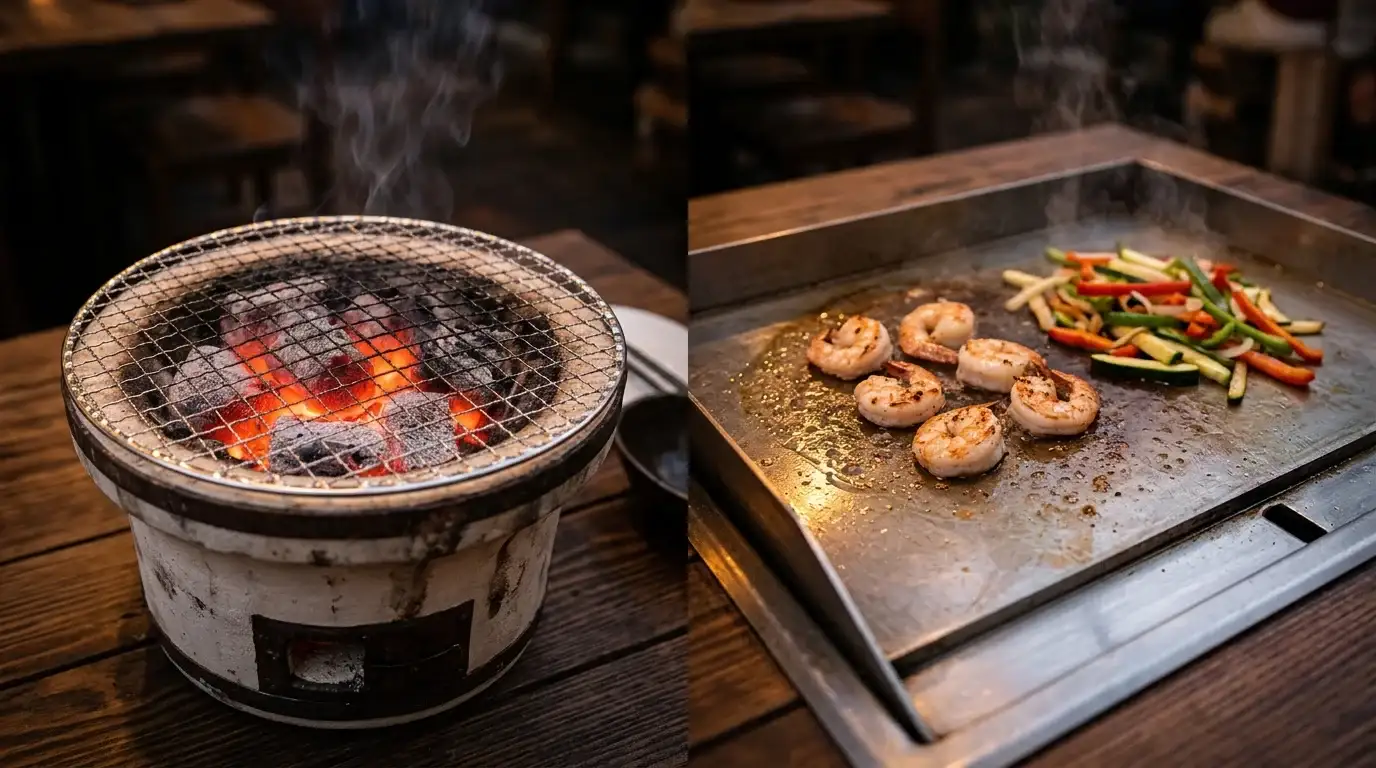
Americans often call these restaurants “hibachi.” The word belongs to something else. Snow explains that a hibachi is a centuries-old family-style “fire bowl,” a charcoal heater, while teppanyaki is a much younger style built around performance on a flat iron plate. Sen notes that even Benihana’s early menus used “hibachi” labels for food cooked on a teppan.
The distinction is practical as well as linguistic. A hibachi cooks over open charcoal; a teppan is a solid steel surface. One is a grill. The other is a griddle.
From Kobe beef to the mall
Two directions from one plate
Teppanyaki went two ways. In Japan, at places like Misono, it stayed a high-end way to serve Kobe beef; Snow notes that it is considered a pricey meal there, though lunch sets start around 3,000 yen. In the United States, Benihana made it a celebration dinner, built on chicken, shrimp and steak cooked with a show. Snow reports the chain had grown to 77 restaurants across the United States, the Caribbean and Central and South America.
Both versions start from the same thing: a flat piece of hot iron and a cook who stands where the diners can see.
Frequently asked questions
Where did teppanyaki originate?
Kobe, Japan. Misono says it opened in 1945 as the world’s first teppanyaki restaurant, when founder Shigeji Fujioka began cooking steak on an okonomiyaki iron plate.
Who brought teppanyaki to America?
Rocky Aoki, who opened the first Benihana on West 56th Street in New York City in May 1964.
What is the difference between teppanyaki and hibachi?
Teppanyaki is cooked on a flat iron griddle. A hibachi is a traditional charcoal fire bowl.
What does teppanyaki mean?
Grilling on an iron plate: teppan means iron plate, and yaki means grilled.
Sources
- Misono, official site: https://www.misono.org/en/
- Nancy Snow, “Teppanyaki: A Japanese cooking tradition made in America,” Japan Today: https://japantoday.com/category/features/food/teppanyaki-a-japanese-cooking-tradition-made-in-america
- Benihana, “History”: https://www.benihana.com/?p=817
- Mayukh Sen, “A Flower in the Debris: The Legacy of Benihana, Rocky Aoki’s All-American Empire,” The Ringer (July 24, 2018): https://www.theringer.com/2018/7/24/17606204/benihana-rocky-aoki-feature