In this story
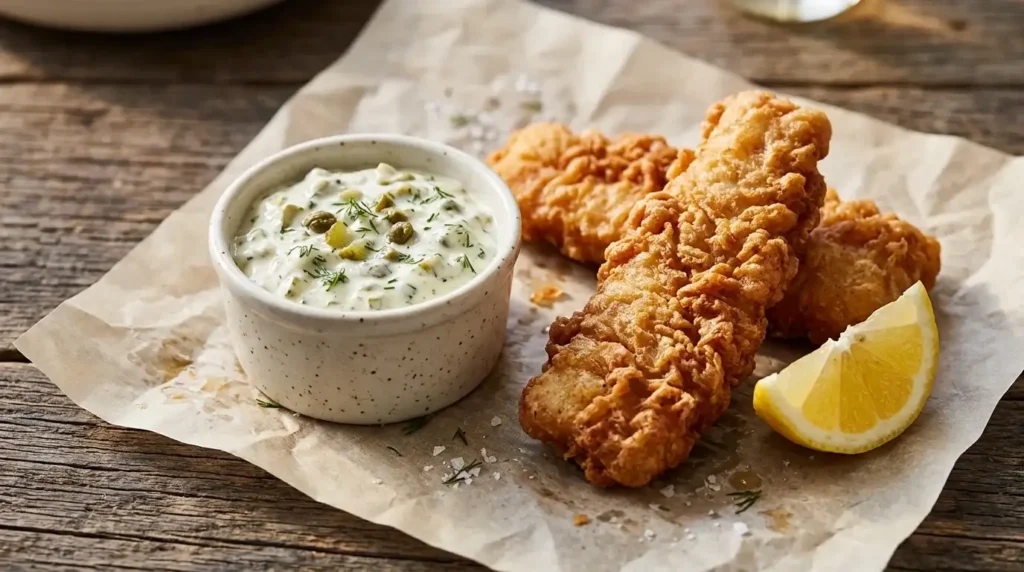
Tartar sauce is mayonnaise sharpened with chopped pickles, capers, herbs and lemon, the white sauce that comes in a paper cup beside fried fish. It is French in origin and older than most people assume. The name ties it to the Tatars of Central Asia through a chain of French cooking terms, and the direction of that chain, whether the sauce named a dish or a dish named the sauce, depends on which reference is asked.
Video: How to Make Tartare Sauce, Rick Stein Recipe, from the Rick Stein Restaurants YouTube channel
Mayonnaise with a bite
The base has not changed much. Matthew Lee of Chowhound, writing in July 2024, describes a tart mayonnaise base with vinegar or lemon juice and herbs such as tarragon and parsley. Courtney Iseman of Tasting Table, in September 2024, lists the modern components as mayonnaise with chopped pickles or relish, lemon, Dijon mustard, garlic and capers.
Gregory Lewis McNamee, writing for Britannica, describes the sauce as a mayonnaise and mustard blend with gherkins that the French chef Auguste Escoffier helped perfect.
The mayonnaise base links it to Grill Cheesy’s other cold emulsified sauces, including remoulade and the family covered in aioli versus mayonnaise.
A French sauce, an English word
The English term is mid-Victorian. The Online Etymology Dictionary records “tartar sauce” by 1855, from French sauce tartare. Lee notes that the English writer Eliza Acton’s 1860 cookbook described a version of it as a remoulade-style sauce.
The French origin is not much in doubt. Iseman writes that many countries have claimed the sauce, but France has the strongest case, because its first written mentions appear in 19th-century French cookbooks. Britannica adds a dissent from the period: Joseph Favre, writing in 1894, traced the sauce to Poland rather than Central Asia.

Which came first, sauce or steak
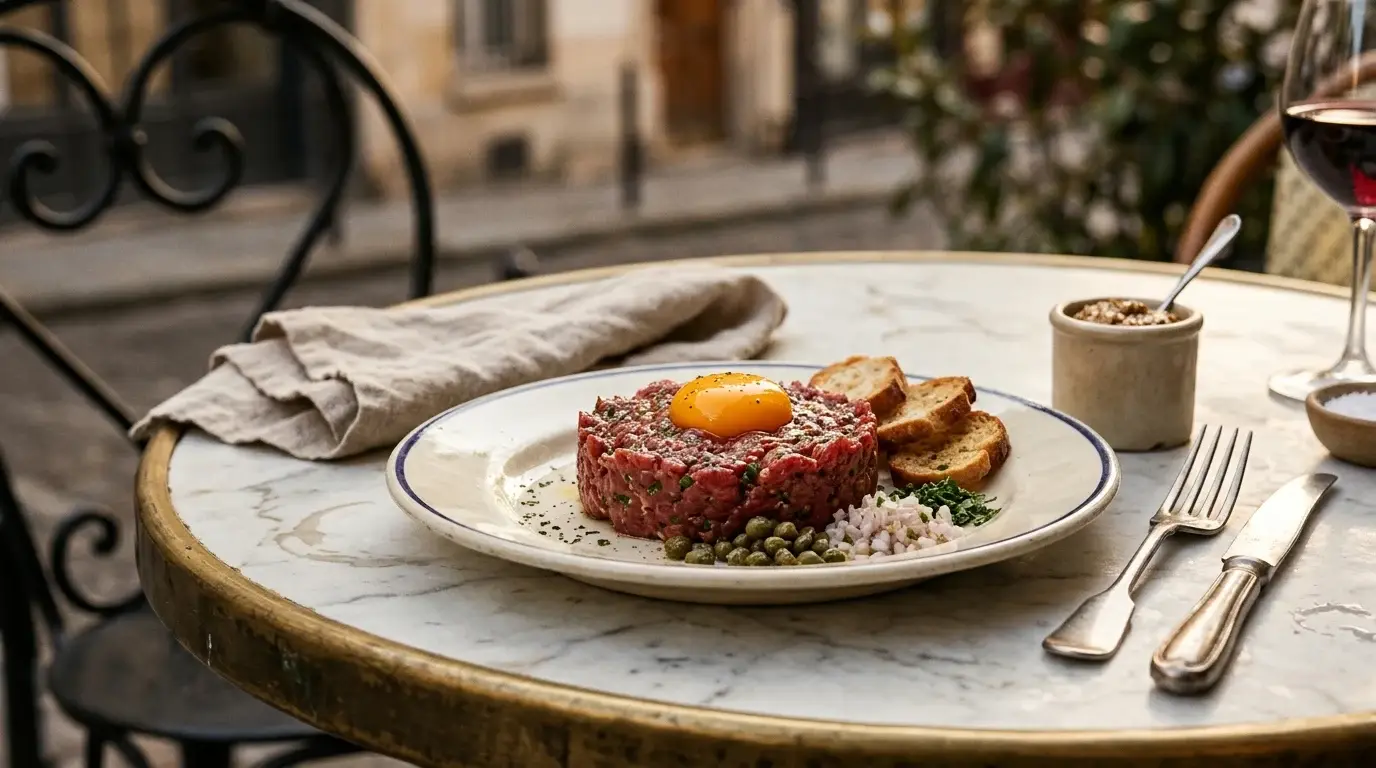
Here the sources split. Lee, at Chowhound, says the sauce was likely created in the 19th century as a tangy companion for steak tartare, which lacked acidity, so the sauce took the steak’s name. Iseman similarly writes that French diners in the 1800s ate it with beef tartare, which may explain the name.
Britannica tells it the other way. McNamee writes that the word “tartare” first attached to a sauce and only later moved to raw chopped meat or fish. Raw beef prepared that way was originally called à l’Américaine, he writes, reflecting a belief that Americans ate their meat raw; Escoffier’s Le Guide culinaire of 1903 listed “Beefsteak à l’Américaine” with tartar sauce served on the side.
The dates support caution. Britannica says steak tartare appeared on only a few French menus in the late 19th century, became more common in the early 20th and truly popular in the 1950s. Set beside the 1855 English attestation of the sauce, that timeline sits more easily with Britannica’s account, though none of the sources fetched here settles the question.
The Tatars, and a legend
Whatever came first, the word reaches back to a people. The Online Etymology Dictionary traces “Tartar” to Persian Tatar, first applied in the 13th century to Genghis Khan’s armies, with a Western spelling influenced from the start by Latin Tartarus, meaning hell. The tartar on teeth and wine casks is an unrelated word.
The connection to food rests on stereotype. Lee writes that the 13th-century French chronicler Jean de Joinville portrayed the Tartars, whom he called Mongols, as people who ate only raw meat and milk, and suggests he likely never met any. The story that Tatar horsemen tenderized meat under their saddles is probably a legend, Lee writes; Britannica calls the related claim that the original meat was horse “likely a myth.”
From the steak to the fish
The sauce’s modern partner is fried seafood. Iseman notes that while 19th-century French diners paired it with beef, today it is most often served with fried fish.
Jars helped. Iseman writes that Hellmann’s is believed to have sold the first bottled tartar sauce in the 1920s, citing an earlier report and describing the claim as likely rather than confirmed. Richard Hellmann had begun making mayonnaise at a New York delicatessen, and his products spread to stores nationwide through that decade. Before then, tartar sauce had to be made at home. Iseman adds that Hellmann’s discontinued its tartar sauce in 2024.
Mayonnaise-based sandwich spreads in general are compared in mayonnaise versus Miracle Whip.

Questions people ask
Where does tartar sauce come from? France. Its first written mentions are in 19th-century French cookbooks; one 1894 French writer traced it to Poland.
When did “tartar sauce” enter English? By 1855, per the Online Etymology Dictionary.
Is tartar sauce named after steak tartare? Chowhound and Tasting Table say yes. Britannica says the word moved from the sauce to the meat.
Did the Tatars invent tartar sauce? No. The name traces to the Tatars only through French culinary terms and an old stereotype about raw meat.
Who sold the first jarred tartar sauce? Hellmann’s is believed to have, in the 1920s, per Tasting Table.
Sources
- Matthew Lee, Chowhound, Did The Tartars Invent Tartar Sauce? (July 20, 2024): https://www.chowhound.com/1622755/who-invented-tartar-sauce/
- Courtney Iseman, Tasting Table, Tartar Sauce Was Always Made From Scratch Until This Brand Stepped In (Sept. 19, 2024): https://tastingtable.com/1663539/hellmanns-first-bottle-tartar-sauce
- Gregory Lewis McNamee, Britannica, Steak tartare (undated): https://www.britannica.com/topic/steak-tartare
- Online Etymology Dictionary, tartar: https://www.etymonline.com/word/tartar