In this story
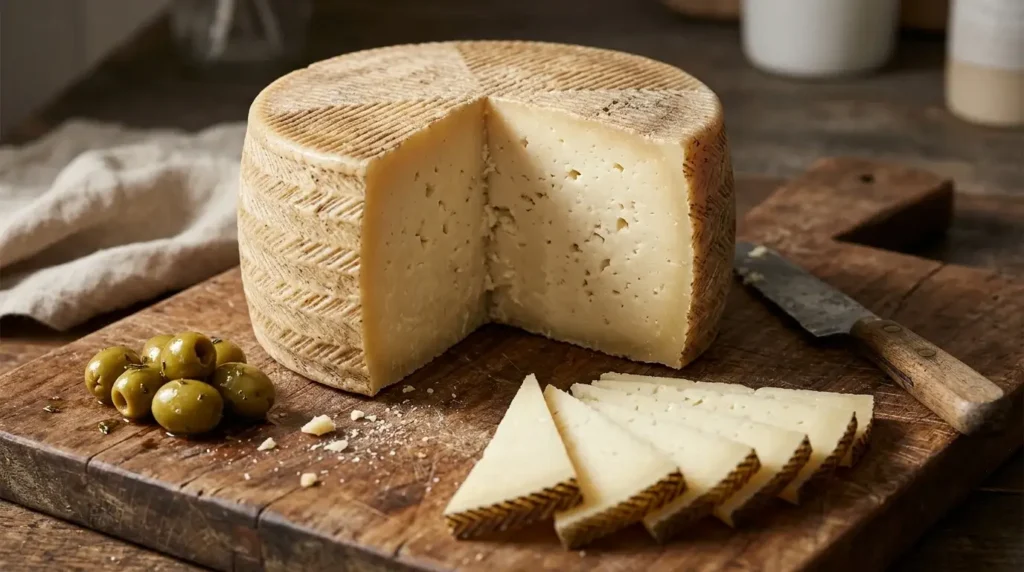
Manchego is a firm, pressed cheese made from the milk of Manchega sheep in the La Mancha region of Spain. It is sold at several ages, from a few months to two years, and it is recognizable at a glance by the zigzag pattern pressed into its sides. Under European protected-origin rules, only cheese from one breed, in one region, made to a written specification, can carry the name.
Video: How Spanish Manchego Cheese Is Made At A 200-Year-Old Dairy, from the Insider Food YouTube channel
One breed, one region
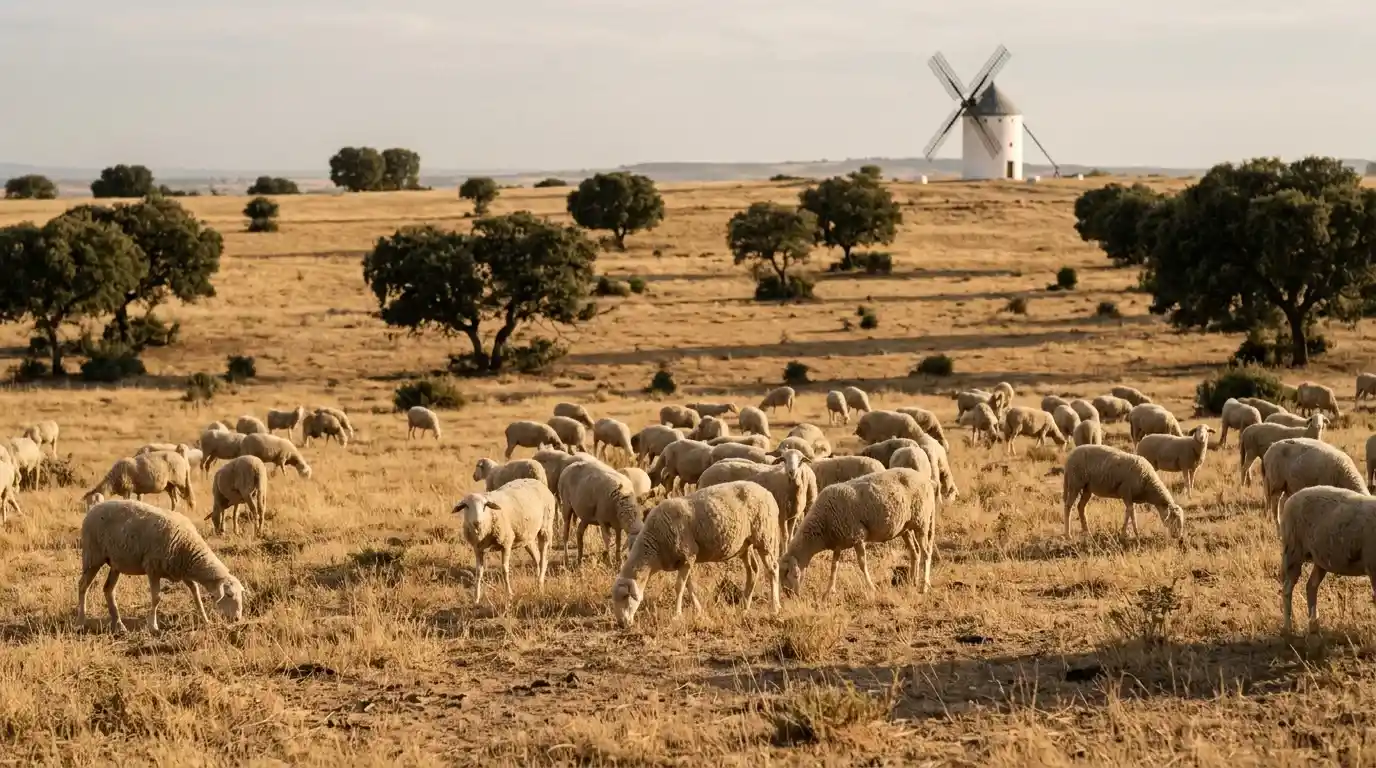
The milk rule is strict. The protected designation’s single document, in an English version published by the UK government, states that the milk comes only from Manchega ewes registered in the production area. It sets minimums of 6.5 percent fat and 4.5 percent protein in the milk itself.
The region is defined to the hectare. The same document lists four provinces of La Mancha totaling 4,419,763 hectares: Albacete, Ciudad Real, Cuenca and Toledo. The province of Ciudad Real’s tourism office describes the same four-province area.
The document also traces the cheese’s link to the place through literature, noting that Cervantes’s Don Quixote associates it with La Mancha, along with 19th- and 20th-century works. It records a provisional recognition of the designation by an order of July 2, 1982.
Raw or pasteurized
Two kinds are permitted. The Ciudad Real tourism office explains that standard Manchego is made with pasteurized sheep’s milk, while artisan Manchego uses unpasteurized milk from registered flocks. The specification allows cheese made from raw milk to be labeled “Artesano.”
Shape, size and rind
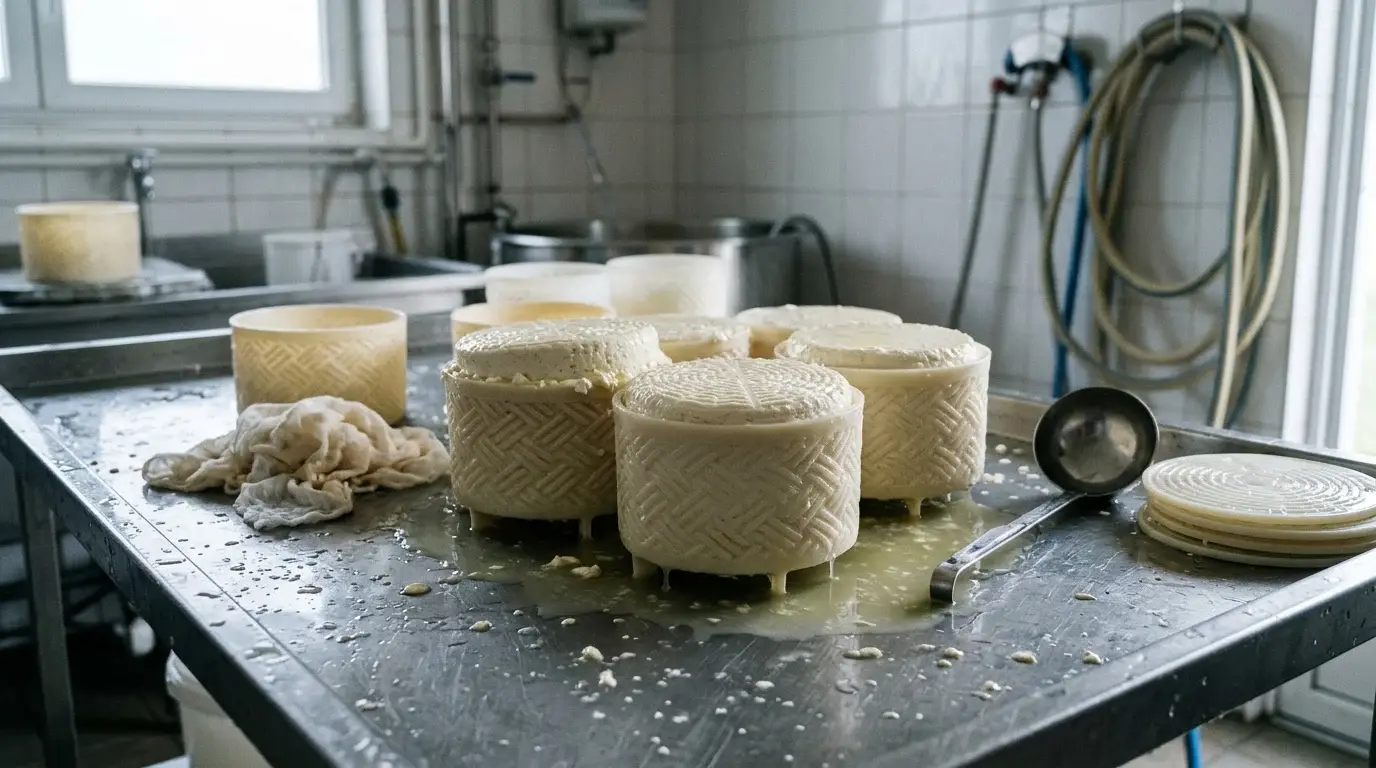
A wheel is a squat cylinder. The specification sets weights between 0.4 and 4.0 kilograms, a maximum height of 12 centimeters and a maximum diameter of 22 centimeters, with flat faces.
The rind carries two marks. The specification names the “Flor,” a pattern on the flat faces, and the “Pleita,” the pattern on the sides. The tourism office describes the rind as hard and pale yellow, or blackish-green if surface molds that form during ripening are not cleaned off. The specification prohibits any substance that turns the rind black, while the tourism office describes a naturally blackish-green rind; the specification text fetched here does not spell out how the two fit together.
Inside, the tourism office describes a firm, compact paste from white to ivory yellow with small, unevenly spread holes.
How long it ages
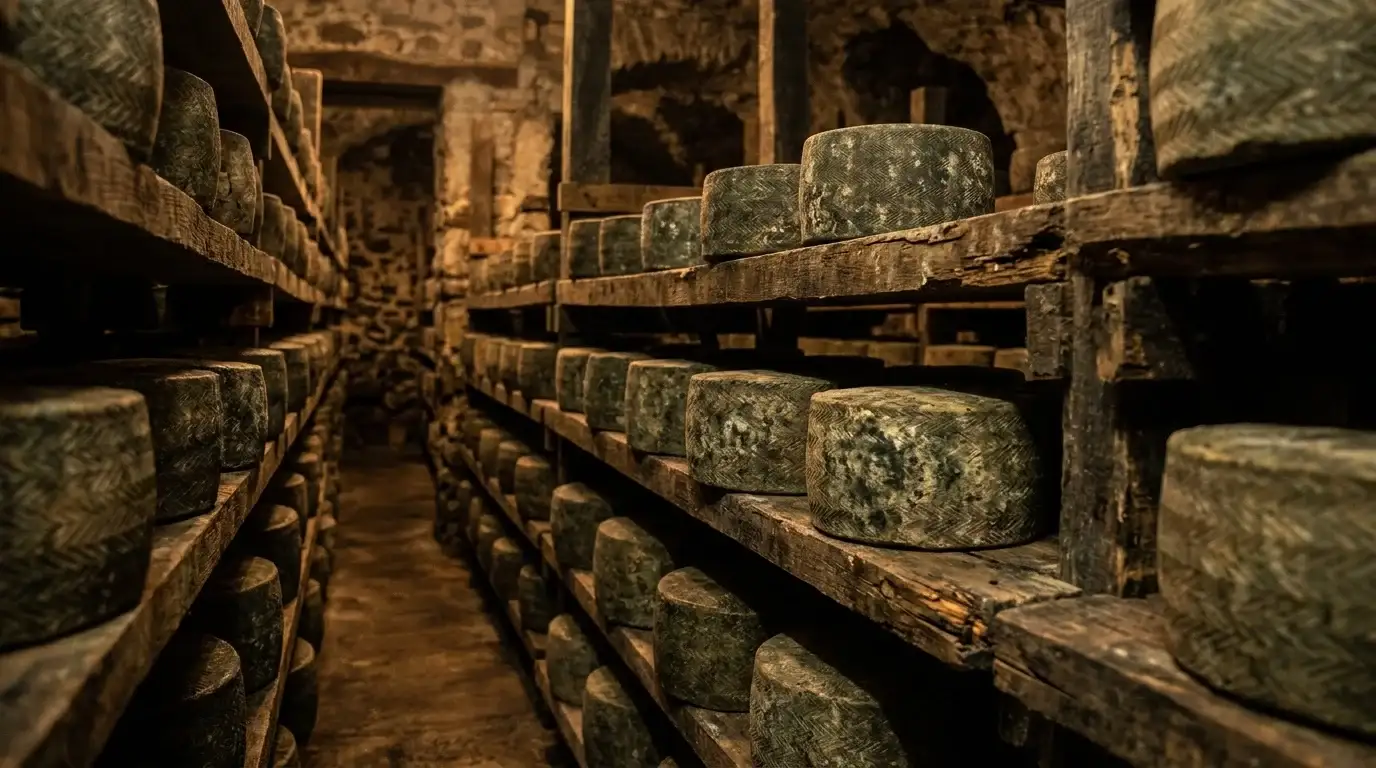
The minimum depends on size, and sources simplify it differently. The tourism office gives a single minimum of 60 days. The specification is more precise: at least 30 days for cheeses under 1.5 kilograms and 60 days for heavier ones, with larger cheeses aged up to two years.
The tourism office divides aged cheeses into two common grades: semicurado, up to six months, and curado, more than six. Longer aging makes the cheese firmer, drier and more intense.
Spotting the real thing
Labels do the work. According to the tourism office, a genuine Manchego carries “Queso Manchego” and the European protected-origin logo on its label, a numbered back label, and a casein plate embedded in the rind reading “D.O.P. QUESO MANCHEGO” followed by five digits and two or three letters. The specification describes the plate as five numbers and two capital letters, applied centrally to each cheese.
Another origin-protected European cheese on Grill Cheesy is Italy’s Parmigiano-Reggiano. For cutting a firm cheese like this for sandwiches, see cheese slicer versus knife versus grater.
A wedge
- Manchego Aged 6 Months Spanish Cheese – 1 pound: a one-pound piece of six-month Manchego. See it on Amazon (affiliate link)
As an Amazon Associate I earn from qualifying purchases. A commission may be earned if you buy through this link, at no extra cost to you.
Questions people ask
What milk is Manchego made from? Only milk from Manchega sheep registered in La Mancha.
How long is Manchego aged? At least 30 days for small cheeses and 60 days for larger ones under the specification; up to two years.
What is the pattern on Manchego’s rind? The “pleita” on the sides and the “flor” on the flat faces.
Is Manchego made with raw milk? It can be. Raw-milk cheese may be labeled “Artesano”; standard Manchego uses pasteurized milk.
How can you tell real Manchego? Look for the protected-origin logo, a numbered back label and a casein plate in the rind.
Sources
- Queso Manchego PDO single document, published by the UK government (undated): https://assets.publishing.service.gov.uk/media/6682d6645b0d63b556a4b56f/Queso_Manchego_DOP_20.pdf
- Turismo Ciudad Real, Manchego Cheese: https://turismo.ciudadreal.es/en/project/queso-manchego-2/