In this story
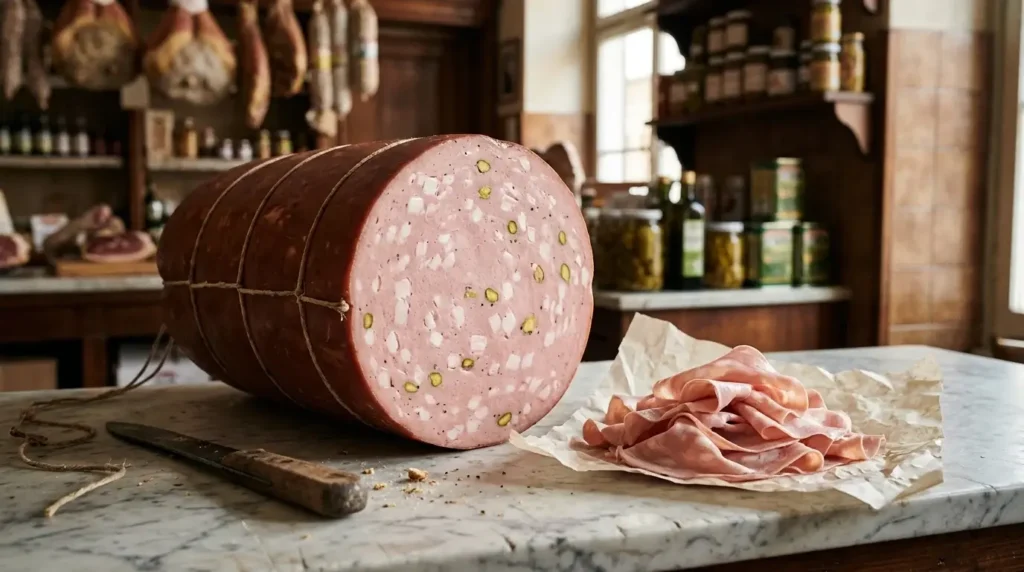
Mortadella is a cooked pork sausage from Bologna, ground so fine it is almost a paste and studded with small white cubes of fat. A full sausage can weigh more than 20 pounds and take most of a day to cook. Sliced paper-thin, it is pale pink, faintly sweet and fragrant with spice. It is also the ancestor most often credited for American bologna, which explains the name of the lunch meat and very little about the flavor. For more than three decades, Americans could not legally buy the Italian original at all.
Video: How Giant Italian Mortadella Sausage Is Made, from the Insider Food YouTube channel
A sausage regulated since 1661
Bologna wrote the rules more than three centuries before the EU did
The consortium that protects Mortadella Bologna traces the product to the Etruscan and Roman settlements on the city’s site, where oak forests supplied acorns for pigs. The name itself is uncertain. The consortium lists theories tying it to the Latin mortarium, the mortar in which meat was pounded, and to myrtatum, from the myrtle once used to season it. Emilia-Romagna’s tourism office points to a Roman-era stele in Bologna’s Archaeological Museum that shows pigs being driven to pasture next to a mortar.
The firmer date is October 24, 1661. On that day, the consortium says, Cardinal Farnese officially set out the rules for preparing the sausage, and the date is now celebrated as International Mortadella Day. Bologna’s official tourism site describes the decree as establishing the first rules for the production of Mortadella, a regulation the city treats as an early example of what the European Union now calls a protected designation.
The decree had teeth, and it had a predecessor. Italiani.it, an Italian culture site, reports that the Bolognese agronomist Vincenzo Tanara published the first documented mortadella recipe in 1644, and that Farnese’s 1661 ban forbade making mortadella from any meat other than pork. A second edict in 1720 spelled out who could make it at all, with violators facing a fine of 200 scudi and three lashes of the whip. The salaroli, Bologna’s guild of pork butchers and salters, had already adopted a mortar and pestle as their coat of arms.
That protection arrived in modern form much later. The same source dates the EU’s recognition of Mortadella Bologna as a protected geographical indication to 1998. Today only sausage made to the consortium’s specification, within a defined production area, can be sold as Mortadella Bologna PGI. The consortium lists that area as Emilia-Romagna, Piemonte, Lombardia, Veneto, the province of Trento, Toscana, Marche and Lazio, a much wider territory than the city itself.
How mortadella is made
Lean pork ground fine, jowl fat cut into cubes, a long slow cook
The process starts with two kinds of pork. Emilia-Romagna’s tourism office explains that the meat is the striated muscle of the pig, while the fat comes exclusively from the jowls, cut into cubes called lardelli. Those cubes are what give a slice its white mosaic.
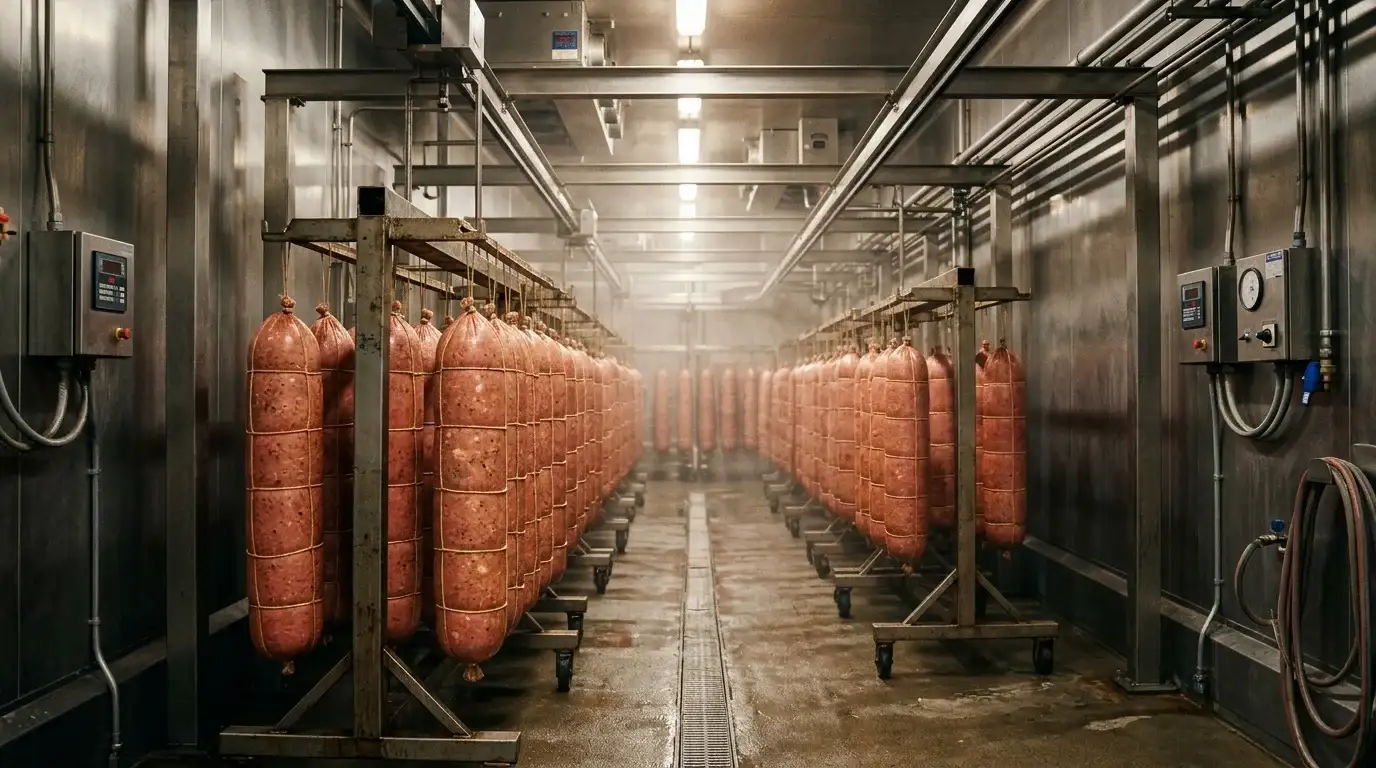
Atlas Obscura’s description fills in the rest. Butchers grind the lean pork very fine, fold in the cubed fat and season the mix with pepper, garlic, nutmeg and sometimes myrtle. The mixture is stuffed into oval casings and hung in large ovens for a slow cook. The example Atlas Obscura describes weighs about 22 pounds and takes roughly 24 hours to cook.
Cooking time scales with size. The regional tourism office says mortadella cooks in dry-air ovens for anywhere from a few hours to a full day, depending on the sausage, which gives it a mildly spiced aroma and a balanced flavor. The Cheese Connoisseur puts the range at at least eight hours and up to 26, and says the PGI specification calls for a 7:3 ratio of pork to fat.
The pistachio question
Allowed, not required, and often left out in Bologna itself
Outside Italy, mortadella is often identified by its green flecks of pistachio. Inside Bologna, that is far from a rule. Emilia-Romagna’s tourism office notes that pistachios are optional under the specification and that some producers, especially in Bologna and northern Italy, leave them out entirely.
For a buyer, the pistachios say less about authenticity than the PGI label does. A plain mortadella and a pistachio mortadella can both be made to the specification, and a sausage studded with nuts can still be an imitation. The consortium’s own description of its job is to enforce controls against copies.
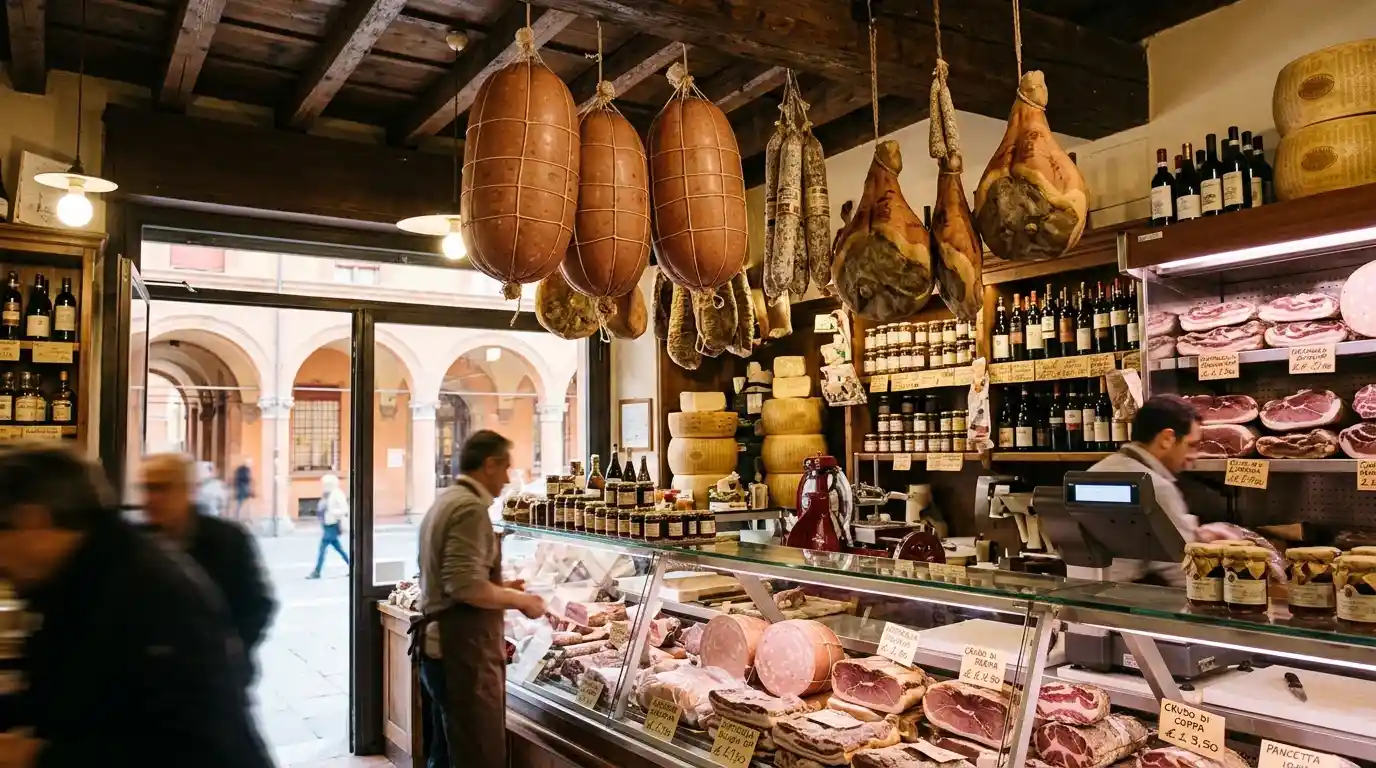
In the city, the uses go well beyond the sandwich. Atlas Obscura reports that Bolognese cooks slice it thin for panini, whip it into a mousse to spread at aperitivo and grind it into the filling for tortellini.
How mortadella became baloney
A descendant, according to most accounts, though the path is disputed
American bologna is usually described as mortadella’s offspring. Atlas Obscura calls baloney a mass-produced, distant descendant and credits German immigrants with bringing the sausage to the United States, where German-American businessman Oscar Mayer helped popularize it. The Atlas Obscura account says machinery in the 1800s had already made the sausage widely available across Europe, where it traveled under the name “la Bologna.”
Not everyone accepts the family tree. Cooksinfo, a food reference site, writes that baloney was perhaps originally inspired by the Italian Mortadella, though there’s no actual proof of the link. The names line up; the documentary trail is thinner.
The products themselves are far apart. Mortadella Bologna PGI is made from pork, with visible cubes of jowl fat. Food Republic notes that while mortadella is always pork, American bologna can contain beef, chicken or turkey as well, and the American version is ground smooth, without the fat mosaic that defines the Italian sausage.
The American ban, 1967 to 2000
A swine disease outbreak kept the real thing out for 33 years
For most of the late 20th century, Americans could not legally buy Italian mortadella. NPR reported in February 2000 that Italian pork products were banned in the United States in 1967 after an outbreak of swine fever in Italy, and that the USDA was finally lifting restrictions on certain products, mortadella among them.
Accounts differ on which disease started it. NPR’s report says swine fever, and the Cheese Connoisseur specifies African swine fever. The disease behind the long caution on cured meats was a hardy one. Meat+Poultry explained in 2013, when the USDA relaxed restrictions on more Italian cured meats, that the agency had kept some products out because of swine vesicular disease, which is fairly heat resistant and can survive a long time in salted, dried and smoked meats. NPR’s 2013 coverage noted that before that change, only prosciutto di Parma, prosciutto di San Daniele and mortadella had been approved for import.
The ban even reached the movies. The Cheese Connoisseur notes that the 1971 film Lady Liberty, starring Sophia Loren, turns on her character’s attempt to smuggle mortadella into the United States. The Italian title was simply La mortadella.
Mortadella between bread
From Bologna panini to São Paulo’s oversized sandwich
The simplest mortadella sandwich is the Bolognese one Atlas Obscura describes: thin slices in a panino. In its home city the sausage is a sandwich meat first and a cooking ingredient second.
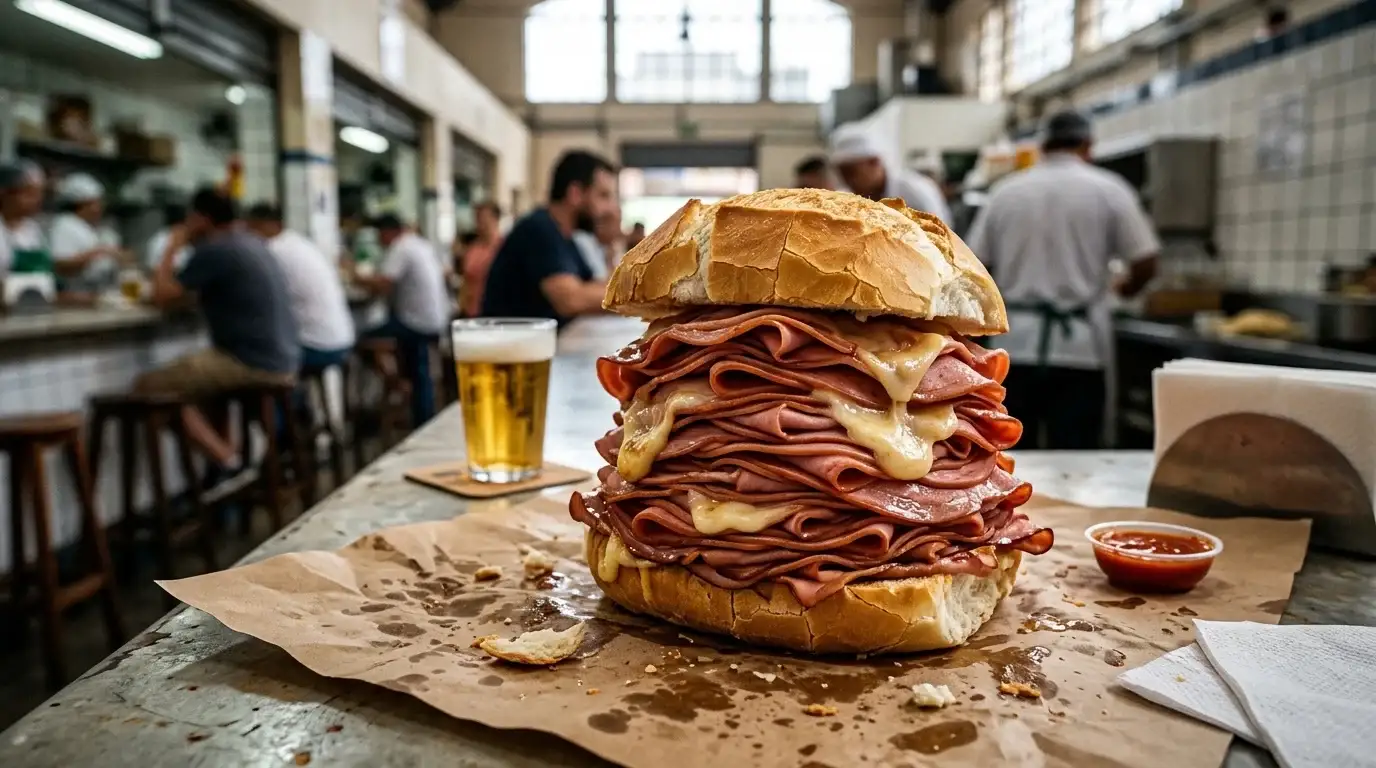
The most famous mortadella sandwich in the world, though, may be in Brazil. Culture Trip calls the sandwich at São Paulo’s Mercado Municipal, known as the Mercadão, the most famous of São Paulo’s sandwiches. It packs about 10 ounces of mortadella with melted cheese, tomato and lettuce into a pão francês, the small crusty roll found all over Brazil. The origin story Culture Trip repeats is a legend: a customer complained so loudly about skimpy, overpriced sandwiches that a cook stuffed one roll with an absurd amount of mortadella to quiet him, onlookers asked for the same and the sandwich became the market’s specialty.
Frequently asked questions
What is mortadella made of?
Finely ground pork with cubes of fat taken from the pig’s jowl, called lardelli, seasoned with spices and sometimes pistachios, then slow-cooked in large casings.
Is mortadella the same as bologna?
No. American bologna is usually described as a descendant, but mortadella Bologna PGI is all pork with visible fat cubes, while American bologna is smooth and often made from mixed meats.
Why was mortadella banned in the US?
NPR reported that Italian pork products were banned in 1967 after a swine fever outbreak in Italy. The USDA lifted the restriction on mortadella in 2000.
Does real mortadella have pistachios?
Not necessarily. Pistachios are optional under the specification, and many Bologna producers leave them out.
Sources
- Consorzio Mortadella Bologna, “Mortadella Bologna”: https://mortadellabologna.com/en/mortadella-bologna/
- Bologna Welcome, “Mortadella Day”: https://www.bolognawelcome.com/en/events/food-and-wine-en/mortadella-day-en
- Emilia-Romagna Tourism, “PGI Mortadella Bologna”: https://emiliaromagnaturismo.it/en/food-valley/pgi-mortadella-bologna
- Atlas Obscura, “Mortadella”: https://atlasobscura.com/foods/mortadella-bologna-baloney
- Italiani.it, “Mortadella Bologna”: https://en.italiani.it/?p=69449
- Cooksinfo, “Baloney”: https://www.cooksinfo.com/baloney/
- NPR, “Mortadella” (February 11, 2000): https://npr.org/2000/02/11/1070265/mortadella
- Meat+Poultry, “USDA relaxes ban on Italian cured meat products”: https://meatpoultry.com/articles/9912-usda-relaxes-ban-on-italian-cured-meat-products
- NPR via NPR Illinois, “No More Smuggling: Many Cured Italian Meats Coming To America” (2013): https://www.nprillinois.org/post/no-more-smuggling-many-cured-italian-meats-coming-america
- Food Republic, “Secrets Of Bologna You’ll Wish You Knew Sooner”: https://www.foodrepublic.com/1525080/secrets-bologna-wish-knew-sooner/
- The Cheese Connoisseur, “This is No Bologna”: https://www.cheeseconnoisseur.com/?p=7893
- Culture Trip, “São Paulo’s Iconic Sandwiches”: https://theculturetrip.com/south-america/brazil/articles/sao-paulos-iconic-sandwiches-will-make-your-mouth-water