
In this story
In Italian, panino is one small sandwich or bread roll, and panini is the plural. In English-speaking countries, panini usually names a single hot, pressed sandwich, a usage that Merriam-Webster says produced the variant plural paninis. Between the Italian bar counter and the American sandwich shop, both the word and the sandwich changed.
Video: Best ITALIAN SANDWICH | Italian Panini Recipe, Vincenzo’s Plate
Panino and panini in Italian
The word is a diminutive of pane, bread, which in turn comes from Latin panis, according to Merriam-Webster and Etymonline. So panino literally means a small bread. Writing for a sandwich newsletter, The Sword and the Sandwich points out that the word does not inherently mean a pressed sandwich at all; it names the roll, and a filled one is a panino imbottito, a stuffed panino.
Whether panino on its own can stand for any sandwich is less settled. Wikipedia’s article on the panini sandwich says it often does, but flags that statement as needing a citation, so it is best treated as a common claim rather than a documented rule.
Italian also has the word paninoteca, a sandwich shop. The Italian dictionary Treccani uses it, alongside paninerie, to describe the places where young people in 1980s Milan gathered.
How panini became a singular in English
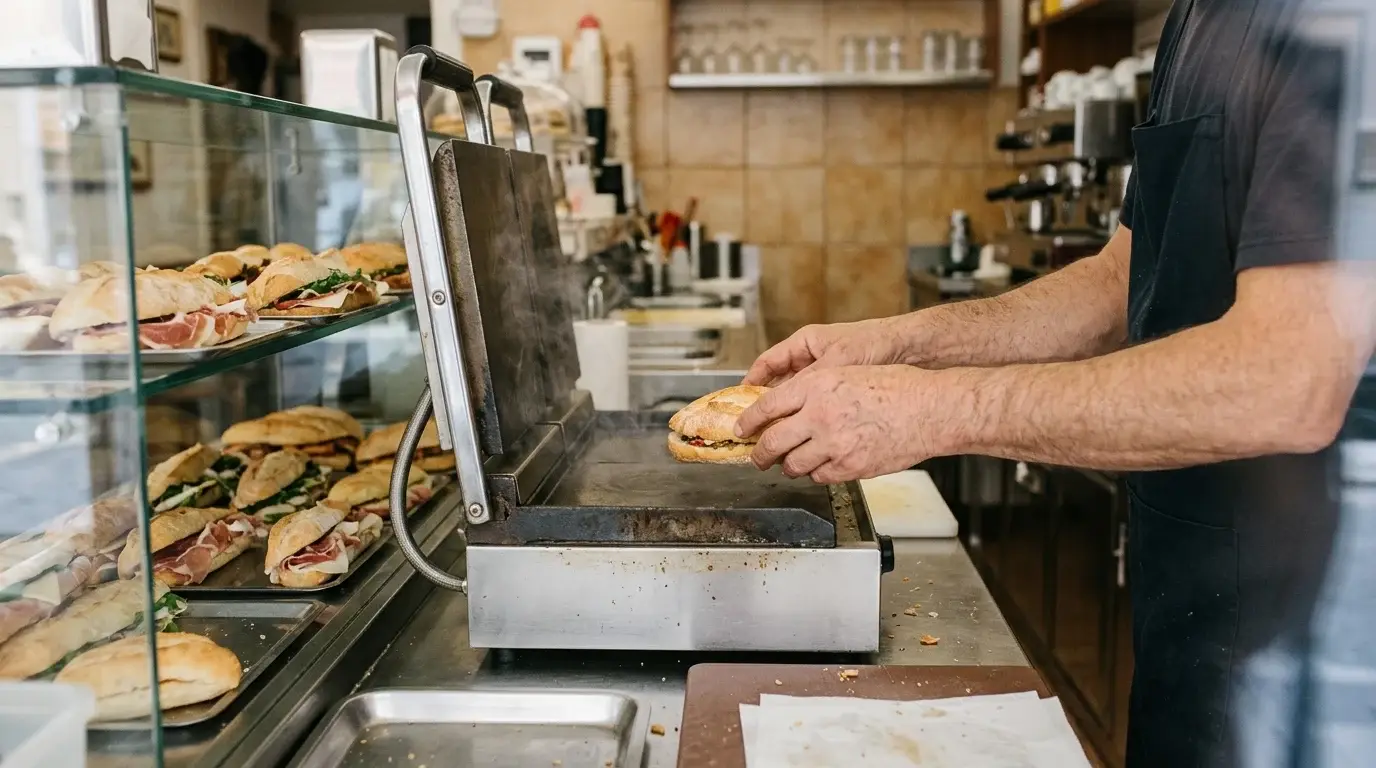
English borrowed the plural and used it as if it were a singular noun. Sandwich Tribunal describes the result: in the United States a single pressed sandwich is a panini, and the plural follows English habit with an added s. Merriam-Webster adds that panino as an English singular is now relatively uncommon.
The date of the first English appearance depends on the source. Merriam-Webster gives 1955 as the first known use. Etymonline records the word in English by 1974, and says American restaurant menus have used it since about 1980 for sandwiches on a small, flat loaf of Italian bread. Wikipedia puts the first US reference at 1956, while The Sword and the Sandwich cites a 1954 New York Times piece, though it does not give an exact first use. The sources do not reconcile the dates.
The sandwich itself arrived later than the word. Sandwich Tribunal, citing Food Timeline, says pressed panini drew American attention in the mid-1970s as a trendy, upscale treat, and spread to mid-priced chains as sandwich presses became common. The Sword and the Sandwich reports that by the 1990s pressed panini were fashionable in Los Angeles and New York, and quotes a 1995 Washington Post article by Walter Nicholls saying they had reached cities from Seattle to Chicago to Dallas. By the 2000s, the same newsletter says, the fashion had faded into the deli case.
Other American roll sandwiches kept their own regional names; hoagie, sub, hero and grinder are a separate story, and so is the muffuletta.
Paninoteche and the Milan sandwich bars
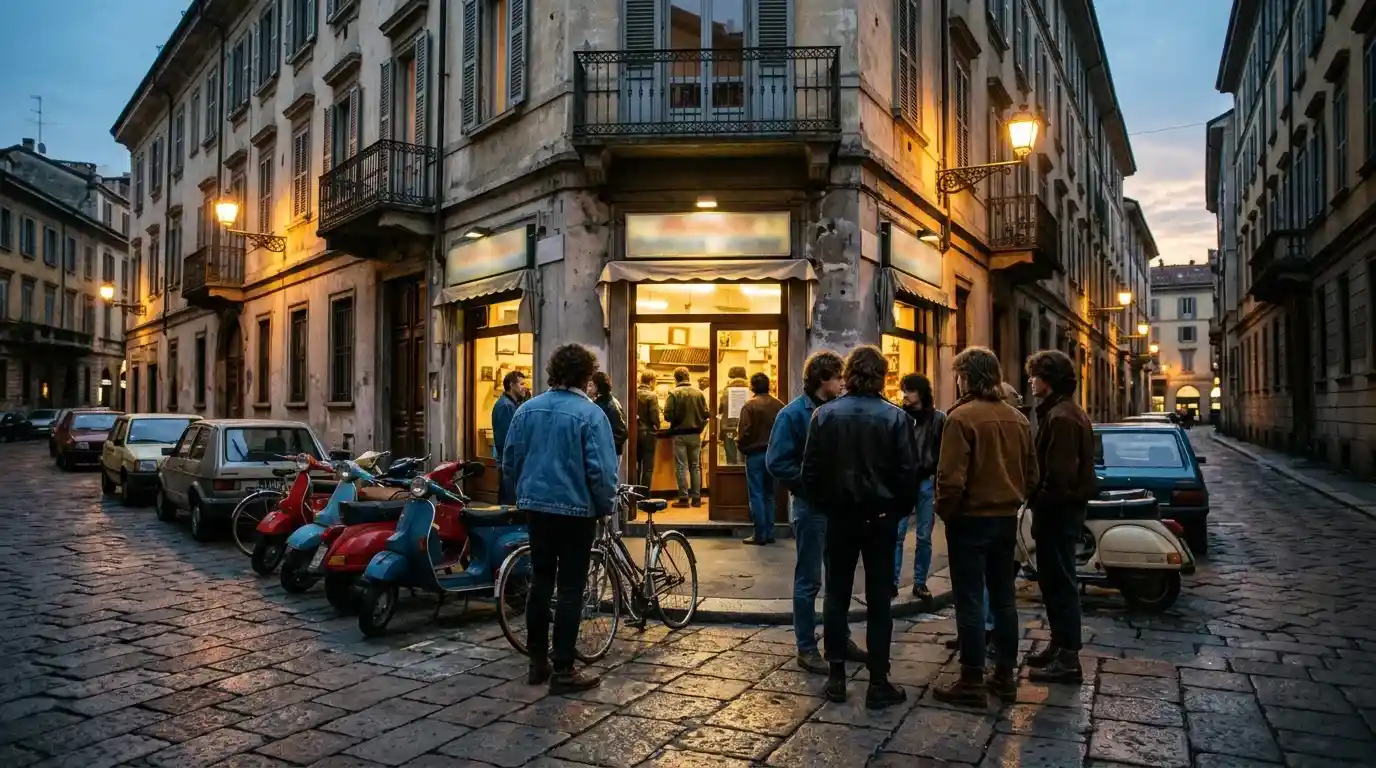
Wikipedia says the sandwiches became trendy in the 1970s and 1980s in Milanese bars called paninoteche. The Sword and the Sandwich describes the Italian fad as peaking in the 1980s, with upscale paninotecas in fashionable neighborhoods and cheaper, fast-food versions elsewhere.
One bar sits at the center of the story, and its description varies. Vice calls Il Panino, also written Al Panino, the first sandwich bar in Milan. Mr Porter places it as a small snack bar in Piazza Liberty. 80s Never End calls it a small burger shop in a square beside the cathedral. Those accounts do not agree on the kind of food it sold or its exact location, and none of the pages fetched for this article gives an opening date for the bar.
The electric panini grill is also contested. The Sword and the Sandwich says such grills appeared in the 1930s and that both Milan and Lombardy claim to have invented them; the source attributes neither the date nor either claim, and the question stays open here.
The paninari
The bar gave its name to a youth subculture. According to the Italian dictionary Treccani, paninaro is slang that arose in Milan in the 1980s and then spread across Italy, describing teenagers who dress alike and show off expensive, fashionable clothing, gathering in fast-food outlets and sandwich shops. Vice goes further and calls the paninari the only youth cult named for a sandwich, though The Sword and the Sandwich hedges the same claim as the author’s own.
Where they met is another point on which the sources differ. Vice names Il Panino as the original hangout for a group drawn from a few private schools, and quotes the author Enrico Pirondi as saying they gathered on scooters outside Burghy, an Italian fast-food chain. Mr Porter puts them first at Il Panino and then at a branch of the newly opened Burghy in Piazza San Babila.
Clothes and music
Vice lists Timberland boots, aviator jackets, Levi’s jackets lined with faux fur, bright Moncler and Stone Island jackets, Ray-Bans and Best Company sweatshirts. Mr Porter adds Sebago deck shoes, Vespas and Emporio Armani tops, and says the clothes worked as status symbols. The Pet Shop Boys recorded a song titled “Paninaro,” released in September 1986 as the B-side of “Suburbia” in Italy only, in a run of about 5,000 copies, according to 80s Never End.
Politics
Accounts of the paninari’s politics conflict. Vice says politics were not on their agenda, while The Sword and the Sandwich says the subculture began with fashionable young fascists and became apolitical as it grew. Wikipedia says they were depicted as right-leaning and fashion-focused, a wording that marks it as portrayal, not established fact. Mr Porter does not mention politics.
The end
Pirondi, quoted in Vice, says the movement faded around the end of the 1980s. 80s Never End puts the fast decline in summer 1987, with leather jackets, studs and Dr. Martens replacing the earlier look. Mr Porter ties the end to mainstream adoption and the arrival of the 1990s.
The Italian panino and the American panini
The two sandwiches overlap but are not the same. Per Sandwich Tribunal and Tasting Table, made-to-order Italian panini are often cold, and many cafes prepare them ahead and heat them on a press. American panini are typically hot and pressed.
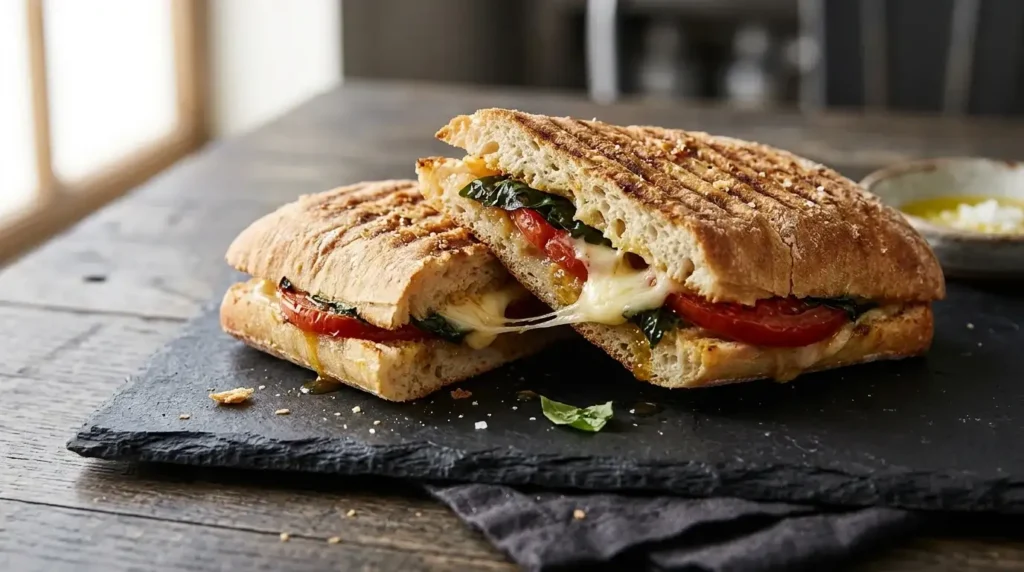
Sara Rosso, interviewed by Panini Happy, says panini in Italy are not always heated. At most bars and lunch spots the worker asks whether the customer wants it reheated, and the sandwich is then pressed between smooth metal plates, so it comes out flatter and without grill marks. She also says panini presses are not common household appliances in Italy, and that a panino made at home is usually not served heated. The grooved plates that leave grill marks belong, per Sandwich Tribunal, to the American version.
Fillings differ in scale. Tasting Table says Italian panini rarely have more than two or three ingredients, often cured meat, cheese or vegetables, sometimes with pesto or olive oil. Rosso gives prosciutto crudo, tomatoes and mozzarella as an example. Tasting Table says American panini include grilled cheese and tuna melts. Bread varies too: ciabatta, focaccia and rosetta rolls are named for Italian versions, and Vincenzo’s Plate builds one on a fresh focaccia roll with prosciutto, grilled eggplant, marinated mushrooms and fontina, with no heating step in the recipe.
How to press a panini
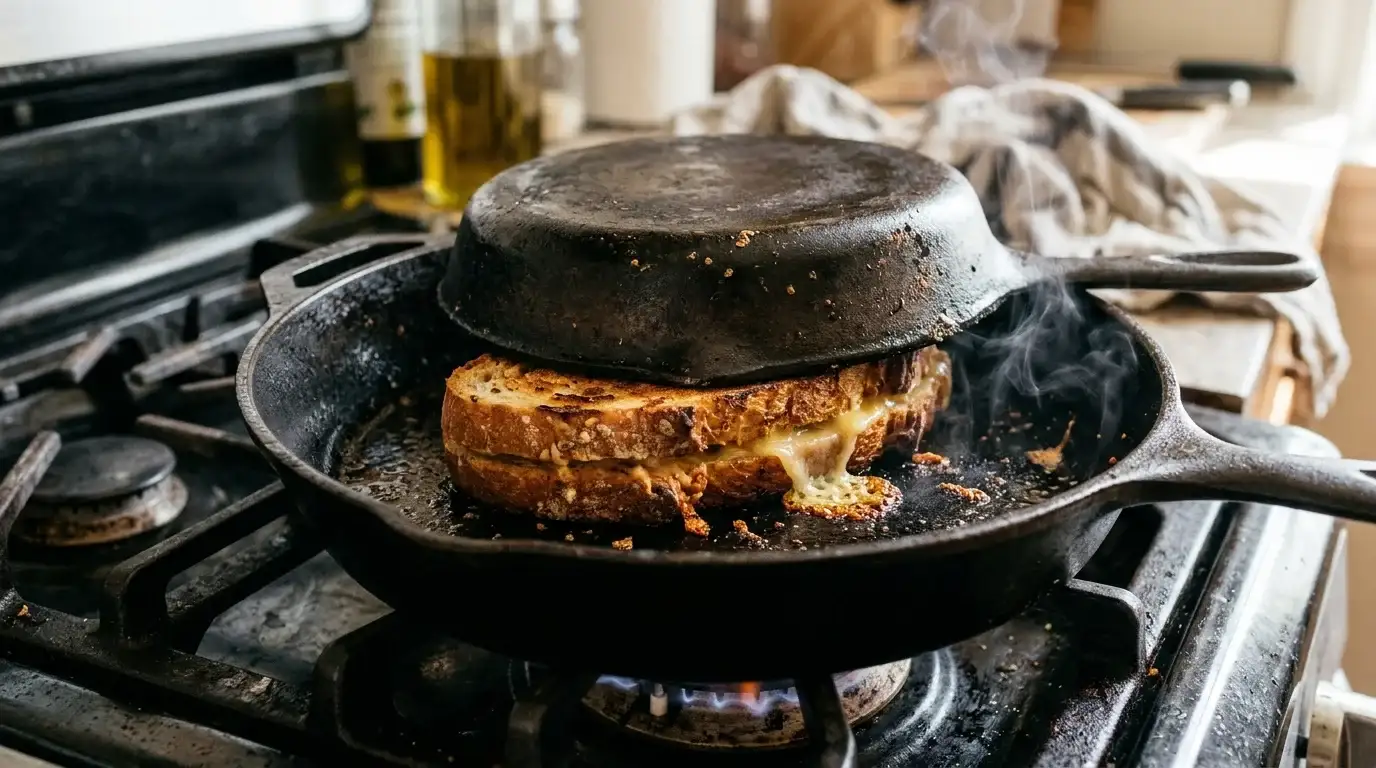
A press is not required. Two methods from The Kitchn use a heavy skillet over medium-high heat for about a couple of minutes per side. One presses down with a large lid. The other sets a second heavy pan on top, which the article recommends for sandwiches with a lot of cheese; the top pan can be preheated, with an oven mitt for handling it.
Chowhound says a flat-bottomed heavy pan works, cast iron especially, and that a pot or a clean brick can add weight. For the oven, it puts the sandwich on a baking sheet under a heavy oven-safe press or skillet, and for several sandwiches suggests parchment paper, a second baking sheet and weights on top. The article says the result depends on weight and heat, with “no magic” involved, and that pressing gives a crisper crust.
Preparing the sandwich
Panini Happy’s eight tips cover the build. Olive oil or melted butter brushed on the outside gives a crostini-like crispness. Wet ingredients go in the middle, and tomato seeds come out to limit moisture. Round-topped breads such as baguettes are turned inside out so flat surfaces meet the heat and the loaf does not roll. Leafy greens go on after grilling to avoid wilting, and a sharp straight-edged knife cuts cleaner than a serrated one.
Sandwich Tribunal tested several fillings. Sturdy bread held up better than standard sliced bread, caprese worked well because the mozzarella melts, and prosciutto lost its fat under heat and became hard to bite, which led the author to serve it cold.
Sources:
- Merriam-Webster, “Panini”: https://www.merriam-webster.com/dictionary/panini
- Etymonline, “panini”: https://www.etymonline.com/word/panini
- Wikipedia, “Panini (sandwich)”: https://en.wikipedia.org/wiki/Panini_(sandwich)
- The Sword and the Sandwich, “Notable Sandwiches 130: Panini”: https://buttondown.com/theswordandthesandwich/archive/notable-sandwiches-130-panini
- Treccani, “paninaro”: https://www.treccani.it/vocabolario/paninaro/
- Sandwich Tribunal, “Panini, Panino… Let’s Call the Whole Thing Off”: https://sandwichtribunal.com/2018/01/panini-panino-lets-call-the-whole-thing-off
- Tasting Table, “Panini Vs Panino: Is There A Difference?”: https://www.tastingtable.com/1662197/panini-vs-panino-difference/
- Vice, “Cool sandwich paninaro Italy 1980s youth fashion”: https://www.vice.com/en/article/cool-sandwich-paninaro-italy-1980s-youth-fashion
- Mr Porter, “Paninaro: How Italian Teenagers And A Sandwich Shop Changed Menswear”: https://www.mrporter.com/en-be/journal/fashion/paninaro-menswear-25359310
- 80s Never End, “Paninaro – Pet Shop Boys”: https://80sneverend.com/paninaro
- Panini Happy, “Panini in Italy: Q&A with Sara Rosso”: https://paninihappy.com/?p=4078
- Panini Happy, “8 Tips for Making Great Panini”: https://paninihappy.com/8-tips-for-making-great-panini/
- Vincenzo’s Plate, “How to Make Italian Panini”: https://www.vincenzosplate.com/italian-panini/
- The Kitchn, “5 Ways to Make a Hot, Crispy Sandwich Without a Panini Press”: https://www.thekitchn.com/5-ways-to-make-a-hot-crispy-sandwich-without-a-panini-press-177316
- Chowhound, “How To Make A Perfect, Crunchy Panini Without A Panini Press”: https://www.chowhound.com/1731010/how-to-make-panini-without-press