In this story
A burrito is a flour tortilla rolled around a filling and closed at the ends, built to be held in one hand. The name means “little donkey,” and that is about the only part of its history that no one argues over. A border-town vendor, a dictionary entry, a pair of San Francisco taquerias and a Denver chain all have a place in the story. Some of those places are documented. Others are folklore repeated until it sounds like fact.
Video: Tracing the delicious history of San Francisco's Mission-style burrito, from the KTVU FOX 2 San Francisco YouTube channel
The dictionary entry
“Burrito” in print by 1895
The written record starts earlier than the most famous legend. México Desconocido, the Mexican travel and culture magazine, notes that the word appears in Feliz Ramos y Duarte’s Diccionario de Mexicanismos of 1895, defined as a tortilla rolled around meat or another stew. Emily Upton, writing for Today I Found Out in 2014, adds that the dictionary tied the term to the state of Guanajuato.
That entry describes something close to a taco. The distinction between the two was looser then, and a rolled tortilla with a filling went by different names in different regions.
The Juan Méndez legend
A vendor, a donkey and a cloth over the food
The story most often told is set in Ciudad Juárez, across the border from El Paso. During the Mexican Revolution, as México Desconocido recounts it, a vendor named Juan Méndez in the Bella Vista neighborhood wrapped food in large homemade flour tortillas and carried it on his donkey under a cloth to keep it warm. Customers named the food after the animal.
The story is charming and unproven. Upton calls it likely false, since the dictionary entry predates the Revolution. México Desconocido also passes along another explanation for the name: the long rolled tortillas resemble a donkey’s ears. Gustavo Arellano, the Los Angeles Times columnist and author of Taco USA, put the general problem plainly to KQED in 2023, saying of Mexican food origin stories that “very few of them are indisputable.”
Ciudad Juárez still claims the dish. México Desconocido cites Elsa Aranda Pastrana of the Universidad Autónoma de Ciudad Juárez, who says burritos became part of the city’s food culture and its regional fast food as women entered the workforce and family routines changed.
Flour tortillas and the north
Why the burrito stayed regional in Mexico
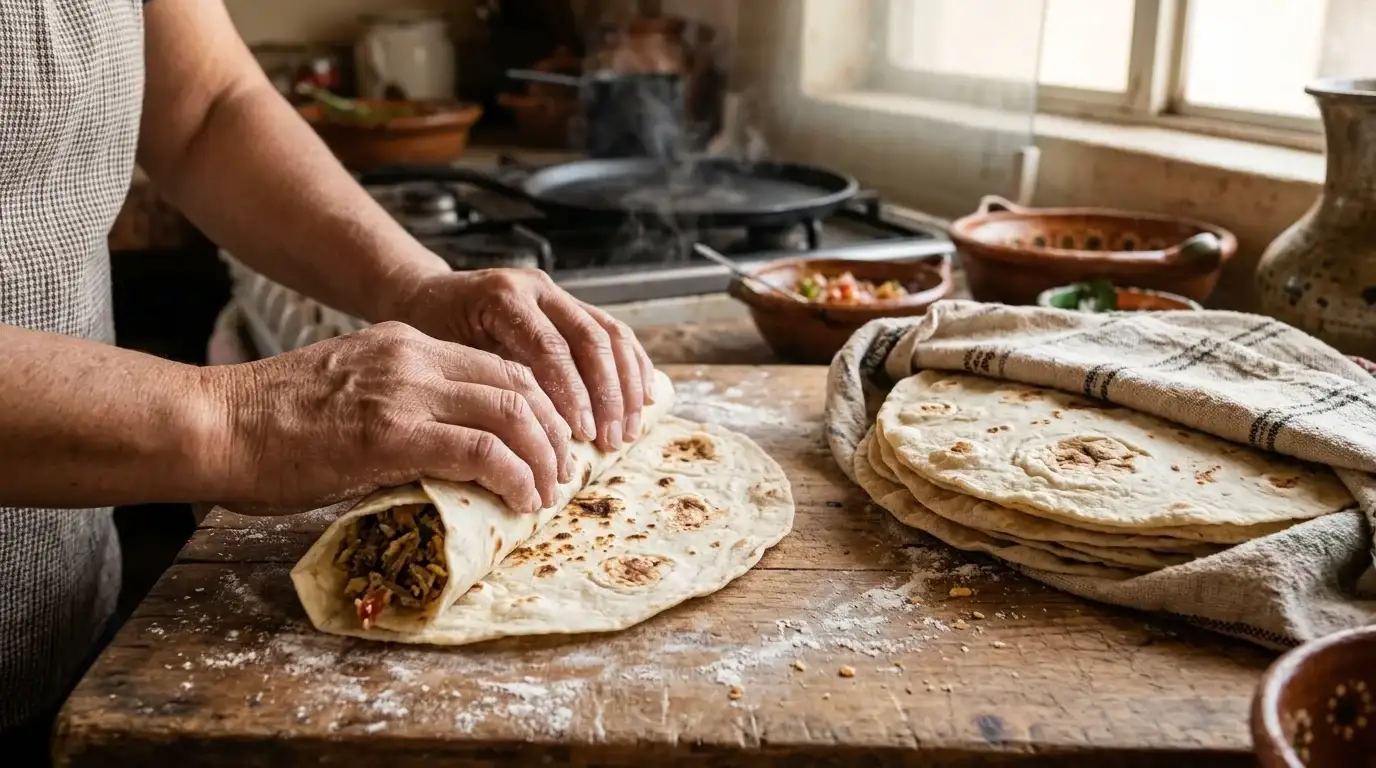
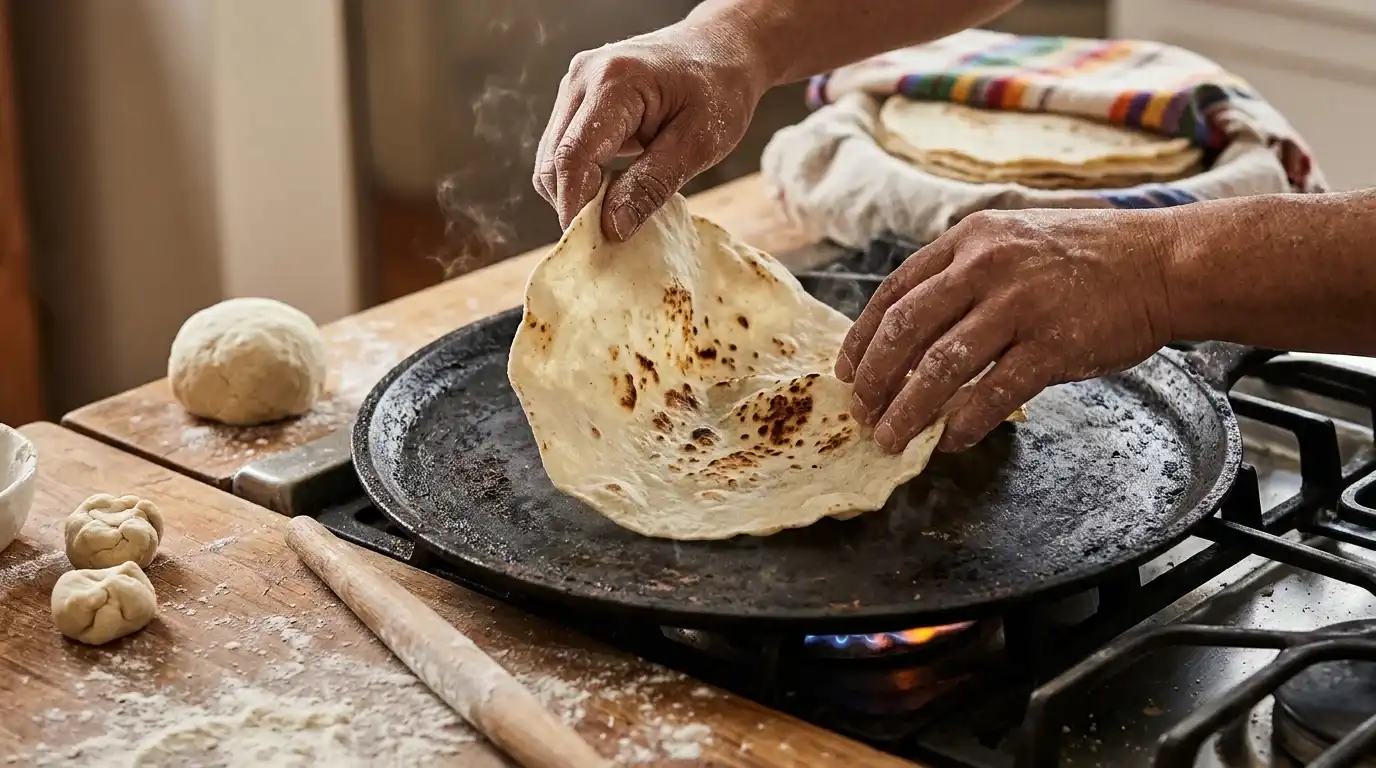
The burrito is a food of the wheat-growing north. Alison Herman, writing in The Ringer in 2017, reports Arellano’s argument that the burrito came from northern Mexican states such as Sonora, where flour tortillas were common, and never spread across Mexico the way tacos did because flour tortillas were rare elsewhere.
Regional fillings follow. México Desconocido lists chile, machaca in sauce and machaca with egg in Sonora, machaca in Baja California, and chilorio or mochomos in Sinaloa. In northern Mexico, the magazine notes, burritos were a common meal for farmworkers and laborers.
Mexico City’s tacos al pastor, served on small corn tortillas, sit on the other side of that wheat-and-corn divide.
Crossing the border
From a 1930s menu to the fast-food counter
The burrito moved north with people. Upton reports that the first known US menu listing appeared in the 1930s at El Cholo Spanish Café in Los Angeles. The Ringer cites a 1930s New Mexican cookbook as the first documented US burrito, and says that in the 1940s American farmers fed burritos to Bracero Program workers, many of whom came from central Mexico and disliked them.
Arellano’s explanation for the burrito’s American success, as The Ringer summarizes it, is the flour tortilla itself, which sold far more widely in the United States than corn. Regional styles followed, including the Los Angeles bean-and-cheese burrito. The breakfast burrito, Upton writes, caught on around 1975 and reached chains including McDonald’s, Sonic and Hardee’s by the 1990s.
The Mission burrito fight
El Faro, La Cumbre and two September dates
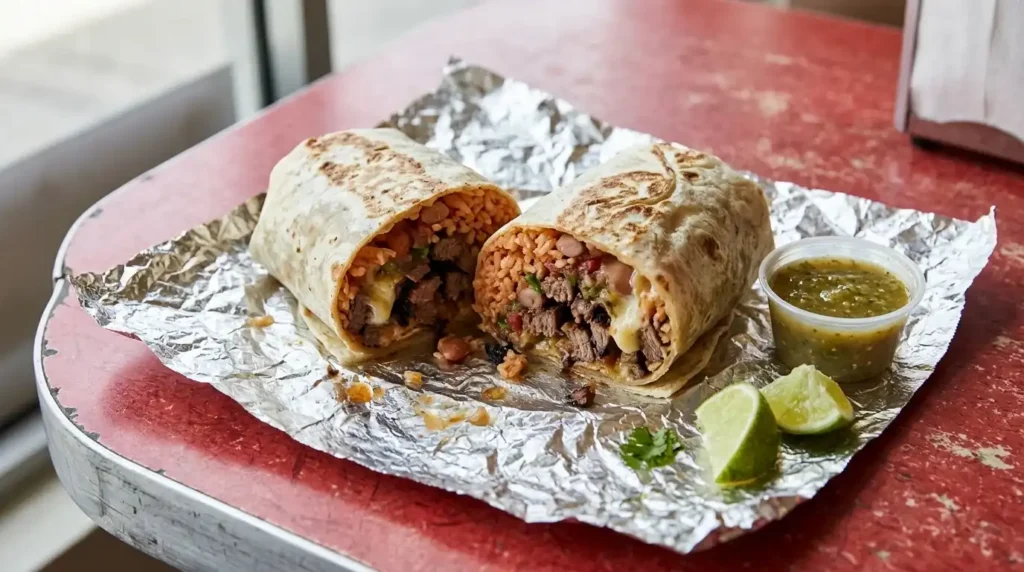
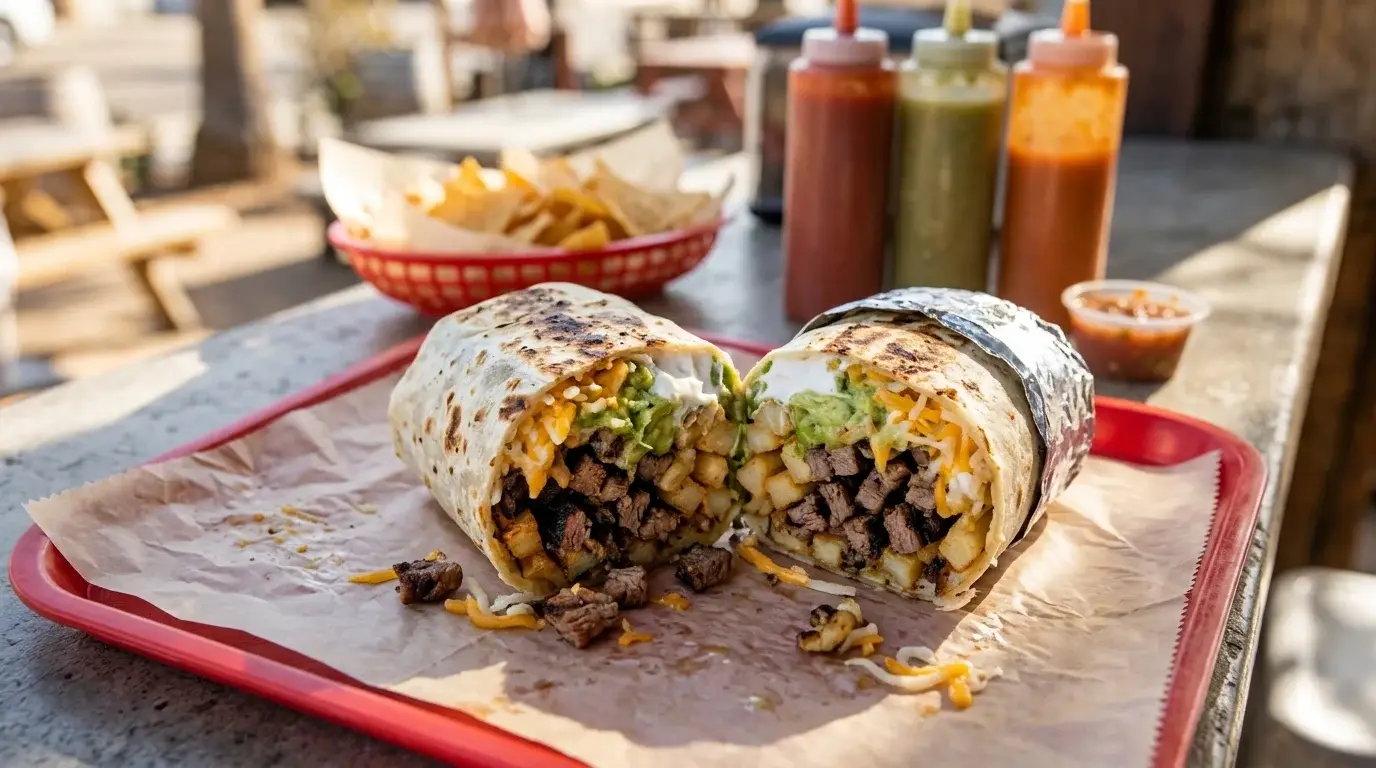
San Francisco made the burrito large. Two Mission District taquerias claim the first oversized version. The Ringer reports that El Faro’s Febronio Ontiveros said he created it on September 26, 1961, for a group of firefighters, while Raul and Michaela Duran of Taqueria La Cumbre date their claim to September 29, 1969. Arellano, the article notes, favors El Faro’s story.
KQED’s 2023 reporting complicates even that. A story associated with La Cumbre credits Miki Duran with joining two flour tortillas for hungry firefighters, a detail close to El Faro’s version. Miguel Jara, who founded La Taqueria in the Mission 50 years before, told KQED he didn’t know whether that was true, and said he did not know what a Mission-style burrito is. His own burritos skip rice, unlike most in the neighborhood.
The style traveled anyway. The Ringer reports that Steve Ells, a former line cook at the San Francisco restaurant Stars, opened the first Chipotle in Denver in 1993, and Arellano credits Chipotle with spreading the foil-wrapped Mission format across the country.
The California burrito and other branches
French fries in San Diego
The burrito kept branching. The Ringer describes San Diego’s California burrito as meat, condiments and french fries in place of rice and beans. Fries were added sometime in the 1980s, the article says, most likely at Roberto’s Taco Shop, which Roberto Robledo opened in 1964, though the local chain Santana’s also claims credit. The earliest menu listing Arellano found was at a Mexican spinoff of Carl’s Jr., and that one had no fries.
Each branch keeps the same core: a flour tortilla, folded so nothing falls out.
Frequently asked questions
Where did the burrito originate?
Northern Mexico. The word appears in an 1895 Mexican dictionary, and Ciudad Juárez claims the modern dish.
Why is it called a burrito?
It means “little donkey.” Explanations include the Juan Méndez legend and the shape’s resemblance to donkey ears; none is proven.
Who invented the Mission burrito?
Disputed. El Faro claims September 26, 1961; La Cumbre claims September 29, 1969.
When did burritos come to the United States?
Documented US examples date to the 1930s, including a menu listing at El Cholo in Los Angeles.
Sources
- Aldo Vicencio, “Los burritos: un platillo que sí es mexicano,” México Desconocido (August 16, 2024): https://www.mexicodesconocido.com.mx/burritos.html
- Emily Upton, “The History of Burritos,” Today I Found Out (April 1, 2014): https://www.todayifoundout.com/index.php/2014/04/history-burritos/
- César Saldaña, “What Is a Mission-Style Burrito? Maybe … a Myth,” KQED (September 14, 2023): https://kqed.org/news/11961178/what-is-a-mission-style-burrito-maybe-a-myth
- Alison Herman, “The Lost Burrito,” The Ringer (March 1, 2017): https://www.theringer.com/2017/3/1/16043252/california-burrito-mission-san-diego-food-week-3740b14023b5