In this story
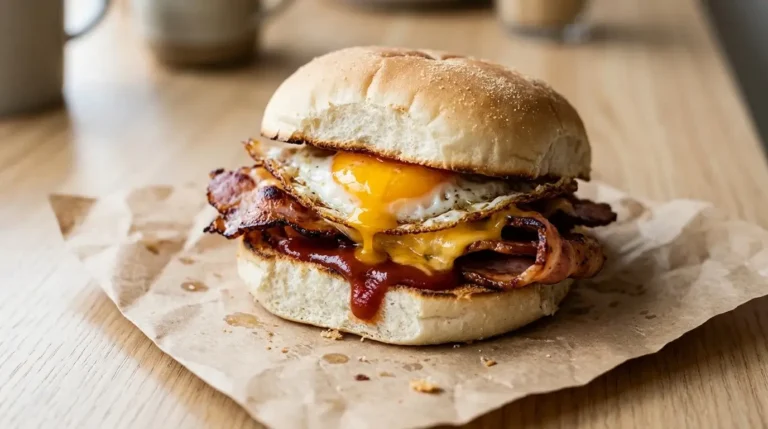
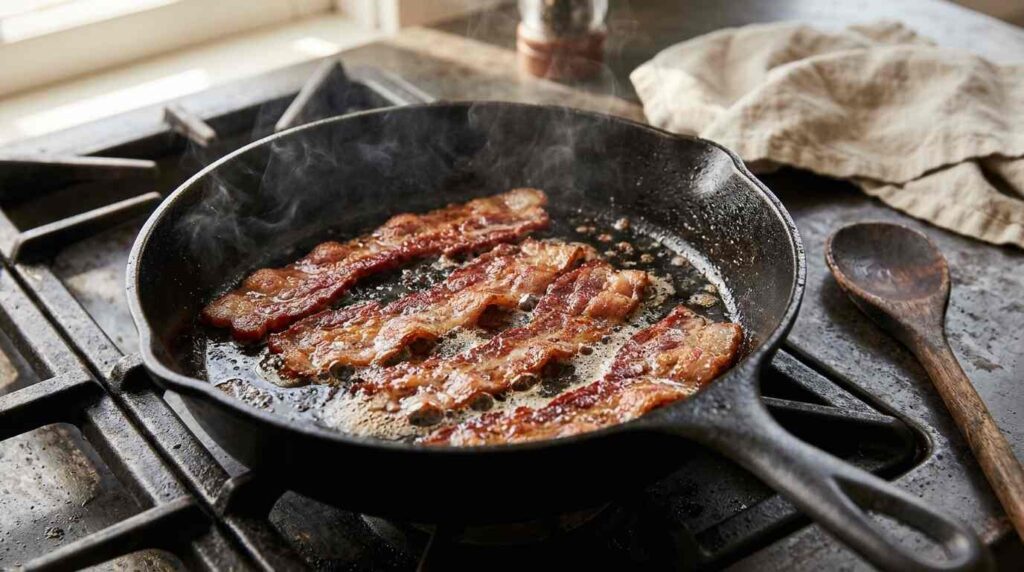
The bacon butty is grilled or fried bacon between slices of buttered bread or in a soft roll, and no document names an inventor for it. What the record does show is a sandwich built from two old British things, cured pork and a regional word for bread and butter. Food columnist Felicity Cloake, writing in the New Statesman, calls it a cultural icon that unites the country, and the arguments over how to make it properly have run long enough to attract university laboratories and a prime ministerial hopeful.
Video: BACON BUTTY WITH 3 BIG RASHERS! | Simply Whitby! TV
Where the word butty comes from
Dictionaries agree on the root and disagree about little else. Dictionary.com lists butty as a British dialect word for a slice of bread and butter or a sandwich, first recorded between 1850 and 1855 and formed from butter plus the suffix -y. The Online Etymology Dictionary dates it to 1855 and places it in northern English. A second, unrelated butty, meaning a workmate or friend and especially a fellow miner, appears in the record from 1780 to 1790, and its origin is listed as obscure.
The spelling wobbles. Dictionary.com gives buttie as a variant, and the plural is butties. A butty, then, was never specifically a bacon sandwich. It was bread and butter first, and the filling arrived as a modifier, so that a jam butty and a chip butty sit alongside the bacon one. The IronmongeryDirect survey reported by the Culture Trip defines the word as a colloquialism for any buttered sandwich, especially one with a hot filling.
No fetched source dates the first bacon butty or names a café, cook or town that produced it. One blog states that the dish apparently comes from England while admitting it found no history tying the sandwich to an English inventor, so the claim of English origin rests on the word itself and on where the dish is eaten.
One sandwich, a dozen names
The word used depends on where the speaker is standing. Tim Hayward, writing for SAVEUR in 2011, lists butty, piece, wedge, doorstep, sanger and sarnie as regional names. Cloake adds the bread names bap, barm, stottie cake and morning roll in the same piece.
The Culture Trip survey of just over 2,000 people sorted the names for a bacon roll by region. The southern half of England said bacon bap or bacon roll, and that was the most common answer overall. The North West said bacon barm, the Midlands said cob, and Scotland offered bacon bridie, buttery or rowie. None of the names describes a different filling. They describe a different bread, which is where much of the dispute begins.
The Wikipedia article on the sandwich, which is cited here only as a pointer to the other terms, lists bacon cob, bacon barm and rasher sandwich among the alternatives and says bap, cob and sarnie are also used in New Zealand.
The bacon behind the sandwich
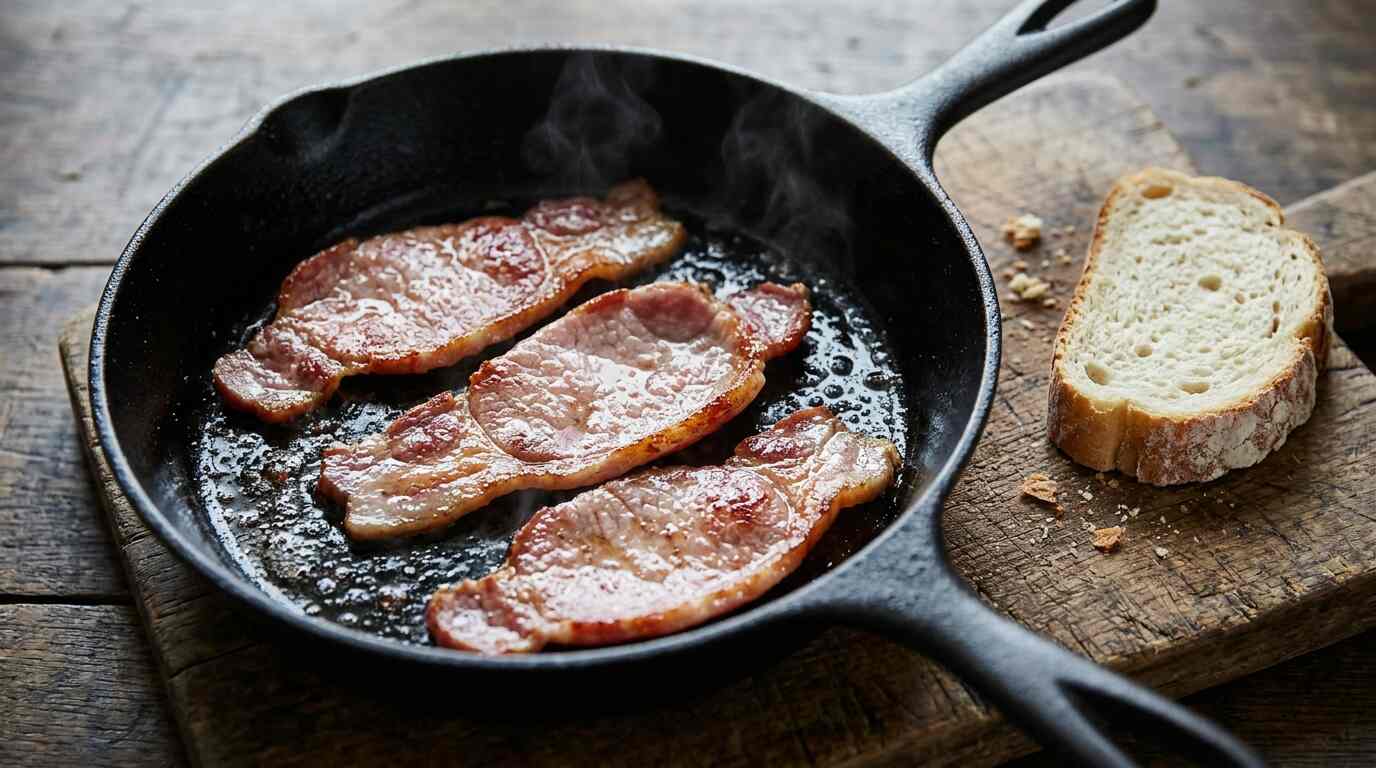
British bacon is not American bacon. Parkers, a UK retailer, explains on its blog about the sandwich that back bacon comes from the loin with a strip of belly attached, while the American streaky kind comes only from the belly. Cloake relays an exchange from Jilly Cooper’s 1979 book Class, in which a grocer says “When a woman asks for back, I call her ‘madam’. When she asks for streaky, I call her ‘dear’.” The cut, in other words, has carried class signals.
Cloake also argues that bacon in the sense of a side of salt-cured pork was once peculiar to the British Isles, and that the pig was for centuries the only animal raised in Britain purely for meat. Cured meat was prized because it supplied pleasure for months, a view that makes the on-the-go sandwich a late development.
The curing method most associated with the British rasher is the Wiltshire cure. Wikipedia, again used as a pointer, says it began in the eighteenth century in Calne, Wiltshire, where the Harris family developed it. It started as a dry cure of ten to fourteen days and has been a wet brine cure of four to five days since the First World War. A London history blog dates the founding of Harris’s shed behind a shop in Calne to 1770 and credits the brine with cutting curing time by more than half and producing a sweeter, less salty bacon. That post cites no sources, so the date and the figure are the author’s own. The same post says average consumption in 1880 was about 705 grams per person per week.
What chefs and surveys say belongs in it
Chef Fergus Henderson of St. John in London has built his name on plain British food. Hayward’s SAVEUR piece describes the version served there as smoked back bacon from Gloucestershire Old Spots pigs on thick slices of grilled white bread. Henderson’s own line, as quoted there: “Once slipped between white, crusty bread and smeared with brown sauce… now we’re talking!” He told the magazine that frying bacon makes people react alike, a remark Cloake also repeats.
Surveys put numbers on the consensus. A Direct Line for Business poll of over 1,000 adults, reported by Restaurant in February 2015, found the ideal butty to be smoked bacon, untoasted sliced white bread and brown sauce. Twenty-five percent chose sliced white as the best bread, against 6 percent for brown and 5 percent for baguette. Fifty-eight percent would leave the bread untoasted and 21 percent wanted it toasted or warmed. Most respondents wanted nothing but bacon and sauce, though 31 percent would add egg and 14 percent cheese. Fried banana and avocado were among the unusual extras.
The IronmongeryDirect survey, summarized by the Culture Trip, reached a similar picture from a different sample: smoked bacon, three rashers, in a soft white roll. Cloake notes that bacon beat cheese to the top spot in a 2020 poll of favorite sandwich fillings.
Brown sauce, ketchup and marmalade
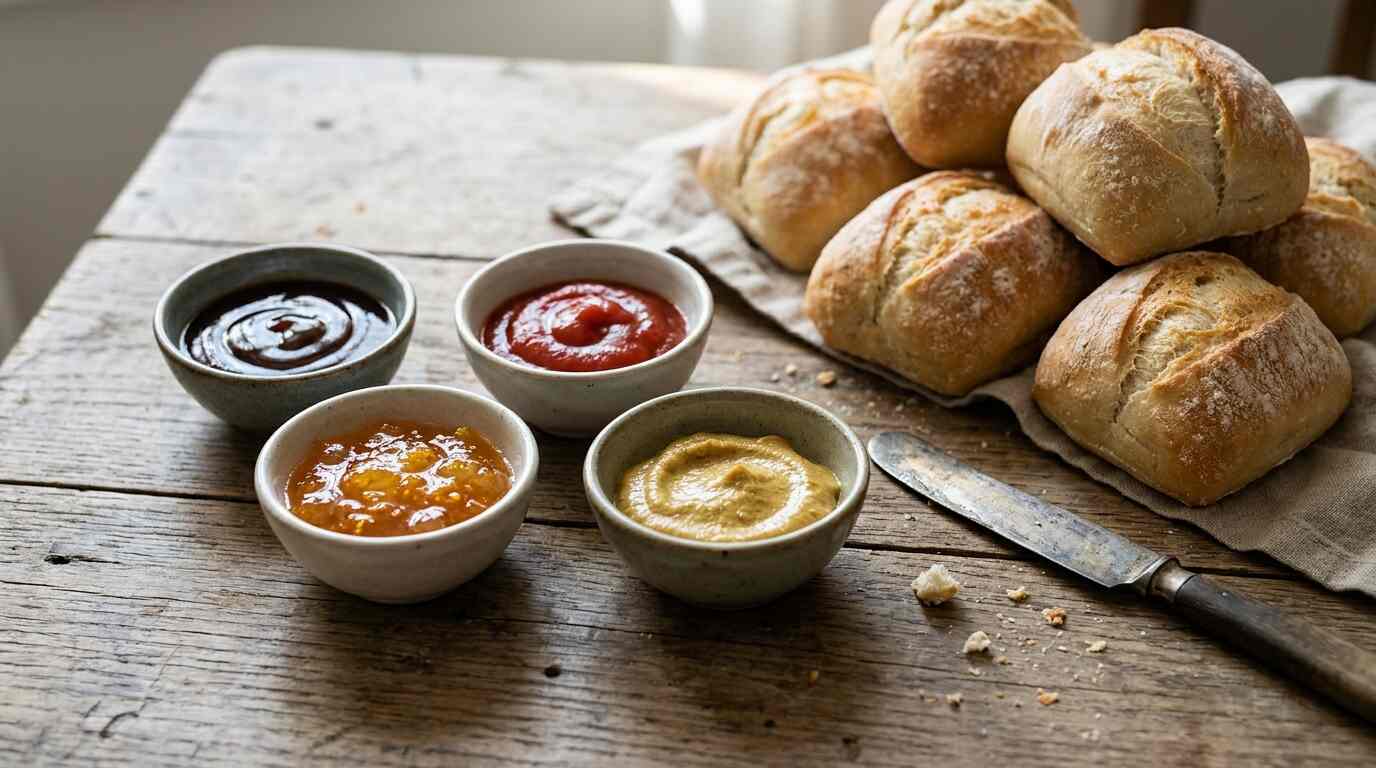
The sauce is where the butty divides. In the Culture Trip survey, 44 percent preferred brown sauce and 36 percent ketchup. Eleven percent wanted none and 4 percent chose barbecue sauce. The Direct Line poll also put brown sauce first, with the regional pattern muddled in the published account, which says both that the East of England and Wales chose ketchup and that the East of England chose brown.
The best-known brown sauce is HP. Mental Floss credits Frederick Gibson Garton, a Nottingham grocer, with the original recipe, first marketed as The Banquet Sauce and renamed Garton’s HP Sauce in 1895. Financial trouble led him to sell the trademark and recipe in 1903 for 150 pounds to Edwin Samson Moore of the Midlands Vinegar Company in Birmingham. The initials are said to stand for Houses of Parliament, which the article labels a legend.
The Ian Visits blog went looking for evidence and could not find the 1895 trademark. The earliest advertising he found tying the sauce to Parliament dated from 1906, and a 1910 advertisement said it was used on the dining tables of the House of Parliament. The author concluded that the exact truth will probably never be known. The sauce has since changed hands several times. Heinz bought it in 2005 for 470 million pounds, according to Mental Floss, and production moved from Aston, Birmingham, to the Netherlands in 2006.
Cloake rejects both camps. Her answer, recorded in the New Statesman, is English mustard and marmalade, a pairing Wikipedia also attributes to her. The brown-versus-red argument continues undisturbed. Parkers adds that HP Fruity, made with apple and dates, is sweeter, and notes a separate quarrel over whether the bread should be buttered or fried in the bacon fat.
The Leeds study and the crunch
In April 2007, researchers in the food science department at the University of Leeds published a formula for the perfect bacon sandwich. News-Medical reported that four researchers led by Dr. Graham Clayton spent more than 1,000 hours testing 700 variations. The variables included smoked, unsmoked, streaky and thick-cut bacon, four cooking methods, three oils, and different times and temperatures. A shortlist was measured for texture by computer, and 50 volunteers rated each sandwich for taste, texture and flavor.
The finding was that crispness mattered most. Clayton said consumers respond more to the texture and crunching sound of the bacon than to its taste and smell. The recommended method was two or three back rashers under a preheated grill at about 240 degrees Celsius (475 Fahrenheit) for seven minutes, between slices of farmhouse bread one to two centimeters thick. The team also published an equation in which the force in newtons needed to break the cooked bacon depends on bacon type, cooking method, cooking time and serving temperature. The same report notes that Britons spend more than 1 billion pounds a year on bacon, which it calls the country’s most frequently eaten meat.
The Wikipedia article summarizes the study’s winner as crispy, fried, not-too-fat bacon between thick slices of white bread, which matches the News-Medical account in substance.
The sandwich that entered politics
In May 2014, Labour leader Ed Miliband stopped at a cafe in New Covent Garden Flower Market in London. PoliticsHome recounts that he ordered a bacon sandwich on camera despite a warning from his press chief not to eat in front of photographers. The bacon was hot, he struggled, and Evening Standard photographer Jeremy Selwyn took about a dozen frames. The images went viral and were edited into countless scenes. The Sun printed one on its front page on the eve of a head-to-head with David Cameron before the 2015 election.
Miliband later disputed the importance of the episode. In a 2021 LBC interview he said, “I don’t think I lost because of the bacon sandwich,” and added that deeper reasons lay behind the defeat. Cloake records that he named the incident as his sole regret from his time as leader.
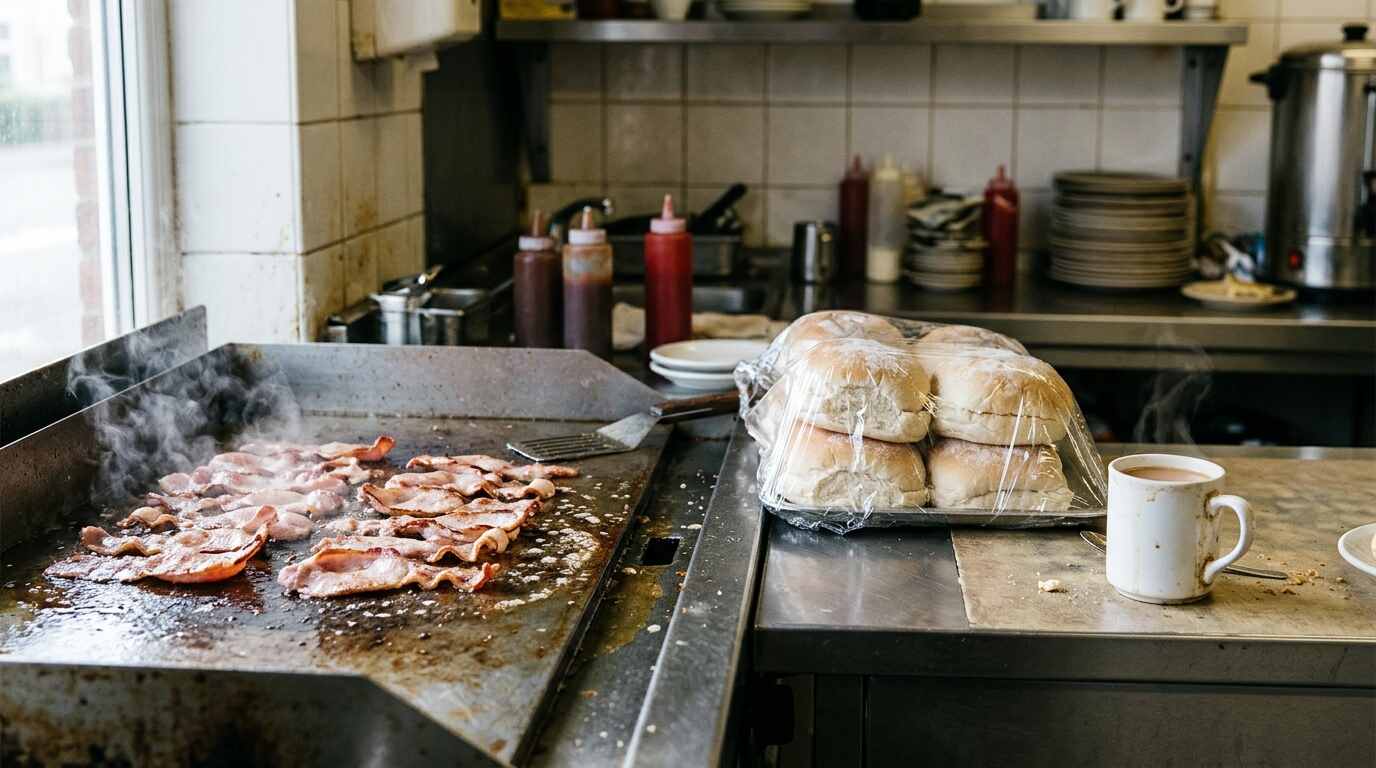
That the sandwich could carry this weight says something about its place. It is sold from greasy-spoon cafes and, according to Hayward, unwrapped on grouse moors from fine linen. Cloake reports that it is served from a burger van at a DIY store in Leatherhead and at Buckingham Palace.
Sources:
- New Statesman, Felicity Cloake, “The bacon butty is a uniquely British phenomenon”: https://www.newstatesman.com/culture/food-drink/2021/06/bacon-butty-uniquely-british-phenomenon-cultural-icon-unites-us-all
- Dictionary.com, “butty”: https://dictionary.com/browse/butty
- Online Etymology Dictionary, “butty”: https://www.etymonline.com/word/butty
- Culture Trip, “Revealed: This Is How Britain Makes Bacon Sandwiches”: https://theculturetrip.com/europe/united-kingdom/articles/revealed-this-is-how-britain-makes-bacon-sandwiches
- SAVEUR, Tim Hayward, “Britain’s Pride: The Bacon Sandwich” (2011): https://www.saveur.com/article/Travels/Britains-Pride-Bacon-Sandwich/
- Wikipedia, “Bacon sandwich” (pointer only): https://en.wikipedia.org/wiki/Bacon_sandwich
- Wikipedia, “Wiltshire cure” (pointer only): https://en.wikipedia.org/wiki/Wiltshire_cure
- Parkers, “The Bacon Sandwich”: https://parkersgbi.com/blogs/brew-banter/the-bacon-sandwich
- A London Miscellany, “Bacon Mania”: https://alondonmiscellany.blog/2023/08/04/bacon-mania
- Restaurant, “Infographic: Bacon butty trends”: https://www.restaurantonline.co.uk/Article/2015/02/27/Infographic-Bacon-butty-trends/
- Mental Floss, “What Is HP Sauce?”: https://www.mentalfloss.com/food/hp-sauce-history
- Ian Visits, “Is HP Sauce really named after the Houses of Parliament?”: https://www.ianvisits.co.uk/blog/2020/03/24/is-hp-sauce-really-named-after-the-houses-of-parliament/
- News-Medical, Leeds University bacon sandwich study (2007): https://www.news-medical.net/news/2007/04/11/23367.aspx
- PoliticsHome, “Recipes For Disaster: The Bacon Sandwich”: https://www.politicshome.com/news/article/recipes-disaster
- LBC, “Ed Miliband: the bacon sandwich didn’t lose me 2015 election”: https://www.lbc.co.uk/radio/presenters/matt-frei/ed-miliband-the-bacon-sandwich-didnt-lose-me-2015-election/
- Simply Whitby! TV (YouTube), “BACON BUTTY WITH 3 BIG RASHERS!”: https://www.youtube.com/watch?v=oyZZv_VjbUI