
In this story
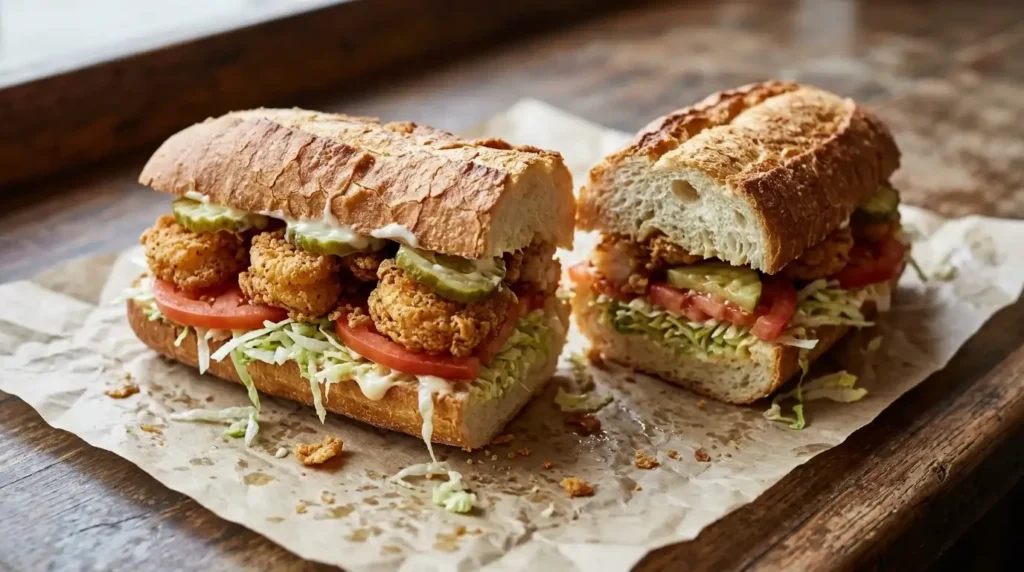
The po’ boy is a New Orleans sandwich built on a long loaf of crisp-crusted French bread, filled with anything from roast beef drenched in gravy to fried shrimp, and customarily “dressed” with lettuce, tomato, pickles and mayonnaise. Its best-known origin story dates to a streetcar strike in the summer of 1929. That story is widely repeated, and it is also the subject of a long-running dispute among historians.
Video: How The Po’Boy Became a New Orleans Obsession, Eater
The 1929 streetcar strike account
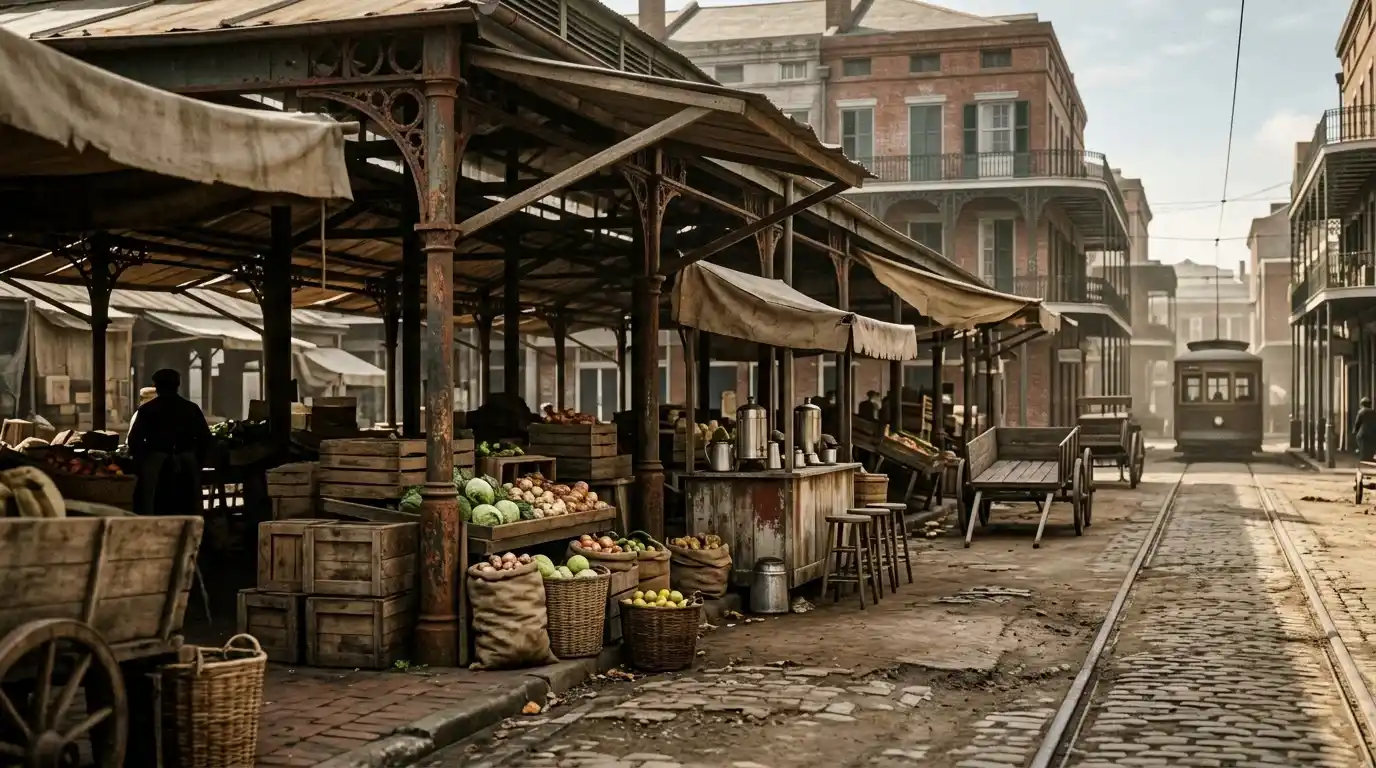
Benny and Clovis Martin moved from Raceland, Louisiana, to New Orleans in the mid-1910s and worked as streetcar conductors, belonging to the street railway employees’ union. According to the New Orleans Historical entry on the sandwich, they opened a small coffee stand in the French Market in 1922. The 64 Parishes encyclopedia entry adds that within a couple of years the brothers had moved into a far larger restaurant on St. Claude Avenue, open around the clock, with a car lot served by carhops.
On July 1, 1929, the city’s motormen and conductors walked out. Both sources describe a dispute about control of the workplace and roughly 1,100 jobs rather than about wages. Attempts to run cars with imported strikebreakers drew crowds into the streets, and the system largely stood idle for about two weeks.
The Martins sided with the strikers. They wrote a letter promising free meals to members of the carmen’s union local, Division 194, and the standard telling holds that they kept the promise with sandwiches. In that telling, Benny Martin later recalled that whenever a striker came through the door, one of the brothers would announce, “Here comes another poor boy.” The sandwich took its name from the joke.
Leidenheimer Baking Company, which still bakes the city’s best-known sandwich loaf, tells the same story on its own history page. So does the Parkway Bakery and Tavern history page, which also places Parkway’s owner, Henry Timothy Sr., in the business of selling poor boys that same year.
Doubts about the strike story
The documentary record is thinner than the legend. An Associated Press piece reprinted by The Washington Times reports that the Martins’ letter promised free meals without describing what the meals were, and that the familiar strike narrative did not appear in a New Orleans newspaper until 1969, some forty years after the event.
Earlier evidence points elsewhere. A 1933 New Orleans States article described the Martins selling sandwiches near the old French Market before the strike began. The same article gave the name a different source: hard-pressed truck farmers from St. Bernard Parish who gathered on North Peters Street. The AP piece also notes that a 1931 advertisement by a man named Andrew Battistella billed him as the “Originator of the Poor Boy’s Sandwich,” a claim that goes unexplained in the sources fetched here.
The sandwich idea itself is older than 1929. The same report cites an 1851 Picayune article describing oysters served in bread at a New Orleans saloon, and a 1917 advertisement offering a fried oyster sandwich for ten cents. The earliest printed use of the name that the AP piece mentions comes from late 1929, in a Meigs O. Frost story about a murder trial, which referred to “huge sandwiches New Orleans knows as the ‘po-boy sandwich.'”
The 64 Parishes entry takes a middle position: it accepts the Martins’ restaurant as the place where the poor boy took its recognized form while acknowledging that sandwiches on French bread already existed. The New Orleans Historical entry likewise says many legends surround the sandwich but that the documents support stories centered on the Martin brothers’ stand. Neither source treats the question as closed.
How the name is explained
Three explanations circulate, each with a different degree of support.
The strike version reads the name as an in-joke. By the 64 Parishes account, the irony is that the strikers had been among the city’s best-paid workers since their union formed in 1902, so calling them “poor boys” was a jab as much as a tribute. The word also had an older meaning: the same entry says beggars around the French Market were known as “po-boys” because they received handouts there.
The truck farmer version comes from the 1933 newspaper article described above, and ties the name to hard-up growers rather than strikers.
A third story derives the name from pour bourre, supposedly French for “for tips,” and says nuns gave bread tips to beggars in the late 1800s. The 64 Parishes entry says no documentary evidence shows New Orleanians ordering sandwiches under that name in that period.
Spelling has its own history. According to 64 Parishes, “poor boy” came first and displaced older terms such as “loaf” in the early 1930s. Menus held to the long spelling until the 1970s, when the shortened “po’ boy” took over, a shift the entry links to white college students of the late 1960s and 1970s.
The bread
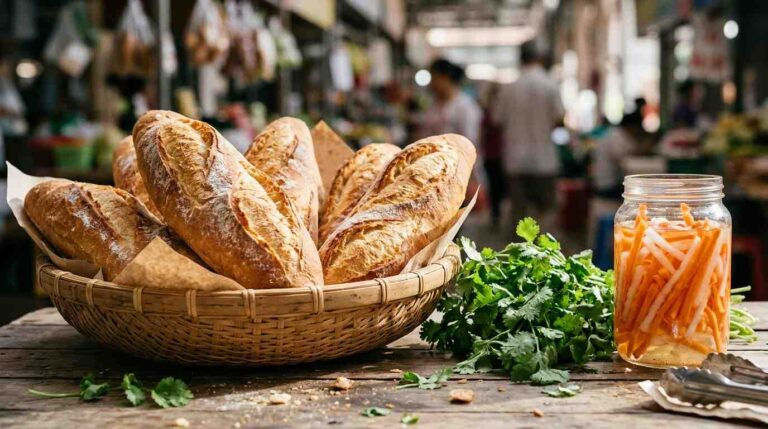
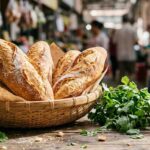
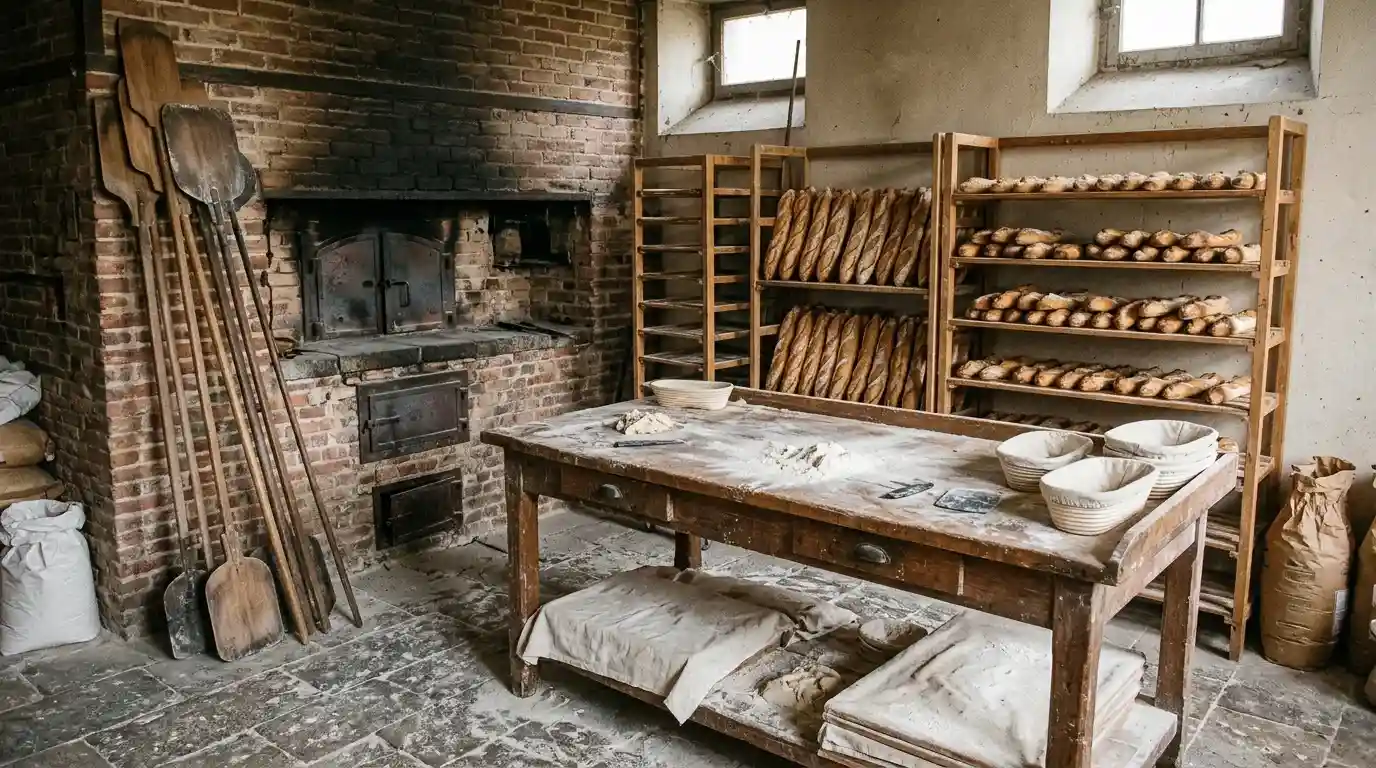
The loaf is what separates a po’ boy from an ordinary hoagie or sub. According to 64 Parishes, German and Austrian bakers dominated New Orleans baking by the mid-1800s and developed a lighter loaf with a crisp crust, and the entry adds that the first poor boy loaves were baked by African American workers in a bakery run by an Italian immigrant who supplied Cajun restaurants around the French Market.
The bakers’ own histories say the shape was engineered. The Leidenheimer account holds that the Martins found the traditional tapered French loaf produced sandwiches of uneven size, and wanted a more symmetrical one that could be cut into equal portions. The 64 Parishes entry credits a different baker: it says the brothers worked with bread supplier John Gendusa on a new loaf, originally forty inches long and uniform in shape, so cheaper cuts of meat could be turned into large sandwiches. The two accounts agree on the problem and differ on who solved it.
Leidenheimer was founded in 1896 by George Leidenheimer, a German immigrant who first baked dense German-style breads before the crisp New Orleans French loaf made the bakery famous, according to the Southern Foodways Alliance oral history. Loaf length varies by source. 64 Parishes gives a current length of thirty to thirty-two inches, while a CBS News report says the loaves run 28 inches and come only from local bakers.
Fillings and what “dressed” means
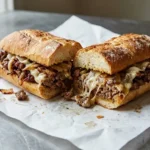
The first poor boys were frugal sandwiches. Per 64 Parishes, many were roast beef made from cheap cuts, and the CBS report describes the original as gravy and meat scraps on French bread. Nick Gagliano, who remembered the Martins’ shop from childhood and is quoted in the AP report, recalled that the gravy was sparing enough for the bread to stay crisp, and that the sandwiches came with house-made mayonnaise and shredded lettuce, which was new to him.
Seafood later became the sandwich’s calling card. The 64 Parishes entry lists shrimp, oyster, catfish, soft-shell crab, fried eggplant, French fries, and ham and cheese among later fillings, and Explore Louisiana’s po-boy guide adds boudin sausage and hot sausage. The entry also records a “Vietnamese po-boy,” the local name for the bánh mì, a nod to the city’s Vietnamese community.
French fries deserve a note, because they appear in two conflicting claims. The Parkway history page says free French fry poor boys went to striking streetcar workers in 1929. The 64 Parishes entry reports that Benny Martin, interviewed in 1949, called the fries version a recent habit favored by teenagers and said most original poor boys held cheaper meat.
What “dressed” means
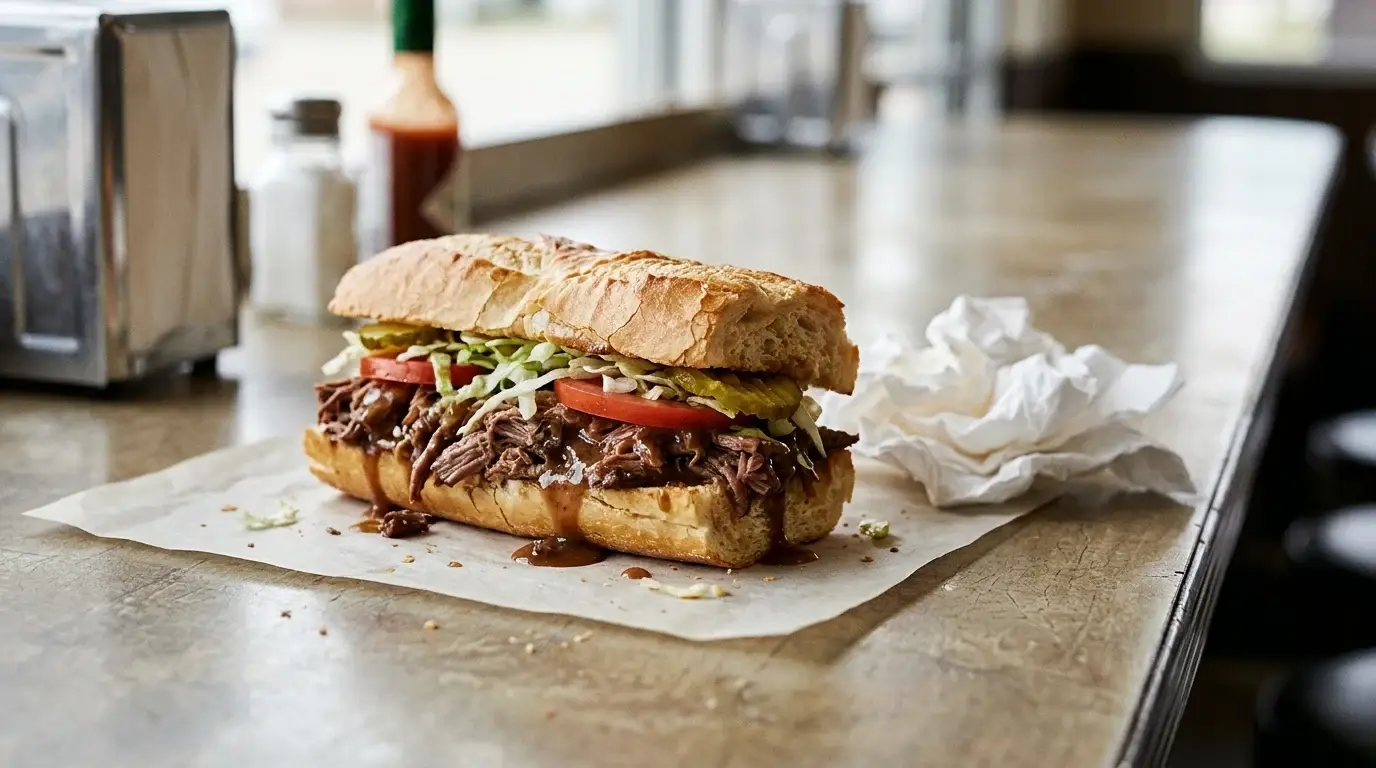
Ordering a po’ boy “dressed” asks for the standard toppings. The Parkway page defines them as lettuce, tomatoes, pickles and mayonnaise, and Explore Louisiana describes shredded lettuce, tomato, sliced pickles and mayonnaise, noting that some versions add butter, hot sauce or Creole mustard. A sandwich ordered plain skips them.
The po’ boy today
The sandwich now has its own festival. The Oak Street Po-Boy Festival has honored it each fall since 2007 along Oak Street in the Carrollton neighborhood, with part of the proceeds going to Son of a Saint, a nonprofit that mentors fatherless boys. Explore Louisiana’s guide says more than 40 craft food vendors compete there in categories such as best filling, which gives the festival a competitive streak. The 64 Parishes entry says the festival began as the New Orleans Po-Boy Preservation Festival and draws attention to the sandwich for at least a day each year.
Preservation was the point, because the entry also warns that franchise sandwich chains keep gaining ground and that cheap alternatives are eroding the po-boy’s customer base. Family shops continue regardless. In the CBS report, chef Justin Kennedy calls the sandwich “a way of life” in New Orleans, while the same report introduces Josh Domilese as the fourth-generation owner of Domilese’s Po-Boys.
The origin dispute shows no sign of ending. The strike account remains the version printed on bakery websites and festival materials, while the 1933 newspaper article and the 1969 timeline keep the alternative explanations in circulation.
Sources:
- New Orleans Historical, “Po-Boy Sandwich”: https://neworleanshistorical.org/items/show/480
- 64 Parishes, “Po-Boy Sandwich”: https://64parishes.org/entry/po-boy-sandwich
- The Washington Times (Associated Press), “The messy history of the po-boy”: https://www.washingtontimes.com/news/2016/oct/8/the-messy-history-of-the-po-boy/
- Leidenheimer Baking Company, “Our Story”: https://leidenheimer.com/pages/our-story
- Parkway Bakery and Tavern, history: https://parkwaypoorboys.com/new-orleans-parkway-bakery-and-tavern-history
- Southern Foodways Alliance, “Leidenheimer Baking Company”: https://www.southernfoodways.org/?p=15337
- CBS News, “The tale behind the sandwich: New Orleans po’ boy”: https://www.cbsnews.com/news/the-tale-behind-the-sandwich-new-orleans-po-boy
- Explore Louisiana, Louisiana po-boys guide: https://www.explorelouisiana.com/articles/louisiana-poboys-guide
- Oak Street Po-Boy Festival, About: https://www.poboyfest.com/about
- Eater, “How The Po’Boy Became a New Orleans Obsession”: https://www.youtube.com/watch?v=FHIQQkAX2IM