
In this story
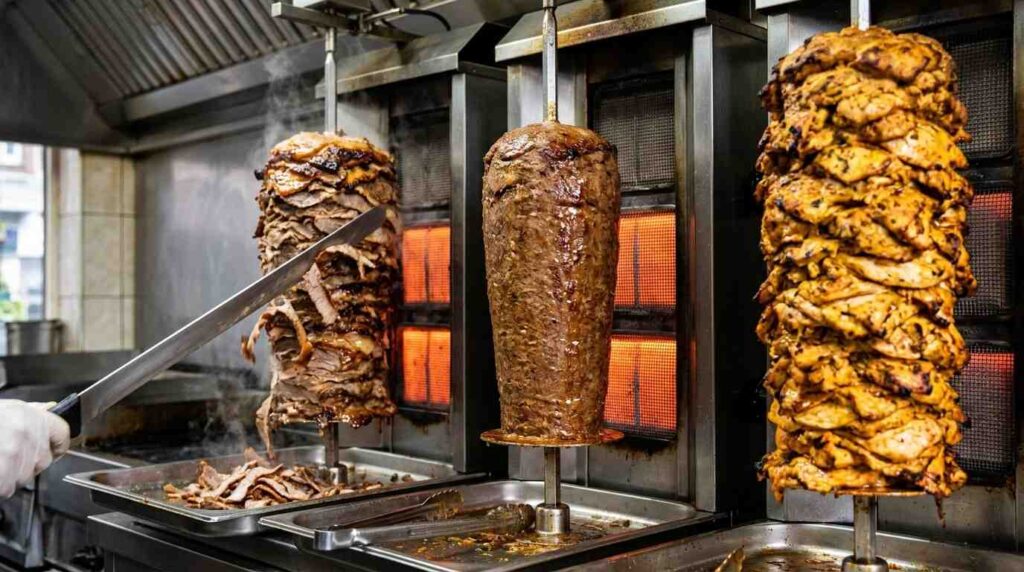
Gyro, doner and shawarma are shaved from the same kind of machine: meat stacked on a vertical spit, roasted against a heat source and sliced off as the outer layer browns. Food writers agree on that, and on the family tree behind it, but the differences in meat, spice, bread and sauce are less tidy than the usual one-line comparisons suggest. Sources split, for example, on whether a Greek gyro is pork, lamb, beef or chicken, and on who first put doner into bread in Berlin.
Video: Shawarma, Döner Kebab and Gyros: History and Differences Explained, from the TastyVersum YouTube channel
What the three share
One method, three countries
Yummy Istanbul states the common ground plainly: all three are meat stacked on a vertical spit, grilled at the edge and shaved off as it cooks. Unpacked describes gyros and shawarma as marinated meat shaved from a rotating spit and served in flatbread or on a plate, and says both trace back to the Turkish doner kebab. MEL Magazine quotes Jim Mumford as calling vertical spit roasting an ancient technique suited to tough cuts of meat.
The word itself carries the technique. Doner comes from the Turkish verb dönmek, “to turn,” according to Yummy Istanbul. Fox News says gyro comes from the Greek word for turn. AOL’s comparison says shawarma comes from the Turkish çevirme, also “turning.”
So the arguments are about what goes on the spit and what surrounds it. The detail below follows the comparison table in Yummy Istanbul, with the other sources added where they disagree.
Doner: the Ottoman original
Lamb, thin slices and a bread-free past
Doner is the oldest of the three on paper. National Geographic cites the food historian Mary Işın, who dates the first depictions of the dish to two miniature paintings by an Istanbul artist from 1616 to 1620, and says the term “döner kebap” was not written down until 1908. The dish began as a horizontal-spit picnic food, and in the 19th century Istanbul restaurants moved to vertical spits.
Two cooks claim the upright spit. National Geographic names Hamdi Usta of Kastamonu and İskender Efendi of Bursa, both in the mid-1800s. Berlin Food Stories is more specific on the first: Hamdi Usta tilted the skewer vertically in 1835, and Efendi reportedly had the same idea about a decade later. The site’s author notes no independent paperwork for either date.
The meat varies by source. Yummy Istanbul lists beef, lamb or chicken, says doner was traditionally lamb, sometimes beef or a mix, and says chicken doner became popular only after the late 1980s. National Geographic agrees that lamb was traditional and that beef and chicken are now common. Yummy Istanbul adds that the slices are very thin and soft, unlike the thicker pieces of gyro and shawarma, which need more chewing.
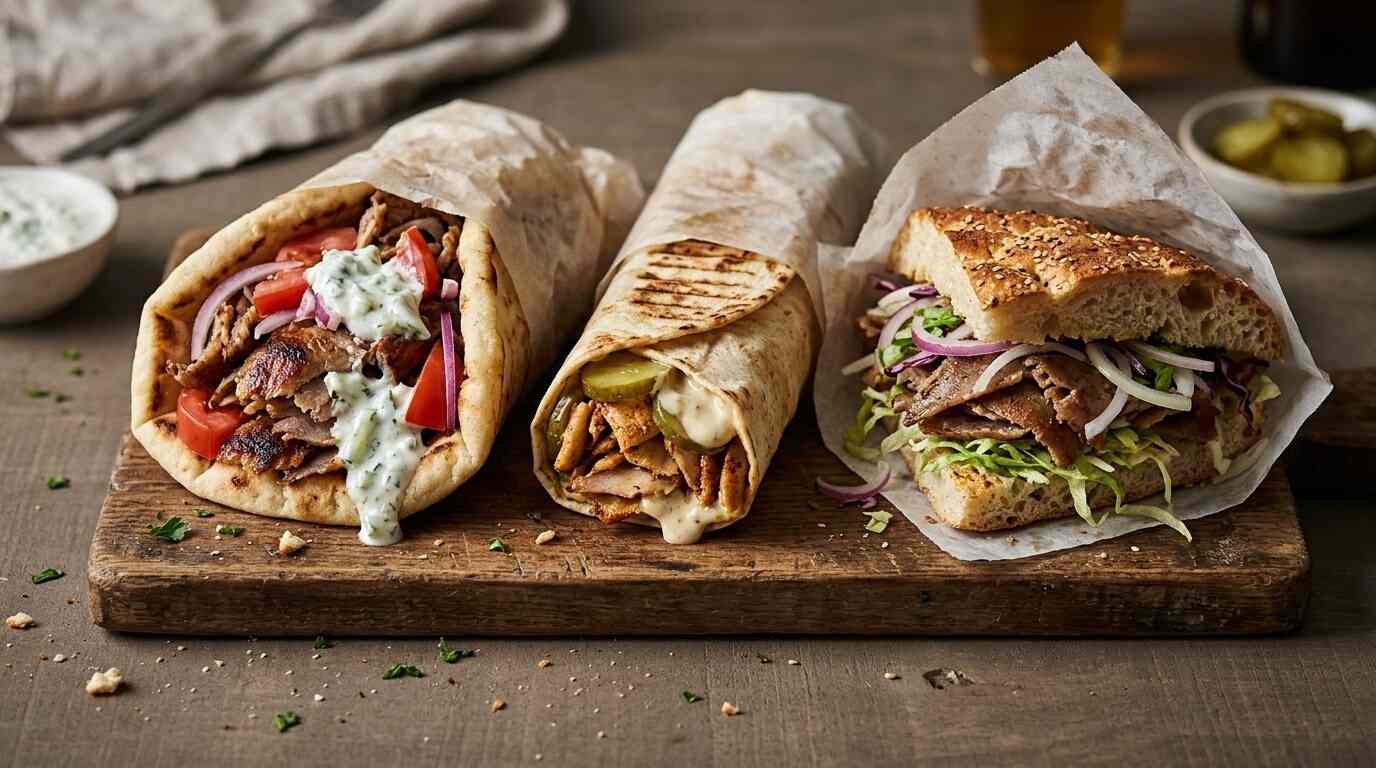
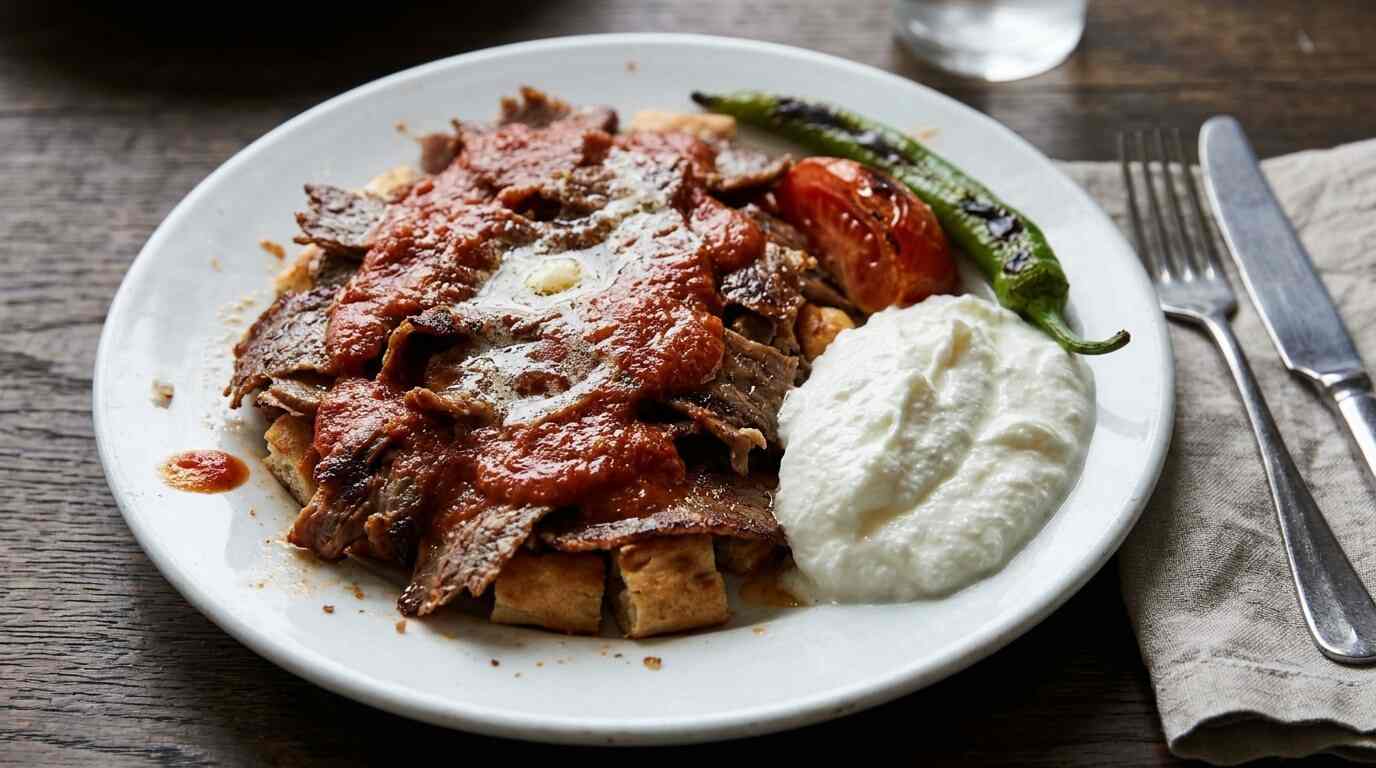
Doner has more than one form. Yummy Istanbul lists the sandwich loaf, the durum wrap and iskender, sliced meat over bread with tomato sauce, melted butter and strained yogurt. The same piece says doner traditionally carries no sauce. Berlin Food Stories agrees about Turkey: the sandwich there is meat-centric, with onions, pickles, sometimes tomatoes and dried spices, and the Turkish masters it interviewed would not add salad, cabbage or sauces.
For the full history of the dish, the site’s döner kebab post covers the Ottoman and Berlin claims in more detail.
Shawarma: spice, garlic and the Levant
Bold seasoning and a sauce that comes in jars
Shawarma is the Arab-world version. Yummy Istanbul says it comes from the Levant, lists lamb, chicken or beef, and says it is served in flatbread with garlic sauce (toum) or tahini, with fries and pickles. Unpacked lists chunks of lamb, chicken or turkey. AOL adds veal and goat to the meats and says the dish traces to the Ottoman Empire in the 18th century, while Yummy Istanbul gives no date for shawarma, and Unpacked says its origins are less definitive. The 18th-century claim therefore rests on one source.
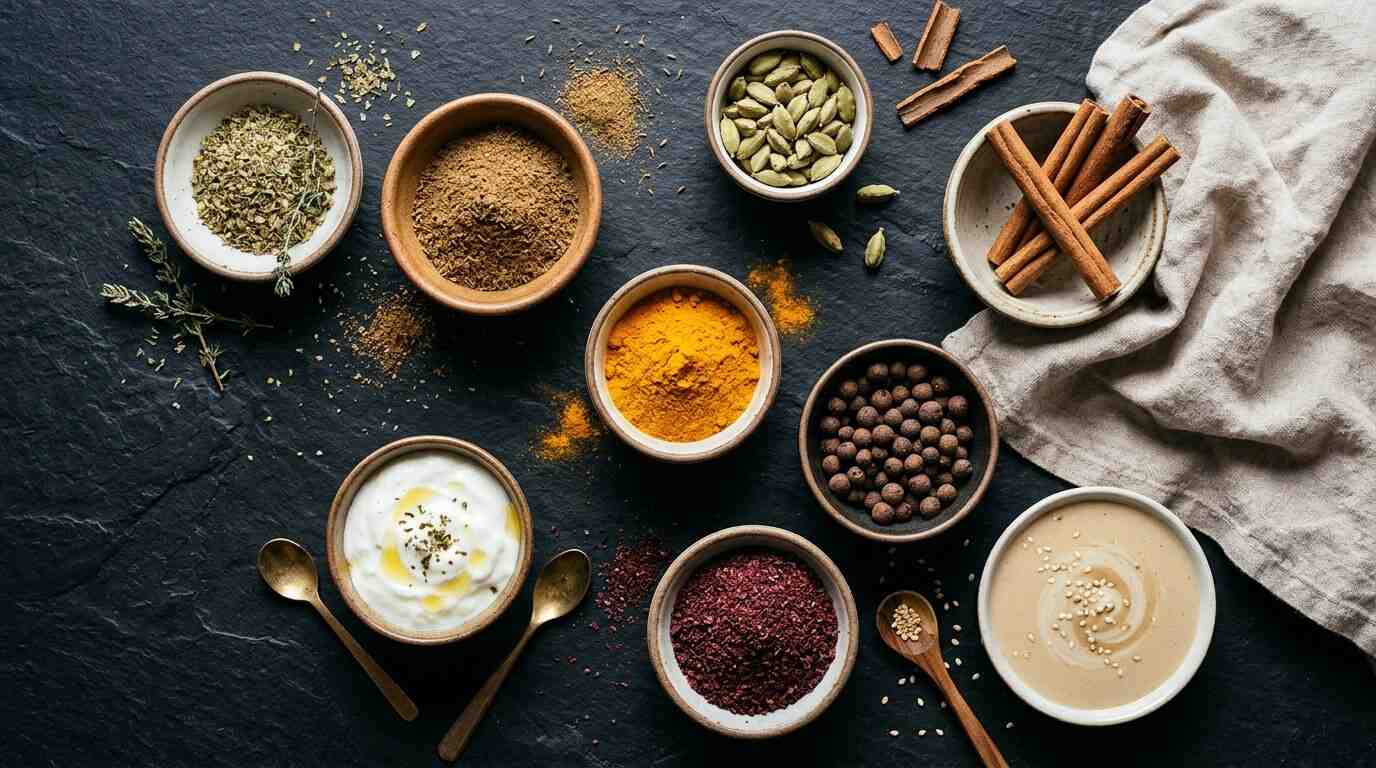
Seasoning is where shawarma separates most clearly. MEL Magazine, quoting Mumford, says cumin, cardamom and turmeric define it. Unpacked names turmeric, cardamom, cinnamon and cloves. Food Republic quotes the chef Jilbert El-Zmetr on two blends: a seven-spice mix of allspice, coriander, cinnamon, black pepper, clove, cumin and nutmeg for chicken, and salt, cumin, coriander, cardamom, paprika and a little cinnamon for lamb and beef. The marinade uses yogurt, which helps tenderize the meat, and rests for at least overnight and ideally two to three days.
Garnishes lean toward the pantry. Unpacked mentions hummus, tahini, pickled mangoes and a buffet of salads. AOL lists tahini, tabbouleh and hummus, and adds that tzatziki never appears.
The cooking differs in one detail as well. AOL says shawarma meat is stacked in a cone and sliced with a knife, while Food Republic’s chef advises slicing home-cooked meat very thin and frying it hot in a pan, since most kitchens lack a vertical rotisserie.
Gyro: Greek herbs and a Chicago cone
Tzatziki, thick pita and ground meat
The gyro is Greek by name and partly American by industry. Fox News says the dish is believed to have started in Greece. AOL says Greek historians link it to the soldiers of Alexander the Great, a claim it reports without detail, and that Greek immigrants brought it to New York in the 1970s. WTTW says doner reached Greece in the 19th or early 20th century and became the pork-based Greek gyro.
The meat is the most argued point. Yummy Istanbul says gyros are made from pork or chicken. AOL says pork is traditional in Greece but that American gyros are usually lamb, beef or a blend. Unpacked says gyro meat is typically lamb or beef, ground and formed into a loaf, and MEL Magazine agrees that gyros use ground meat. The ground-loaf form is the clear contrast with doner and shawarma, whose cooks stack sliced meat.
Seasoning is herbal. MEL Magazine lists oregano, garlic, rosemary, marjoram and thyme, Unpacked oregano, rosemary, thyme and marjoram, and AOL lemon, garlic and oregano. The usual garnish is tomato, onion and tzatziki on thick pita, with fries a common addition, according to Yummy Istanbul.
How the Chicago version took over is told differently by different people. WTTW says George Apostolou probably served the first American gyros at the Parkview Restaurant in Lawndale in 1965, and says some diners avoided pork, so Chicago shifted to lamb-and-beef blends, helped by beef from the Union Stockyards. Tasting Table reports that Peter Parthenis of Gyros Inc. says he began producing gyros in 1973, that Chris Tomaras of Kronos Foods says he first brought the gyro from Greece, and that another producer credits a man named John Garlic. The producers’ accounts conflict. Fox News says Kronos is now the world’s largest gyro manufacturer and that more than 300,000 of its gyros are eaten daily in the United States.
The site’s gyro post follows that industrial history further.
Bread, sauce and toppings
Where the three look different on the plate
On the plate the contrasts are easier to read than on the spit. Yummy Istanbul’s table sets doner on a sandwich loaf, or on lavash for the durum wrap, with lettuce, tomato, onion, sumac onions or pickled peppers. Shawarma goes on flatbread with fries and pickles. The gyro takes thick pita with tomato, onion and fries.
Sauce works as a rough identifier. Tzatziki marks a gyro. Garlic sauce or tahini marks a shawarma. Traditional doner in Turkey has no sauce at all, although that rule has not travelled. Berlin Food Stories says shops in Berlin added tomatoes, salad, cucumbers and red cabbage, marketing the sandwich as a healthier fast food, and that price pressure led to cheaper minced-meat skewers, mayonnaise-based sauces and cheap fillers. Its author treats the Berlin version as a German invention.
Fries are the exception to every rule. Yummy Istanbul lists them on both the gyro and the shawarma, and AOL says both dishes are often served with fries, so a plate with fries cannot be assigned to one country.
Who invented the sandwich version
Berlin, Istanbul or somewhere else
The sandwich form of doner, meat in bread with salad and sauce, has its own dispute. National Geographic says Kadir Nurman, a Turkish guest worker, opened a Berlin shop in 1972 selling flatbreads filled with doner, and that he is credited with the sandwich, though others contest it. Berlin Food Stories gives the official story from the Turkish Association of Döner Manufacturers in Europe: Nurman invented the “Döner im Brot” in 1972, in a shop near Zoologischer Garten that closed in 2003.
The same article lists rivals. Mehmet Aygün of the Hasır group says he invented it on Oranienstraße in 1971, and others claim 1969, 1971 and 1973, but the article says little or no evidence supports any of them. Its author argues the sandwich was first sold in Istanbul between the late 1950s and late 1960s, at shops called Büfes, and that guest workers then brought the idea to Germany.
National Geographic adds a recent twist: in 2024, Turkey applied to the EU to protect “doner” as a guaranteed traditional speciality, and Germany reportedly objected.
Common questions
What is the main difference between a gyro and a shawarma?
Gyro meat is typically ground and formed into a loaf, seasoned with herbs such as oregano, and served with tzatziki on pita. Shawarma uses sliced meat marinated in spices such as cumin, cardamom and turmeric, and takes garlic sauce or tahini, according to MEL Magazine, Unpacked and AOL.
Is doner kebab the same as shawarma?
Both are shaved from a vertical spit and both trace to the Ottoman doner, but Yummy Istanbul separates them by origin, bread and sauce. Doner is Turkish and traditionally sauceless, shawarma is Levantine and served with garlic sauce or tahini.
Is a gyro made of lamb or pork?
The sources differ. Yummy Istanbul says pork or chicken, AOL says pork is traditional in Greece while American gyros are usually lamb, beef or a blend, and Unpacked says lamb or beef.
Sources
- Shawarma, Döner Kebab and Gyros: History and Differences Explained (TastyVersum, YouTube) — https://www.youtube.com/watch?v=yxwitP9DrRU
- Doner vs Shawarma vs Gyro: What’s the Difference? (Yummy Istanbul) — https://yummyistanbul.com/doner-vs-shawarma-vs-gyro/
- What’s the difference between a gyro and a shawarma? (Unpacked) — https://unpacked.media/?p=773
- Shawarma vs. Gyro (MEL Magazine) — https://melmagazine.com/en-us/story/shawarma-vs-gyro
- These Common Spices Make Shawarma Easier Than You Think (Food Republic) — https://www.foodrepublic.com/1830597/spices-used-for-shawarma/
- Gyro vs. Shawarma: The Key Differences Between Two Street Food Faves (AOL) — https://www.aol.com/gyro-vs-shawarma-whats-difference-154946712.html
- What is Turkish doner kebab? (National Geographic) — https://www.nationalgeographic.com/travel/article/what-is-turkish-doner-kebab
- A brief history of the doner kebap (Berlin Food Stories) — https://berlinfoodstories.com/editorials/a-brief-history-of-the-doner-kebap
- The Debated History Of The Gyro (Tasting Table) — https://tastingtable.com/1144626/the-debated-history-of-the-gyro
- Where did the gyro come from? (Fox News) — https://www.foxnews.com/food-drink/where-did-the-gyro-come-from
- Gyros in Chicago (WTTW) — https://www.wttw.com/node/50070
Keep reading
- Sabich: The Iraqi Jewish Eggplant and Egg Sandwich of Israel and the Story Behind Its Name
- Choripán: The Argentine and Uruguayan Chorizo Sandwich, Its Name and Disputed Origins
- Banh Mi History: How the Baguette Became Vietnam’s Sandwich
More in this section: Sandwich Debates guide.