In this story
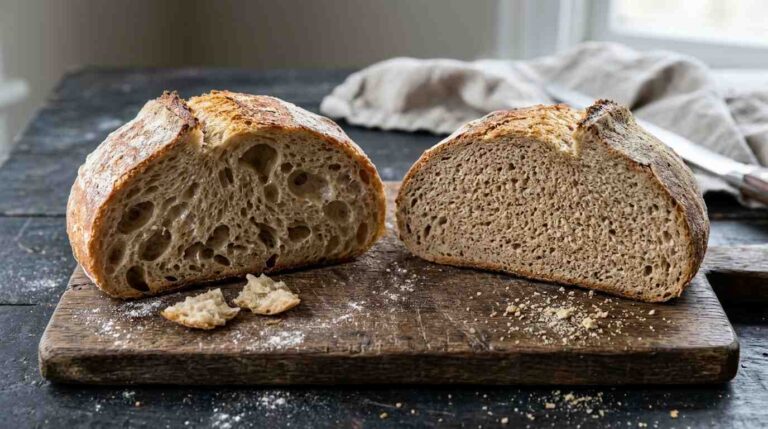
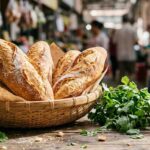
Bread turns brown and fragrant in an oven or a toaster because sugars and amino acids in the dough react once the surface gets hot and dry enough. The process is the Maillard reaction, and Chemistry World’s feature on it puts the everyday case plainly: it is how bread browns to become toast. Crust color, toast flavor and the golden outside of a griddled sandwich all trace back to the same chemistry, which depends on temperature, water and the makeup of the dough.
Video: Why the Maillard Reaction Makes Everything Delicious | Reactions
Maillard in 1912, Hodge in 1953
Louis-Camille Maillard, a French chemist, first reported the reaction in a 1912 paper describing amino acids reacting with sugars at high temperatures, according to the American Chemical Society’s magazine Chemical & Engineering News in its centennial feature on the reaction. Historian Alan Rocke told the magazine that before that paper there were “lots of ideas and anecdotes, but no proper science.”
The mechanism came later. John E. Hodge, working at the U.S. Department of Agriculture in Peoria, Illinois, published a paper in 1953 that laid out the steps, and the same article reports that some chemists have proposed calling the process the Maillard-Hodge reaction without the name catching on. Vincenzo Fogliano of the University of Naples put the division of credit this way: “Maillard discovered the reaction, but Hodge understood it.” Research stayed modest until World War II, when militaries wanted palatable food that would keep and could be produced at industrial scale.
Papasidero’s group, writing about bread specifically, names the early intermediates: a glycosylamine, then a Schiff base in equilibrium with an Amadori compound, which breaks down into a rearranged sugar and an amino acid residue. Those fragments go on to form the aroma compounds. The authors treat bread as a chemical reactor in which kinetic rate constants follow the Arrhenius law, a temperature-dependent form.
Back in the general model, Hodge’s account has three stages. A sugar’s carbonyl group reacts with an amino group and releases water, leaving an unstable compound called a glycosylamine. Rearrangements then yield aminoketose compounds, and further conversions and polymerizations produce the flavor, aroma and color molecules. Nobel laureate Jean-Marie Lehn is quoted calling it “by far, the most widely practiced chemical reaction in the world.”
Where the sugars and amino acids come from
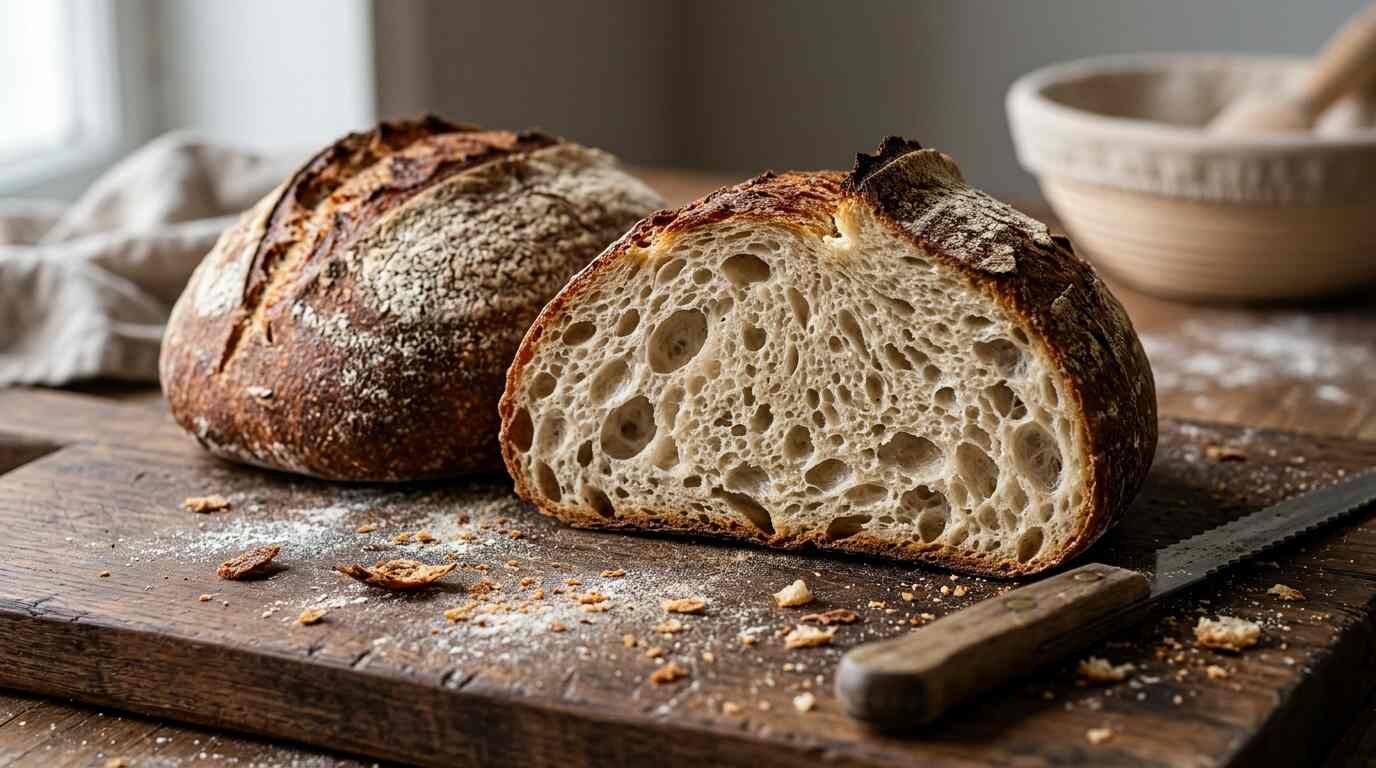
Flour supplies both raw materials, though not in the form most people expect. The research group Innograin, which writes about cereals and baking, says the reactions occur between amino acids from wheat flour proteins and reducing sugars. Those sugars are chiefly maltose and, to a lesser degree, glucose, produced when the enzyme amylase breaks down starch, and added sugars such as sucrose also take part. The page does not name a university, so the group’s institutional standing was not confirmed.
The same page ties color to ingredients. The shade depends on the amino acid, the sugar and the pH. Lactose from added milk tends toward reddish tones, and an alkaline dough, as in pretzels, gives brighter colors. A paper on bread’s aroma chemistry, published in the journal Chemical Engineering Transactions by Davide Papasidero and colleagues, states the principle more generally: the amino acid, the sugar, the water content and the pH together determine which products form.
Amino acids steer the smell. C&EN lists glycine as producing beerlike odors, valine producing rye-bread smells, and cysteine contributing meat and cracker scents. A compound called 2-acetyl-1-pyrroline gives crusty bread, popcorn and basmati rice a desirable flavor, according to the same article.
Why only the crust browns
The inside of a loaf never gets hot enough. Papasidero’s group writes that the Maillard reaction happens mostly in the crust, because of its higher temperature and lower water content, and that the crumb stays near 100°C while its water evaporates. Their paper puts the crust temperature at 140°C or higher at the end of baking, and says a visible reaction rate needs a surface temperature of at least 130°C. The crust itself is only a few millimeters thick.
Innograin describes how that thin layer forms. The surface of the dough meets oven surfaces near 200°C, but evaporation at about 100°C holds the surface temperature back for a time. Water leaves the outer layer faster than moisture arrives from inside, so the layer dries out and becomes the crust, which then limits further moisture movement. Maillard reactions, the group says, become visible at about 130°C, though they start at lower temperatures.
Starch behaves differently from the surface. Innograin reports that wheat starch gelatinizes at about 70°C, depending on the flour and conditions, and that gelatinization needs both heat and moisture, so it rarely happens in the crust, where water evaporates fast. In the crumb, gelatinization makes the structure rigid and stops the loaf from expanding. The crust and the crumb of one slice are therefore doing different chemistry at the same time.
Steam changes the result. Dough enters the oven at roughly 20 to 40°C, and steam condenses on it as a water film that delays heating. Innograin reports that steam tends to give thinner, shinier crusts, while baking without it gives thicker, more matte ones, with only a slight effect on loaf volume.
What happens to a slice in a toaster
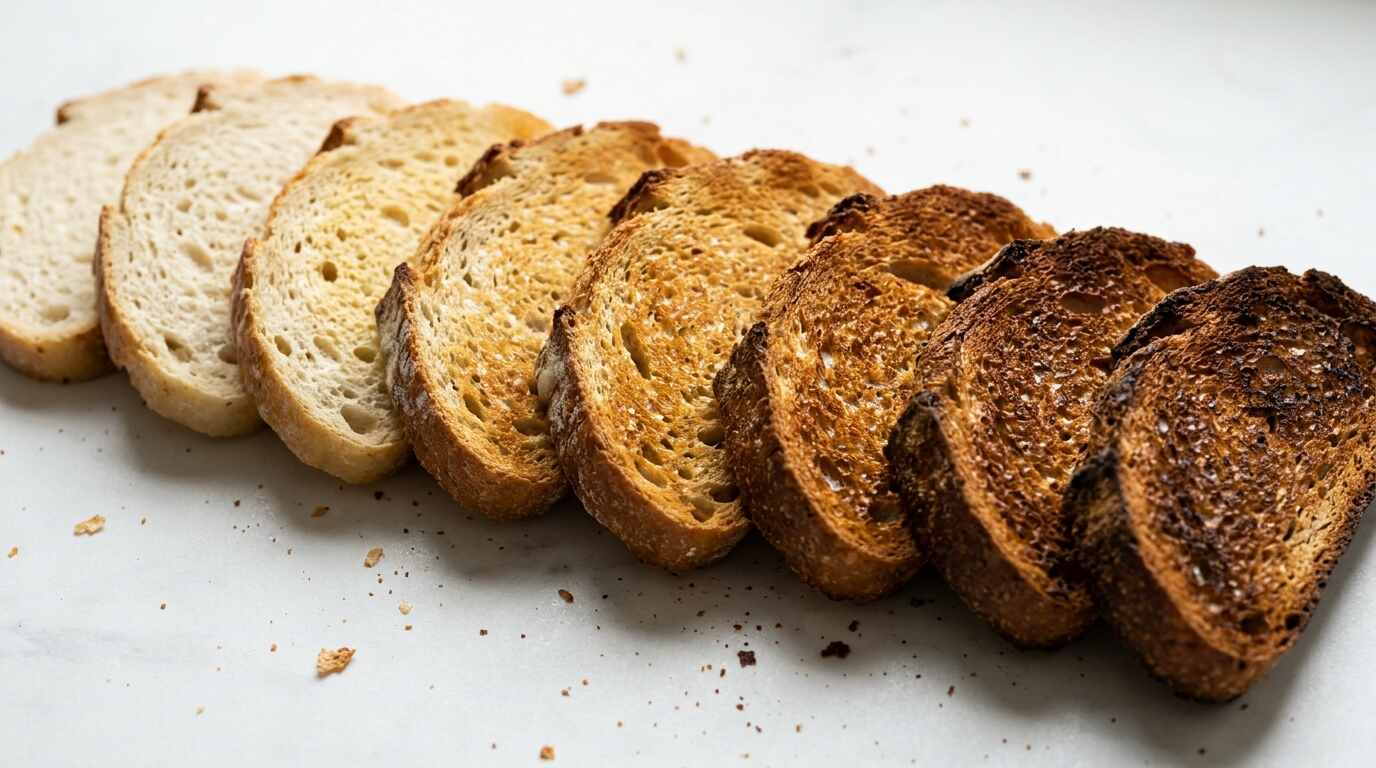
A 2008 study in European Food Research and Technology used toast as its laboratory. Edoardo Capuano, Vincenzo Fogliano and colleagues baked cylinders of dough made from flour, water and yeast at 180°C for 35 minutes, then toasted slices at different combinations of time and temperature. Their abstract reports that water loss followed an exponential trend, fastest at the start of toasting and at higher temperatures, and that browning grew more intense at higher toasting temperatures.
The same study tracked two chemical by-products, hydroxymethylfurfural (HMF) and acrylamide. Both increased with toasting time and temperature, and at 180°C they correlated linearly with browning. Their levels depended strongly on how much water the toast had left. The authors also tested additives, finding that the enzyme asparaginase reduced acrylamide and that the amino acid glycine increased browning while slightly raising HMF. The Wageningen University research record for the paper lists the same findings. Neither page makes claims about health effects, and none are made here.
Toasting, in other words, is controlled drying with chemistry attached. The slice loses water first, the surface warms past the point where browning becomes visible, and color and aroma then build together.
Maillard versus caramelization
Toast and bread crust contain both processes at once, and sources differ on where one ends and the other begins. Caramelization is the browning of sugar alone. The Exploratorium’s Science of Candy pages say it is what happens to pure sugar when heated, with sugar melting and beginning to brown at 338°F, while the Maillard reaction requires protein or amino acids.
Food Republic puts the Maillard threshold lower, at roughly 285 to 300°F, and caramelization typically from about 320°F, though it says caramelization can occur near 230°F depending on the sugar. Food Republic’s writer, Dylan Hofer, cites no expert for those figures, and they conflict with the Exploratorium’s 338°F. Innograin gives yet another range, 160 to 180°C for the sugars in bread dough, which is roughly 320 to 356°F. The sources agree on the order, with Maillard starting first, and on the point that both can happen in one food.
A shared warning runs through all of them: both reactions need dryness. Food Republic notes that moisture can prevent browning, which fits Papasidero’s account of the crumb stalling near 100°C.
Aroma, bitterness and too much color
The reaction does not stop at one pleasant stage. Papasidero’s paper describes a network that can form more than 300 compounds across solid, liquid and gas phases, while C&EN says the reaction forms thousands, of which only a small subset repeatedly contributes to the flavor and odor of cooked food. The two counts differ because the papers define the product pool differently. Melanoidins, the final-stage products that stay solid and cause browning, are not fully characterized in structure or molar weight, per Papasidero.
Two compounds serve as aroma markers in the bread paper, 2-acetyl-2-thiazoline and HMF, each with a reported perception threshold of 0.01 micrograms per kilogram of bread.
Past the pleasant point, color keeps deepening. Innograin says over-baking produces a darker crust with a more bitter flavor, and that the same reactions form acrylamide. The sources describe a continuum rather than a switch, with color, bitterness and by-products all rising together as time and temperature increase.

Browning on a sandwich
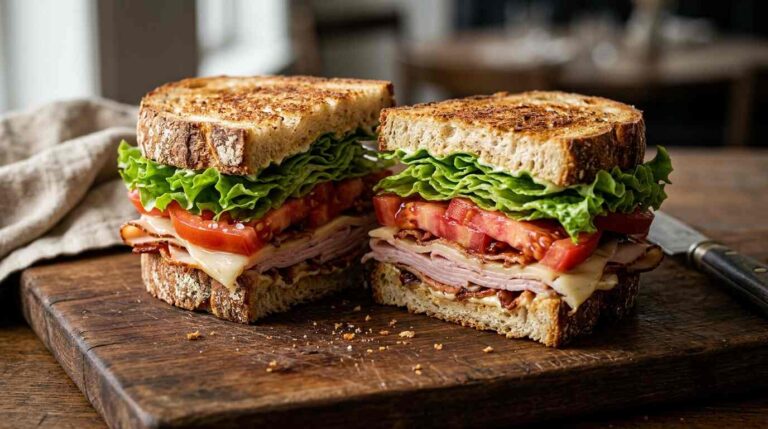
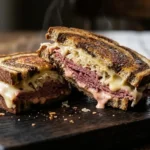
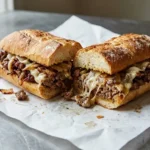
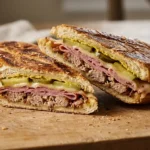
A grilled sandwich adds butter, cheese and a hot surface to the picture, and some of that has been studied. A Dairy Foods column by Prateek Sharma of Utah State University and Nitin Joshi says cheese browning and blistering are governed by lactose, moisture and fat content, the extent of proteolysis, and the starter and non-starter microbes used. Oiling off, covered in the post on why cheese melts and turns greasy, can moderate surface dehydration and thereby affect browning. The authors add that the effect of calcium on browning and blistering is not fully understood.
Sources on the bread side of the sandwich, as above, point to the same variables: sugar, protein, pH, surface temperature and how fast the surface dries.
Sources:
- Chemistry World, “The marvellous Maillard reaction”: https://www.chemistryworld.com/features/the-marvellous-maillard-reaction/3009723.article
- Chemical & Engineering News, “The Maillard Reaction Turns 100”: https://cen.acs.org/articles/90/i40/Maillard-Reaction-Turns-100.html
- Innograin, “Baking II”: https://innograin.uva.es/en/2024/01/13/baking-ii/
- Papasidero et al., “Bread as a Chemical Reactor: Triggering the Aroma Production through Chemical Kinetics,” Chemical Engineering Transactions, vol. 52, 2016: https://air.unimi.it/retrieve/dfa8b998-6bd5-748b-e053-3a05fe0a3a96/Papasidero_ChemEngTrans_BreadChemReac_2016.pdf
- Capuano et al., “Characterization of the Maillard reaction in bread crisps,” European Food Research and Technology, 2008: https://link.springer.com/article/10.1007/s00217-008-0936-5
- Wageningen University & Research record for the same paper: https://research.wur.nl/en/publications/characterization-of-the-maillard-reaction-in-bread-crisps/
- Exploratorium, “Science of Candy: Caramels”: https://annex.exploratorium.edu/cooking/candy/caramels-story.html
- Food Republic, “The Real Difference Between The Maillard Reaction And Caramelization”: https://www.foodrepublic.com/1294310/real-difference-between-maillard-reaction-caramelization
- Dairy Foods, Dairy Detective column on the baking properties of cheese: https://www.dairyfoods.com/articles/98955-the-baking-properties-of-cheese-functionality
- Grill Cheesy, “Why Cheese Melts and Why Some Cheese Turns Greasy”: https://grillcheesy.com/why-cheese-melts-and-turns-greasy/
- Reactions (YouTube), “Why the Maillard Reaction Makes Everything Delicious”: https://www.youtube.com/watch?v=rs1JLYXROVU