In this story
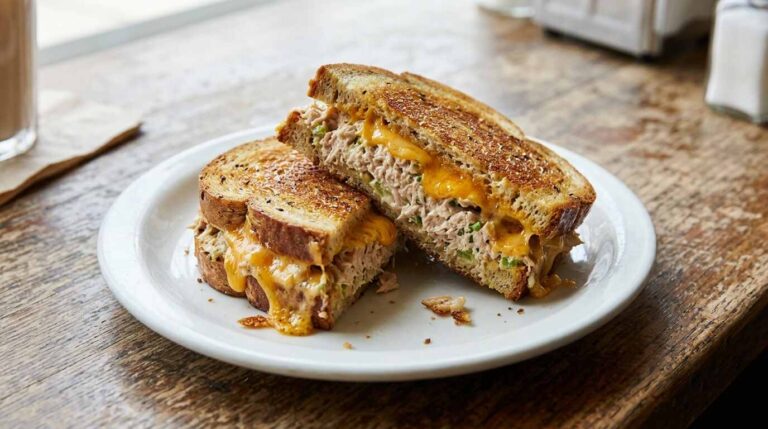
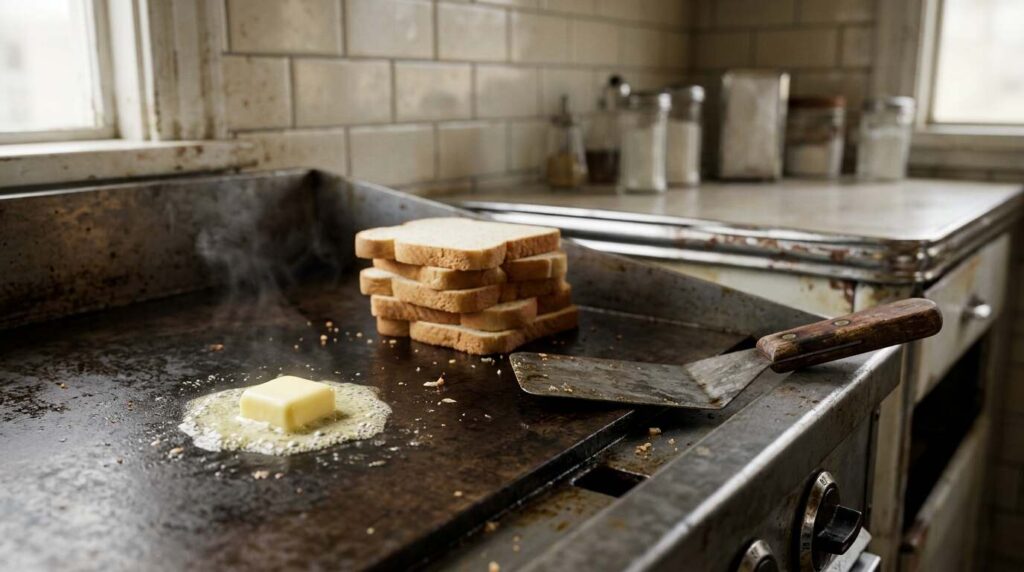
Nobody invented the grilled cheese sandwich, at least not in any way a document can prove. What the record shows is a slow assembly: toasted cheese recipes in Victorian and Edwardian cookbooks, a cheese that melted predictably, bread that arrived already sliced, and a name that took a few decades to settle. Each step has a date, and several of those dates are argued over.
Video: Toasted Cheese Sandwich (1919) on Sandwiches of History, Sandwiches of History
Food writers who try to pin the sandwich to one person or one year keep hitting the same wall: cooks were putting cheese on toast long before anyone thought it worth writing down. A Washington Post column of 1934 already said so, according to The Food Timeline, opening with the line “Grilled cheese sandwiches are no new thing.”
Toasted cheese before the name, 1861 to 1916
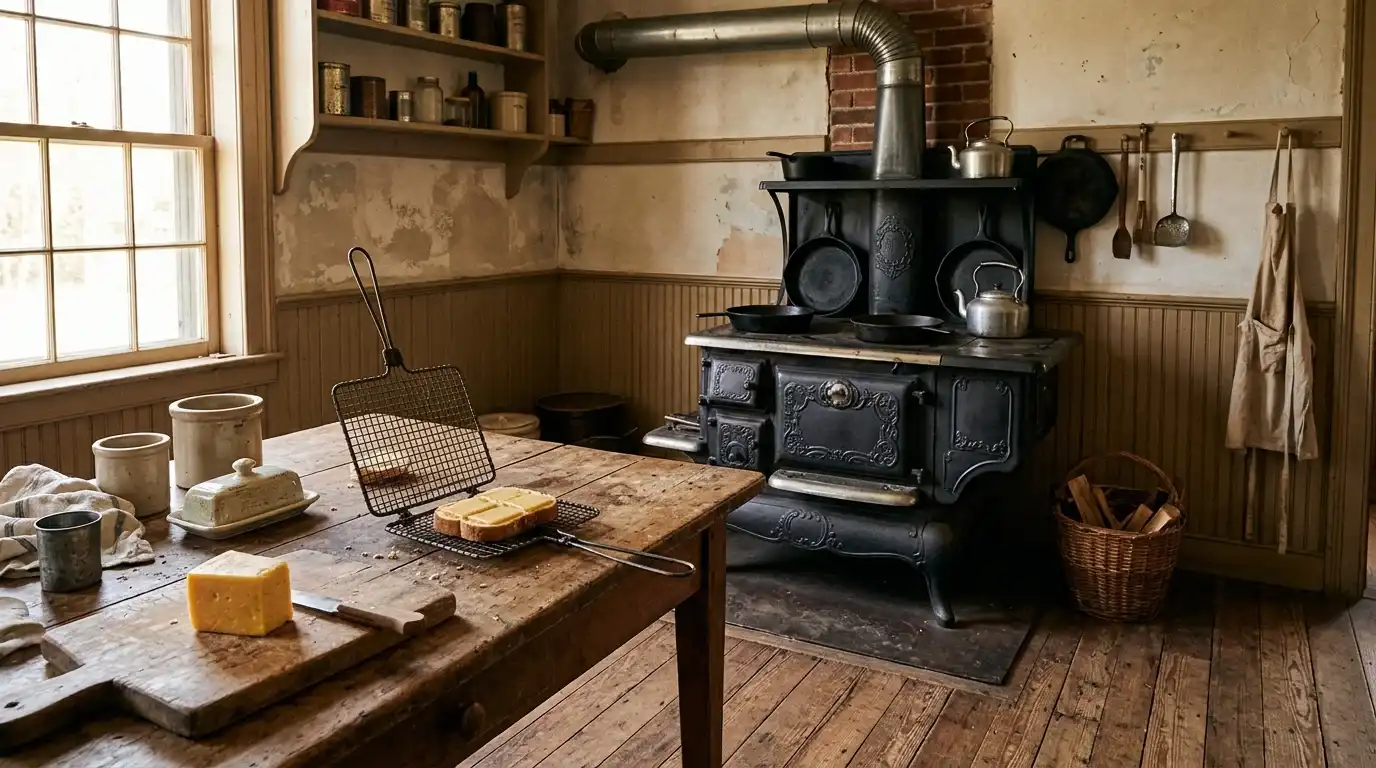
The oldest American-relevant recipe in the usual citations is British. Isabella Beeton’s household manual of 1861 described brown bread and butter sandwiches filled with half-inch slices of rich cheese and heated in an oven until the bread toasted. That is a baked cheese sandwich, not a griddled one, but the concept is the same. (The sandwich itself was already a century old by then; its own origin story is covered in a separate piece on the Earl of Sandwich.)
American cookbooks reach the idea shortly after 1900. Fannie Merritt Farmer’s 1902 chafing-dish book included “cheese boxes,” in which cheese was enclosed in bread and sauteed in butter. A recipe titled “toasted cheese” in Elizabeth Hiller’s sandwich-and-beverage calendar, which The Food Timeline dates to 1915 with a question mark, called for grated cheese and mustard butter under a wire broiler. The question mark matters. That date is the cataloguer’s best estimate, not a printed one.
The cheese dream
A second name appears alongside “toasted cheese.” A 1916 collection of salads, sandwiches and chafing-dish recipes by Marion Neil gave a recipe called cheese dreams: thick slices of cheese fried in butter and served with catsup. The Takeout points to an earlier newspaper version, a 1908 entry in the San Francisco Call that reads very close to the modern sandwich. The same article credits Canada with the cheese dream, though it does not give a source for that attribution.
Cousins from Wales and France
Two relatives show up in nearly every account. Welsh rarebit, cheese melted into a sauce and poured over toast, is placed by Tasting Table in the eighteenth century, and the French croque monsieur, ham and melted cheese on bread, is dated there to 1891. Neither is a grilled cheese. Both establish that heated cheese on bread was an established restaurant item well before American cooks gave it a plain name.
Processed cheese and sliced bread, 1916 to 1929
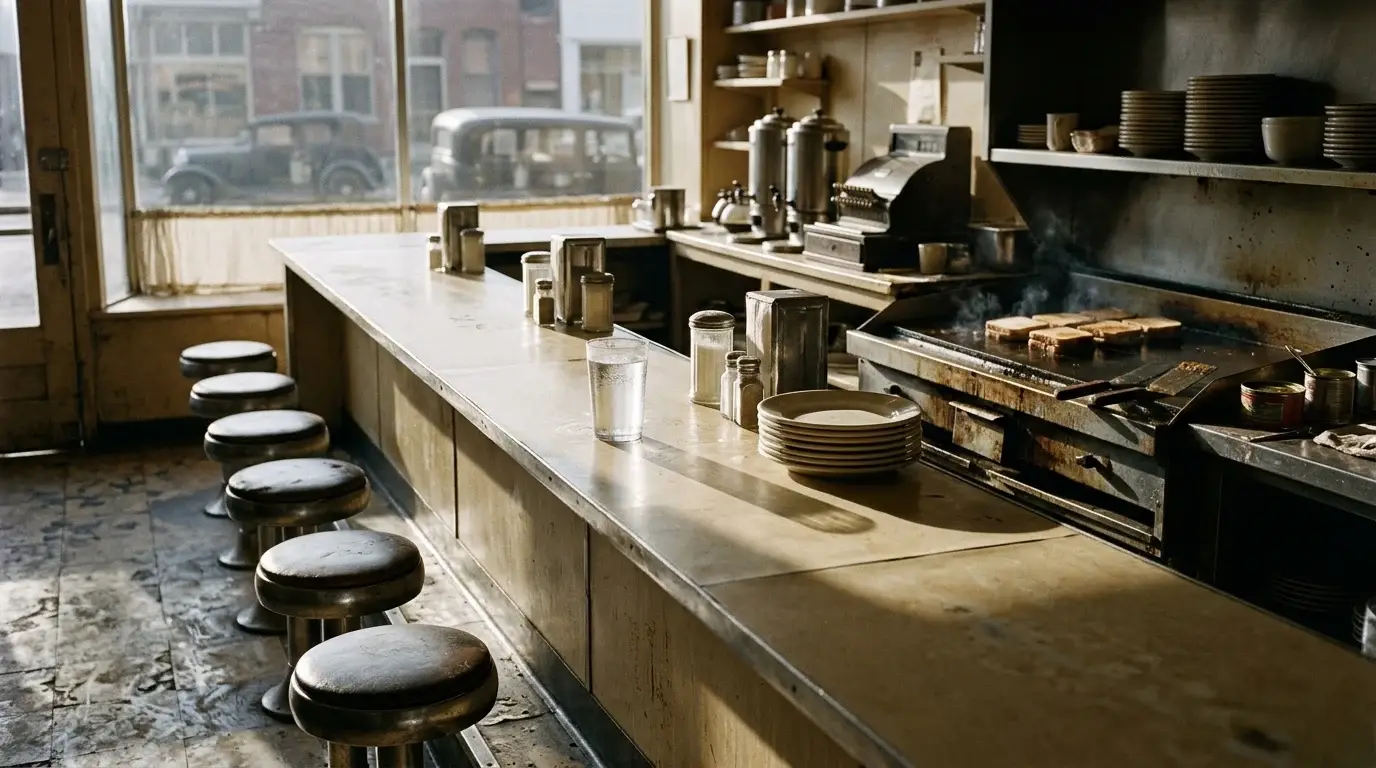
Cheese that melts the same way every time is a manufactured product. James L. Kraft filed for a patent in 1916 on a process for sterilizing cheese, and the resulting canned product went largely to the U.S. military during World War I. He was not the only person making such cheese. The same source notes that other firms sold “potted” cheeses, and that Kraft was first to patent its own. A dairy-industry magazine adds that the product was sent overseas with American troops in both world wars.
Bread took longer. Otto Rohwedder’s slicing-and-wrapping machine went into use at a bakery in Chillicothe, Missouri, in 1928, and an industry report cited by Smithsonian Magazine claimed that by 1929 nearly every town of more than 25,000 people could buy sliced loaves.
Whether sliced bread is what made the cheese sandwich a mass dish is a plausible theory with thin proof. Tasting Table says pre-sliced bread possibly helped the cheese dream spread, and the hedge in that sentence is deliberate. The Food Timeline likewise says the modern form likely began in the 1920s but offers no named source for it.
The first “grilled cheese” in print, 1924 to 1934
The earliest printed appearance of the exact phrase that several researchers have found is a Los Angeles Times luncheon menu column of 20 January 1932, written by Marian Manners. The listing carries no recipe, according to The Food Timeline. Digiday, working separately, reached the same 1932 menu.
Two years later the Washington Post ran a column titled “Grilled Cheese” on 2 May 1934. It suggested an open-faced version with tomato, which fits the broader pattern: the first American grilled cheese was often one slice of bread with cheese on top, not a closed sandwich. A local news station repeating an unsourced claim has placed the phrase in the 1960s, which conflicts with both of the earlier citations and cites nothing. The 1932 date stands as the earliest found, not necessarily the earliest that exists.
Cookbooks and sandwich irons
Equipment and print kept pace with the new ingredients. According to Tasting Table, Charles Champion received a patent in 1924 for what it calls the first electric sandwich maker, and the article adds, with a hedge, that the open-faced cheese dream may have inspired him. The same piece credits a Dr. Earnest Smithers with the jaffle iron shortly before 1950, which is why Australians say jaffle where Americans say grilled cheese.
Cookbooks of the period treated the dish as an everyday technique, not an invention. In 1929 Florence Cowles included a toasted cheese sandwich in her collection of 700 sandwich recipes, made from grated cheese bound with salad dressing or white sauce and flavored with pimento, per The Food Timeline. A 1939 edition of the Boston Cooking School Cook Book gave only a general method for toasted sandwiches: butter the outside, then toast or saute. By 1949 James Beard was giving a richer version in which cheese was mixed with egg yolks, folded with whites and sauteed in butter.
The cheese, the bread and the cooking method differ from one of these entries to the next.
An advertising agency’s claim
Advertising had a hand in the sandwich’s reputation. J. Walter Thompson won the Phenix Cheese account in 1922, Phenix merged with Kraft in 1929, and the agency took on advertising for both. Digiday found a long-copy newspaper ad telling readers that American cheese was ideal for grilled sandwiches, paired with an offer of free cheese for anyone buying a sandwich grill from a cookware maker.
From that campaign grew a piece of agency folklore. A former head of the agency’s North American operation said on a podcast that the firm had invented the sandwich. Digiday’s reporting concluded otherwise, since toasted-cheese recipes predate the agency’s ads, and a company spokesperson told the outlet that the official position is that the agency helped popularize the dish. Popularize is a defensible word. Invent is not.
Sliced cheese: dates that disagree
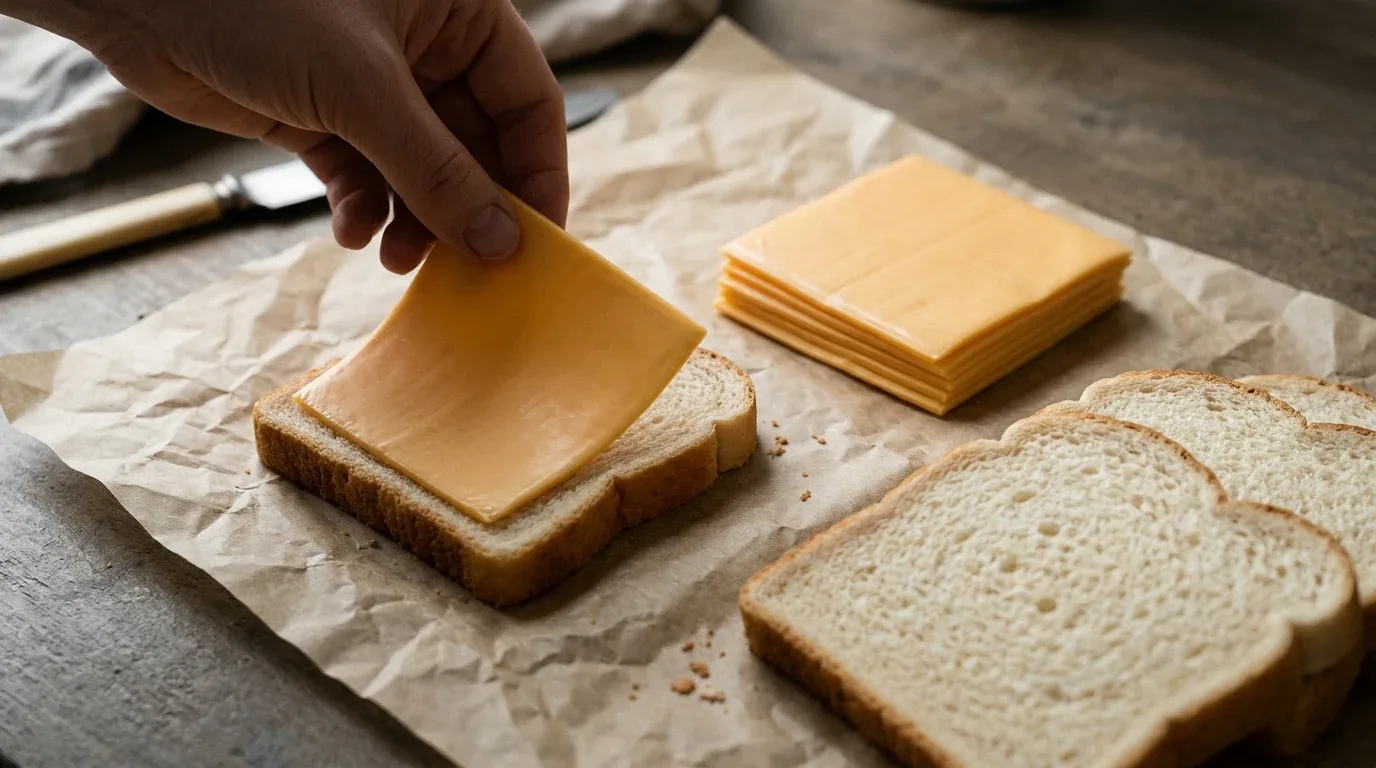
The cheese itself changed form in the middle of the century, and the sources disagree about when.
| Event | Date given | Source |
|---|---|---|
| Kraft research head begins cooling cheese on a table and cutting it into squares | Around 1935, hedged | Culture magazine |
| Pre-cut, unwrapped slices introduced | 1950 | CulinaryLore |
| Individually wrapped slices introduced | 1949 | Digiday |
| Machine built to wrap each slice | 1956 | Culture magazine |
| Individually wrapped slices introduced | About 1965 | CulinaryLore |
Those entries cannot all be right. No source consulted resolves the conflict. Sliced processed cheese existed by about 1950 on most accounts, and the date of the wrapped slice is uncertain, anywhere from 1949 to about 1965.
War kitchens and the school lunch era
Government-issue cookbooks from the Second World War are said to have instructed Navy cooks to broil “American cheese filling sandwiches” in quantity. The claim appears in The Food Timeline and in Wikipedia’s article, which cites that same timeline. The Cook Book of the United States Navy was a real wartime publication, with its 1944 revision listed at ibiblio and a July 1945 edition described elsewhere. The actual recipe text could not be retrieved for this piece, so the Navy citation remains secondhand.
School lunch is a thinner story. The National School Lunch Act made the federal program permanent on 4 June 1946, and its meal patterns counted cheese as a protein food, at 2 ounces for a Type A lunch and 1 ounce for Type B. That official history does not mention sandwiches. A 1949 canners’ booklet of school lunch recipes recommended pairing soup with a sandwich for protein, though it did not name grilled cheese. The popular belief that grilled cheese and tomato soup became a cafeteria pairing in this period has no fetched primary source behind it, and The Takeout says it is unclear who first matched the two.
How the name settled
By the 1930s, according to The Takeout, “toasted cheese” had overtaken “cheese dream” and was then overtaken in turn by “grilled cheese,” though cheese dream stayed in use into the early 1960s. Tasting Table is similarly vague, saying the term emerged in the twentieth century with no single birthplace.
The objection that the cheese is never grilled is as old as the name is common. Wikipedia notes that, despite the term, the sandwich is rarely prepared by grilling, and the Food Timeline observes that in North American usage “grill” and “broil” overlap. The Hiller recipe above, after all, called for a broiler, so the word was never far from the original method.
Sources:
- The Food Timeline, Sandwiches: https://www.foodtimeline.org/foodsandwiches.html
- Wikipedia, Grilled cheese: https://en.wikipedia.org/wiki/Grilled_cheese
- The Takeout, Grilled Cheese Is Unconditional Love In Sandwich Form: https://thetakeout.com/grilled-cheese-history-american-sandwich-1830641806
- CulinaryLore, When Were Kraft Singles First Introduced?: https://culinarylore.com/food-history:when-were-kraft-singles-introduced/
- Culture magazine, Pure Unprocessed American: How Kraft Processed America: https://culturecheesemag.com/blog/pure-unprocessed-american-kraft
- Smithsonian Magazine, Take a Look at the Patents Behind Sliced Bread: https://www.smithsonianmag.com/smart-news/take-look-patents-behind-sliced-bread-180963870/
- Tasting Table, The Murky History Behind The Classic Grilled Cheese Sandwich: https://www.tastingtable.com/1859125/history-grilled-cheese-sandwich
- Digiday, Unsolved Mysteries: Did JWT Really Invent the Grilled Cheese Sandwich: https://digiday.com/marketing/unsolved-mysteries-jwt-really-invent-grilled-cheese-sandwich
- WYTV, History behind the grilled cheese sandwich: https://www.wytv.com/news/daybreak/history-behind-the-grilled-cheese-sandwich/amp
- Cook Book of the United States Navy (1944), ibiblio HyperWar: https://ibiblio.org/hyperwar/USN/ref/CookBook/index.html
- USDA Food and Nutrition Service, National School Lunch Program history (archived): https://webarchive.library.unt.edu/web/20090109040329/http:/www.fns.usda.gov/cnd/Lunch/AboutLunch/ProgramHistory_5.htm
- Sandwiches of History, Toasted Cheese Sandwich (1919): https://www.youtube.com/watch?v=jj6IBj1xNJw