
In this story
A cheese that melts well in a grilled cheese sandwich is a cheese whose protein network loosens under heat while still holding its fat and water inside. Everything else, from the stretch to the grease slick on the bread, follows from how that network is built and how far it has been taken apart by age, acid and salt. Test kitchens and food writers have ranked dozens of cheeses against this standard, and their results agree more often than they differ.
The sections below sort cheeses by melting behavior, then report where the tasting panels split.
Video: What are the Best Cheeses for a Grilled Cheese Sandwich?, Lifehacker
What happens inside a melting cheese
Cheesemaking turns milk protein, casein, into a structure held together by weak bonds, with water and fat trapped inside. Melting means that structure loosens. According to Scientific American, the ideal is a network flexible enough to move yet firm enough to stay in one piece, and mozzarella is the standard example of that balance.
Calcium holds the grip
Calcium phosphate bonds lock casein molecules together. Too much calcium and a cheese will not melt; too little and it turns runny, the same article reports. The Wisconsin Center for Dairy Research adds that bound calcium prevents the casein from rearranging, so losing some of it raises both melt and stretch, and that higher-fat cheeses need more bound calcium to keep their stretch (The Dairy Pipeline, Winter 2000).
Water and fat loosen the network
Fat globules sit between casein clumps and interrupt the web. More fat means fewer protein-to-protein contacts, so the cheese melts at lower temperatures, according to the same Dairy Pipeline issue. Reduced-fat cheeses, by implication, need more heat to do the same job.
Moisture helps, with a limit. Cottage cheese is roughly 80 percent water and does not stretch at all, the Pipeline points out, so water content alone does not predict a good melt. The condition of the protein matters as much. Dry cheeses behave differently again: The Takeout notes that Parmesan, being dry, loses its oil as it heats, while younger cheeses with more water hold their fat in place.
Age: why young cheddar beats old
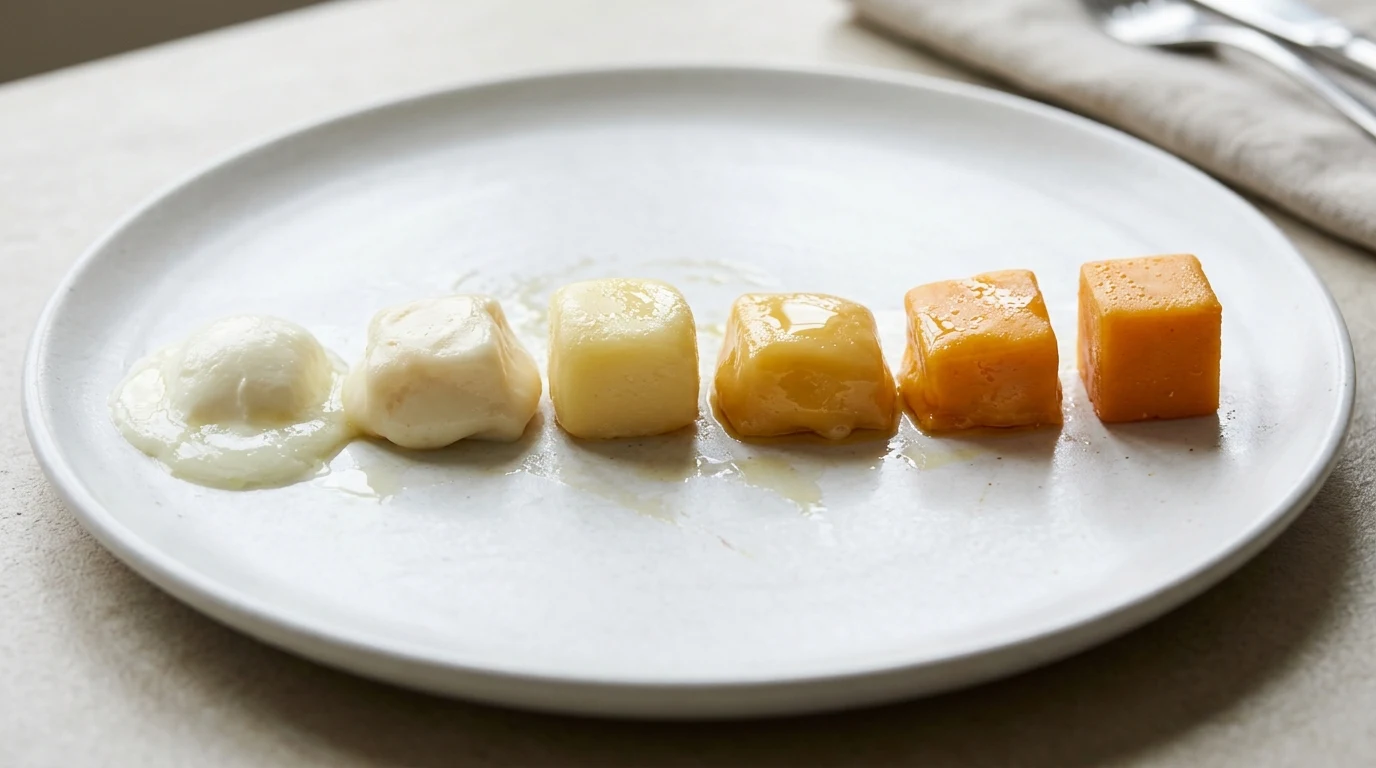
America’s Test Kitchen ran a simple experiment. Editors baked slices of cheddar aged 3, 16 and 24 months on inverted metal cups preheated to 175 degrees. The 3-month cheddar melted smoothly, the 16-month slid down the metal in clumps, and the 24-month broke into two large pieces and never melted (America’s Test Kitchen).
The explanation offered there is that protein structure counts for more than moisture. In fresh cheese, casein sits in tight clusters with little contact between them. Aging cuts the bonds between casein molecules, the clusters loosen and link into a flexible matrix, and the cheese melts smoothly. With more time the proteins bond more tightly, forming a stronger network that needs more heat and can release separated fat.
The Dairy Pipeline describes a two-stage pattern. In young cheese, the early gain in melt and stretch comes mainly from calcium being displaced by hydrogen ions and the casein taking on water over several days. Later, protein breakdown increases melt but reduces stretch. Scientific American states the endpoint plainly: an aged cheese melts more easily but stretches less and can turn soupy.
The two descriptions do not line up neatly, and that gap shows up in the tasting results further down. Age pushes cheese in more than one direction depending on how far along it is.
Acid: the narrow window
Acid dissolves some of the calcium bonds, which makes a cheese more fluid. Too much of it removes so many bonds that casein molecules cling to each other instead, and stretch disappears. Scientific American’s reporter puts it in a sentence: “A good melt requires just the right amount of acid.”
The article gives several named examples of cheeses outside that window:
- Feta is so acidic that it turns brittle, chalky and crumbly instead of melting.
- Panela has too little acid, so its proteins stay too tightly bound.
- Blue cheese starts out acidic and hard to melt, but becomes more meltable as aging breaks the acids down.
- Ricotta is made from whey proteins rather than casein, which form permanent sulfur bonds, so it softens but never truly melts.
The Dairy Pipeline gives a number for the low end: melt is inhibited at a pH around 4.6. Its general rule is that melt increases as pH drops, until stretch is lost.
Processed cheese and emulsifying salts
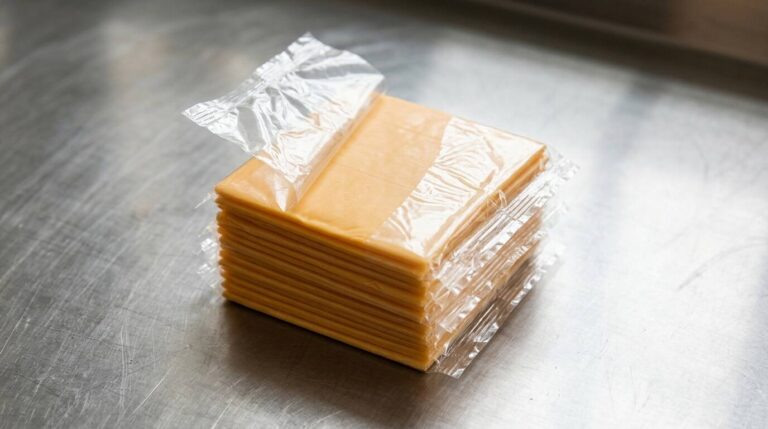
American cheese melts differently because it has been built to. Discover Magazine explains that in natural cheese, calcium ions hold casein together, and sodium citrate swaps those calcium ions for sodium, which carries a weaker charge. The proteins rearrange into a looser, springier net that still traps fat but stays flexible as it warms. The approach dates to 1912, when Gerber and Stettler added sodium citrate to melted Emmentaler and found the fat stayed trapped among the proteins.
Cheese Professor describes the same problem from the other side. When natural cheese melts, the weakening protein network lets its fat escape, which produces the oily, congealed texture. Sodium citrate loosens the tightly bound proteins so the cheese melts cohesively and keeps the fat dispersed. The Takeout says American cheese contains sodium citrate for this reason, and calls it an emulsifying salt that keeps the cheese smooth at any temperature.
Borrowing the trick
The same salt works on ordinary cheese. Milk Street reports that a few grams stirred into warm milk let nearly any cheese melt smoothly, hard cheeses such as Parmesan excepted. Its sauce uses about 10 grams of sodium citrate to 1¼ cups of whole milk and 4 cups of grated cheese, whisked in over low heat, and the result is smooth enough for pasta, vegetables or bread.
The Dairy Pipeline adds a caution from the processing side: excess emulsifying salts can form crystals, particularly in lower-moisture products and when the final pH runs high.
Cheeses sorted by melting behavior
The groupings below use only what the named sources say about each cheese. Where two sources disagree, both are shown.
| Melting behavior | Cheeses named | Source |
|---|---|---|
| Fastest, smoothest | American | Chowhound found it melted in about half the time of the harder cheeses |
| Soft, high-moisture, stretchy | Mozzarella, Monterey Jack, young cheddar | Wisconsin Cheese |
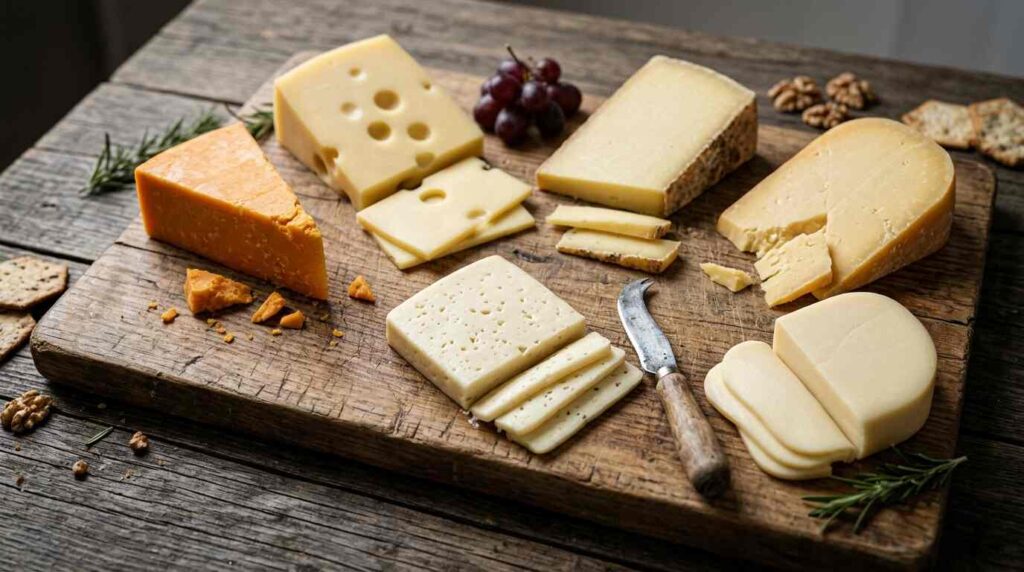
| Soft and buttery | Havarti, Muenster, fontina | The Takeout |
| Soft and mild | Colby, pepper jack, provolone, brie, young gouda | Chowhound |
| Disputed | Gruyère | Listed as a softer melter by Chowhound, as a poor melter by Tasting Table |
| Slow or oily | Aged cheddar, aged gouda, sharp cheddar | Chowhound on aged types; its ranking on sharp cheddar |
| Resistant | Parmesan, Romano | Wisconsin Cheese; Milk Street on Parmesan |
| Will not melt | Feta, ricotta, panela | Scientific American |
Where the panels split
Tasting Table’s piece on a 10-second microwave test places Parmigiano Reggiano and Gruyère among the poor melters, which it ties to lower fat, and American, mozzarella, brie, fresh cheddar and Swiss among the better ones. Chowhound’s list of cheeses to use, by contrast, includes Gruyère and Comté alongside American, Swiss and Colby. Neither article says how old its Gruyère was.
What the test kitchens recommend
The ranking by Chowhound’s Jane Godiner covered 13 cheeses cooked in an oiled iron pan over low heat at 1½ ounces per sandwich. Extra sharp cheddar came first, with a silky, gooey texture, toffee-like sweetness and balanced saltiness, though it needed low heat, frequent flipping and patience. American cheese took second place. Havarti followed, with an effortless melt and good pull.
Further down, mild cheddar was called among the best melters and very gooey but short on flavor, and medium cheddar was judged to lack both mild cheddar’s meltiness and aged cheddar’s nuttiness, a cheese that “just cannot commit.” Sharp cheddar was ranked fourth, with complex flavor but a tendency toward oiliness and soggy bread. Swiss was slow, taking about as much pan time as the hardest cheeses. Mozzarella melted excellently but was too rich and one-note alone.
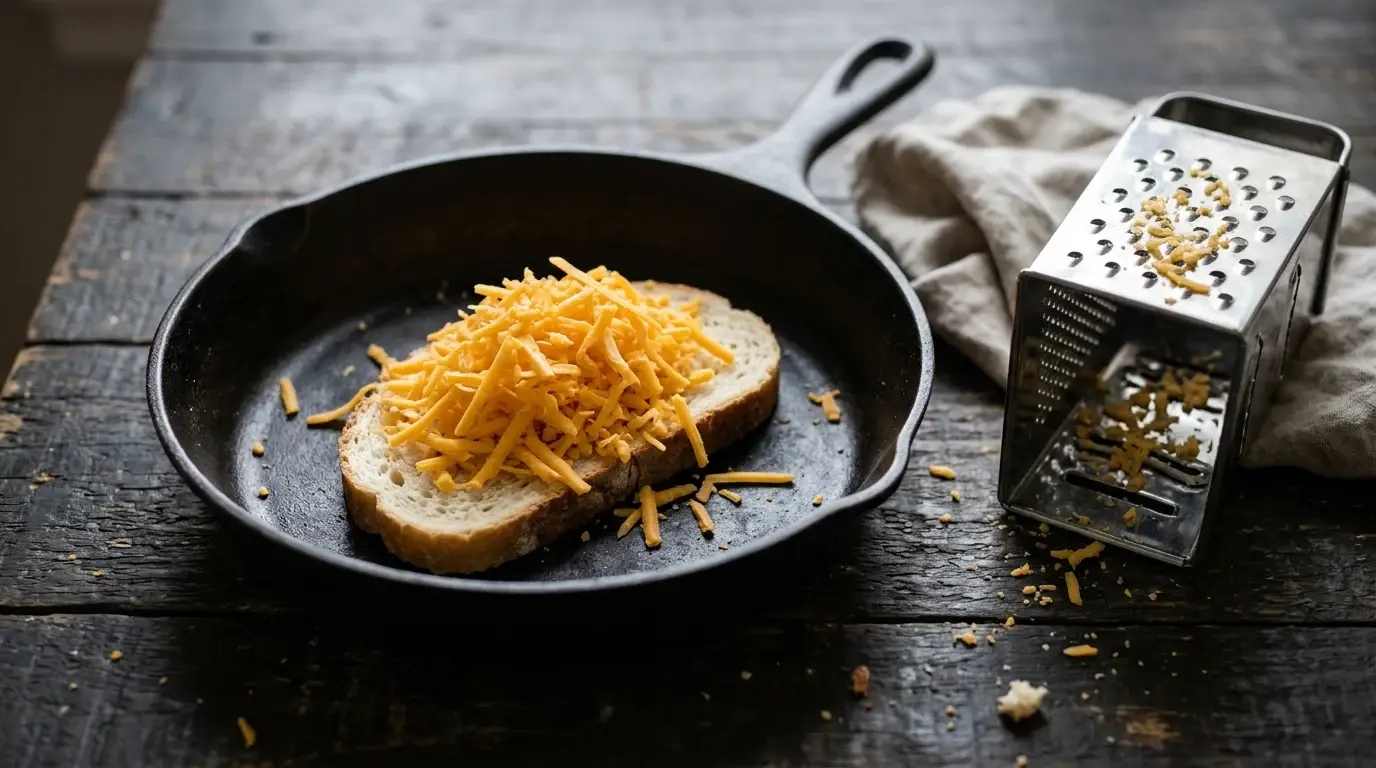
America’s Test Kitchen’s classic grilled cheese recipe prefers mild cheddar, with a combination of cheeses allowed. Its editors grate the cheese on the large holes of a box grater, about 1 cup lightly packed (3 ounces), after finding that grating produced the same even layer as slicing without the effort.
The Royal Society of Chemistry and the British Cheese Board reached for cheddar too. Their formula for a cheese-on-toast, reported by Smithsonian Magazine, was 50 grams of sliced hard cheese on a 10 millimeter slice of white bread, under a grill at about 115 degrees Celsius, 18 centimeters from the heat, for four minutes. The article describes the exercise as partly a publicity effort to get people interested in chemistry.
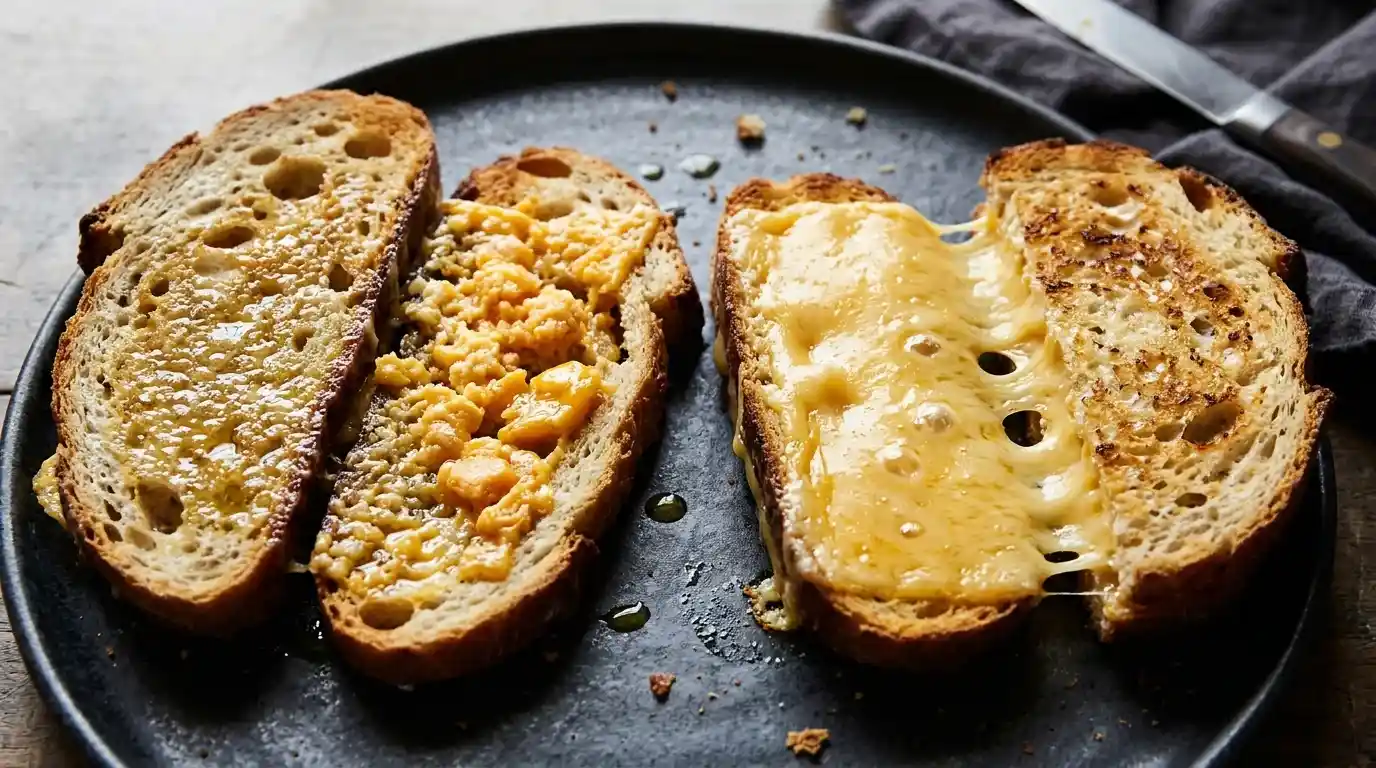
Why a cheese refuses to melt in the pan
Slices that are too thick
The most common mistake, per Chowhound, is cutting slices too thick. They take longer to melt, and the bread burns before the center turns gooey. The recommendation is thin slices or grated cheese, cooked low and slow. Hard cheeses, it adds, will not melt well even when sliced thin; it names Parmesan, aged goudas and aged cheddars.
Heat matched to the cheese
Tasting Table’s microwave test is simple: cut small squares of several cheeses, microwave them 10 seconds, and see which melted evenly, which barely changed and which ran. It then ties the pan to the result. A poor melter wants lower heat and a lid, which traps heat and moisture. A high-fat cheese wants higher heat and close attention so the bread browns before it burns. The article credits the test to “grilled cheese pros” without naming anyone.
Blending
Wisconsin Cheese suggests pairing aged cheeses with high-moisture ones such as mozzarella, fontina or Monterey Jack, or grating an aged cheese finely and combining it with a liquid like milk or cream. It also says a little acid, such as white wine or lemon juice, may help emulsify a cheese.
Not every melting question has a settled answer. Chowhound’s top finish for an extra sharp cheddar sits awkwardly beside America’s Test Kitchen’s finding that 24-month cheddar never melted at all, and neither source tests the other’s conditions.
Sources:
- Scientific American, “Why Cheeses Such as Mozzarella and Cheddar Melt Differently Than Ricotta”: https://www.scientificamerican.com/article/why-cheeses-such-as-mozzarella-and-cheddar-melt-differently-than-ricotta/
- The Dairy Pipeline, Winter 2000, Vol. 12 No. 1, Wisconsin Center for Dairy Research: https://www.cdr.wisc.edu/assets/pipeline-pdfs/pipeline_2000_vol12_01.pdf
- America’s Test Kitchen, “Why Young Cheese Melts Better Than Aged Cheese”: https://www.americastestkitchen.com/how_tos/6679-why-young-cheese-melts-better-than-aged-cheese
- America’s Test Kitchen, “Classic Grilled Cheese Sandwiches for Two”: https://www.americastestkitchen.com/recipes/3782-classic-grilled-cheese-sandwiches-for-two
- The Takeout, “Why Certain Cheeses Are Better at Melting Than Others”: https://www.thetakeout.com/1852804/why-cheeses-better-melting/
- Discover Magazine, “The Secret of Velveeta: How Cheese Food Is Made”: https://www.discovermagazine.com/the-secret-of-velveeta-how-cheese-food-is-made-12045
- Cheese Professor, “Why Sodium Citrate Is the Secret to the Silkiest Cheese Sauce”: https://cheeseprofessor.com/blog/sodium-citrate-cheese-sauce
- Milk Street, “Best Melted Cheese Sodium Citrate”: https://www.177milkstreet.com/2020/10/best-melted-cheese-sodium-citrate
- Chowhound, “I Tried and Ranked 13 Cheeses for Grilled Cheese”: https://www.chowhound.com/2241698/grilled-cheese-cheeses-ranked-worst-to-best/
- Chowhound, “The Common Mistake That Prevents Grilled Cheese From Melting”: https://www.chowhound.com/1527256/common-mistake-prevents-melted-grilled-cheese
- Tasting Table, “The 10-Second Microwave Test for Better Grilled Cheese”: https://www.tastingtable.com/2238916/grilled-cheese-ten-second-microwave-test/
- Wisconsin Cheese, “Why Some Cheese Melts Better Than Others”: https://wisconsincheese.com/the-cheese-life/article/219/why-some-cheese-melts-better-than-others
- Smithsonian Magazine, “Chemists Determine the Perfect Way to Melt Cheese on Toast”: https://www.smithsonianmag.com/smart-news/chemists-determine-the-perfect-way-to-melt-cheese-on-toast-512487/
- Lifehacker (video), “What are the Best Cheeses for a Grilled Cheese Sandwich?”: https://www.youtube.com/watch?v=OchSZrXBc9I