In this story
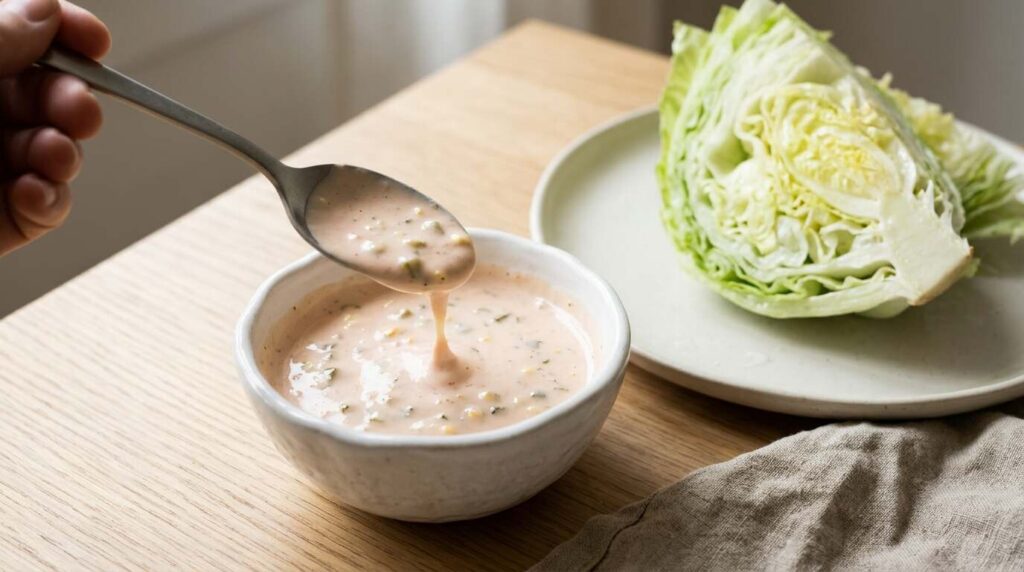
Thousand Island dressing has at least four origin stories, and none of them has been confirmed by a document that settles the question. Mental Floss notes that no one agrees on who should be credited with the recipe, and the competing accounts disagree about who made it, where, and how it reached the menu of a famous New York hotel. What the sources do agree on is the basic formula: mayonnaise, ketchup and chopped pickle, tied by name to the Thousand Islands of the St. Lawrence River.
Video: Who Actually Created Thousand Island Dressing? | Great Big Story
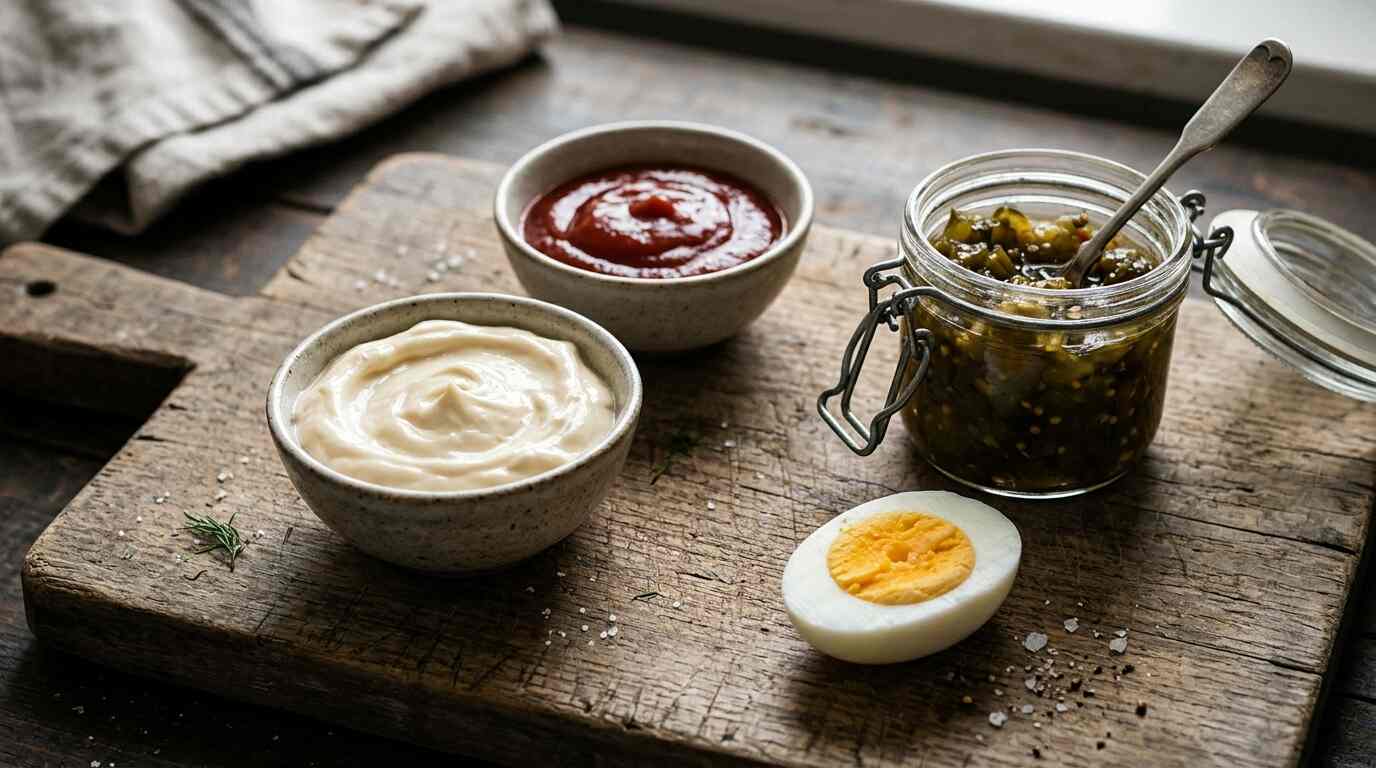
Mayonnaise, ketchup and relish
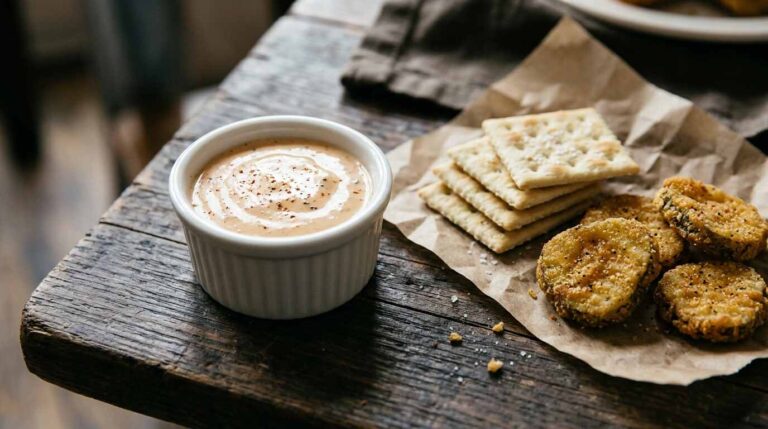
The dressing has no single standard recipe. The Daily Meal describes it as typically built on mayonnaise, ketchup, Worcestershire sauce, lemon juice, mustard and finely chopped pickles, with various spices. The Takeout reduces it to mayonnaise, ketchup and sweet pickle relish, with optional sugar, minced onion or a hard-boiled egg. The chopped additions named by Mental Floss are boiled egg, onions and olives, and sometimes parsley.
The name points to a place. The Thousand Islands are a chain of more than 1,800 islands in the St. Lawrence River on the border of northwestern New York and Ontario, and Mental Floss says the area was a popular destination for upper-class vacationers in the early twentieth century. None of the pages consulted explains how the dressing came to carry the name, beyond the link to the region and its resort hotels.
The Boldt yacht account
The best-known story runs through George Boldt, proprietor of the Waldorf-Astoria hotel in New York City, who built Boldt Castle on Heart Island for his wife, Louise. In the telling repeated by WRVO, Boldt’s chef Oscar Tschirky made the dressing while preparing Sunday lunch on the couple’s steam yacht, using mayonnaise, ketchup, pickle relish and a hard-boiled egg. Boldt then put it on the Waldorf-Astoria menu.
Shane Sanford, who manages Boldt Castle, told the station that tours tell this version and called it “the accepted story.” Local fishing guide Alan Benas, quoted in the same article, called the Boldt connection a marketing ploy. The versions also differ on small points. The Daily Meal has a steward who found that no salad dressing had been packed, while Mental Floss and Great Lakes Now have Tschirky improvising from galley supplies.
Documentary support is thin. Great Lakes Now reports that a 1959 National Geographic article said only that the dressing “was reportedly developed by Boldt’s chef.” Doubters point to a cookbook Tschirky published around that time that does not include it. Thousand Islands Life adds that researchers who went through the Cornell University Archives’ collection of Tschirky’s hotel menus found no mention of Thousand Island dressing. The same article reports that staff at the Thousand Islands Inn dismissed the yacht story as a fabrication.
Sophia LaLonde and the paper in the safe
The second account belongs to Clayton, New York. Sophia LaLonde, the wife of fishing captain George LaLonde, is said to have served “shore dinners” to guests and created a sauce as a dip for fish. Her surname is spelled LaLonde, Lalonde and Lelonde depending on the page. Great Lakes Now says she shared the recipe with the Bertrand family, owners of the Herald Hotel in Clayton, which later became the Thousand Islands Inn.
The physical evidence offered for this version is a sheet of paper. Great Lakes Now reports that when the hotel changed hands in 1972, the new owner found a page titled “Sophia’s Sauce” in a safe, which it describes as a letter from LaLonde to her groundskeeper. WRVO’s account credits Benas with opening the safe and finding a single sheet that cooks said looked like a Thousand Island recipe. The article reports no dating or authentication of the paper. Brad Minnick, the inn’s current owner according to Great Lakes Now, says he, his partner and the previous owner are the only people who have seen the letter.
May Irwin enters the story at this point. She was a stage star described by Great Lakes Now as the first woman to share an onscreen kiss, in Thomas Edison’s film The Kiss. In the Clayton version, Ella Bertrand passed the recipe to Irwin during a stay at the Herald Hotel, and Irwin later carried it to Boldt. Sharon Bourquin, director of the Thousand Islands Museum, says the museum holds a letter in which Irwin wrote the recipe down, and Minnick says that letter states the dressing was served at both the Boldt and the Herald.
Thousand Islands Life reports that the filmmakers Eric J. Roberts and Andrea Reeves, working on a documentary about the dressing, located what they called the missing link in a May Irwin binder at the museum. The article deliberately withholds what it contained, so the finding cannot be assessed from that page.
A Chicago chef and a French dressing
A third claim belongs to Theo Rooms, a chef who said he created the dressing for the grand opening of the Blackstone Hotel in Chicago in 1910. Great Lakes Echo reports that a 1925 award to Rooms for the dressing is held by the Chicago Culinary Museum, and that food historians connect the claim to a 1915 Duluth newspaper recipe titled “Blackstone Dressing.” Of the four claims, this is the one with printed dates attached, although neither the award nor the recipe is described as proof of who invented the dressing.
A fourth account treats the dressing as an offshoot of French dressing. Great Lakes Echo says the sociologist Michael Bell circulated the theory, which draws on a statement in the 1965 eleventh edition of The Fannie Farmer Cookbook that the dressing was based on French dressing. Bell found that it rested mostly on oral tradition. Food Republic describes French dressing as a vinaigrette without mayonnaise that gained ketchup, chili sauce or paprika around the early 1900s, which gave it an orange color and a creamier texture. By Food Republic’s account, mass-market versions turned much sweeter by mid-century.

What the earliest print references show
Wikipedia is used here only as a pointer, since nothing better turned up for this detail. Its article on the dressing lists the earliest known print reference as an October 20, 1912 column in The Kansas City Post describing Thousand Island on lettuce as a fashionable dish in that city, and the earliest known recipe as one in The Kansas City Times on November 20, 1912. A syndicated column followed on December 26, 1912 in papers in Kansas, Oklahoma, Louisiana and Mississippi. Other early cookbook citations on the page run from 1914 to 1919, including The Hotel St. Francis Cook Book of 1919.
Those dates are later than the 1894 Waldorf-Astoria origin that the same article lists, and it states that Tschirky’s 1896 cookbook does not mention the dressing. The citations were not checked against the original newspapers for this post, so the dates rest on Wikipedia’s summary.
Why several claimants could all be partly right
Ben Davison, a University of Virginia historian and chef, offered a reading that avoids picking a winner. On the BackStory radio program he said the stories are probably all true in “their own way”, and tied them to the status of upstate New York as a nineteenth-century resort for wealthy city dwellers. In his view the dressing was more likely made for salad than for fish. Fresh greens signaled sophistication, but the local varieties such as endive, chicory and watercress were bitter, and “mayonnaise is a great masking agent for bitterness.”
Davison also noted that around 1900 “ketchup” usually meant chutney-like sauces, with mushroom and walnut versions the most popular. WRVO reports Davison along similar lines: the first American salad craze came in the 1900s, and the various claimants likely arrived at the idea independently. On BackStory he described it as first an elite table item that reached wider American kitchens later, especially after World War II.
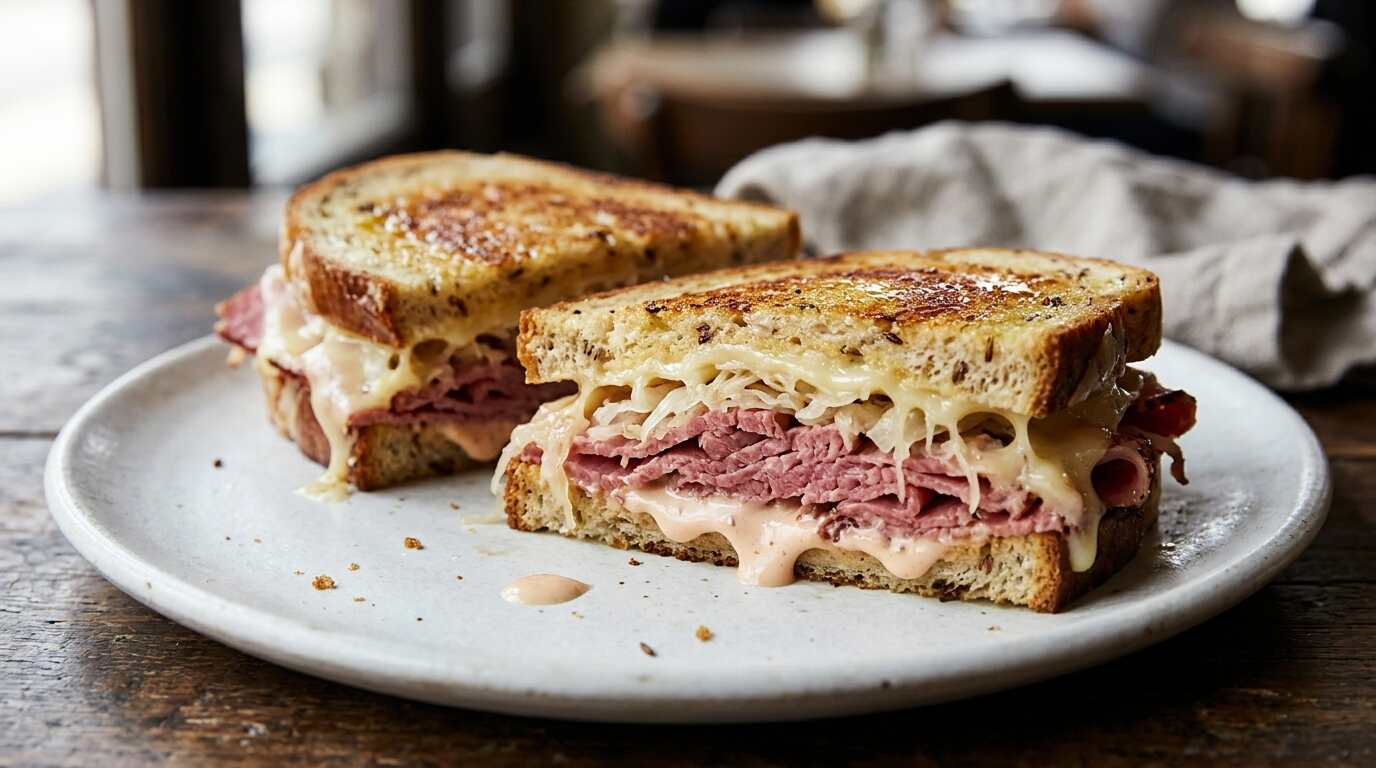
Thousand Island and Russian dressing
The dressing is often confused with Russian dressing, a relative with its own disputed history. Mental Floss reports that James E. Colburn invented Russian dressing in New Hampshire in the early 1900s and that its pink color originally came from poached coral and pulverized lobster shell. The Takeout places Colburn in Nashua. Food Republic adds that an early version used caviar and ground lobster shells before ketchup replaced them.
The practical difference is horseradish. Mental Floss says Russian gets its flavor mainly from horseradish, along with Worcestershire sauce, lemon juice, paprika and onion powder, and Thousand Island carries chopped egg, onions and olives. The Takeout notes that the Reuben sandwich is classically made with Russian dressing but that menus use both. Mental Floss adds that diners were once likely to meet Russian dressing on a Reuben. In the burger trade, the Takeout says Thousand Island is a staple and goes by “secret sauce” at In-N-Out Burger, and it states that Big Mac sauce is not based on it, since McDonald’s uses mustard where Thousand Island uses ketchup.
Sources:
- Mental Floss, “The Mysterious Origins of Thousand Island Dressing”: https://www.mentalfloss.com/food/thousand-island-dressing-origins
- Mental Floss, “Thousand Island vs. Russian Dressing: What’s the Difference?”: https://www.mentalfloss.com/food/thousand-island-vs-russian-dressing-what-is-difference
- Great Lakes Now, “What do you get when you mix mayonnaise, a vaudeville star, two swanky hotels and a fisherman’s wife?”: https://www.greatlakesnow.org/2021/07/thousand-island-dressing-uncertain-origins/
- Great Lakes Echo, “Thousand Island Dressing Mystery” (Rachel Duckett, August 4, 2021): https://greatlakesecho.org/?p=1869826
- WRVO Public Media, “Who really created Thousand Island dressing?”: https://www.wrvo.org/post/who-really-created-thousand-island-dressing
- Thousand Islands Life, “Evidence found for the origin of the Thousand Island Dressing”: https://tilife.org/BackIssues/Archive/tabid/393/articleType/ArticleView/articleId/1377/Evidence-found-for-the-origin-of-the-Thousand-Island-Dressing.html
- BackStory, “A-dressing a Mystery” (Island Hopping episode): https://backstory.newamericanhistory.org/episodes/islands/7
- The Daily Meal, “The Mysterious Origins Of Thousand Island Dressing”: https://www.thedailymeal.com/1552972/origin-story-thousand-island-dressing
- The Takeout, “Russian Dressing Vs Thousand Island Dressing, Explained”: https://www.thetakeout.com/1636787/russian-dressing-vs-thousand-island-dressing-explained/
- Food Republic, “Thousand Island Vs Russian Vs French Dressing”: https://www.foodrepublic.com/2213269/thousand-island-vs-russian-vs-french-dressing-difference/
- Wikipedia, “Thousand Island dressing” (pointer only): https://en.wikipedia.org/wiki/Thousand_Island_dressing
- Great Big Story (YouTube), “Who Actually Created Thousand Island Dressing?”: https://www.youtube.com/watch?v=OZ63oJvZlrI