In this story
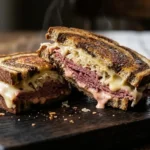
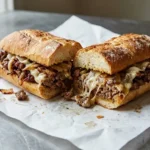
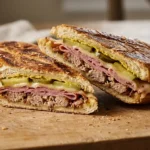
The chivito is a steak sandwich built on thin beef, ham, melted cheese, and a stack of cold toppings, and it is the dish most often named as Uruguay’s national sandwich. The name means “little goat,” yet no goat goes into it. The reason for the name sits at the center of a story that nearly every source tells, and nearly every source tells slightly differently.
Video: Chivito (Uruguay) on Sandwiches of History, Sandwiches of History
The Punta del Este account
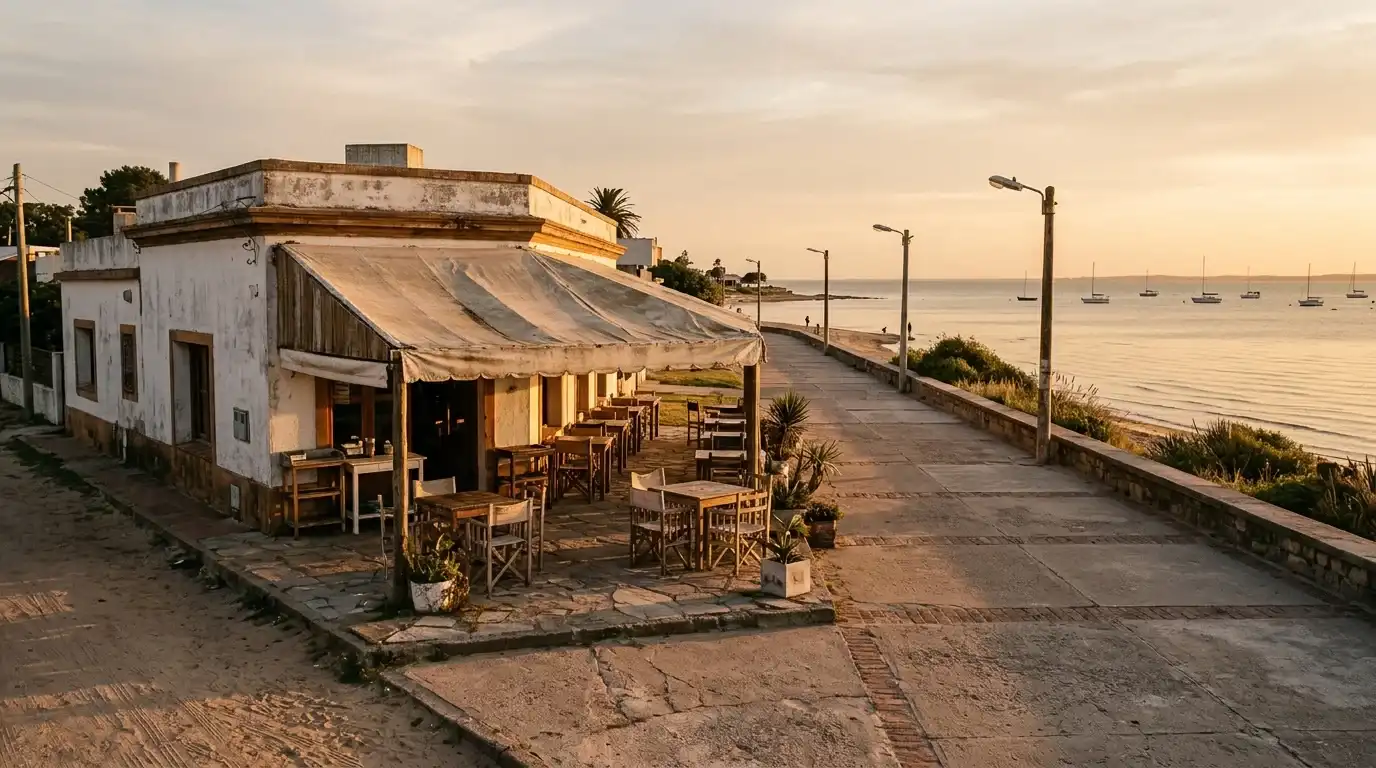
The usual telling places the invention in Punta del Este, the beach resort on Uruguay’s Atlantic coast, at a bar-restaurant called El Mejillón. According to Culture Trip, the owner, Antonio Carbonaro, was approached by an Argentine tourist who wanted goat meat, which the kitchen did not have. He toasted bread with butter, added ham and a thin, medium-rare steak, and gave the result the name chivito. Culture Trip traces this version to a book by Alejandro Sequeira and Armando Olveira Ramos titled Chivito: The King of the Meat Sandwiches.
A 2003 obituary in La Nación gives a fuller picture of the man and the room. Carbonaro, who died at 87, ran El Mejillón at Calle 31 and the Playa Mansa waterfront, a bar that was well known from the 1940s into the early 1960s. He had opened it after noticing that no bar in town stayed open day and night. The paper reports that the chivito went on the menu and sold up to 1,000 a day, enough that two Punta del Este butcher shops depended on supplying the meat. It also notes that the name was never registered as a trademark, and that other places went on to create their own variants.
Carbonaro’s career reached beyond the bar: the same obituary lists him as a Partido Colorado deputy, a municipal councillor, and an auctioneer.
Where the sources disagree
The core of the story holds steady. A customer asked for goat, none was available, and a steak sandwich took its place. Almost everything around that core moves from one account to the next.
The year. Sequeira’s book is cited for New Year’s Eve 1944, and chef Francis Mallmann’s Seven Fires is also credited with 1944. Saveur and Tasting Table both say 1946, and New World Review says 1940. The La Nación obituary offers no year at all in its account of the invention.
The customer. Most versions describe an Argentine woman from Córdoba. La Nación is more cautious, saying the customer was possibly from northern Argentina or Chile and had tasted chivito meat in Córdoba. The same article places the episode during a power outage, a detail absent from most retellings.
The reason for the name. One account says the name was a joke on the missing goat. Another, by the newsletter The Sword and the Sandwich, reports that the sandwich was named because it was roughly the size of a goat haunch, and adds that the story exists in many versions and that the Argentine visitor who sparks a Uruguayan invention is a familiar pattern in sandwich lore.
The restaurant’s history. Saltshaker says El Mejillón had been open since 1939 and had closed a few years before that article appeared in 2024, while New World Review says it closed in the 1960s. La Nación’s obituary puts its heyday between the 1940s and the early 1960s.
The restaurant’s owner. New World Review credits the restaurant to a man named Marcelo Gallardo, while La Nación names Gallardo only as the journalist who directs El Correo de Punta del Este and is quoted in the obituary. The obituary’s identification of Carbonaro as owner matches the other sources.
Welcome Uruguay’s Montevideo guide sidesteps the matter by saying that many claim to have invented the dish. The Carbonaro account is the one that appears in nearly every published history, but the dates and circumstances above remain unresolved in the sources consulted.
Chivito al pan
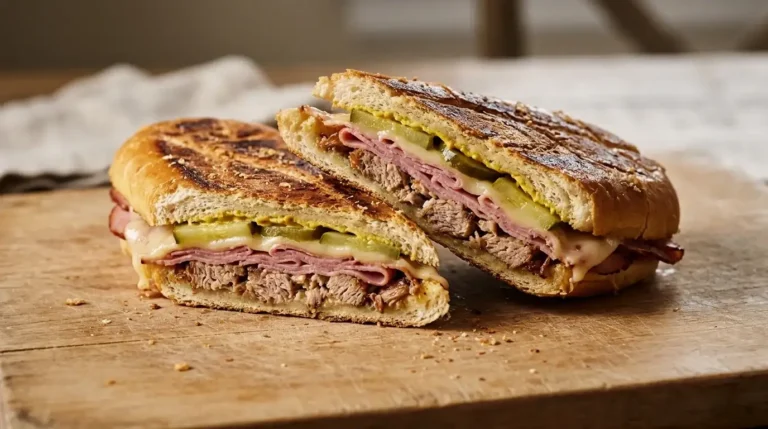
Al pan means “in bread,” and it is the sandwich most people picture. The pieces named across sources are a thin steak, ham, cheese, and mayonnaise. According to Mashed, that list describes the original, with tomato, egg, and sometimes bell pepper added later. The Sword and the Sandwich gives a longer original: steak, ham, cheese, olives, tomato, peppers, and hard-boiled egg.
Saveur’s recipe, credited to chef Ignacio Mattos, shows how a home cook might approach it: a quarter-inch strip steak, fresh mozzarella, two slices of bacon, a sliced hard-boiled egg, mayonnaise, pickled hot peppers, romaine, and tomato, all on the toasted bun. Tasting Table points to thinly sliced, quickly seared steak with mayonnaise, tomato, and melted mozzarella as the basic frame, and suggests cooking bacon, ham, and egg in the same pan.
Modern builds run heavier. The Welcome Uruguay description lists veal tenderloin, lettuce, tomato, ham, cheese, bacon, and egg. A reviewer at Saltshaker adds that a typical Uruguayan version carries pickles and olives, with fries on the side.
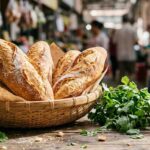
Assembly has its own logic. Sequeira told Explore Parts Unknown that the ham and cheese are cooked on the griddle as a folded “booklet,” with the ham wrapped over the cheese, and that lettuce goes on the bottom to take up juices and keep the lower bread from going soggy. The bread tilts soft. Uruguayans favor rolls such as pan tortuga, while the same article says Argentines reach for hard French bread. Saveur’s recipe calls for a milk bun or kaiser roll, spread with mayonnaise and broiled until lightly toasted.
Chivito canadiense and chivito al plato
Two variants appear in every account, and both are named in La Nación’s obituary as spin-offs created by other places.
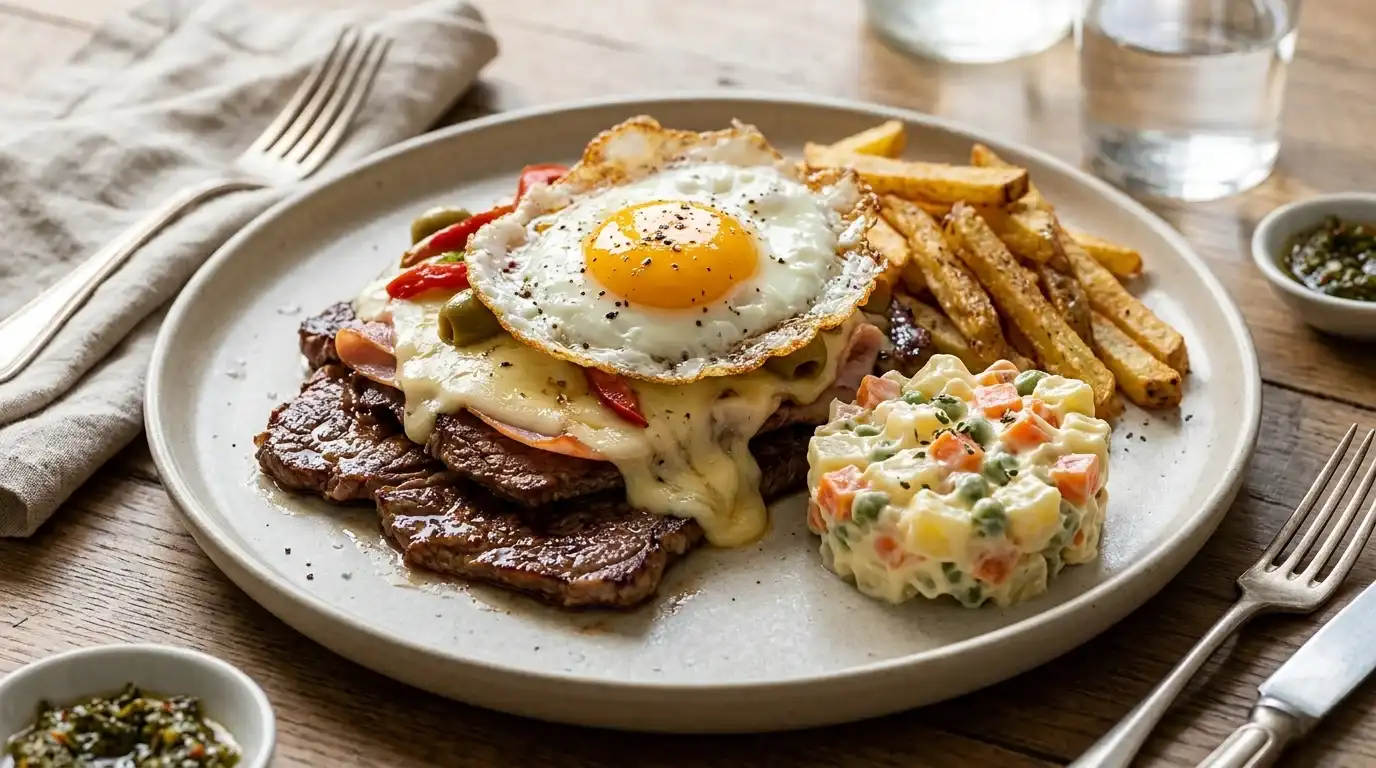
Canadiense. The chivito canadiense swaps in Canadian bacon. Culture Trip reports a date of 1951, when a restaurant owner reportedly wanted a special version of a chivito already popular in Montevideo, and hedges the claim with “it is said.” The same page lists bacon, egg, peppers, onions, and olives as typical extras, served with fries and Russian salad, a mix of potato, peas, and carrots in mayonnaise. Saltshaker describes the canadiense differently, as a sandwich in which Canadian bacon replaces the ham or bacon rather than being added to it.
Al plato. Dropping the bread produces the plate version. Tasting Table describes it as protein on a plate with no bread, a heavier, lower-carbohydrate way to order the same ingredients. Saltshaker adds that the plate usually carries a bigger portion of fillings and swaps fries for ensalada rusa, the mayonnaise-based potato salad. Culture Trip, by contrast, pairs fries and Russian salad with the canadiense.
A single menu can therefore offer the same name with several different plates behind it, and the sources do not agree on which side dish belongs to which version.
Variations by city and kitchen
Published sources describe differences by venue more than by region, and no source consulted lays out a formal map of regional recipes.
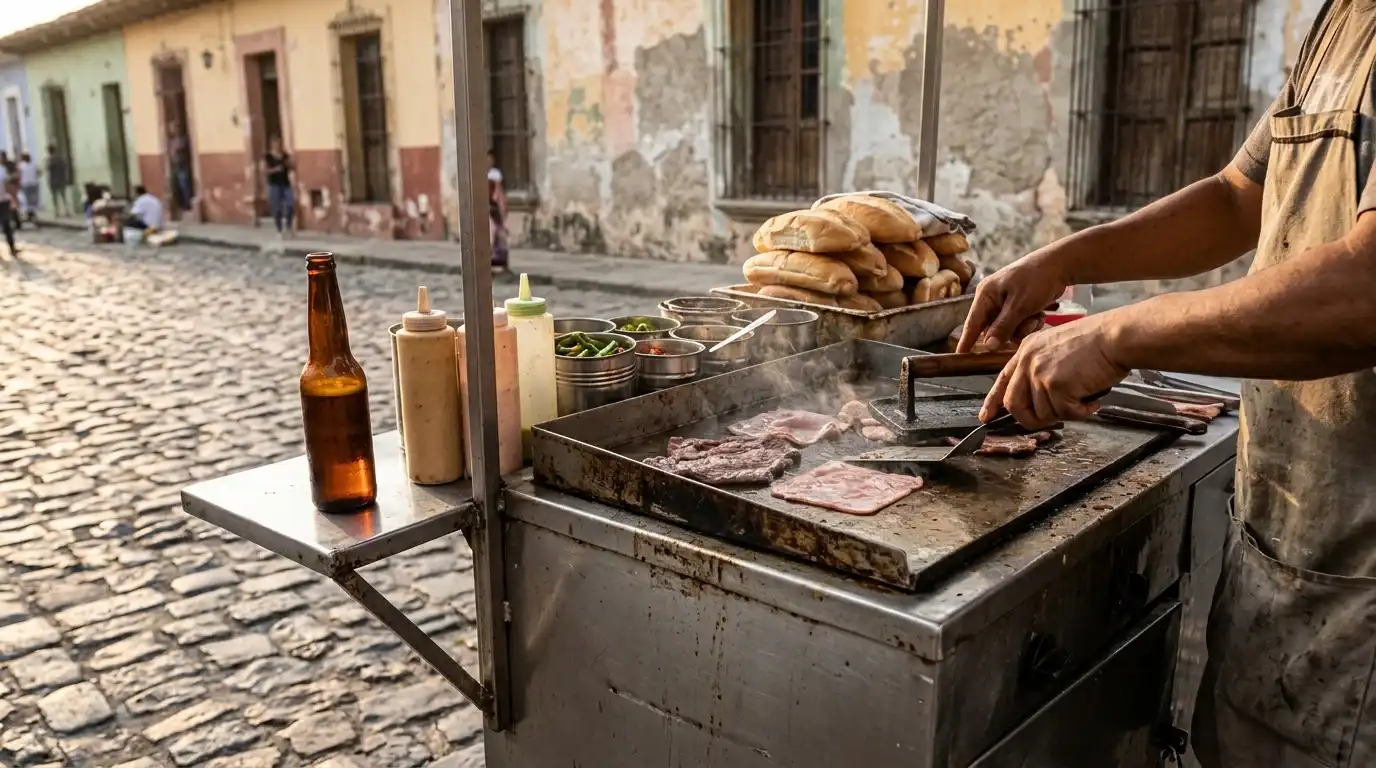
Welcome Uruguay places the sandwich in prestigious Montevideo restaurants, market stalls, and café-bars in small towns across the country, and mentions small metal carts where workers stop for a sandwich and talk about lottery results or soccer. It also notes that local and regional contests have been held to find the most Uruguayan chivito.
Saltshaker’s survey of Montevideo and Colonia del Sacramento turns up concrete contrasts. In Montevideo, Chiviteria Marcos serves a heavily topped version with olives, pickled vegetables, egg, several mayonnaise sauces, and broiled mozzarella, while El Tinkal keeps to steak, bacon, mozzarella, green olives, and mayonnaise. The chain La Pasiva leans toward diner-style food in the capital, though its Colonia branch produced a runny-yolk fried egg. Street carts in Colonia sell smaller, simpler sandwiches. In Buenos Aires, the same writer singles out La Perlita for a meat-heavy version with steak, ham, Canadian bacon, egg, palm hearts, and plenty of cheese, and finds many other Argentine versions disappointing. Tasting Table sums up the spread by saying that size varies by region, from very large to slider-sized.
Kitchens have pushed further. Culture Trip lists wild boar, chicken, lamb, pork, and vegetarian versions, plus Thai, Mexican, and Mediterranean styles. Explore Parts Unknown mentions Futuro Refuerzos, which offers a fish version on beet bread with avocado, sprouts, and dill mayonnaise.
Outside Uruguay the word shifts meaning. In Argentina, chivito refers to a barbecued kid dish, so the same word on a menu across the river points to a different meal.
A place in Uruguayan food culture
Uruguay is a cattle country. The Sword and the Sandwich reports roughly 12 million cattle, about three per person, against a goat population of around 10,000 in 2015 according to the Uruguayan Goat Breeders Association. A steak sandwich named for a goat sits oddly against those numbers.
Anthropologist Gustavo Laborde calls it “an emblem of local cuisine” in the Explore Parts Unknown piece. The same article describes many Uruguayans swapping the afternoon merienda for a refuerzo, usually a cold beer with a steak sandwich, to tide them over until a dinner that can start as late as 11 p.m. Portions are large enough that two to four people often split one.
Culture Trip says about a thousand chivitos are sold every day, and credits the sandwich’s status as one of the few dishes attributed solely to Uruguay to a press record made when it was created. Saltshaker treats the origin story as a source of local pride. Anthony Bourdain, in a line quoted by New World Review, described the sandwich as beloved and revered in Uruguay, and a related comparison from Tasting Table sets it beside the Philly cheesesteak and the Reuben.
Whether the original sandwich carried olives, egg, or neither remains unsettled, and the one document that could settle it, the El Mejillón menu from the 1940s, was not found in any source consulted.
Sources:
- Culture Trip, A Brief History of Uruguay’s Chivito: https://theculturetrip.com/south-america/uruguay/articles/a-brief-history-of-uruguays-chivito
- La Nación, Murió el inventor del chivito uruguayo: https://lanacion.com.ar/sociedad/murio-el-inventor-del-chivito-uruguayo-nid544347
- Explore Parts Unknown, The Art of the Chivito Sandwich: https://explorepartsunknown.com/uruguay/the-art-of-the-chivito-sandwich/
- The Sword and the Sandwich, Notable Sandwiches 42: Chivito: https://buttondown.com/theswordandthesandwich/archive/notable-sandwiches-42-chivito
- Mashed, The Seaside Origins Of The Chivito Sandwich: https://www.mashed.com/1570051/chivito-sandwich-origins/
- Saveur, Uruguayan Steak Sandwich (Chivito): https://www.saveur.com/recipes/chivito-uruguayan-cheesesteak-sandwich-recipe
- Tasting Table, Chivito Is The Small, Thinly-Sliced Steak Sandwich You Should Know: https://tastingtable.com/1329668/chivito-sliced-steak-sandwich
- New World Review, The Chivito, Uruguay’s National Dish: https://newworldreview.com/2011/12/the-chivito-uruguays-national-dish/
- Welcome Uruguay, Uruguayan Cuisine: Chivito: https://www.welcomeuruguay.com/montevideo/uruguayan-cuisine-chivito.html
- Saltshaker, How does the Chivito Uruguayo stack up?: https://www.saltshaker.net/20240218/an-oriental-sandwich
- YouTube, Chivito (Uruguay) on Sandwiches of History: https://www.youtube.com/watch?v=VeKajzGXQAQ