In this story
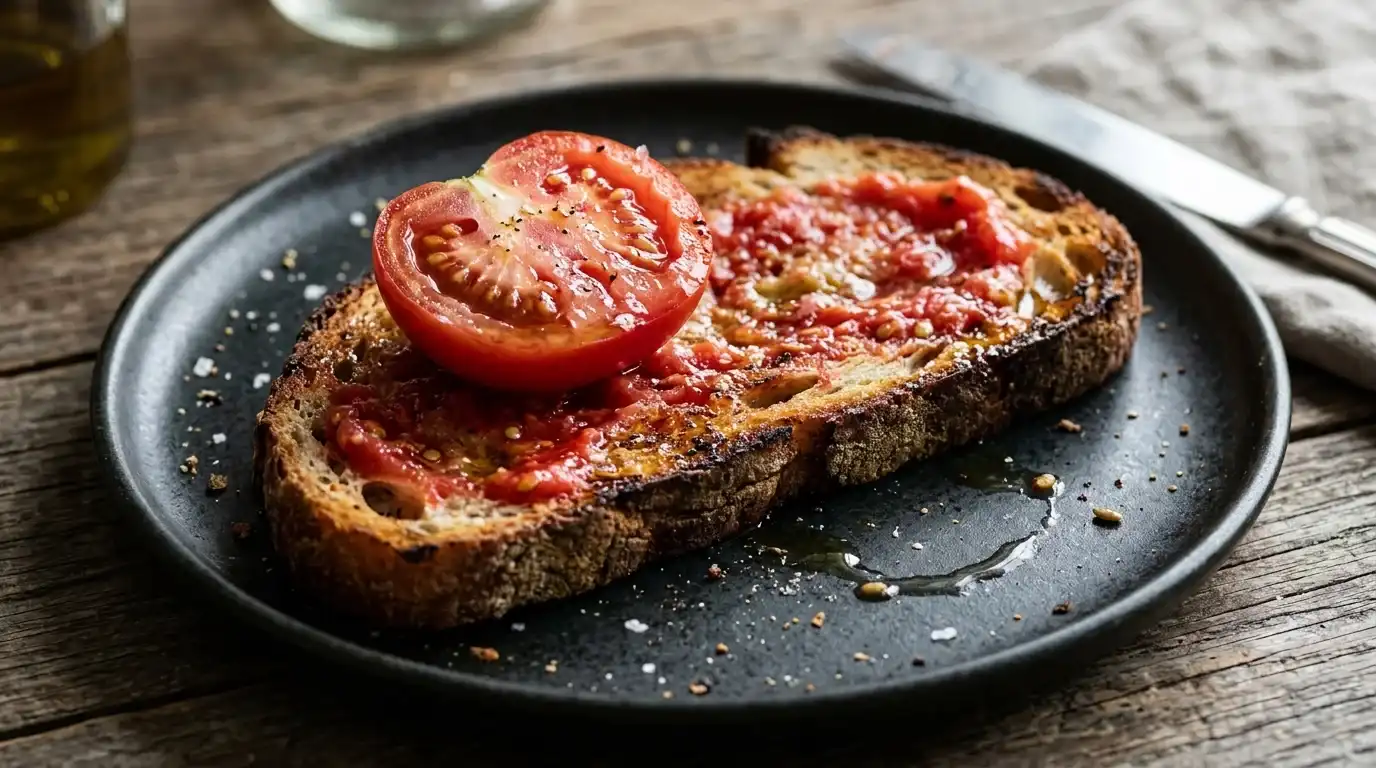
Pa amb tomàquet, pan con tomate in Spanish, is bread rubbed with a cut tomato, salted and drizzled with olive oil. In Catalonia it is a snack and a base for ham or anchovies, and it carries more weight than four ingredients should: a symbol of Catalan identity with a rulebook, a canonical book and a list of heresies. Its first written appearance is a single line from 1884 that nobody has managed to check.
Video: Catalonia's Anytime Snack: Pa Amb Tomàquet (Catalan Tomato Bread), from the America's Test Kitchen YouTube channel
Stale bread and a tomato surplus
A farmhouse economy
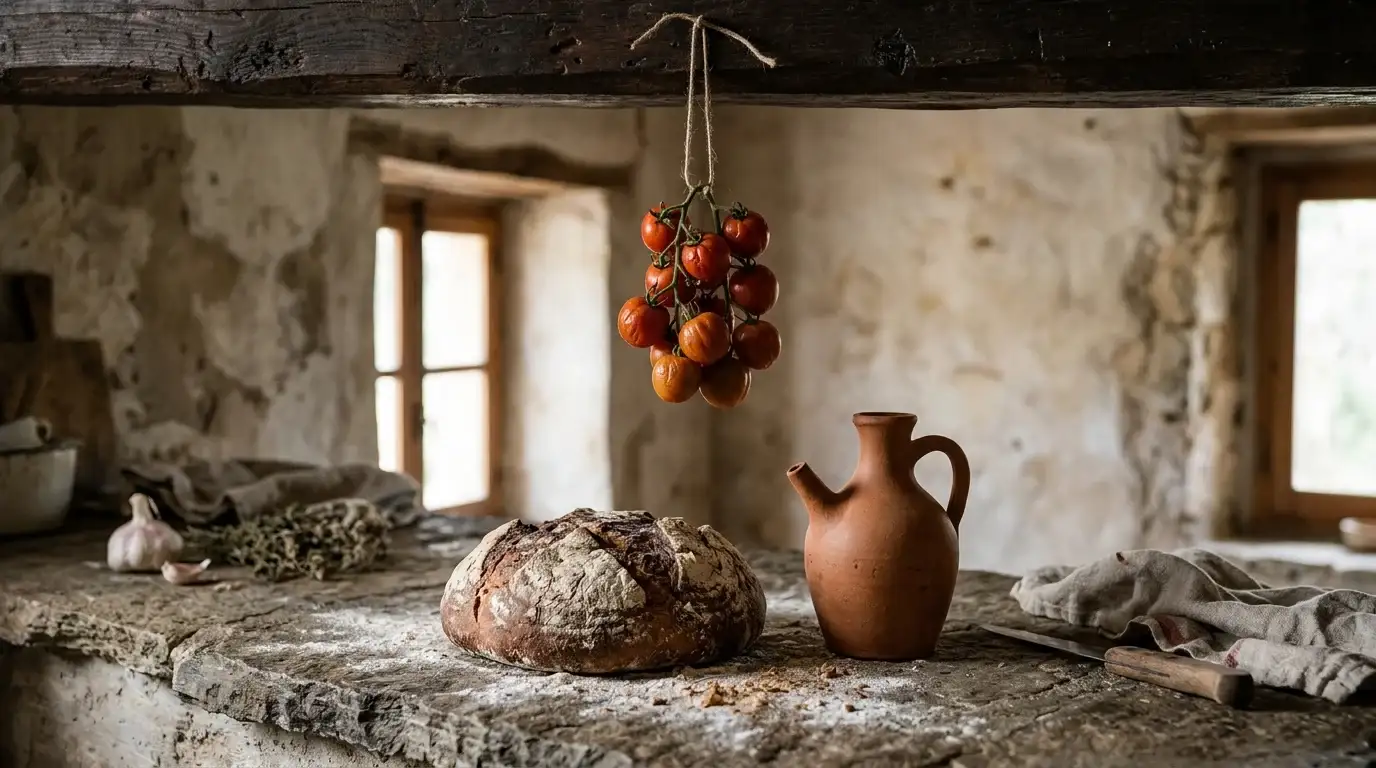
The dish began as thrift. Barcelona Turisme, in a December 2014 guide, describes it growing out of plain bread with oil, with tomatoes arriving in the 18th century, as part of farmhouse cooking where nothing was wasted. The Generalitat de Catalunya’s heritage page on 19th-century cooking cites the gastronome Nèstor Luján: the dish appeared in the countryside in years of plentiful tomatoes, which were used to soften dry bread, and its first references date from the 19th century.
How bread goes hard, and why a wet topping brings it back, is covered in Grill Cheesy’s why bread goes stale.
The 1884 line
Pompeu Gener, Nèstor Luján, Leopoldo Pomés
The written trail is thin. Trinitat Gilbert Martínez, writing for Ara in April 2026, traces the 1884 date to the writer Pompeu Gener. Luján quoted the line as the first literary reference in a 1984 newspaper article: “What we ate one night was bread with oil seasoned with tomato.” Leopoldo Pomés repeated the 1884 date in 1985 in Teoría y práctica del pan con tomate, a book devoted entirely to the dish.
Gilbert Martínez adds the problem: the 1884 reference is hard to verify. Barcelona Turisme describes that first record as two-day-old bread softened with tomato and oiled. Wikipedia’s pa amb tomàquet entry, used here only as a pointer, notes a separate claim from chef Josep Lladonosa i Giró, who recalled his grandmother saying her own parents ate a dish by that name, which would push it earlier but rests on family memory.
Pomés’s rules
Rustic bread, ripe tomato, salt before oil
Pomés set the method. Ara summarizes his rules: rustic bread, tomato rubbed on both sides, salt before the oil so it sticks, ripe tomatoes and low-acidity olive oil, and a light hand, with the skin used only to hold the tomato. The quantity matters: Pomés’s measure of the right amount is enough tomato to tint the bread red.
Barcelona Turisme’s version reorders it. Its guide calls for toasted pa de pagès, a rustic sourdough, salt to taste before the tomato, tomàquets de ramallet or de penjar cut in half and rubbed on, then extra-virgin olive oil chosen to suit what it accompanies. Whether salt goes on before the tomato or between tomato and oil is one of the small arguments the dish invites. The bread itself is covered in Grill Cheesy’s sourdough bread.
Sacrileges
Grated tomato and brushed purée
Catalans keep a list. Ara records the complaints: grated tomato, tomato purée brushed on, skins left in, unripe or acidic tomatoes. Chef Ada Parellada objects to purée versions. Pomés relayed that Josep Mercader opposed adding sugar to cut acidity and instead drained the tomato overnight.
The cost has changed too. Pomés put the cost in 1985 at 17.60 pesetas, about 10 euro cents, per Ara, which notes that inflation makes the cheap-dish claim harder to sustain.
On the table
Ham, anchovies, and abroad
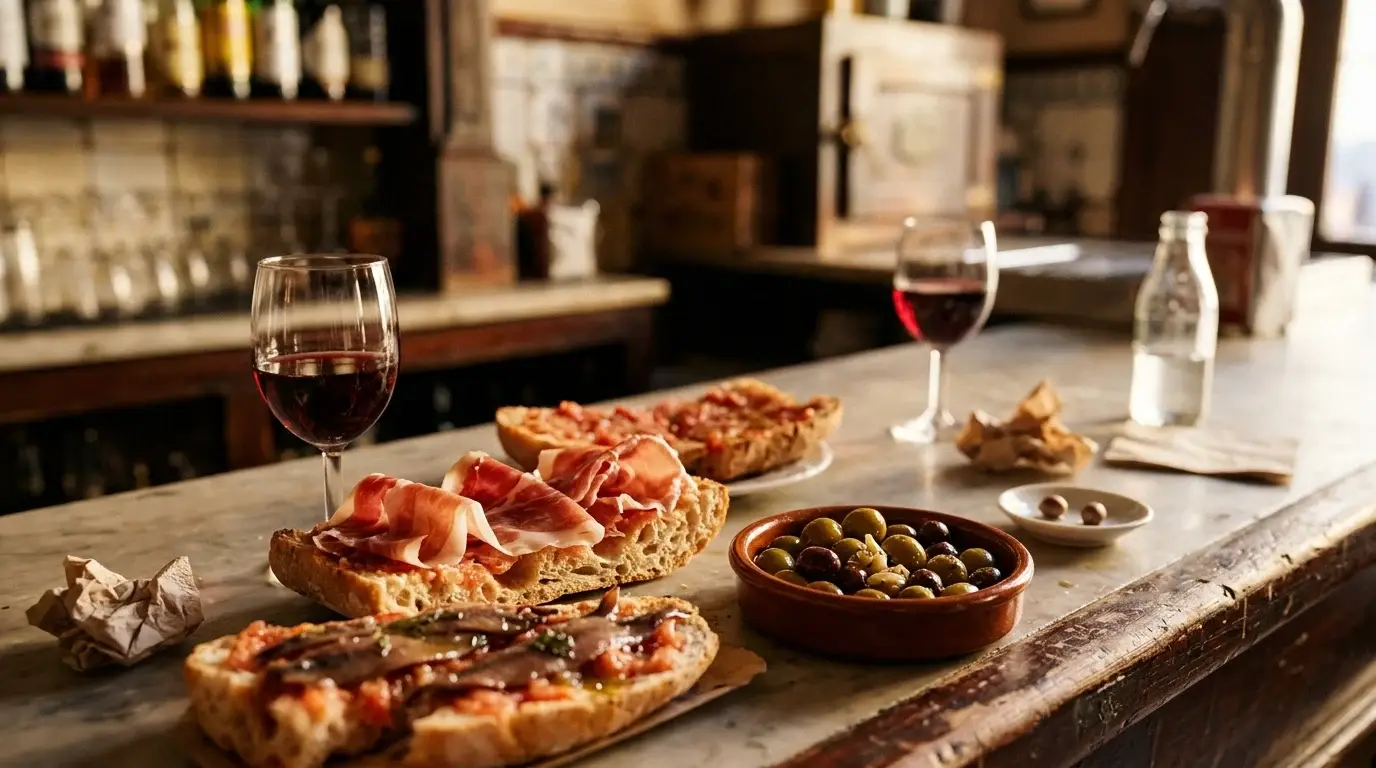
The tomato bread is a base. Wikipedia, as a pointer, pictures it with ham, olives, anchovies and fried fish; Catalan cured ham fits the same family covered in Grill Cheesy’s prosciutto. The other Catalan table staple, garlic and oil emulsified, is in aioli vs. mayonnaise.
Abroad it has a foothold rather than an empire. Ara names Montse Guillén in New York and the Clos family’s hotels in London and Madrid as places that serve it, and concludes it has not become a global icon.
Questions people ask
What is pa amb tomàquet? Bread, often toasted rustic sourdough, rubbed with ripe tomato, salted and drizzled with olive oil.
Is pan con tomate the same as pa amb tomàquet? Yes: pan con tomate is the Spanish name; pa amb tomàquet is Catalan.
When was pan con tomate invented? Its first written reference is usually dated to 1884, a line credited to Pompeu Gener, but Ara notes it is hard to verify.
Do you grate the tomato? Traditionalists say no; grated tomato and purée are on Ara’s list of sacrileges.
Salt before or after the tomato? Sources differ: Barcelona Turisme salts first; Pomés salts after the tomato and before the oil.
For the drizzle
- Castillo De Canena Extra Virgin Olive Oil, 16.8 fl. oz., Arbequina: a Spanish arbequina olive oil for finishing tomato bread. See it on Amazon (affiliate link)
As an Amazon Associate I earn from qualifying purchases. A commission may be earned if you buy through this link, at no extra cost to you.
Sources
- Trinitat Gilbert Martínez, Ara, X-ray of bread with tomato (Apr. 2, 2026): https://en.ara.cat/food/x-ray-of-pa-tomaquet-sacrileges-detractors-and-the-origin-of-this-traditional-catalan-dish_1_5696955.html
- Barcelona Turisme, The sacred principles of pa amb tomàquet (Dec. 22, 2014): https://www.barcelonaturisme.com/wv3/fr/enjoy/8/les-normes-sacrees-du-pa-amb-tomaquet.html
- Generalitat de Catalunya, Patrimoni, Cooking in the 19th century: https://patrimoni.gencat.cat/en/collection/cooking-19th-century
- Wikipedia, Pa amb tomàquet (pointer only): https://en.wikipedia.org/wiki/Pa_amb_tom%C3%A0quet