In this story
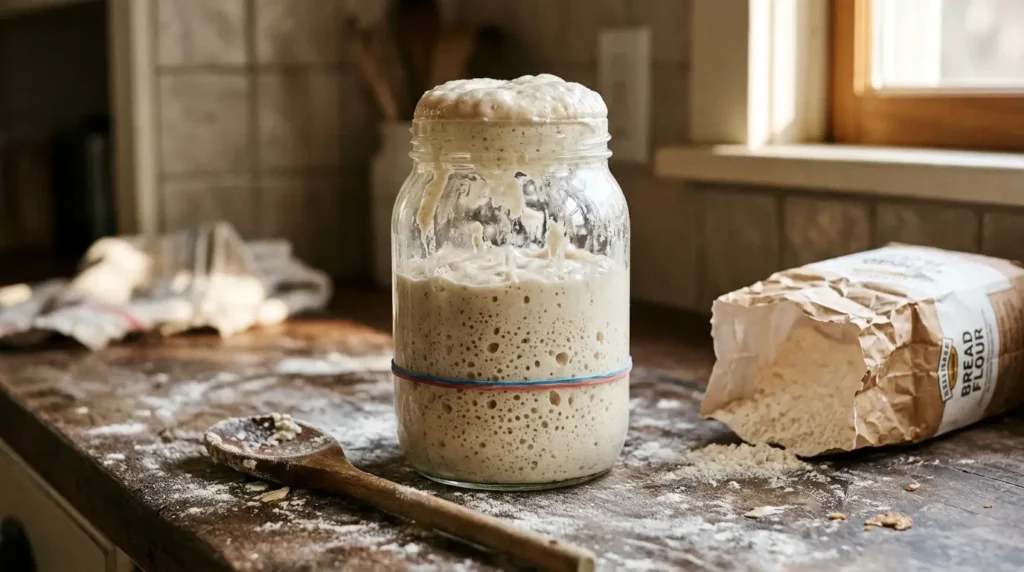
Sourdough bread is leavened by a living culture instead of a packet of commercial yeast. The baker keeps a starter, a paste of flour and water colonized by wild yeasts and bacteria, feeds it, and uses part of it to raise each batch of dough. The yeasts make the gas that lifts the loaf. The bacteria make lactic and acetic acids, which give the bread its sour edge and help it keep. That simple arrangement now carries a heavy load of legend, most of it pinned to San Francisco, and in the last fifty years scientists have tested a good deal of it.
Video: Sourdough bread is a microbial mystery, from the Sci NC YouTube channel
What lives in a starter
Yeasts make the rise, bacteria make the sour
A starter is a small ecosystem. The eLife study described below summarizes it plainly: the culture is a community of yeasts and bacteria that ferment the carbohydrates in flour and produce the carbon dioxide gas that makes dough rise. Each feeding of fresh flour and water keeps the community going, and bakers have passed starters from one kitchen to another for generations.
The bacteria are mostly lactic acid bacteria. In the 1971 study described below, the bacteria isolated from San Francisco sourdough produced both lactic and acetic acid, and those acids are the sour in sourdough. The yeast side of the partnership turned out to be more varied than bakers assumed, as the 2021 study showed.
Commercial baker’s yeast is the contrast case: one species, Saccharomyces cerevisiae, sold in packets or cakes. Boudin’s own timeline treats the arrival of Fleischmann’s cake yeast as the moment it had to choose between the two methods.
Thousands of years before San Francisco
Leavened bread is far older than any city’s claim to it
Bread raised by fermentation is ancient. Guinness World Records lists the oldest fermented bread as fragments dated to 6600 BCE from the Neolithic settlement of Çatalhöyük in Türkiye, a finding reported in March 2024. Before that discovery, the record holder came from ancient Egypt, around 1500 BCE. The Google Arts and Culture exhibit on experimental Egyptian baking, built on Mark Lehner’s excavations of bakeries at the Giza pyramid workers’ town, concludes that ancient Egyptian bread was probably a type of sourdough.
In 2019 a group led by Seamus Blackley, a physicist and the creator of the Xbox, tried to go further by coaxing yeast out of Egyptian bread molds in museum collections in Boston. Archaeologist Serena Love of the University of Queensland was careful about what they had found. She told The Art Newspaper, “It could be 80-year-old museum yeast from the air, or it could be ancient yeast.” The loaf got plenty of attention, but the age of its culture was never the settled part.
The Gold Rush story, and what historians say about it
Miners’ bread had a bad reputation before it had a good one
San Francisco ties its loaf to 1849. Veteran prospectors were nicknamed “sourdoughs,” and the city’s bakeries tell a story of miners carrying starters into the hills. Atlas Obscura’s history of the bread complicates that picture. Its research found that diaries, letters and newspapers from the period often complained that miners’ sourdough was inedible.
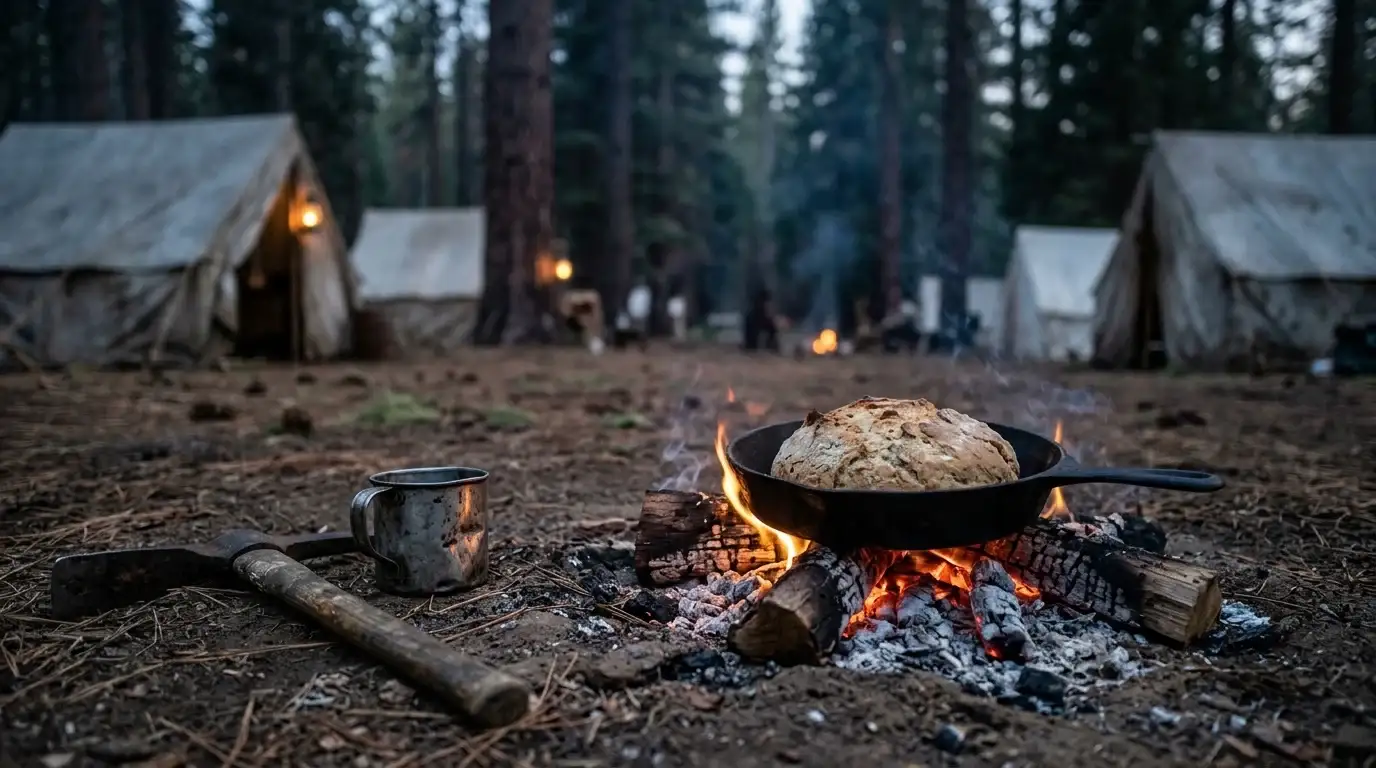
The reasons were practical. Most Americans at the time preferred sweet, light bread made with barm or commercial yeast, and sour bread was seen as a baking failure. Miners used starters because store-bought yeast ran out and cost too much in the camps, while a starter needed only flour, water and air. Inexperienced cooks baked over campfires or in gold pans, and adding baking soda to cut the sourness left yellow streaks and an off taste. Some starters were kept in filthy conditions, and Atlas Obscura reports that press accounts at the time blamed contaminated starter for some deaths.
The rehabilitation came from professional bakers. French and Italian immigrants already knew the levain method from Europe, and they sold their loaves as “French” or “Sour French” bread rather than as miners’ food. Early 20th-century clubs of aging prospectors romanticized the hardships of the frontier, and by the middle of the century the city’s tourism boards and bakeries were putting the 49ers at the center of the story and selling the bread nationwide.
Boudin and the mother dough
San Francisco’s oldest business still bakes from a starter it traces to 1849
The bakery most tied to that story is Boudin. Its own history page dates the business to 1849, when San Francisco’s population reached 20,000 by the end of the year, and says Isidore Boudin, from a family of French bakers, is believed to have received the mother dough from one of the gold seekers. The bakery moved to Dupont Street, now Grant Avenue, in North Beach in 1852.
The commitment to the starter is part of the company’s identity. Boudin’s timeline says that in 1868, despite the spread of Fleischmann’s cake yeast, the family stayed with its wild-yeast mother dough. After Isidore died in 1887, his widow Louise and their daughter Lucie ran the bakery, which moved to Broadway in 1890.
The claim is about continuity of practice: a starter fed and carried forward, batch after batch, rather than replaced with packaged yeast. Whether the microbes in today’s mother dough match those of 1849 is a different question, and the 2021 study’s finding that age, feeding and storage all shape a starter suggests the answer would be hard to pin down.
The microbe named for San Francisco
In 1971 two scientists isolated the bacterium behind the sour
For more than a century nobody had cultured the bacteria responsible for San Francisco sourdough’s tang. Leo Kline and T. F. Sugihara published the breakthrough in Applied Microbiology in March 1971. Their paper reports a growth medium that allowed isolation, apparently for the first time, of the bacteria responsible for the acid production in the city’s century-old French bread process.
The key was what the bacteria ate. Their medium required maltose at a high level, a sugar released as flour starches break down. The organisms were short, rod-shaped bacteria that produced lactic and acetic acids, with acetic acid making up anywhere from 3 to 26 percent of the total. The researchers proposed the name Lactobacillus sanfrancisco.
The name has been revised twice. The taxonomic database LPSN records the corrected form Lactobacillus sanfranciscensis from 1984 and the current name, Fructilactobacillus sanfranciscensis, from a 2020 reclassification. The etymology note keeps the origin story: the species is named after the city where the sourdough it came from had been propagated for more than 100 years.
What 500 starters revealed
Geography mattered far less than bakers assumed
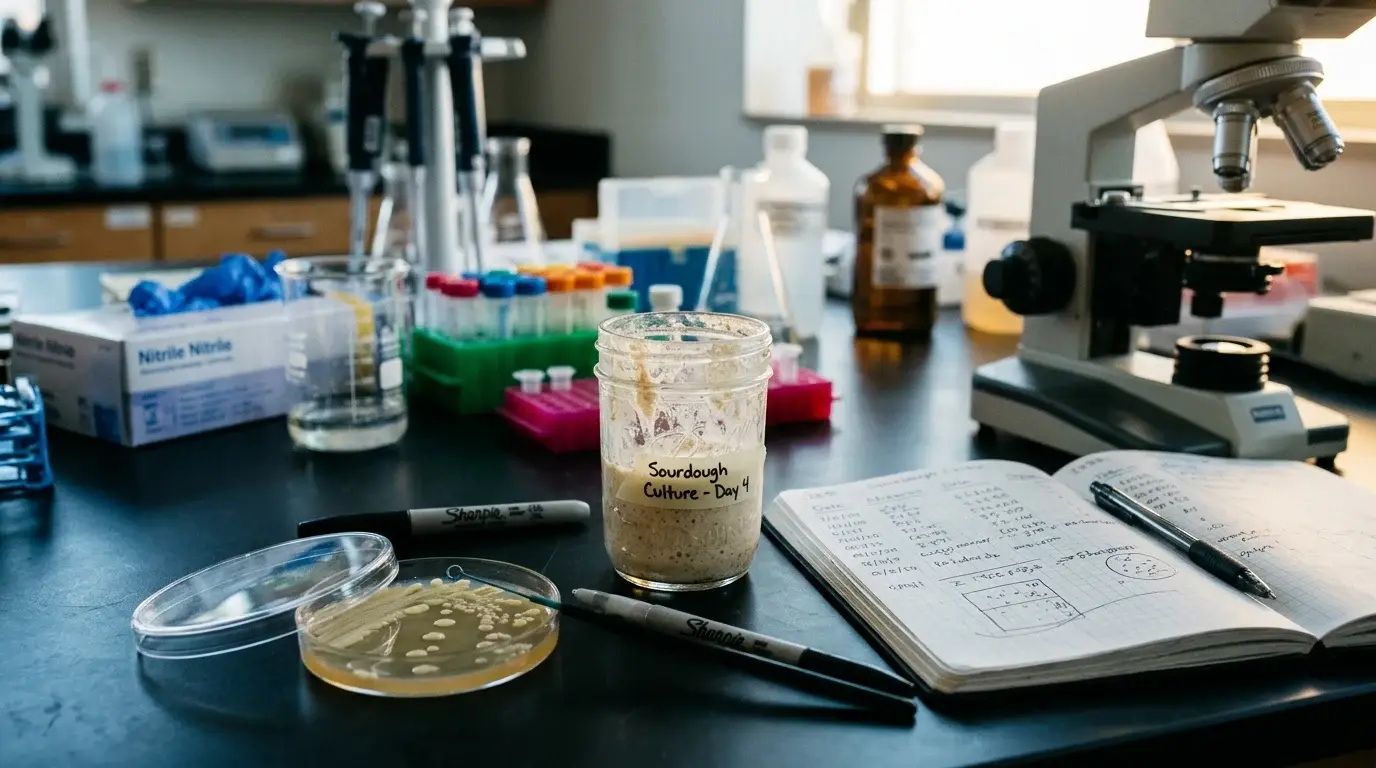
The largest study of home starters so far, published in eLife in January 2021, sequenced the microbes in 500 sourdough starters from four continents, most of them from home bakers in North America and Europe. The team, led by researchers at Tufts, North Carolina State University and the University of Colorado Boulder, then cultured 40 representative starters and measured their aroma and how fast they made dough rise.
The headline finding cut against the San Francisco legend. Elizabeth Landis, a co-lead author at Tufts, told NC State’s news office that “where the baker lives was not an important factor” in a starter’s microbiology. No single variable explained much of the difference between starters. Instead, many small factors added up, including the starter’s age, how often it was fed and where in the home it was kept.
Two other results surprised bakers:
- About 30 percent of the starters did not contain Saccharomyces cerevisiae, the species sold as baker’s yeast. Across all samples, the team found 70 kinds of yeast, though the median starter held only one.
- Acetic acid bacteria, which earlier research had largely ignored, turned up in 29.4 percent of samples. Starters that carried them rose more slowly and smelled more like vinegar.
Benjamin Wolfe of Tufts, a co-author, added a caution that applies to any reading of the study: it was observational, so it identifies relationships without proving that a given microbe causes a given trait.
Sourdough on the sandwich board
A sour, sturdy loaf that was sold as “French” bread for decades
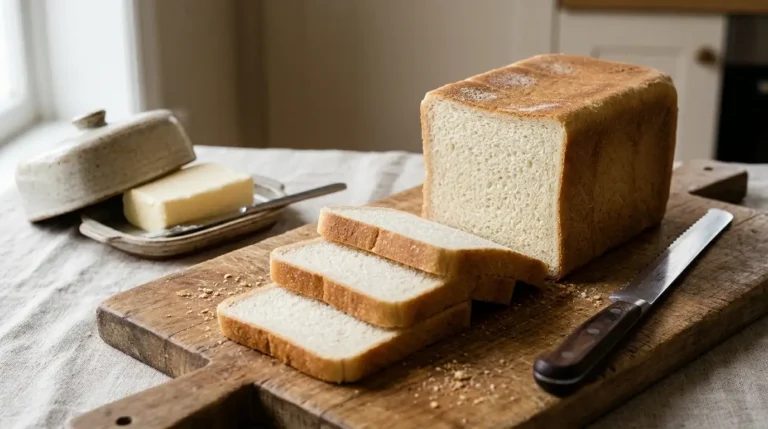
San Francisco’s bakers built the bread’s market by calling it French, and Atlas Obscura notes they sold it as “Sour French” bread long before the miners’ story became the selling point. On a sandwich, sourdough’s appeal comes from the same traits the bakers sold: a crust that resists sogginess and a crumb with enough structure to toast, grill or press without collapsing.
The sourness is the trade-off. A strongly acetic loaf, the vinegary kind the 2021 study linked to acetic acid bacteria, brings its own sharp flavor to whatever goes inside. Neither choice requires a starter from 1849. The NC State team’s results suggest that a starter fed regularly in a home kitchen anywhere can produce bread with real sourdough character.

Frequently asked questions
What makes sourdough sour?
Lactic acid bacteria in the starter produce lactic and acetic acids as they ferment the sugars in flour. Acetic acid gives the sharper, vinegary note.
Is San Francisco sourdough different because of the local air?
The 2021 study of 500 starters found that where a baker lives was not an important factor in a starter’s microbes.
What is the bacterium named after San Francisco?
It was first isolated by Leo Kline and T. F. Sugihara in 1971 and is now called Fructilactobacillus sanfranciscensis.
Does sourdough always contain baker’s yeast?
No. About 30 percent of the starters in the 2021 study did not contain Saccharomyces cerevisiae.
Sources
- Landis, Oliverio et al., “The diversity and function of sourdough starter microbiomes,” eLife (2021): https://elifesciences.org/articles/61644
- Same study via PubMed Central: https://pmc.ncbi.nlm.nih.gov/articles/PMC7837699
- NC State News, “The Sourdough Map” (January 2021): https://news.ncsu.edu/2021/01/the-sourdough-map/
- Guinness World Records, “Oldest fermented bread”: https://www.guinnessworldrecords.com/world-records/768791-oldest-fermented-bread
- Google Arts and Culture, “How Did Ancient Egyptians Bake Bread?”: https://artsandculture.google.com/story/how-did-ancient-egyptians-bake-bread/XgWRhMWH03I98Q
- The Art Newspaper, Martha Lufkin (13 August 2019): https://www.theartnewspaper.com/news/egypt-bread-xbox-seamus-blackly-peabody-museum-mfa-boston
- Atlas Obscura, “Sourdough history”: https://www.atlasobscura.com/articles/sourdough-history
- Boudin Bakery, “Our History”: https://boudinbakery.com/our-story/our-history/
- Kline and Sugihara, “Microorganisms of the San Francisco Sour Dough Bread Process II,” Applied Microbiology (1971): https://pmc.ncbi.nlm.nih.gov/articles/PMC377203
- LPSN, Lactobacillus sanfranciscensis: https://lpsn.dsmz.de/species/lactobacillus-sanfranciscensis