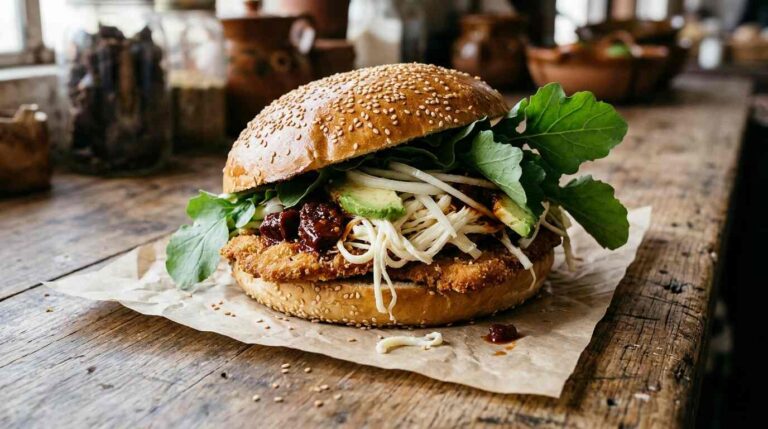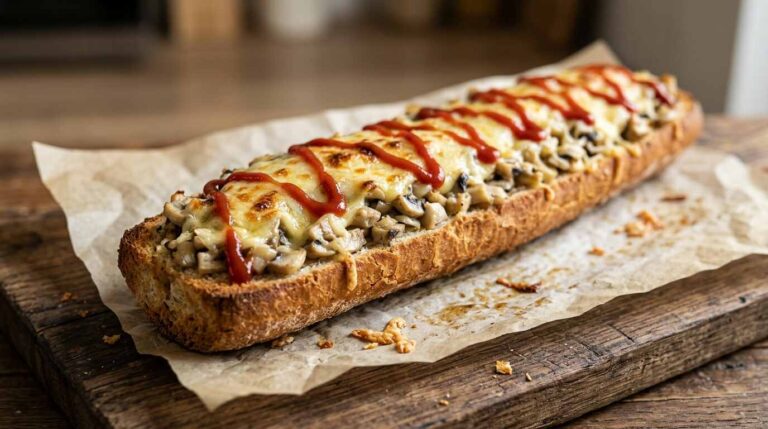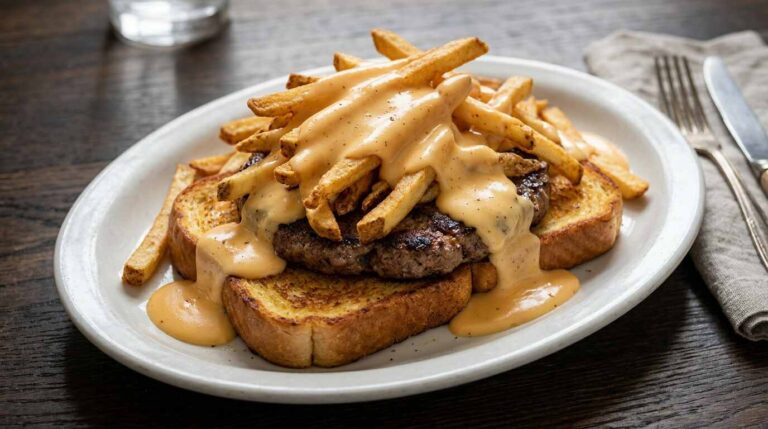
In this story
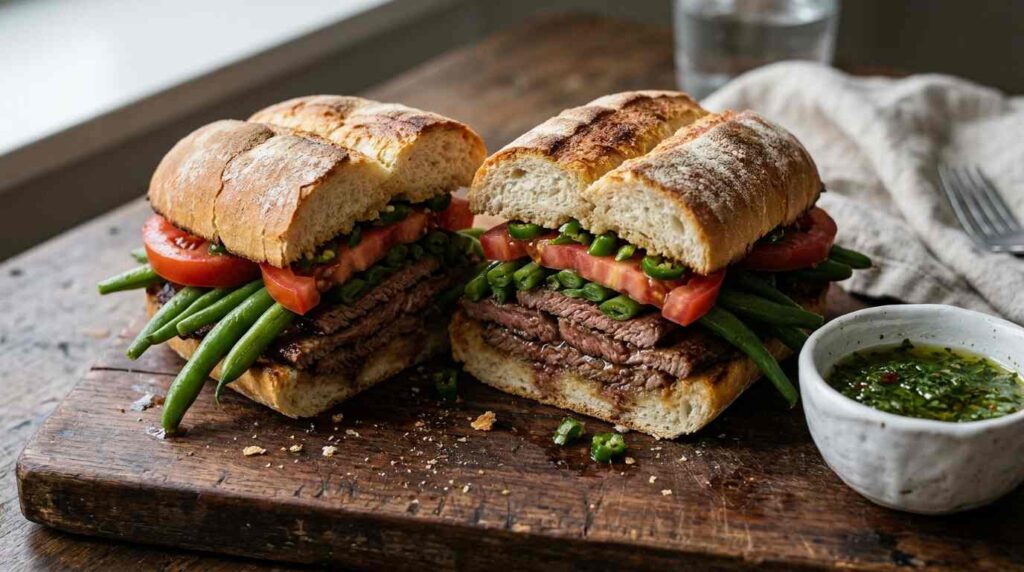
The chacarero is a Chilean sandwich of thinly sliced steak, cooked green beans, sliced tomato and green chili, built on a round roll or a crusty marraqueta. Chile’s national tourism site describes it as thin beef slices, green beans, tomato and green chili heaped onto a “frica” roll, with “a very fresh taste with a spicy touch.” Saveur calls it Santiago’s signature sandwich, and CNN Chile singles out the porotos verdes, the green beans, together with a touch of ají verde as what characterizes it.
Video: Chacarero | The Delicious Chilean Sandwich — from the Flavor Moments YouTube channel
What Goes Into a Chacarero
Thin beef, soft beans, tomato and green chili
The meat is cut thin and cooked fast. El Dínamo’s recipe guide names asiento, posta rosada and posta negra as suitable cuts, seared quickly so the slices stay juicy, and Redgol’s roundup lists posta rosada, lomo and asiento with the excess fat trimmed. The sandwich is also sold as churrasco chacarero, the name behind Chile’s annual celebration of it.
The green beans carry the sandwich. Saveur’s guide to the chacarero trail describes them as julienned and crisp against soft bread and tender meat, while The Daily Meal reports the opposite tradition: “With chacarero, green beans are often overcooked to ensure they pair perfectly with the other ingredients.” Both treatments appear in print, and neither source treats the other as wrong.
Tomato goes in as slices, ideally peeled, according to En Cancha’s recipe, and the heat comes from ají verde, a green chili chopped or made into a sauce. Mayonnaise appears in most of the recipes. Saveur mentions an avocado smear as the alternative. Bío Bío Chile adds a purist’s note: the traditional version uses only meat, green beans and tomato, and mayonnaise and chili are later modernizations.
The meat is not fixed either. Meteored reports pork cooked on a griddle at one Santiago stall, and Saveur lists a roasted-pork (pernil) chacarero at another.
The Bread: Frica, Marraqueta and Amasado
A sandwich shaped by whichever roll the shop bakes
No single bread defines the chacarero. The Spanish edition of Chile’s tourism blog says the chacarero and the lomito are both served on pan frica, a large round bread, while the Barros Luco and Barros Jarpa usually use sliced sandwich loaf. CNN Chile calls the marraqueta the bread of the chacarero, and Meteored says the sandwich can come on a fluffy frica or a crisp marraqueta, with one Santiago fuente de soda using house-made pan amasado, toasted.
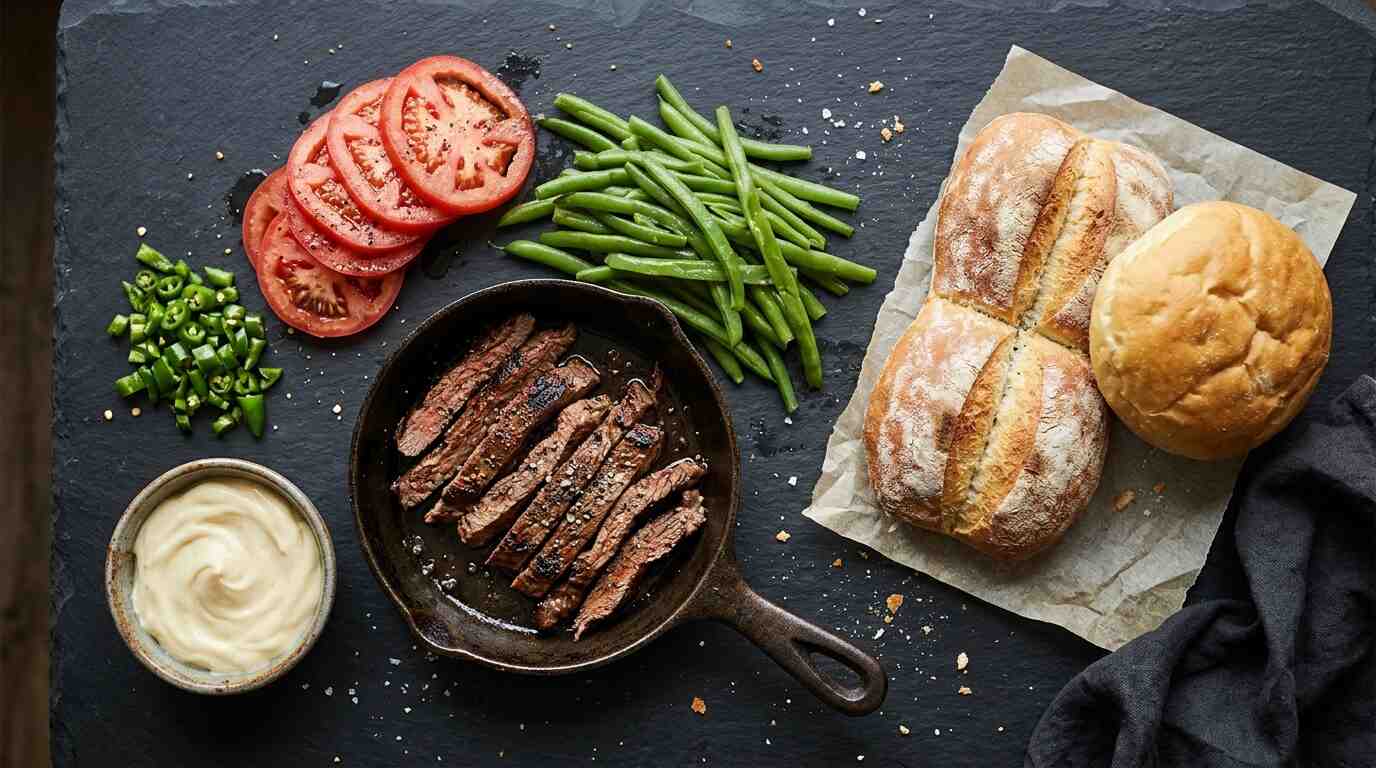
The marraqueta is Chile’s everyday loaf. WGBH reported that it is made from water, flour, salt and yeast, baked with steam for a hard crust, and shaped from two dough balls pressed together and nearly split lengthwise. The same report lists sausage in a choripán among the ways Chileans eat it. A retail guide to Chilean breads from Líder says the marraqueta dough contains no fat, while amasado is denser and usually includes fat.
Hallulla, which the tourism blog lists alongside marraqueta and amasado, is a different roll. Chilean Food and Garden describes it as round, flat and soft with a slightly sweet flavor, served warm with butter, ham and cheese or with avocado. None of the chacarero sources consulted for this article names hallulla as a chacarero bread, so the pairing rests on Chile’s bread vocabulary and not on a documented recipe.
Chile’s appetite for the whole category is large. The tourism blog puts Chile second among the world’s bread consumers after Germany, at roughly 98 kilograms per person each year.
Where the Name and the Sandwich Come From
A word with a farm in it, and an inventor nobody can name
The name is the one part of the story that sources agree on. Chacarero comes from chacra, a small rural property with a house and land. Bío Bío Chile notes that in southern Chile a chacarero was a farmer, and that beans, tomato and meat are what a farm produces. 24 Horas traces chacra to Quechua and says the owners of such land in the south were called chacareros.
Who made the first one is open. CNN Chile states that the origin is not fully known and offers a theory: it was a typical dish of the country’s farmers, and the southern crop owners called chacareros may have invented it, which the outlet itself labels speculation. Meteored supplies a date and a scene, placing the sandwich in the 1940s, when farmers who came to the city built a hearty lunch from the freshest produce of their chacras. The page cites no document for the decade.
A third attribution points to a person. En Cancha says the chacarero is attributed to a man named Juan Hurtado, who made it to sell from a street cart. That name also appears in the sandwich’s American story. The restaurant Chacarero in Boston says its founder, Juan Hurtado, a Chilean native, began selling sandwiches from a pushcart, and its page describes his version as a traditional Chilean sandwich without claiming he invented the original. The tourism blog likewise credits Hurtado with popularizing the sandwich in Boston, not with creating it. Whether En Cancha merges two stories is not something the pages settle.
The English-language Wikipedia entry, used here only as a pointer, lists Chile as the place of origin and names no inventor or date.
Where Santiago Eats It
Counter stools, fuentes de soda and a sandwich with its own day
The chacarero lives at the counter. It is one of the sandwiches sold at the fuentes de soda, the casual lunch counters that the English Wikipedia entry compares to the British greasy spoon. Saveur calls it “the meat-on-bread of choice” in Santiago and sets it beside New York’s pastrami on rye, Montreal’s smoked meat and the New Orleans po’boy. Those three have their own posts on pastrami on rye and the po’ boy.
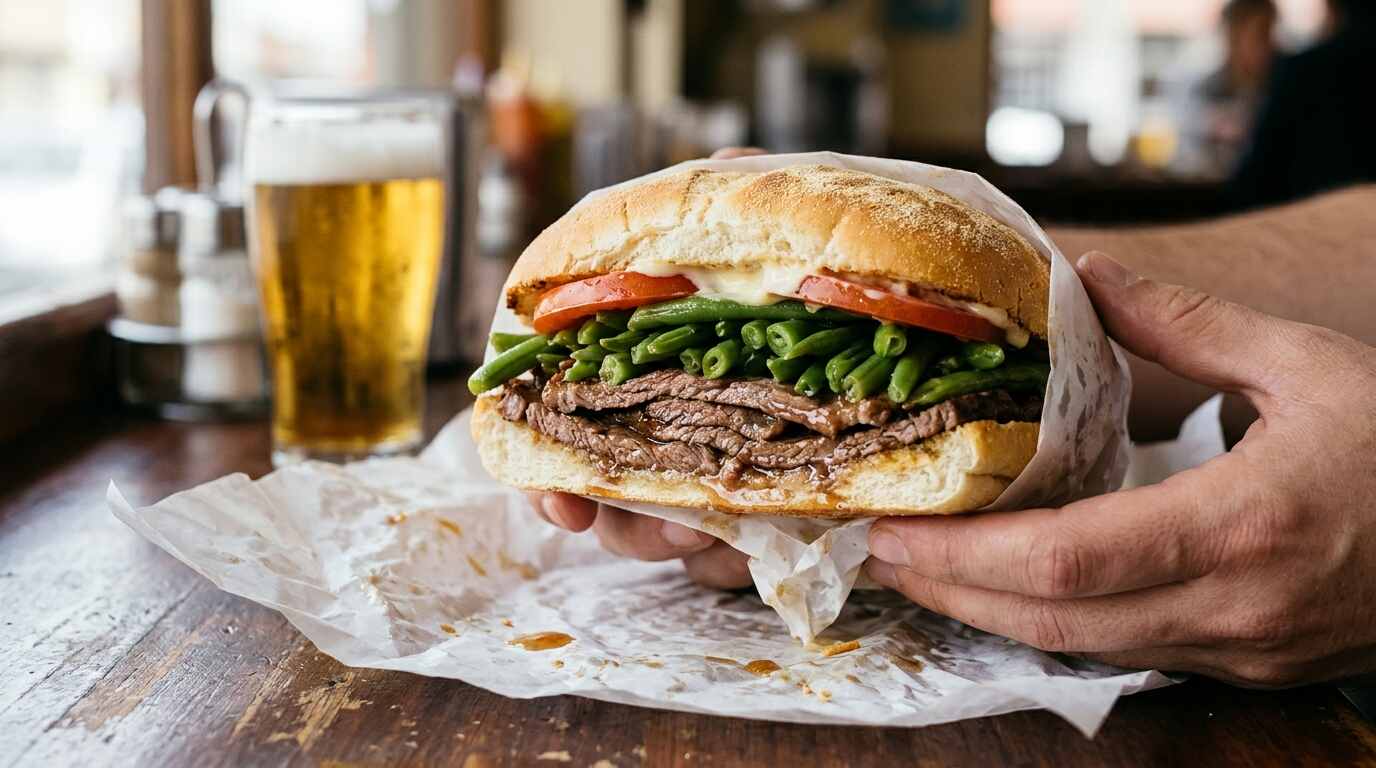
Meteored’s Santiago list is specific about addresses and dates. Fuente Alemana, at Pedro de Valdivia 210 in Providencia, has operated since 1954 and is known for juicy beef, fresh vegetables and a house mayonnaise-and-mustard blend. La Terraza, at Vicuña Mackenna 24 near the Baquedano metro stop, was founded in 1972 and sells more than 50 sandwich types. La Picá de Jaime, in the Persa Bío Bío market in Barrio Franklin, dates to 1997 and cooks pork on the griddle until very tender. Fuente Mardoqueo, in Barrio Yungay, runs four branches across the city. Saveur adds Bar Liguria on Avenida Providencia, Taberna El Hoyo, which it says has served food for about 100 years, Fuente Chilena and La Superior.
The sandwich also has a calendar date. CNN Chile, 24 Horas and El Dínamo all report that the Día del Churrasco Chacarero falls on February 17, with restaurants running promotions that day. 24 Horas also reported that Time magazine placed the chacarero on a list of the 13 most amazing sandwiches in the world, in an article dated August 28, 2014. A second 24 Horas piece, from 2023, dates the Time listing to 2017, so the outlet’s own articles disagree.
Chacarero Beside Completo, Choripán and Barros Luco
Chile’s sandwich counter, and the sausage sandwich across the Andes
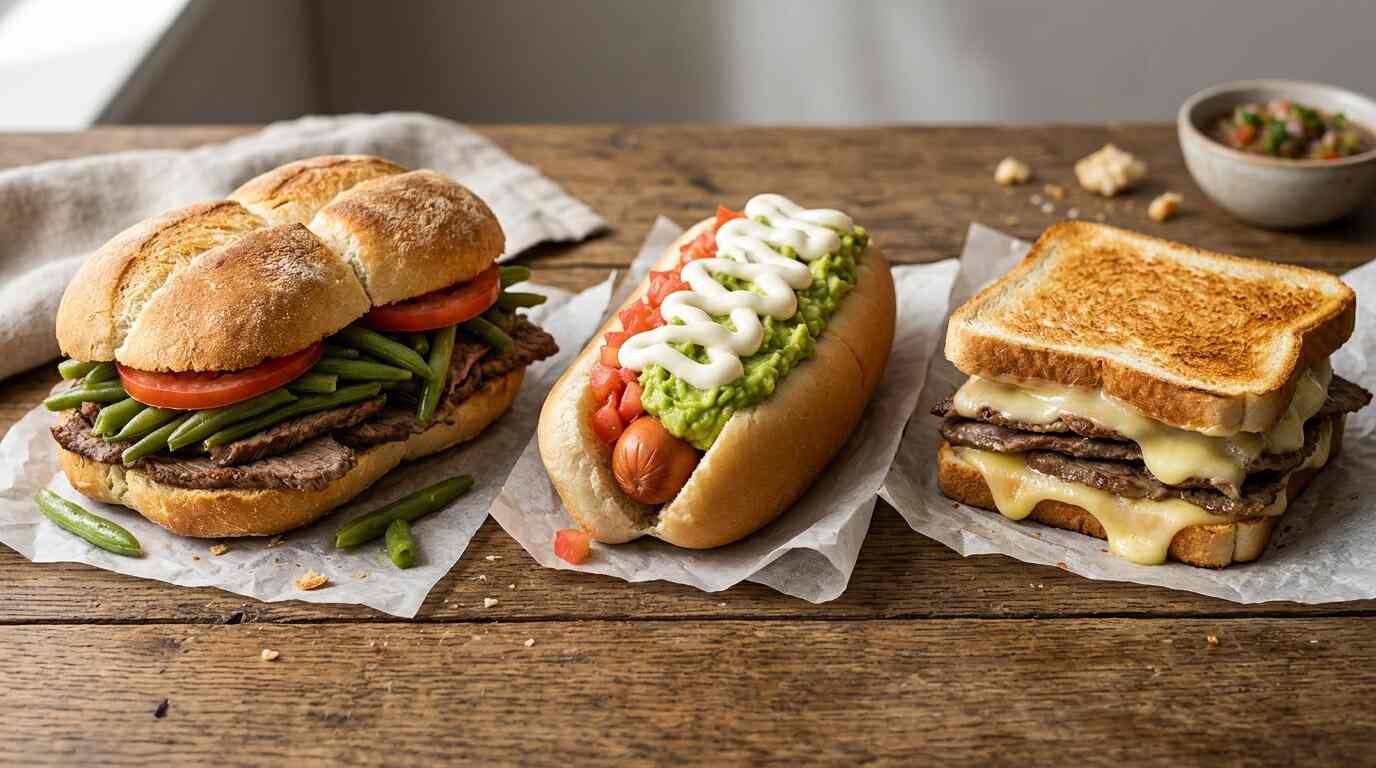
Chile’s sandwiches sort into a few families. The completo is a hot dog. The tourism blog says it was introduced to Chile by Germans in the south and then adapted, with the classic version carrying sauerkraut, americana sauce (pickles, onion and carrot), green sauce, ketchup and mustard. The completo italiano, with avocado, tomato and mayonnaise, takes its name from the Italian flag, and Bío Bío Chile adds the alemán, where sauerkraut replaces the avocado, and the español, with red peppers and mayonnaise. Whether a hot dog counts as a sandwich at all is argued in is a hot dog a sandwich.
The lomito shares the chacarero’s frica roll but swaps steak for roast pork, with tomato, mayonnaise and sauerkraut in Redgol’s version. The Barros Luco is the political one. Bío Bío Chile says President Ramón Barros Luco, who governed from 1910 to 1915, reportedly ordered a toasted sandwich of chopped meat and melted cheese at the Torres de Santiago café. His followers began asking for one “igualito al de Barros Luco.” The Barros Jarpa, with ham, followed in 1935 at the La Unión club, according to the same article.
Choripán sits across the Andes. Argentine Asado’s guide places its beginning in the Río de la Plata region in the mid-19th century, among gauchos who needed portable food at communal asados, and notes that Argentina and Uruguay both claim it. The roll is a firm-crusted French-style stick, the sausage is grilled chorizo, and chimichurri is the sauce. The choripán post covers it in full. In Chile, the WGBH report on the marraqueta lists choripán among that bread’s uses. The comparison is structural. Choripán depends on one rich sausage and an acidic sauce, while the chacarero spreads its work across steak, soft green beans, tomato and heat. Another steak sandwich with a strong regional identity is covered in the Philly cheesesteak post.
The Chacarero in Boston
How a Chilean sandwich reached American lunch lines
The Boston Chacarero is the sandwich’s best-documented export. The restaurant’s own page says Juan Hurtado began with a pushcart, that customers were skeptical of the green beans until they tried them, and that he later ran a small counter in Filene’s Basement before moving to a spot at 101 Arch Street. The sandwich it serves is a Chilean-style one on soft round bread baked fresh each morning, with choice of beef or chicken, Muenster cheese, tomatoes, steamed green beans, an avocado spread and a jalapeño-habanero heat.
The Daily Meal reports the same Hurtado build: green beans, avocado spread, tomatoes, Muenster and hot sauce. It also states that Chileans tend to eat the sandwich in spring and summer, when the vegetables are freshest, and that Hurtado bakes his own bread. The Chilean pages cited above list mayonnaise and ají verde, with avocado as an alternative at Saveur’s Santiago shops, and none of them mentions Muenster.
Sources
- Chile Travel, “Chile, the sandwich paradise” (English): https://chile.travel/en/wp-json/wp/v2/posts/46511
- Chile Travel, “Chile, el paraíso del sándwich”: https://chile.travel/blog/chile-el-paraiso-del-sandwich-2/
- Bío Bío Chile, “La curiosa razón detrás de los nombres de los sándwiches chilenos”: https://www.biobiochile.cl/noticias/sociedad/curiosidades/2018/05/06/la-curiosa-razon-detras-de-los-nombres-de-los-sandwiches-chilenos.shtml
- Meteored Chile, “Dónde comer en Santiago el mejor chacarero”: https://www.meteored.cl/noticias/actualidad/donde-comer-en-santiago-el-mejor-chacarero.html
- CNN Chile, “Día del Churrasco Chacarero 2026”: https://www.cnnchile.com/cultura/dia-del-churrasco-chacarero-2026-5-restaurantes-con-ofertas-para-disfrutar-del-sandwich-chileno-en-todo-chile_20260217/
- 24 Horas, “Día del Chacarero: el sándwich destacado por Time”: https://www.24horas.cl/tendencias/espectaculos/dia-del-chacarero-el-sandwich-destacado-por-times
- 24 Horas, “Revista Time destaca al chacarero como uno de los 13 sándwiches más increíbles”: https://www.24horas.cl/tendencias/espectaculosycultura/revista-time-destaca-al-chacarero-como-uno-de-los-13-sandwiches-mas-increibles-1392282
- El Dínamo, “Día del Chacarero: las mejores recetas”: https://www.eldinamo.cl/buen-dato/2025/02/17/dia-del-chacarero-las-mejores-recetas-para-preparar-este-tradicional-sandwich-chileno/
- En Cancha, “Receta de sándwich chacarero chileno”: https://www.encancha.cl/enlahora/cocina/2022/11/3/receta-de-sandwich-chacarero-chileno-como-hacer-en-casa-este-clasico-nacional-186565/
- Redgol, “Día mundial del sándwich”: https://redgol.cl/tendencias/dia-mundial-del-sandwich-cual-prefieres-barros-luco-lomito-chacarero-ave-palta-mechada-palta-tomate-20231102-RDG-182127.html
- Saveur, “On the Chacarero Trail: Where to Eat Santiago’s Favorite Sandwich”: https://www.saveur.com/article/Travels/Where-to-Eat-the-Chacarero-Sandwich-in-Santiago
- The Daily Meal, “Add Green Beans To Your Next Steak Sandwich For A Chilean Twist”: https://www.thedailymeal.com/1547580/chacarero-chileno-sandwich-beans
- Chacarero (Boston), About: https://www.chacarero.com/about/
- WGBH, “In Chile, Marraqueta Is The Daily Bread”: https://www.wgbh.org/news/2016-07-07/in-chile-marraqueta-is-the-daily-bread
- Líder, “Tipos de pan en Chile”: https://www.lider.cl/blog/tipos-de-pan-en-chile
- Chilean Food and Garden, “Hallullas Chilean Bread”: https://www.chileanfoodandgarden.com/chilean-bread-hallullas/
- Argentine Asado, “Choripán: The King of Argentine Street Sandwiches”: https://argentineasado.com/recipes/choripan-the-king-of-argentine-street-sandwiches
- Wikipedia, “Chacarero” (pointer only): https://en.wikipedia.org/wiki/Chacarero
Keep reading
- Bocadillo: Spain’s Crusty-Loaf Sandwich, Its Name and Its Regional Forms
- Francesinha: Porto’s Sandwich, Its Origin Story and the Sauce
- Chip Butty: Origin, Regional Names and the Bacon Butty Connection
More in this section: Sandwiches Around the World guide.