
In this story
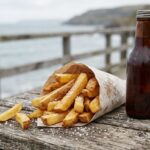
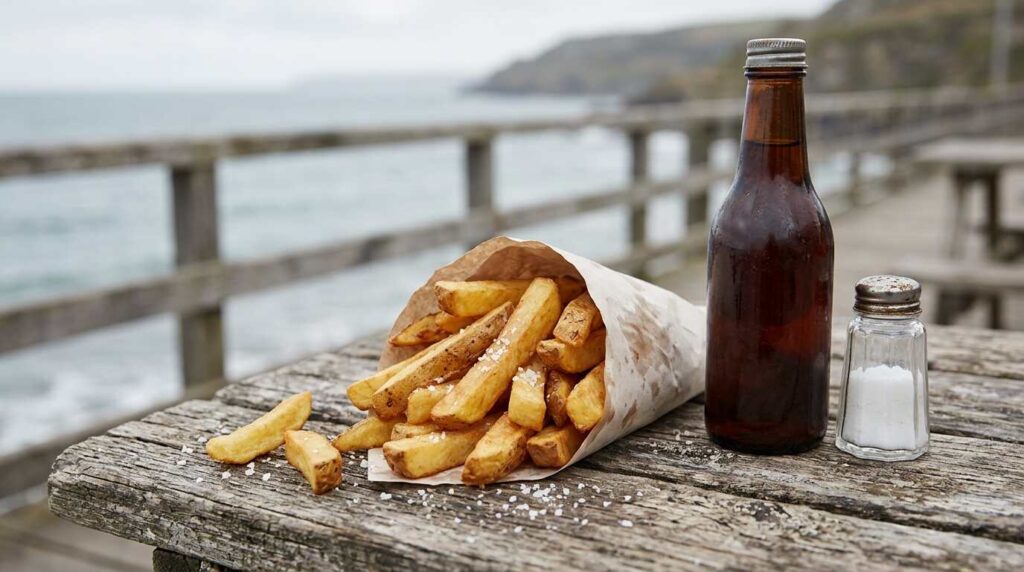
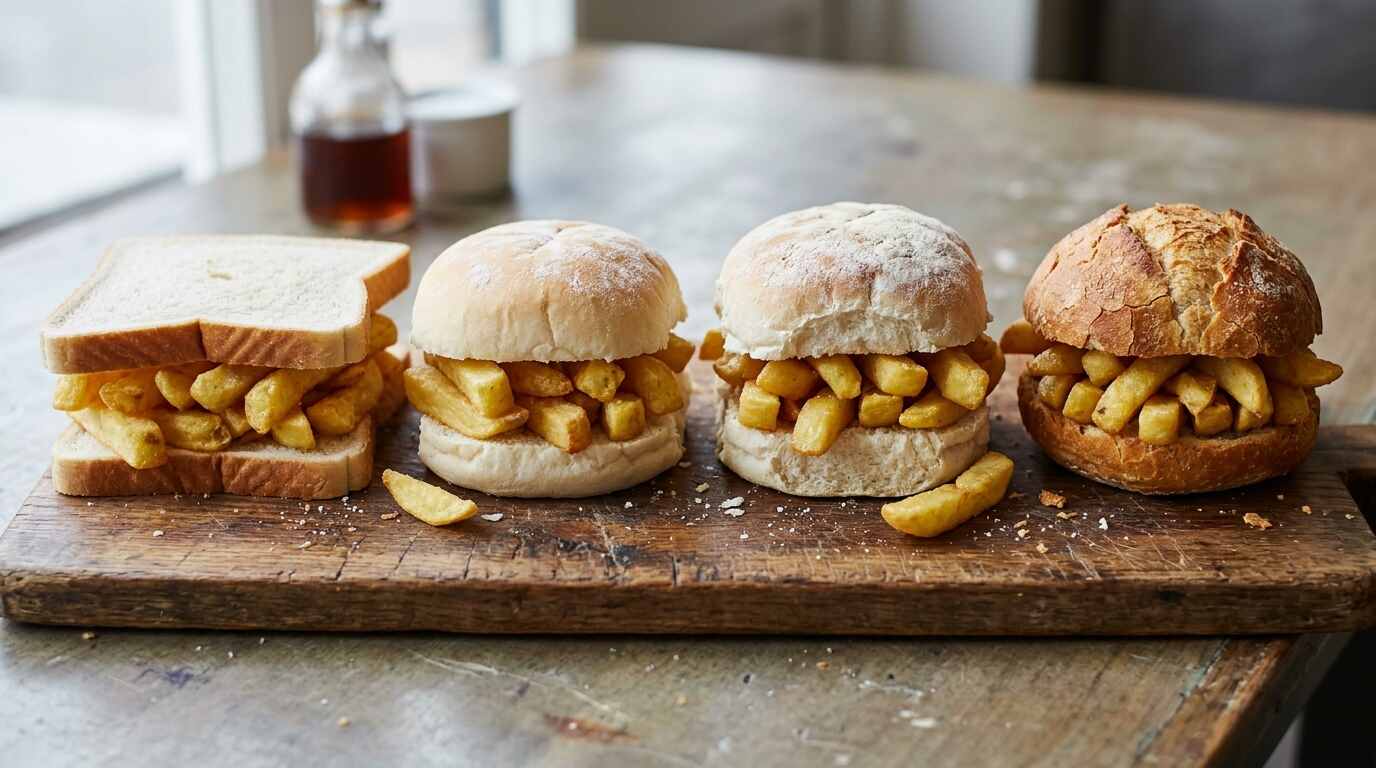
The chip butty is hot fried potato wedged between buttered bread, and its birthplace is claimed in at least four directions. The National Federation of Fish Friers, as reported by Vice, puts it in Lancashire at what it calls Britain’s second-ever fish and chip shop. Yorkshire, Liverpool and Ireland have all been proposed as well. Nobody wrote the first one down, and the name for the thing changes from one town to the next.
Video: Behold… The English ‘Chip Butty’ | VICE TV
Mr Lees and the 1863 claim
The official account begins with a Mr Lees. According to the federation’s version relayed by Vice, his shop opened in 1863 as a market stall in Oldham and became known for generously sized “chip barms.” A second telling moves the stall a few miles. Historic UK places Lees in Mossley, near Oldham, selling from a wooden hut in the market before moving to a permanent shop across the road, with a window that read “This is the first fish and chip shop in the world.”
The sign claims first place, where the federation’s wording makes Lees second, and a rival claimant stands in the way. Historic UK reports that Joseph Malin, a Jewish immigrant, is said to have opened a fish and chip shop on Cleveland Way in London’s East End in the 1860s, and that Lancashire and London both claim to have invented the dish. Traveller’s account of the same period dates Malin’s shop to around 1863, four years after Charles Dickens used the word “chips” in A Tale of Two Cities, and adds that Lees was soon putting his fries into a barm, a roll.
Dundee enters the argument from a different side. The same article reports that Dundee City Council says chips were first sold in the city in the 1870s by a Belgian immigrant named Edward De Gernier. That claim concerns the chip rather than the sandwich, and it sits uneasily beside the Lancashire date.
Even the Lees story has a gap in the paper record. The word “chip barm,” Vice notes, did not appear in dictionaries, books or newspapers until well into the twentieth century. Yorkshire chef and food historian Dr Neil Buttery explains the silence by saying that working-class cooks in the north of England “could not, and did not, write things down.”
What butty means
The word predates the sandwich it now names. Etymonline defines it as a slice of bread and butter, first recorded in 1855 in northern English, and builds it from butter plus the suffix -y. Earlier evidence exists. Word Histories finds the bread-and-butter sense in the Lancaster Gazette of 14 April 1827, as “a butty,” and again in the Chester Chronicle of 6 August 1841. Both citations come from reports of poisoning cases, which makes them an odd christening for a comfort food.
Merriam-Webster gives the same construction, butter with -y, and dates the sense of a sandwich to 1934. The shift from a buttered slice to a filled sandwich therefore happened somewhere in between, though the sources fetched for this post do not say exactly when or where.
Competing local theories exist for the word itself. Vice reports that butty is said to be Yorkshire slang for butter, which suits the Yorkshire origin claim, while Liverpool has been named as an origin too. None of the dictionaries consulted settles the matter beyond the butter root.
Why chips took hold in the north
The potato itself came late and slowly. Traveller’s history says it reached Britain in the late sixteenth century, credited to Sir Francis Drake or perhaps Sir Walter Raleigh, and was at first feared as poisonous. Fried potato had been cooked for a long time before the chip shop. Professor Rebecca Earle, author of Potato in the Object Lessons series, is quoted by Vice as saying that recipes for chips and “potatoes fried” go back to the eighteenth century.
Earle’s explanation for the northern advantage is practical. The north, she says, had access to fuel that London and the south did not, and its position near Ireland gave it a supply of potatoes. Producing chips at scale made them, in her words, “literally – cheap as chips.” She ties their spread to the fish and chip shop and café boom of the 1900s.
Buttery adds the school dinner room. By his account, children in northern towns were fed chip butties every day at school. Food writer Jonathan Nunn, quoted in the same piece, places the whole family of double-carbohydrate snacks in the north, with Hull patties and pie barms alongside the chip butty.
The federation counts roughly 10,500 chip shops in the United Kingdom today, according to Historic UK, which works out to about eight for each McDonald’s outlet. That figure refers to the present day and says nothing about the nineteenth century.
Butty, barm, bap, cob and roll
No single term covers the filled bread roll in Britain, and the chip version collects every regional word. A Foodhub survey of 2,000 respondents, reported by the Grimsby Telegraph, found chip butty winning with 58 percent. Chip roll took 11 percent, chip sandwich 6, chip bap 5.75, chip barm 4.85 and chip cob 4. The article does not give the survey year.
The regional breakdown shows where each word lives. In the north-west, chip butty and chip barm were nearly tied, with the butty ahead by two points. In London, chip butty led and chip roll drew more than one vote in five. Across the East Midlands, around Leicester and Nottingham, butty led and chip cob followed with almost three in ten.
A general survey of bread-roll words points the same way. Mashed cites a 2018 YouGov finding that 52 percent of English people say “bread roll,” with “bun” common in the North East and parts of Yorkshire and Cumbria, “cob” in the Midlands, and “barm” or “barm cake” in the North West. The Takeout adds chip sarnie to the list of names, along with chip roll, chip cob and chip barm.
The bacon butty
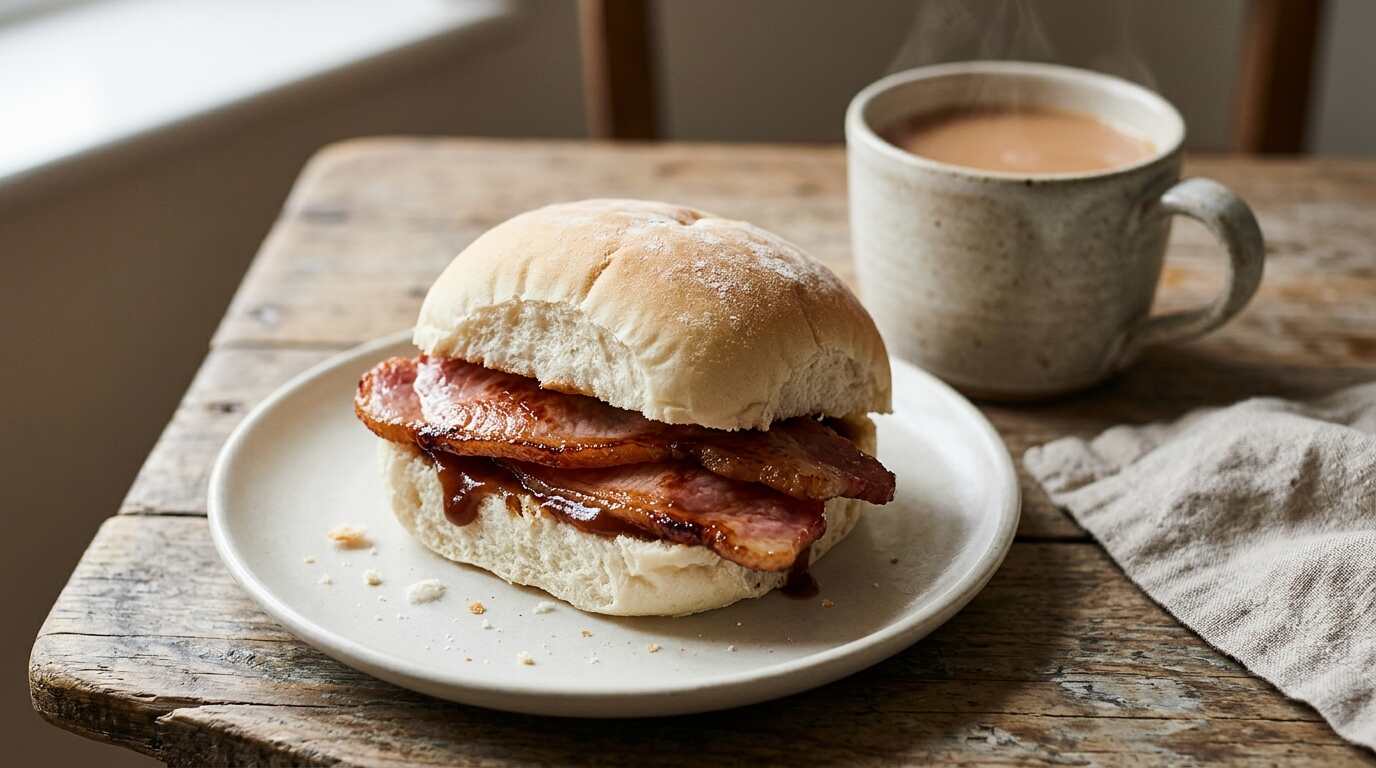
Bacon shares the word and much of the vocabulary. A survey by IronmongeryDirect of 2,014 UK adults, published through the British Sandwich and Food to Go Association, described the ideal bacon butty as three slices of smoked bacon in a white roll with brown sauce. Brown sauce was the choice of 44 percent, ketchup of 36, no sauce of 11 and barbecue sauce of 4. About 24 percent toast the bread, and 43 percent butter it before filling.
The names for the bread split along the same lines as the chip version. The association’s report lists bacon bap or roll in the South, cob in the Midlands, barm in the North West and bridie, buttery or rowie in Scotland. In Scotland sliced white bread (53 percent) narrowly beat a roll (48 percent). Culture Trip, summarizing the same research, describes a butty as a general British term for any buttered sandwich, especially one with a hot filling.
No fetched source gives an origin for the bacon sandwich in the way the federation does for the chip butty. The bacon version has a survey, and the chip version has a legend.
Building one
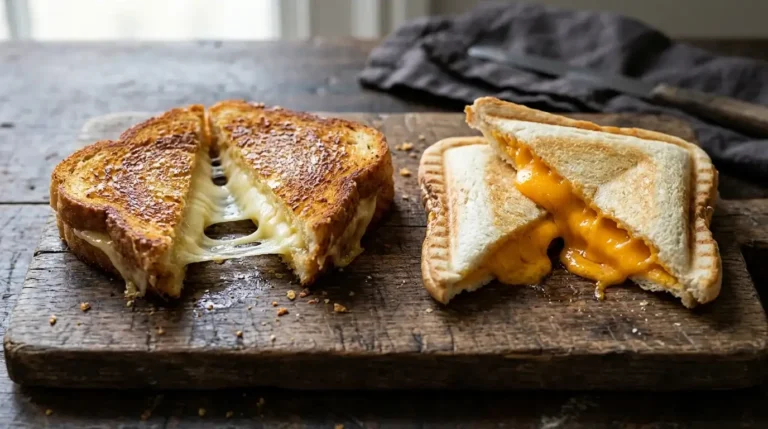
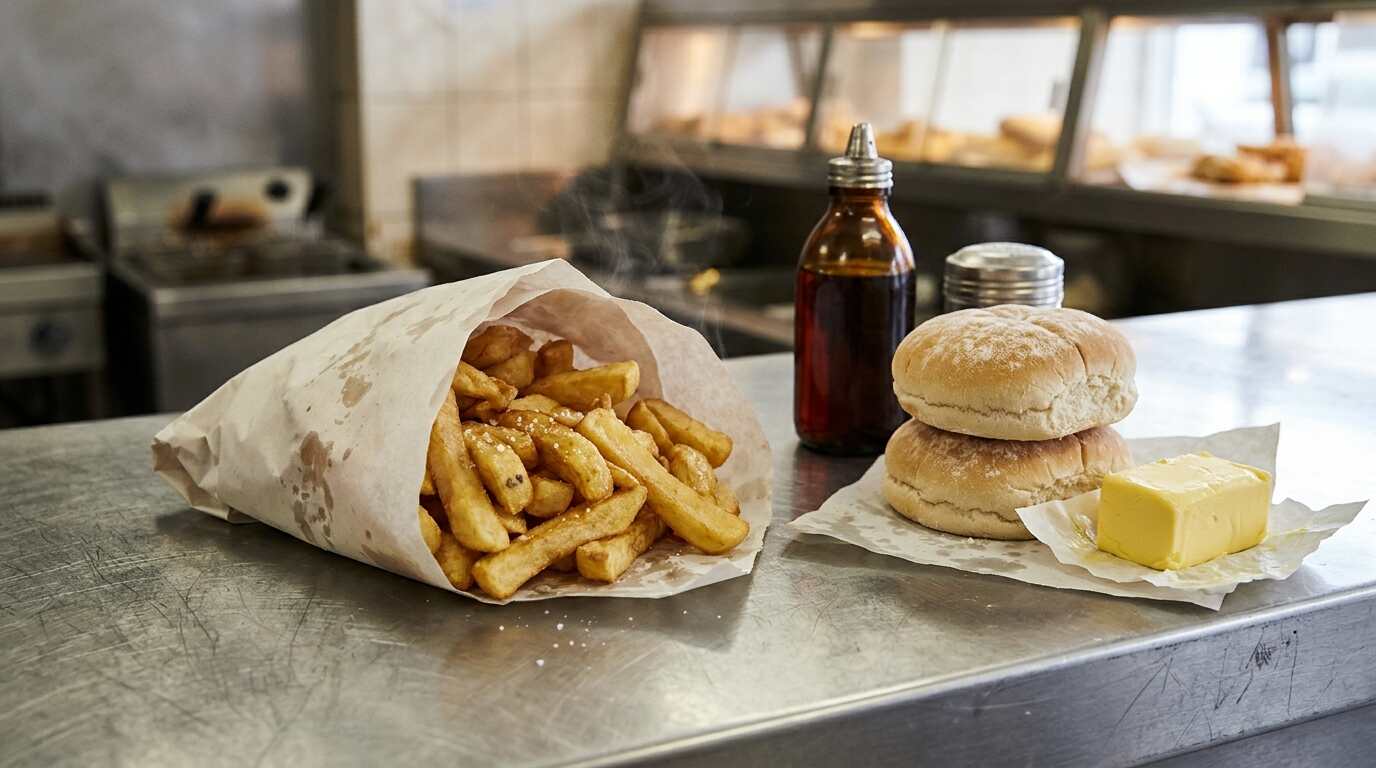
The chip butty is assembled with little ceremony, and descriptions agree on most of it. The Takeout recommends soft, untoasted white bread, butter on both slices, crisp-outside, soft-inside chips placed on hot and pressed down so they cling. Malt vinegar, ketchup or brown sauce are the usual additions. Pre-cut loaves made that sort of bread cheap and uniform, and the story of how they arrived appears in the post on the invention of sliced bread. A different British hot sandwich built on the same bread appears in the post on the cheese toastie.
Salt and the shop matter to the people who sell it. John Molnar of The Cod’s Scallops in Nottingham, named best chippy at the National Fish and Chip Awards 2020, recalls his mother buying an uncut loaf and a large bag of chips for tea. He is firm on table salt over Cornish.
Chef Paul Ainsworth, who has a Michelin star and a restaurant in Padstow, Cornwall, turned the sandwich upmarket. Vice describes his version as triple-cooked chips on toasted sourdough with eggy mayonnaise and aged Parmesan, priced at £8.95. Nunn doubts the butty will ever be “properly boujie-fied.”
Chants, headlines and Burger King
The chip butty carries a regional identity that a menu cannot supply. Sheffield United supporters have sung “The Greasy Chip Butty Song” since the mid-1980s, according to Goal, to the melody of John Denver’s “Annie’s Song.” The chant celebrates working-class life in Sheffield with irony. Rotherham fans say it began at their old ground, Millmoor, and Burton Albion, Grimsby Town and St Helens rugby league have also taken it up.
Earle reads the sandwich as a statement about national identity, and Vice quotes her saying that holding an opinion about the chip butty is itself an act of Britishness. In early 2020 Burger King announced a Chip Burger, a patty-less sandwich with fries, mayo and ketchup between two buns, and an online chorus replied that it was a chip butty. An American user accused the company of cultural misappropriation, and a Birmingham-born user wrote “It’s a chip butty ffs.”
Ireland has a place in the sandwich’s reputation as well. U2 singer Bono named the chip butty as his favorite sandwich on Stephen Colbert’s Late Show and said he grew up eating them, as The Takeout reports. The same article calls the Lancashire 1863 account the generally accepted one while noting competing claims.
Sources:
- Vice, “A Brief History of the Humble Chip Butty” (Sam Hancock, 12 March 2020): https://www.vice.com/en/article/a-brief-history-of-the-humble-chip-butty
- Historic UK, “The History of Fish and Chips”: https://www.historic-uk.com/CultureUK/Fish-Chips/
- Traveller (traveller.com.au), “In praise of Britain’s (greatest?) culinary invention: The chip butty”: https://www.traveller.com.au/traveller/inspiration/in-praise-of-britain-s-greatest-culinary-invention-the-chip-butty-20240123-p5ezhg.html
- Etymonline, “butty”: https://www.etymonline.com/word/butty
- Word Histories, “butty: meanings and origin”: https://wordhistories.net/2021/07/15/butty/
- Merriam-Webster, “butty”: https://www.merriam-webster.com/dictionary/butty
- Grimsby Telegraph, chip butty, roll, cob or bap: https://www.grimsbytelegraph.co.uk/whats-on/food-drink/chip-butty-roll-cob-bap-4482940
- Mashed, English bacon sandwich bread names: https://www.mashed.com/1562073/what-is-english-bacon-sandwich-bread-called
- The Takeout, Bono’s favorite sandwich: https://www.thetakeout.com/1863163/bono-favorite-sandwich-chip-butty/
- British Sandwich and Food to Go Association, perfect bacon butty formula: https://www.sandwich.org.uk/index.php/news-features/78-revealed-the-formula-to-a-perfect-bacon-butty
- Culture Trip, how Britain makes bacon sandwiches: https://theculturetrip.com/europe/united-kingdom/articles/revealed-this-is-how-britain-makes-bacon-sandwiches
- Goal, “Greasy Chip Butty” lyrics and background: https://www.goal.com/en/news/greasy-chip-butty-full-lyrics-to-sheffield-uniteds-famous/5rrqdu8ofxnm13uz83s9q7uxx
- VICE TV (YouTube), “Behold… The English ‘Chip Butty'”: https://www.youtube.com/watch?v=yGRt3mLFrjg