In this story
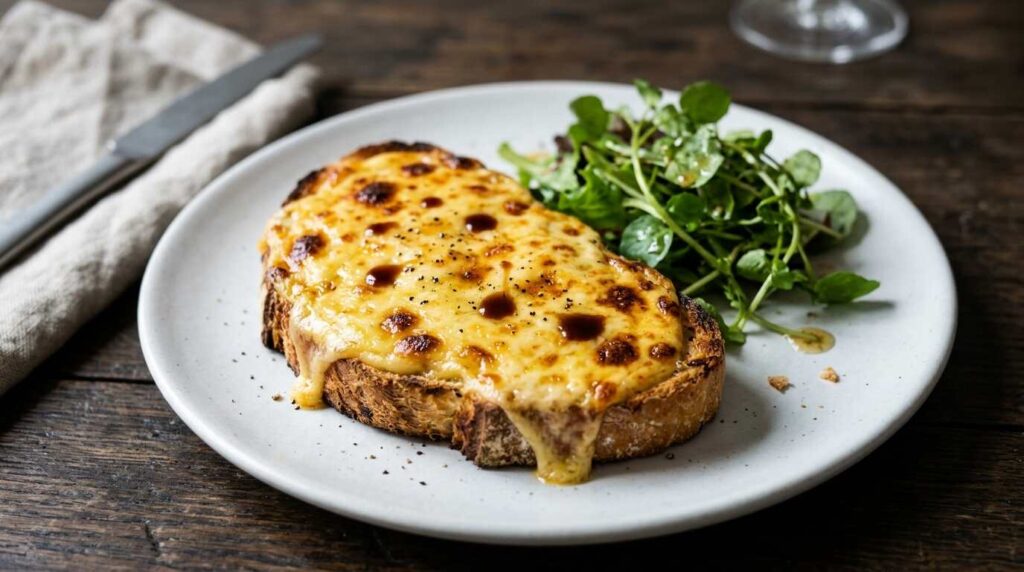
Welsh rarebit is a hot cheese mixture poured or spread over toast, and it contains no rabbit. Merriam-Webster defines the older spelling, Welsh rabbit, as “melted often seasoned cheese poured over toast or crackers,” and dates its first known use to 1725. The sources that follow agree on that much and on little else: the reason for the name, the order in which “rabbit” and “rarebit” appeared, and whether the dish has any real claim to being Welsh are all open questions.
Video: Why is cheese on toast called Welsh Rabbit / Rarebit? — from the Cheese History YouTube channel
Earliest Written Records
Joke books and a journal entry stand before the first recipe
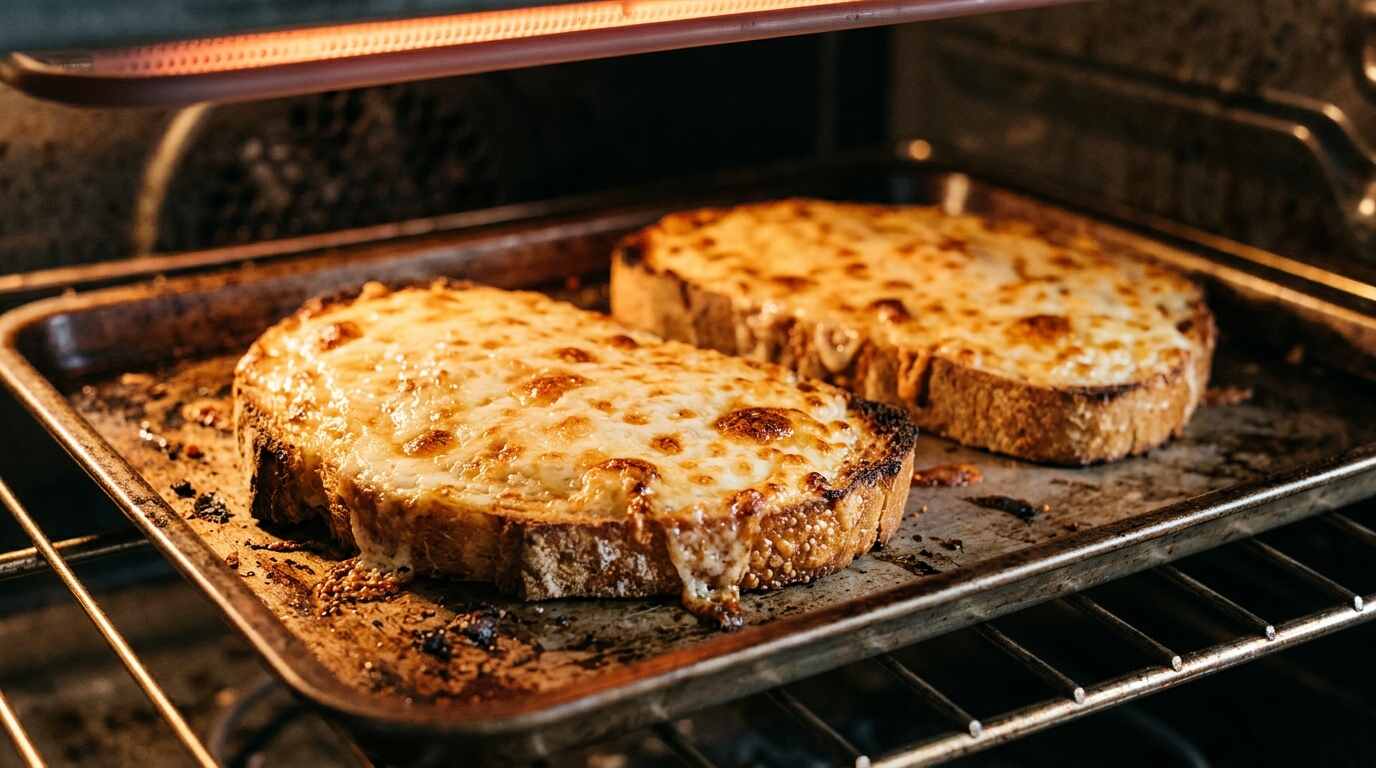
The earliest record of the exact phrase is a private one. According to the Interesting Literature account of the Oxford English Dictionary entry, John Byrom’s journal for 4 April 1725 mentions “Welsh rabbit and stewed cheese.” The Word Histories site, citing the 1854 edition of the journal, adds entries from 6 April and 15 May of the same year. Merriam-Webster independently dates the phrase to 1725.
Toasted cheese associated with the Welsh predates the name. Wikipedia, used here only as a pointer to its cited texts, reports a joke book of about 1526, A C Merie Talys, in which St Peter calls “Cause bobe” to lure the Welshmen out of heaven, the Welsh caws pobi, baked cheese. It also cites Andrew Boorde’s 1542 The Fyrst Boke of the Introduction of Knowledge, which contains the line “I am a Welshman, I do love cause boby, good roasted cheese.” Neither text uses the word “rabbit.”
The first cookery book entry that the fetched sources agree on comes from Hannah Glasse. Her The Art of Cookery, made Plain and Easy gives recipes for Scotch, Welsh and English rabbit; Word Histories places this in the second edition of 1747, and Interesting Literature in 1747 as well, with the Scotch version the first recorded of its kind. In Glasse’s Welsh version, as Word Histories summarizes it, bread and cheese are toasted, the cheese is browned with a hot iron, and mustard is optional. Wikipedia describes the Scotch rabbit as buttered toast with toasted cheese on top, and the English rabbit as bread soaked in red wine, topped with thick cheese and browned in an oven.
Dictionaries of slang followed. Word Histories quotes Francis Grose’s A Classical Dictionary of the Vulgar Tongue, in its 1788 second edition, defining “Welch Rabbit” as bread and cheese toasted. Wikipedia places an earlier Grose entry in 1785, defining it as a “Welch rare bit.” Poe used the dish in his 1845 story Some Words with a Mummy, treating it as something to eat with stout, per Word Histories.
Rabbit or Rarebit
The printed record puts “rabbit” first and “rarebit” about half a century later
The printed record favors “rabbit” as the older form. Interesting Literature gives 1781 as the first appearance of “Welsh rarebit” in the OED, near the end of the eighteenth century, and Snopes agrees on 1725 for “rabbit” and 1781 for “rarebit.” The CulinaryLore article hedges on the later date, giving it as “perhaps 1785 or thereabouts.”
What the record cannot supply is the reason. Several explanations compete.
The first is a joke on the Welsh. Snopes describes the most common theory as an English jibe that the Welsh were too poor to afford rabbit, or too unsophisticated to notice the substitution. Word Histories offers a related reading of the “Welsh” element as a word the English used for inferior or substitute goods, pointing to Grose’s “Welch Comb,” meaning the thumb and four fingers, and “Welch Fiddle,” meaning the itch.
The second is a pattern of mock-grand names for cheap food. Word Histories lists “German duck” for a sheep’s head, “poor man’s goose” for liver and potatoes, “weavers’ beef” for sprats, and fish called “capon.” CulinaryLore lists “German-Duck,” “Cobbler’s-Lobster,” “Norfolk-Capon” and “Billingsgate-Pheasant.” An 1849 book, Henry Wharton Griffith’s A Lift for the Lazy, argued that foods were often named for places where they were favorites, comparing Welsh rabbit with “Albany beef” for sturgeon. CulinaryLore quotes it: “Welsh Rabbit is not, as many persons suppose, a corruption of Welsh rare-bit.”
The third is that “rarebit” is a deliberate refinement. The same sources note that “rare bit” could be an attempt to make the dish sound better, or, as Interesting Literature suggests, a tongue-in-cheek jab at those who treated cheese on toast as a gourmet dish. Linguists in Wikipedia’s account lean toward “rarebit” as a corruption of “rabbit,” and the article lists critics of the newer spelling from 1892 to 1926. H. W. Fowler’s verdict in 1926, as reported there, was: “Welsh Rabbit is amusing and right. Welsh Rarebit is stupid and wrong.”
Snopes ends in the same place as the rest: no one knows the origin with certainty, and no particular evidence links cheese on toast to Welsh cooking. The etymology is unresolved.
The Sauce and the Toast
Cheese, a fat, a thickener, and a liquid, then a grill
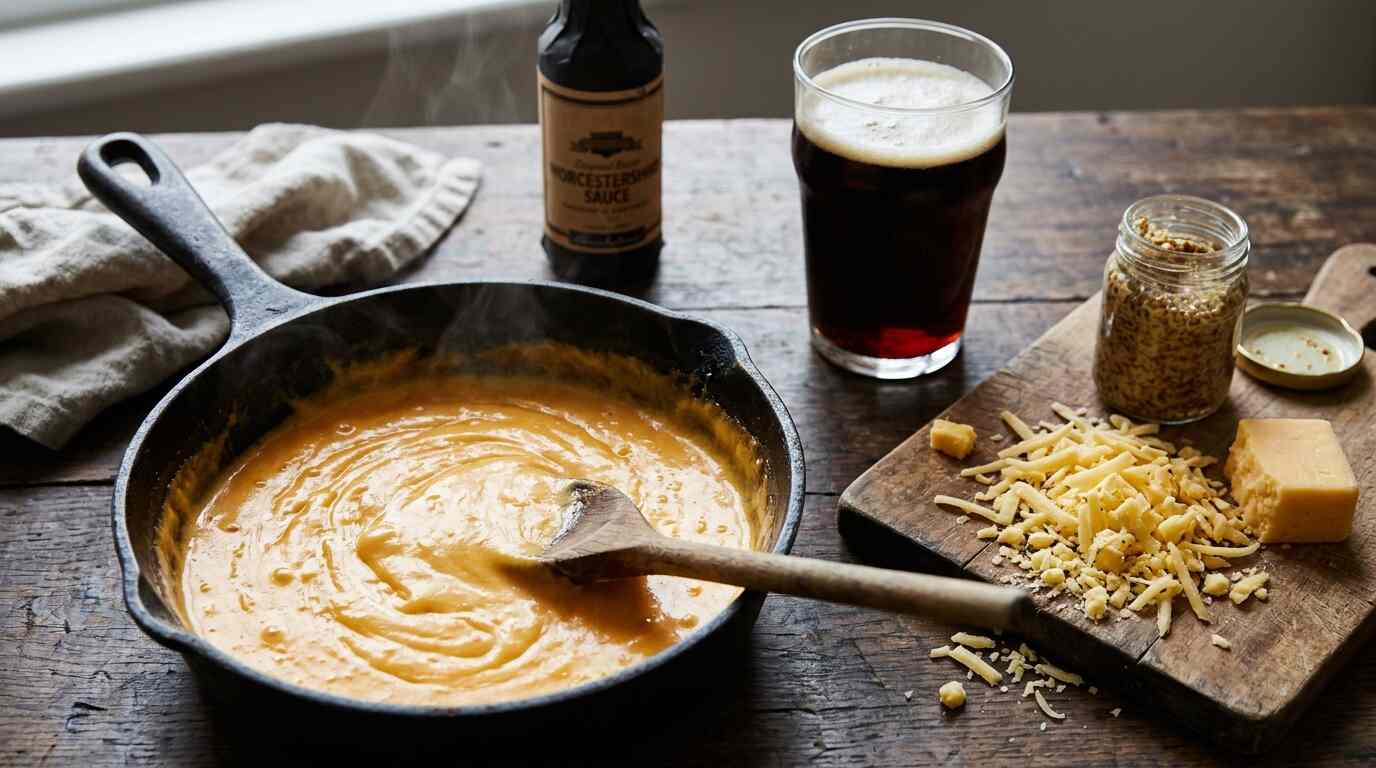
The plainest definition is cheese melted onto bread. Modern recipes build a sauce first. The Visit Wales recipe for four combines 225 g of mature Welsh cheddar with 25 g of melted butter, a tablespoon of plain flour, a tablespoon of mustard, a tablespoon of Worcestershire sauce, black pepper and four tablespoons of Welsh beer, with a spoonful of laverbread, on four thick slices of bread. The page calls the dish an “18th century creation.”
A second Welsh recipe, published on Wales.com, uses 300 g of cheese, ideally a half-and-half mix of Caerphilly and cheddar, with 15 g of butter, two teaspoons of flour, a teaspoon of English mustard powder, a quarter teaspoon of cayenne, a good glug of Worcestershire sauce and 150 ml of Welsh beer. The mixture is cooked, cooled, spread on toasted bread and grilled until it bubbles. That page describes the dish as originally a simple piece of cheese on warm bread, later refined with mustard and ale, and names stout or bitter as suitable beers.
The Cheese Professor, an American cheese site, gives a variant for two built on six ounces of sharp white cheddar, a cup of beer, a quarter cup of milk, a teaspoon of Dijon mustard and two teaspoons of Worcestershire sauce, and calls the dish an open-faced fondue sandwich. It notes that fondue leans toward Alpine cheese and white wine, while rarebit uses cheddar and beer.
Across the three, the common components are a mature cheese, a roux of butter and flour, beer or ale, mustard and Worcestershire sauce. Glasse’s 1747 Welsh rabbit, as the sources summarize it, calls only for toasted bread, cheese and optional mustard, which suggests that the ale and Worcestershire arrived later, though the fetched sources do not date either addition. Wikipedia also lists wine, cayenne and paprika as additions, and Wales.com notes that some recipes use champagne.
Variations Under the Same Name
An egg, a tomato, or a béchamel base
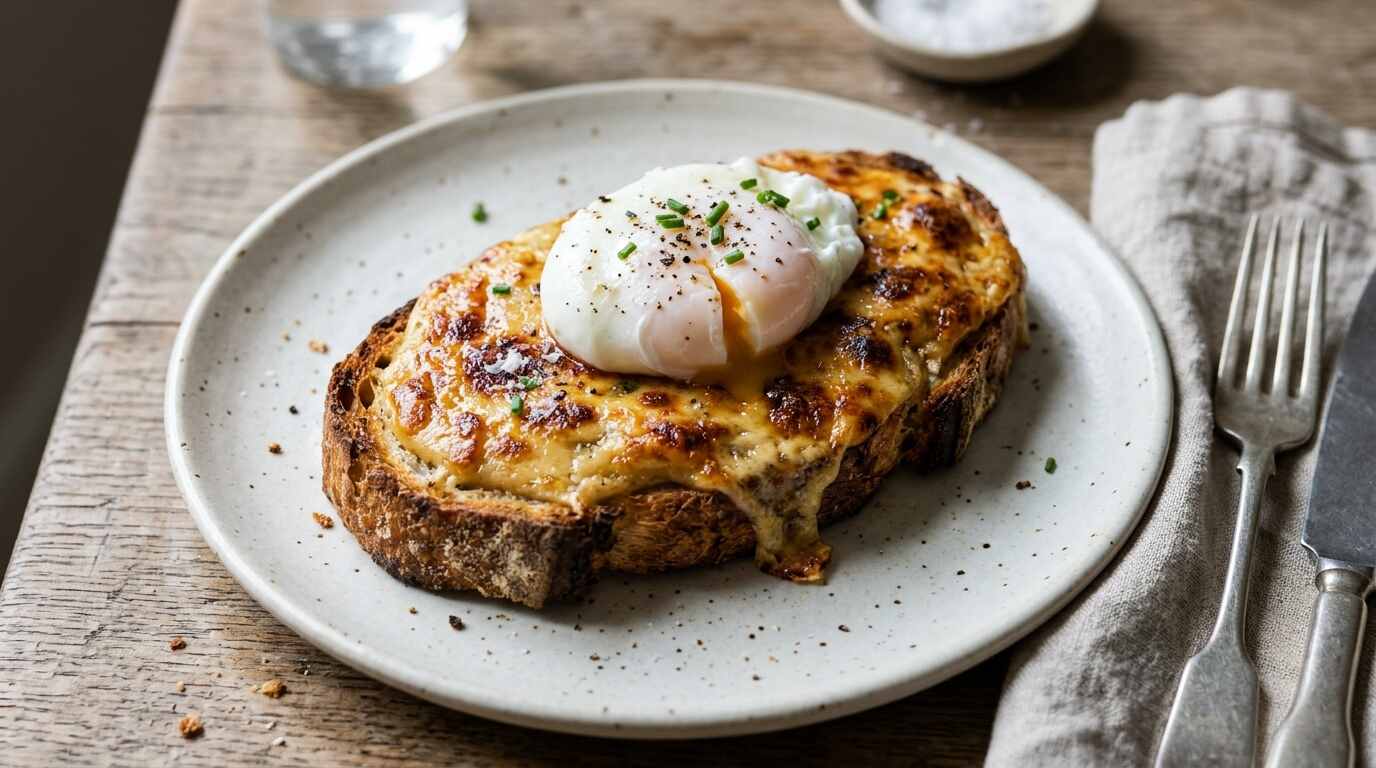
Wikipedia lists several named variants. “Buck rabbit,” or golden buck, adds an egg on top, and the Cheese Professor specifies a poached egg. “Blushing bunny” is blended with tomato or tomato soup. Some sauces blend cheese and mustard into béchamel. In France, “un Welsh” is popular in the Nord-Pas-de-Calais and Côte d’Opale regions, according to Wikipedia, and the same article reports that Escoffier and Saulnier list the dish as a savoury and use “rarebit” to signal that it contains no meat.
Wikipedia also names the Hot Brown among the variations, without elaborating. The Grill Cheesy post on the hot brown covers that sandwich separately.
Rarebit and the Grilled Cheese Sandwich
A sauce on one slice against a slice of cheese between two
The structural difference is simple. A grilled cheese holds cheese between two pieces of bread and is cooked closed. Rarebit puts a prepared cheese mixture on top of a single slice of toasted bread and finishes it under a grill. The result in Merriam-Webster’s definition is cheese poured over toast, which is open-faced.
Both melt cheese against bread, and the Grill Cheesy history of the grilled cheese sandwich follows the closed version. The British equivalent of the plain open-faced slice, cheese on toast, receives separate treatment in the cheese toastie post. Interesting Literature reports that the phrase “cheese on toast” itself is first recorded in 1880, almost a century after “Welsh rarebit” in the OED. The cheese most often named for the sauce, cheddar, has a history of its own in the post on cheddar cheese history.
Whether rarebit descends from earlier toasted-cheese dishes or merely echoes them is not something the sources settle. The 1526 and 1542 texts show toasted cheese tied to the Welsh in English jokes before the phrase “Welsh rabbit” is recorded, and Wikipedia treats the “rabbit” as probably jocular. The step from those lines to a sauce spread on bread is not documented in the pages fetched here.
Sources
- Merriam-Webster, “Welsh rabbit”: https://www.merriam-webster.com/dictionary/Welsh%20rabbit
- Snopes, “What Are Welsh Rabbit and Welsh Rarebit?”: https://www.snopes.com/fact-check/welsh-rabbit-and-welsh-rarebit/
- CulinaryLore, “Welsh Rabbit versus Welsh Rarebit”: https://culinarylore.com/food-history:welsh-rabbit-versus-welsh-rarebit/
- Interesting Literature, “The Origins of the Phrase Welsh Rarebit”: https://interestingliterature.com/2026/08/welsh-rarebit-phrase-origins/amp/
- Word Histories, “The Cultural Background to Welsh Rabbit”: https://wordhistories.net/2017/12/19/welsh-rabbit-origin/
- Visit Wales, “Welsh Rarebit”: https://www.visitwales.com/en-us/welsh-rarebit
- Wales.com, “Welsh Rarebit”: https://www.wales.com/visit/food-and-drink/welsh-recipes/welsh-rarebit
- The Cheese Professor, “Everything You Need to Know About Welsh Rarebit”: https://cheeseprofessor.com/blog/welsh-rarebit
- Wikipedia, “Welsh rarebit” (used only as a pointer to its cited texts; no primary text of Boorde, Glasse or Grose was fetched): https://en.wikipedia.org/wiki/Welsh_rarebit
Keep reading
- Who Invented the Sandwich? What the Earl of Sandwich Sources Say
- Tea Sandwiches: History, Fillings and How They Are Made
- Who Invented Sliced Bread? Otto Rohwedder and the First Pre-Sliced Loaf
More in this section: Sandwich History guide.