In this story
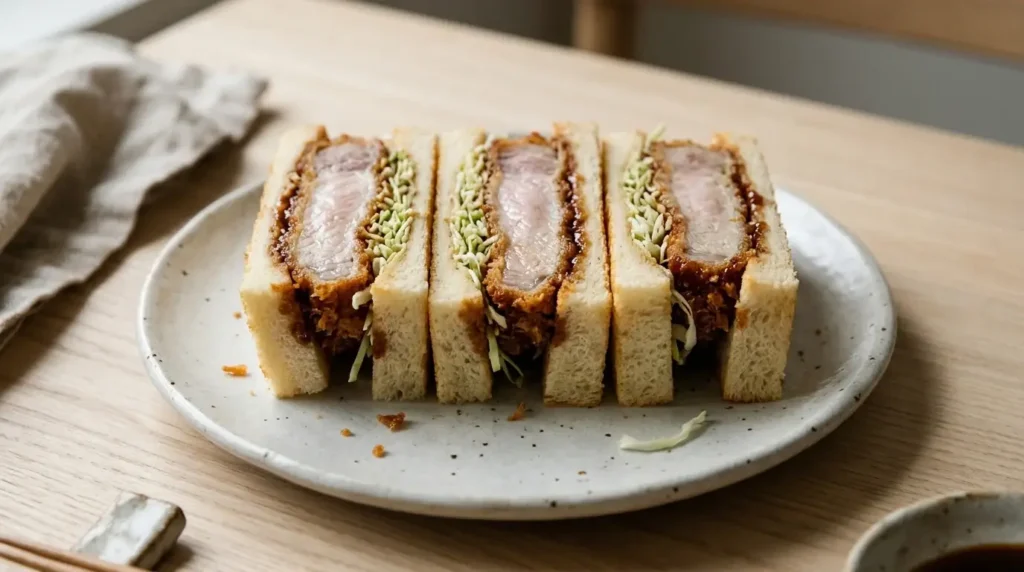
A katsu sando is a deep-fried cutlet, usually pork, pressed between slices of soft white bread. The name joins “katsu,” short for cutlet, with “sando,” the Japanese clipping of “sandwich.” Just One Cookbook places tonkatsu and chicken katsu within yoshoku, the Western-influenced strand of Japanese cooking, and the sandwich turns up in convenience stores, bakeries, department-store food halls and tonkatsu restaurants across the country.
Its history runs through two separate stories: how a breaded European cutlet became a Japanese staple in the Meiji era, and how one Tokyo restaurant is said to have put that cutlet between bread. The second story has several versions, and the sources do not agree on every detail.
Video: Katsu Sando (Japan) on Sandwiches of History, Sandwiches of History
From French cutlet to tonkatsu
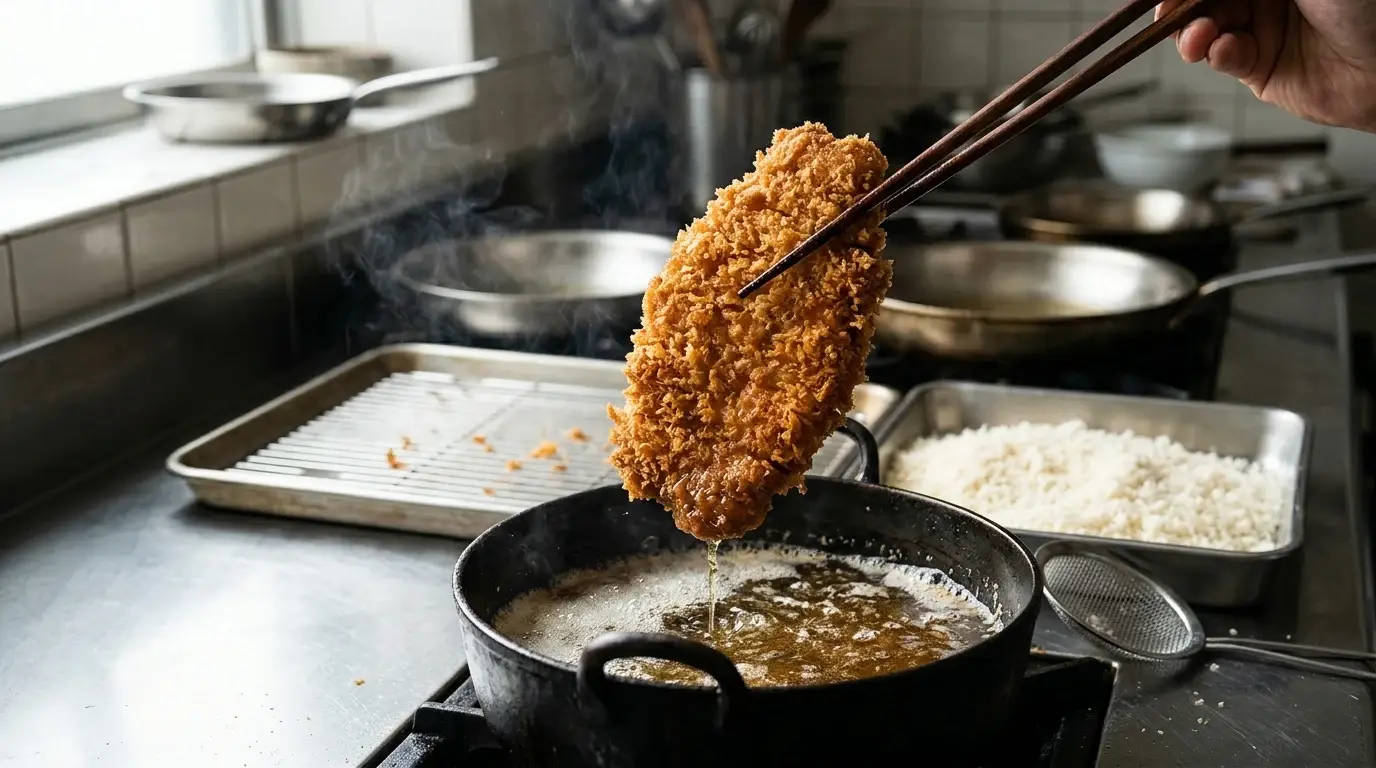
Japan’s tonkatsu is a descendant of the French côtelette de veau, a breaded veal cutlet pan-fried in butter. A Japanese government publication places the adaptation in the Meiji period (1868 to 1912), when Western dishes were being imported and reworked. Rengatei, a Ginza restaurant that opened in 1895, put a “pork cutlet” on its menu in 1899. The same source says the kitchen found pan-frying too oily, borrowed deep-frying from tempura, and swapped stale breadcrumbs for fresher, lighter panko.
Pork replaced veal because meat was expensive and out of reach for most people at the time. Later changes were just as practical: a shortage of cooks led to finely chopped cabbage replacing a more labor-intensive garnish of château carrots and potatoes, and imported Worcestershire sauces took the place of demi-glace.
Accounts differ on the model for the dish. Japan Today reports that Motojiro Kida, the restaurant’s second-generation owner, served the first tonkatsu in 1899 and that it was based on the Italian cotoletta, while the government publication points to the French veal cutlet. Wikipedia’s tonkatsu entry, used here only as a pointer to those references, records the thick-cut form as first sold in Okachimachi, Ueno, in 1929. Who gave the dish the name “tonkatsu” is less settled; a Dentsu article notes that some say Ponchiken in Okachimachi, others Rakuten in Ueno.
Yoshoku, the category behind the sandwich
Japan ended more than 200 years of isolation in 1853. According to SBS Food, Western dishes then gained acceptance as yoshoku, sitting alongside traditional washoku. Tonkatsu became one of the category’s anchors and spread into katsu curry, katsu-don and, eventually, the sandwich.
The sources attach the first sandwich to a specific shop and a specific story.
Isen and the geisha story
The most widely repeated origin points to Isen, a tonkatsu restaurant in the Ueno area of Tokyo. Isen was founded in 1930, and its slogan, per SBS Food, promises cutlets that can be cut with chopsticks. The restaurant sat in a district where geisha lived and worked, and they were regular customers.
According to Urban Life Tokyo, which draws on Isen’s third-generation owner, Ishizaka Momoko, the idea belonged to the first proprietress, Ishizaka Tokiko. While the first proprietor, Ishizaka Kazuo, was frying cutlets, she thought pork would taste good in bread, as with a ham sandwich. Isen ordered a smaller-than-usual bread for the purpose. Geisha were the reason: the small size let them snack between engagements without smudging lipstick, and the shop still uses it, so the sandwich can be eaten without opening the mouth wide. SBS Food repeats the lipstick detail, saying the smaller crustless bread let geisha eat the sandwich “without messing up their lipstick”.
What the sources dispute
The date is the first gap. Urban Life Tokyo puts the sandwich in the early 1930s, near the founding. Wikipedia gives 1935 and credits “Toki Ishizaka,” but its own page tags that claim as speculation. RecipeTin Japan and Sudachi also say 1935, five years after the opening. SBS Food says only that the sandwich dates to the 1930s, and a travel article on Isen’s main shop states plainly that no date for the sandwich’s invention is given and that the 1930 founding should not be read as one.
The motive varies as well. Urban Life Tokyo and Wikipedia cite the ham sandwich. SBS Food, referring to Isen’s own website, says the proprietress ate toast and tea instead of rice and miso one morning and thought of cutlet between bread, the way sushi is rolled. A newsletter on notable sandwiches, also citing the restaurant’s site, says she wanted a more filling breakfast than toast and tea. These may all be pieces of one family story, but no single account combines them.
Even the setting is described differently. Urban Life Tokyo places Isen in Yushima, Bunkyo ward, formerly the Shitaya Domicho geisha district. The Sword and the Sandwich newsletter says Shitaya, and SBS Food says Ueno. A Gendai Media article calls Isen the “said to be” birthplace, presenting the claim as tradition rather than established fact. Nothing fetched for this article names a rival restaurant for the sandwich itself.
Shokupan and the sauce
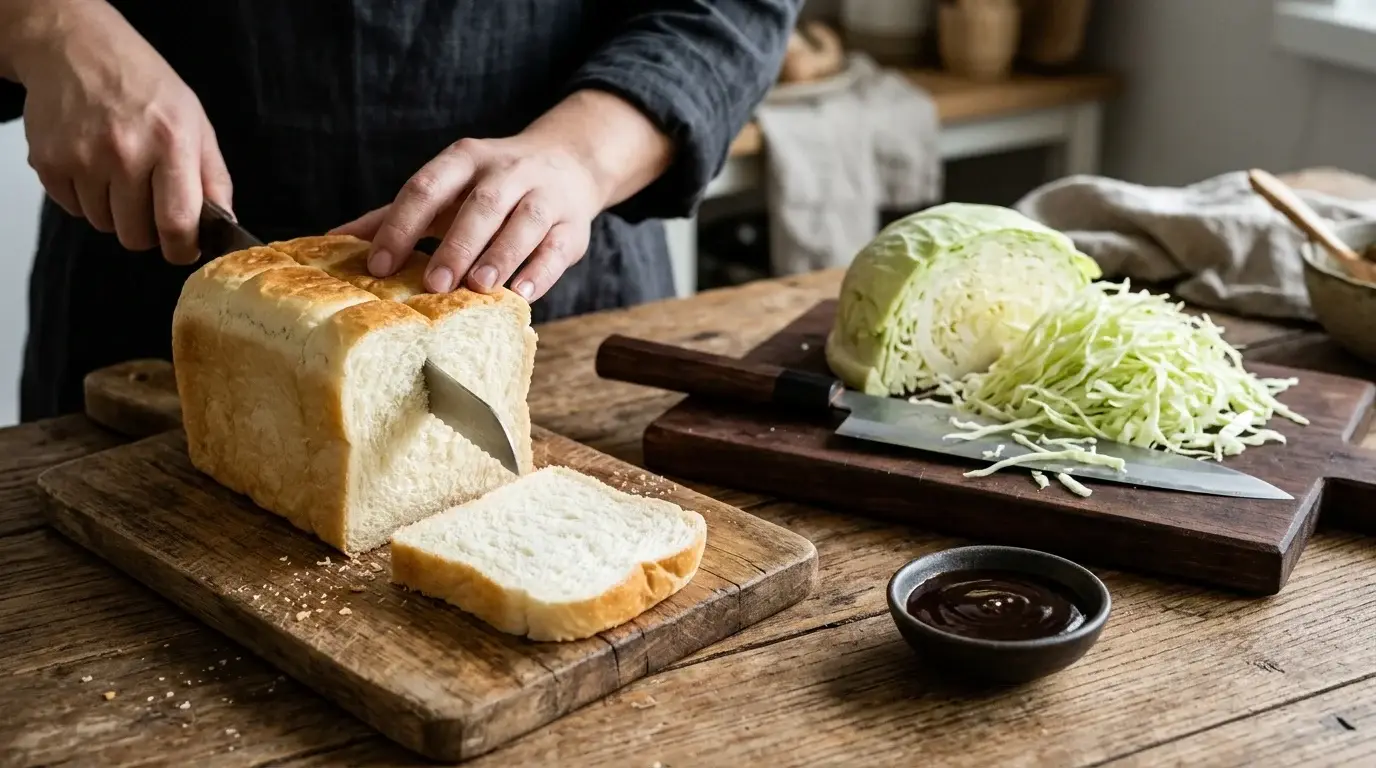
Japanese sandwiches almost always use sliced shokupan or an English-style loaf, according to Just Bento. Japanese Taste calls shokupan the most standard bread in Japan and the usual choice for sandwiches. The word comes from the Portuguese “pan,” per Tasting Table, which adds that European-style bread reached Japan in the 16th century through Dutch and Portuguese traders. How milk bread itself arose is, in that article’s words, not completely clear; it mentions the British baker Robert Clarke and his Yokohama Bakery of 1862 as a possible early version but calls this unconfirmed.
The loaf does not have to be milk bread everywhere. Wikipedia lists variations with round buns at hamburger restaurants and with koppe pan in Aomori.
Sauce is the other fixed point. SBS Food explains that tonkatsu sauce is sweet and savory and developed from English Worcestershire sauce; its chef source says a barbecue sauce is the wrong choice, and that a home version starts with Worcestershire plus ketchup and sugar. Mustard is a common partner: RecipeTin Japan uses karashi, a Japanese hot mustard, with English mustard as a substitute. Regional versions depart from the standard. Wikipedia describes Nagoya’s miso-based katsu sando and its Worcestershire-based version, and Sudachi offers a red miso sauce and a mustard-mayonnaise variation as alternatives to the usual bottled sauce.

How the sandwich is made
The recipes fetched for this article agree on the outline and differ in the details.
For the cutlet, SBS Food quotes the chef Kenny Takayama of Sydney’s Cafe Oratanek, who recommends frying slowly at a low temperature. He pulls the cutlet when it is about 90 percent cooked and lets residual heat carry it to roughly 98 percent. Just One Cookbook toasts the panko in oil first, pounds the pork loin, and bakes the breaded cutlets at 400°F (200°C) for about 20 minutes instead of frying.
For the sandwich, the steps converge:
- Butter one side of each slice. Just One Cookbook says the butter works as a moisture barrier.
- Spread karashi or Dijon on one slice and tonkatsu sauce on the cutlet or the other slice.
- Add shredded cabbage, which several recipes treat as optional.
- Press the sandwich: Just One Cookbook uses two plates for 5 minutes, RecipeTin Japan rests it about 5 minutes, and Japanese Taste wraps it tightly and refrigerates it for 30 minutes.
- Trim the crusts if wanted and cut. RecipeTin Japan cuts into three pieces and checks that the corners are right angles; Japanese Taste cuts in half down the middle and calls that the popular style.
Two Japanese shops described by Just Bento show how far the formula can bend. Maisen in Tokyo uses thickly cut black pig pork and coats the breading in its slightly sweet house sauce, which leaves the crust soft. Uchiki Pan, a Yokohama bakery founded in 1888, mixes sesame seeds into the panko so the coating stays crunchy even cold, and sauces only one side of the cutlet.
Konbini, bakeries and department stores
Just Bento writes that the sandwich is readily found in convenience stores, bakeries, supermarkets and department-store food halls. Konbini versions are sold cold, and Just Bento says katsu sando are always served cold or at room temperature. Sudachi makes the same point and adds that a hot one can only come from a home kitchen.
Time Out Tokyo notes that most convenience stores carry chicken, pork, shrimp and minced-meat versions. It picks one chain’s chicken katsu sando with cabbage and katsu sauce as a reliable choice, while cautioning that the cutlet typically loses its crunch inside the bread. Wikipedia also cites Tokyo Station’s ekiben and Haneda Airport’s soraben as places where the sandwich appears as a portable meal.
Maisen has become one of the best-known names for the sandwich. Founder Chiyoko Koide opened the restaurant in 1965, according to Stripes, and the flagship in the Omotesando area occupies a converted bathhouse. Its hire-katsu sando, made from lean pork fillet, is a signature item; Just Bento says the company sells its sandwiches and bentos at several department stores in the Tokyo area and some other large cities, and Tokyo Weekender describes small branches in department stores across Japan. Wikipedia also names Mansei in Akihabara for a loin version, the mankatsu-sando.
Katsu and winning
The word “katsu” is a homophone of the verb meaning “to win,” which is why, per SBS Food, students often eat cutlets before major exams or sporting events. Wikipedia ties the katsu sando to the same custom of eating it before an exam or competition.
Sources:
- Just One Cookbook, Katsu Sando: https://www.justonecookbook.com/katsu-sando
- Highlighting Japan (Government of Japan), The Roots of Tonkatsu: https://gov-online.go.jp/eng/publicity/book/hlj/html/201810/201810_08_en.html
- Japan Today, Rengatei: https://japantoday.com/category/features/food/rengatei-venerable-ginza-eaterie-is-birthplace-of-yoshoku-classics-like-tonkatsu-and-omuraisu
- Wikipedia, Tonkatsu (pointer): https://en.wikipedia.org/wiki/Tonkatsu
- Dentsu, article on pork cutlet sandwich development: https://dentsu-ho.com/en/articles/5589
- SBS Food, From geishas to the world: Katsu sando, then and now: https://www.sbs.com.au/food/article/from-geishas-to-the-world-katsu-sando-then-and-now/lqg6wgkvs
- Urban Life Tokyo, Katsu sando and the geisha of the hanamachi: https://urbanlife.tokyo/post/68979/
- Wikipedia, Katsu-sando (pointer): https://en.wikipedia.org/wiki/Katsu-sando
- RecipeTin Japan, Katsu Sando: https://japan.recipetineats.com/katsu-sando-pork-cutlet-sandwich/
- Sudachi, What is Katsu Sando?: https://sudachirecipes.com/?p=1548
- Magical Trip, Isen Honten: https://magical-trip.com/media/isen-honten-main-store-in-ueno-birthplace-of-katsu-sandwich-in-japan
- The Sword and the Sandwich, Notable Sandwiches #98: Katsu Sando: https://buttondown.com/theswordandthesandwich/archive/notable-sandwiches-98-katsu-sando
- Gendai Media, katsu sando article: https://gendai.media/articles/-/42273
- Just Bento, Two approaches to katsu sando, plus more Japanese sandwiches: https://justbento.com/handbook/bento-culture/two-approaches-katsu-sando-plus-more-japanese-sandwiches
- Japanese Taste, How To Make Katsu Sando: https://japanesetaste.com/blogs/japanese-taste-recipes/how-to-make-katsu-sando-pork-cutlet-sandwich-at-home
- Tasting Table, The History of Japanese-Style Milk Bread: https://www.tastingtable.com/1541144/what-is-japanese-milk-bread/
- Time Out Tokyo, Konbini sandwiches: https://www.timeout.com/tokyo/restaurants/the-konbini-connoisseurs-guide-to-sandwiches
- Stripes, Popular tonkatsu chain Maisen: https://www.stripes.com/news/2018-12-13/popular-tonkatsu-chain-maisen-serves-up-a-japanese-classic-in-a-family-friendly-environment-1512146.html1
- Tokyo Weekender, Maisen: https://www.tokyoweekender.com/the-concierge/maisen/
- YouTube, Katsu Sando (Japan) on Sandwiches of History: https://www.youtube.com/watch?v=kDb7cRn67cw