In this story
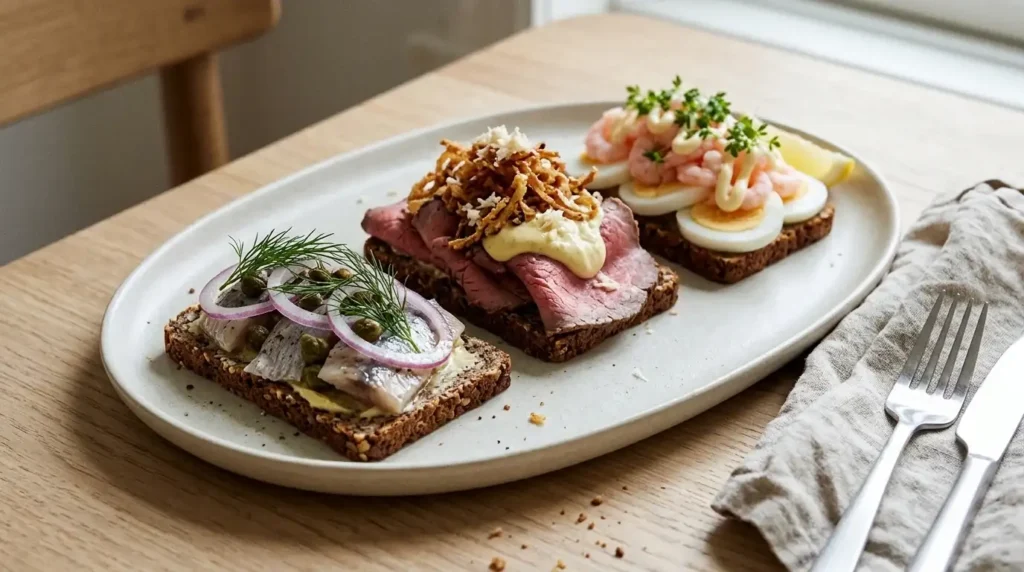
Smørrebrød is Denmark’s open-faced sandwich: a thin slice of buttered bread, most often dense dark rye, covered with herring, liver pâté, roast beef, egg, shrimp or any of several hundred other combinations. The name translates roughly as “butter and bread”, and the dish sits at the opposite end of the sandwich spectrum from a stacked, closed construction such as the club sandwich. The bread is the base of a small composed plate rather than a wrapper around a filling.
The tradition is older than its restaurants and younger than its legends. Sources disagree on where the idea began, who first put it on a menu and how strictly it must be eaten, and those disagreements are part of what keeps the dish interesting.
Video: How To Cook Danish Classics: Smørrebrød (Open Face Sandwich), simonjul
The bread under the toppings
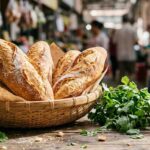
The standard base is rugbrød, a dense, dark, sourdough rye that is sold sliced in shades from light to nearly black. Saveur describes the traditional version as fermented, with a malty, faintly sweet flavor and a sour tang, which is why it holds up under wet toppings that would flatten a softer loaf.
Cut thin, usually about the size of a playing card according to Chowhound, each slice is a single portion of a larger meal, not a sandwich to be finished alone. A diner expects to eat several.
Butter, lard and the soggy-bread problem
Before anything else goes on, the slice is covered to its edges with butter, goose fat or another rich spread. Saveur gives the practical reason: the layer keeps juices from soaking into the bread. Chef and cookbook author Trine Hahnemann spreads salted butter evenly to the edges but makes exceptions when a topping would soak the bread or when the salt is meant to balance a sweet one, such as shrimp or fig spread.
Rye is not universal. Shrimp and some salmon go on white bread, cheese versions are usually made on white bread, and a few classics such as stjerneskud are built on white bread. Red meat, by contrast, always goes on rye, as do herring, mackerel and eel.

Where the open sandwich came from
The oldest claim reaches back to the Middle Ages, when thick slices of stale bread called trenchers served as plates. Chowhound ties smørrebrød to that practice, and Hahnemann likewise says the Danish lunch tradition goes back at least that far. Saveur takes a different position, calling the dish a comparatively recent invention even though bread-eating cultures have long served food on bread. Routes North dates the invention to the late 19th century.
Most accounts agree on the 19th-century mechanism. Leftovers from the previous evening went onto bread for a midday meal, and when industrialization moved workers into factories, the open sandwich became a packed lunch. Hahnemann adds that small markets began selling fresh fish and meat in that century and local factories began producing pålæg, the general Danish word for sandwich toppings.
From farm lunch to restaurant plate
By the end of the 1800s, families were making smørrebrød at home and dedicated restaurants had opened across Denmark. Hahnemann places the arrival of the elaborate, many-layered style around 1880, along with a school designed for women whose graduates could call themselves smørrebrødsjomfru. She also reports that Hans Christian Andersen ate smørrebrød before visiting bourgeois families, whose suppers often disappointed him, and that shops selling it around the turn of the century made it arguably Denmark’s first take-away food.
The firsts are contested. Culture Trip credits the owners of a place called DIVAN 2 as the first to put it on a restaurant menu, while Routes North says Nimb in Copenhagen is said to have been first. Culture Trip cites no sources for either claim. The better-documented date is 1888, when Oskar and Petra Davidsen opened a Copenhagen restaurant serving more than 170 varieties, with menus reportedly about four feet long. Their descendants still run a restaurant under the family name, and Saveur quotes Ida Davidsen, a fourth-generation restaurateur, comparing smørrebrød to pasta and crêpes: all are ways of using what is left over.
Classic toppings
Hundreds of combinations exist, but a short list recurs in nearly every source.
| Topping | What the sources describe |
|---|---|
| Pickled herring | The traditional opener, often with raw onion, capers and dill |
| Liver pâté (leverpostej) | Served warm and rough-chopped with bacon and sautéed mushrooms, or cold as the base of dyrlægens natmad |
| Roast beef | Roast beef with remoulade, horseradish and fried onions |
| Egg and shrimp | Egg and prawns with mayonnaise and cress |
| Stjerneskud | Steamed and fried plaice on buttered white bread, topped with shrimp, caviar and lemon |
| Sol over Gudhjem | Smoked herring, chives, radish and a raw egg yolk on rye |
The veterinarian’s midnight snack
Dyrlægens natmad is, per Wikipedia’s description, liver pâté on dark rye, topped with salted beef and a slice of meat aspic and garnished with onion rings and cress. The story behind the name is shaky. Routes North says it was named after a Copenhagen vet, and SBS passes along a rumor that the vet was one of King Christian IV’s, presenting it explicitly as rumor.
Saveur calls roast beef and liver pâté classics of the past and notes that Danes commonly reach for small shrimp, boiled eggs and pickled or fermented herring. One Copenhagen restaurant it mentions offers eight herring options alone.
How it fits into a Danish lunch
Smørrebrød is traditionally a lunch food, packed or served on a plate. Heavily loaded versions, called højtbelagt, can stand in as a main course at an informal dinner party, and natmad, “night food,” is the late snack served before guests leave. Easter tables favor eggs, prawns and herring; Christmas favors roast pork with red cabbage, according to the same guide.
Beer, snaps and shared platters
At restaurants and on festive occasions, the sandwiches traditionally come with beer and Danish snaps. At a celebration lunch, pickled herring is served with a small glass of aquavit. Saveur adds that the dish was originally casual pub fare.
At home, the bread is often passed around the table and then each dish of toppings follows, with everyone helping themselves. Karin Monk of the Danish Club in Melbourne describes hosts who set out all the ingredients so guests assemble their own. In restaurants, diners usually mark their choices on a paper slip.
Casual home eating has its own vocabulary. Hahnemann distinguishes madder, open-faced sandwiches eaten at home, from sammenklapsmad, two slices with filling between them. The closed version is also called klapsammen, common in homes.

Order of eating and table etiquette
Every source that addresses etiquette agrees on two points. The sandwich is eaten with a knife and fork, not by hand, and the sequence runs from light to heavy. Saveur’s version: pickled or smoked herring first, then other seafood, then meat, and finally cheese. SBS gives the same order and lists cured salmon, mackerel and trout under the fish course, with meatballs and liver paste under meat.
Chowhound adds that breaking the sequence is considered a social faux pas. Monk says Denmark has many rules for doing smørrebrød correctly and calls the tradition strict but flexible.
Pairing rules
Hahnemann lists a set of unwritten conventions: herring and meat are not combined, salmon does not take remoulade or mayonnaise, and roasted onion stays off smoked fish. Boiled potato with shrimp is an accepted exception. She also writes that creativity is welcome, since “there’s no reward for being boring”.
Portion size is practical. Two to three pieces is a typical serving, and for more variety the bread can be cut in half before topping so that each piece is smaller.

Decline, revival and current standing
Smørrebrød has not held a straight line of popularity. Hahnemann reports that interest fell in the late 20th century because industrial toppings and bread lowered quality and fast food competed. Culture Trip dates a revival to 2006, crediting chef Adam Aamann, though that account is unsourced. Hahnemann describes the recovery as a turn toward simple, modern versions on good home-baked rye, with every topping meant to be eaten rather than used as decoration.
Aamann, quoted by Saveur, draws a firm line around what counts: a dessert version is not really smørrebrød. Fruit still appears in savory builds, such as rhubarb sauces and pork belly braised in cherries.
A national dish, or nearly
Scandinavia Standard says smørrebrød was a contender for Denmark’s national dish, but fried pork with parsley sauce won. Monk calls it the most quintessential Danish food, while noting that younger Danes may see it as old-fashioned even though most grew up eating it. Avocado, cherry tomatoes and cucumber now appear on the slice, and vegetarian versions exist, such as sliced boiled potato with mayonnaise and fried shallots.
Restaurant prices vary widely. Routes North lists individual pieces at about 58 to over 100 Danish kroner, and set menus of three pieces at roughly 145 to 260 kroner, depending on the restaurant.
Sources:
- Smørrebrød, Wikipedia (used as a pointer for named toppings and bread terms): https://en.wikipedia.org/wiki/Sm%C3%B8rrebr%C3%B8d
- How to Make Smørrebrød, Denmark’s Contribution to the World’s Great Sandwiches, Saveur: https://www.saveur.com/how-to-make-smorrebrod
- The Origin Story Of Denmark’s Iconic Open-Faced Sandwiches, Chowhound: https://www.chowhound.com/1674669/origin-open-faced-sandwich-denmark
- How a Farmer’s Open Faced-Sandwich Became a National Danish Dish, Culture Trip: https://theculturetrip.com/europe/denmark/articles/how-a-farmers-open-faced-sandwich-became-a-national-danish-dish
- Smørrebrød: The choose-your-own-adventure sandwich, SBS Food: https://www.sbs.com.au/food/article/2020/09/03/smorrebrod-choose-your-own-adventure-sandwich
- Smørrebrød – The Danish lunch, Trine Hahnemann: https://trinehahnemann.substack.com/p/smrrebrd-the-danish-lunch
- Danish smørrebrød: the ultimate guide, Routes North: https://routesnorth.com/eating-drinking/danish-smorrebrod-the-ultimate-guide
- Getting to know smørrebrød, Scandinavia Standard: https://www.scandinaviastandard.com/getting-to-know-smorrebrod-the-ultimate-guide-to-danish-open-faced-sandwiches/
- How To Cook Danish Classics: Smørrebrød (Open Face Sandwich), YouTube: https://www.youtube.com/watch?v=shO1X8QEjrA