


In this story
Nobody can prove who invented the hamburger, and that has not stopped five towns from trying. Seymour, Wisconsin, says a teenager flattened a meatball at its 1885 fair. Hamburg, New York, says two brothers from Ohio ran out of sausage at its fair the same year. Athens, Texas, credits a potter who sold patties on homemade bread in the 1880s. Oklahoma points to a Fourth of July in 1891. New Haven, Connecticut, holds a Library of Congress recognition for a lunch wagon that put ground beef between toast in 1900. In 2007 the Wisconsin and Texas legislatures each passed resolutions naming their own town the original home of the hamburger, which settled nothing.
Video: How The World's First Burger Was Made At Louis' Lunch, from the Insider Food YouTube channel
The Hamburg steak came first
A minced-beef plate dish reached American menus before the sandwich did
Before anyone put it in bread, there was the Hamburg steak, a patty of minced beef and onion served on a plate. Writing for The Washington Post, food writer Erik Ofgang reported that hamburger steak began appearing on American menus in the early 1870s. A famous menu said to show Delmonico’s in New York selling Hamburg steak in 1834 is a fake. Smithsonian magazine notes that scholars Jack Prost and Ellen Steinberg found very little about that menu adds up, from the restaurant’s address to the typeface.
Early Hamburg steak was not necessarily ground. Smithsonian’s tests of 19th-century recipes, including Mrs. Lincoln’s Boston Cook Book of 1884, found instructions to pound round steak with onions rather than grind it. What changed the dish was hardware. The magazine points to cheap meat grinders like the 1897 Universal Food Chopper, sold through catalogs, and notes that most hamburger origin claims date from 1885 to 1904, often at fairs where a sandwich eaten by hand made sense.
That timing frames every claim below. Ground beef in bread was an obvious idea once grinding was easy, and the evidence suggests several people had it.
Seymour, Wisconsin, 1885
Hamburger Charlie and a flattened meatball at the county fair
Seymour’s story belongs to Charlie Nagreen, who was 15 when he sold food at the town’s fair in 1885. The Home of the Hamburger organization says he smashed the meat between two pieces of bread so fairgoers could carry it while they walked, and called it a hamburger. It says early newspaper articles, interviews with contemporaries and Nagreen’s daughter all support the date. Nagreen kept coming back to the fair for decades and became the town’s most famous resident.
The state backed him. Wisconsin’s 2007 Assembly Joint Resolution 12 states that Nagreen began calling ground beef patties in a bun “hamburgers” in 1885 and declares Seymour the Original Home of the Hamburger. The town holds an annual Burger Fest, which began in 1989, and it has a statue of Nagreen and a Hamburger Hall of Fame.
Hamburg, New York, 1885
The Menches brothers and the name on the fair sign
The Erie County Fair, held in the Buffalo suburb of Hamburg, tells a parallel story set at the same moment. According to the fair, Frank and Charles Menches of Ohio were food vendors at the 1885 fair, which ran September 16 to 18. The family’s version, repeated by Akron’s National Hamburger Festival, is that the brothers ran out of sausage, bought ground beef from a local butcher instead and named the sandwich after the town.
The fair argues that its story is the only one that explains the word itself. It has also designated September 18 as National Birth of the Burger Day. Author Chris Carosa, whose book Hamburger Dreams backs the Menches account, told NPR that Frank looked up at the sign and called it a Hamburg sandwich.
There is a wrinkle. Frank Menches’s obituary in The New York Times placed the events at the 1892 Summit County Fair in Akron instead, a discrepancy collected in Wikipedia’s hamburger history entry, which GrillCheesy uses here only as a pointer because the obituary itself could not be fetched.

Athens, Texas, and Tulsa, Oklahoma
A potter’s lunch counter and a backyard bun
Texas credits Fletcher Davis, known as Uncle Fletch or Old Dave. Texas Co-op Power reports that historian Frank X. Tolbert’s research had Davis selling fried ground beef patties on homemade bread with pickles, onions and mustard at a café on the Athens courthouse square in the late 1880s, then taking the sandwich to the 1904 St. Louis World’s Fair. The Texas Legislature’s House Concurrent Resolution 15 of 2007 formally designates Athens as the Original Home of the Hamburger.
The Texas evidence has been challenged. The same Texas Co-op Power article reports that a 1904 New-York Tribune story said to describe the sandwich at the fair has never been located, and that it reportedly did not name Davis. Etymologist Barry Popik, who lived in Texas at the time, told legislators he found no record of anyone selling hamburgers at the fair, and he got no response.
Oklahoma’s claim rests on Oscar Weber Bilby. Fox News reports that Bilby is said to have served the first hamburger, bun and all, in 1891 at a Fourth of July gathering just west of what is now Tulsa. The bun is the point of the Bilby story. Texas Co-op Power sums up the Oklahoma position: without a bun, the food is a steak sandwich or a patty melt rather than a hamburger.
New Haven, Connecticut, 1900
Louis’ Lunch, toast instead of a bun and the Library of Congress
The most decorated claim belongs to Louis’ Lunch. Connecticut History writes that Louis Lassen created the first hamburger in 1900 when a customer asked for something “quick and delicious” and Lassen broiled ground beef from his steak trimmings and put it between toasted bread. Lassen’s business started as a lunch wagon in 1895.
The restaurant still serves the burger on white toast, cut diagonally. It survived urban renewal in 1974, when residents protested a planned eviction and the building was moved to its current site on Crown Street. In 2000, U.S. Representative Rosa DeLauro nominated the restaurant for the Library of Congress’s Local Legacies project, and the restaurant’s own site quotes the Library as recognizing it as the birthplace of the hamburger sandwich.
Two objections follow it around. The first is definitional: to people who insist on a bun, a patty on toast is a steak sandwich. The second is documentary. Ofgang’s reporting for The Washington Post found printed references to hamburger sandwiches years before 1900, and he concluded the New Haven claim does not hold up as a first.

What the old newspapers actually show
Hamburger sandwiches were already on sale across the country in the 1890s
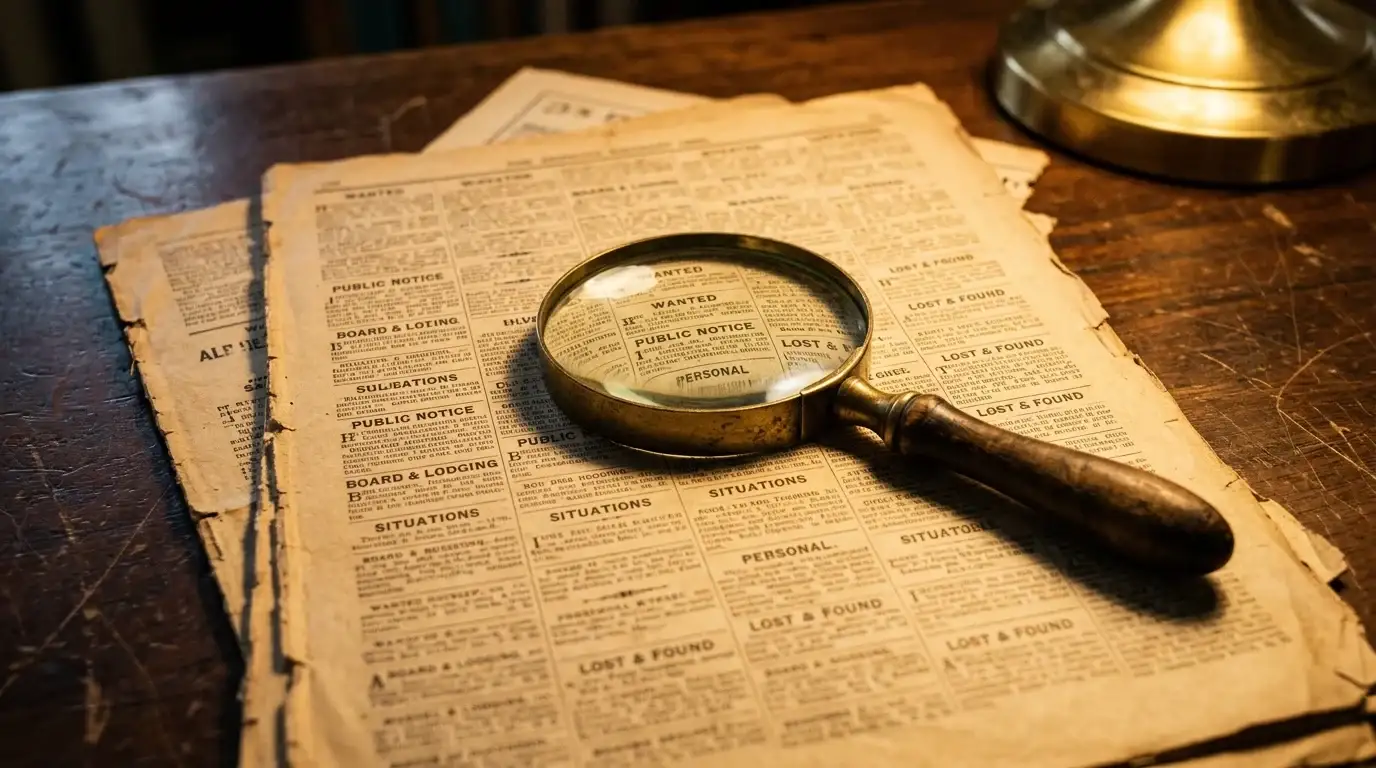
The strongest evidence does not belong to any of the famous claimants. Ofgang found more than a dozen 1890s newspaper references to hamburger sandwiches across eight states and Hawaii. The earliest he cites is a July 25, 1893, item in the Reno Gazette-Journal reporting that a saloon lunch counter had been taken over by a man named Tom Fraker, who “prides himself on his ability to make hamburger sandwiches.” A month later, an ad promised the sandwiches would fortify even Satan himself.
Other examples from the same reporting:
- 1887, New York: a lodging house advertised coffee, hamburger steak and bread for 10 cents.
- 1891, Boston Globe: a butcher’s ad promoted a cookbook with a “hamburger on toast” recipe.
- 1894, Shiner Gazette in Texas: a saloon advertised hamburger steak sandwiches.
- 1894, San Francisco Chronicle: street carts were selling hamburger sandwiches late at night.
None of those vendors claimed to have invented anything, which is the telling part. By the 1890s the sandwich was ordinary bar food in several states at once. Food historian Andrew F. Smith, author of Hamburger: A Global History, calls the competing regional stories “hamburger fakelore,” a phrase Ofgang quotes in the same piece.
Why no one will ever win
A simple idea, cheap grinders and a lot of county fairs
The likeliest answer is the least satisfying one: the hamburger was invented many times, in many places, by people who never wrote it down. Smithsonian reaches the same conclusion, suggesting that several towns may each have come up with it independently. Ground beef was getting cheap, fairs and saloons needed food that could be held in one hand, and bread was already there.
That leaves the towns free to keep celebrating. Seymour runs Burger Fest. Hamburg marks September 18. Athens hosts an annual Uncle Fletch Davis hamburger cook-off, which the Texas Senate mentioned in its 2007 Athens Day resolution. New Haven still cooks on a broiler the Lassen family dates to 1895 and still serves the patty on toast.
The claims do share one detail. The early versions described in these accounts were plain: ground beef, bread of whatever kind was at hand and, in the Athens telling, pickles, onions and mustard. The argument over the bun was there from the start.
Frequently asked questions
Who invented the hamburger?
No one can be proven. Claimants include Charlie Nagreen (Seymour, Wisconsin, 1885), Frank and Charles Menches (Hamburg, New York, 1885), Fletcher Davis (Athens, Texas, 1880s), Oscar Weber Bilby (near Tulsa, 1891) and Louis Lassen (New Haven, 1900).
What does the Library of Congress say?
Louis’ Lunch in New Haven was named a Connecticut legacy in the Library’s Local Legacies project in 2000, and the restaurant quotes the Library as recognizing it as the birthplace of the hamburger sandwich.
Why is it called a hamburger?
It descends from the Hamburg steak, a minced beef patty named for the German city. The Menches family says the sandwich name came from Hamburg, New York, where their fair was held.
What is the earliest printed reference to a hamburger sandwich?
Reporting for The Washington Post cites a July 25, 1893, item in the Reno Gazette-Journal about a saloon cook’s hamburger sandwiches.
Sources
- Erik Ofgang, The Washington Post, via Portland Press Herald (June 13, 2021): https://www.pressherald.com/?p=6049797
- Smithsonian, “Taste-Testing the History of the Hamburger”: https://www.smithsonianmag.com/arts-culture/taste-testing-history-hamburger-180959789/
- Home of the Hamburger, “Hamburger Charlie”: https://homeofthehamburger.org/hamburger-charlie
- Wisconsin Legislature, 2007 Assembly Joint Resolution 12: https://docs.legis.wisconsin.gov/2007/related/enrolled/ajr12
- Erie County Fair, “Birth of the Hamburger”: https://www.ecfair.org/p/info/about-the-fair/birth-of-the-hamburger
- Erie County Fair blog, “National Birth of the Burger Day”: https://blog.ecfair.org/?p=303
- NPR, interview with Chris Carosa: https://www.npr.org/transcripts/1178699094
- Wikipedia, “History of the hamburger in the United States” (pointer only, for the Menches obituary): https://en.wikipedia.org/wiki/History_of_the_hamburger_in_the_United_States
- Texas Co-op Power, Clay Coppedge (July 2019): https://texascooppower.com/?p=5736
- Texas Legislature, H.C.R. No. 15 (2007): https://capitol.texas.gov/tlodocs/80R/billtext/html/HC00015F.htm
- Texas Senate, S.R. No. 298 (2007): https://capitol.texas.gov/tlodocs/80R/billtext/pdf/SR00298F.pdf
- Fox News, “History of the hamburger”: https://www.foxnews.com/food-drink/history-of-the-hamburger-from-immigrant-fare-to-fast-food-favorite
- Connecticut History, “Louis’ Lunch and the Birth of the Hamburger”: https://connecticuthistory.org/louis-lunch-and-the-birth-of-the-hamburger/
- Louis’ Lunch: https://louislunch.com/
- Congressional Record, July 27, 2000 (DeLauro statement): https://www.govinfo.gov/content/pkg/CREC-2000-07-27/html/CREC-2000-07-27-pt2-PgE1377-3.htm


