In this story
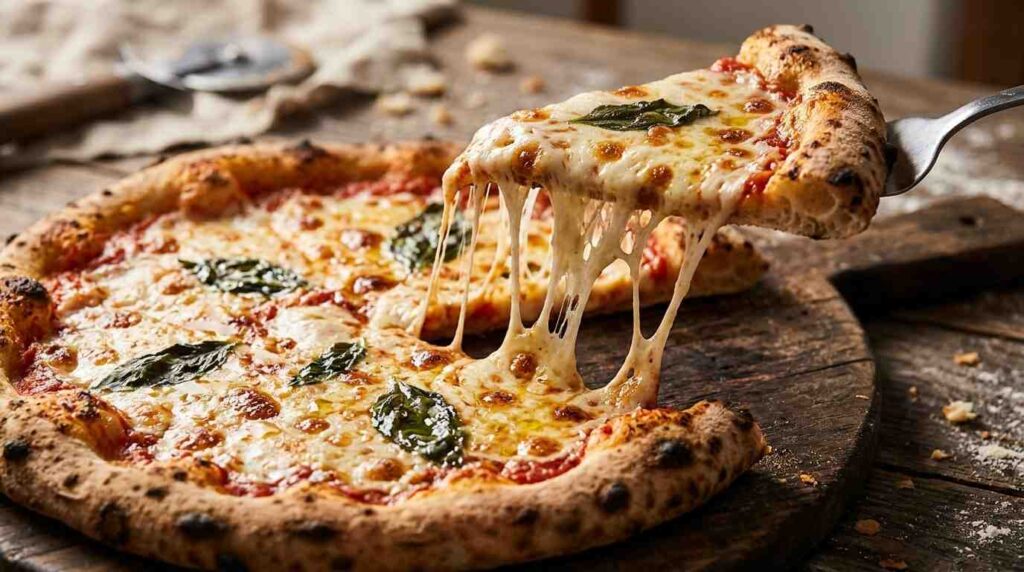
In a University of Melbourne lab, mozzarella is melted on a cracker at 240°C and pulled apart by a machine that measures the force each stretch takes. The stretch itself was set long before the melt. During cheesemaking the curd is heated in hot water and pulled again and again in one direction, and researchers at the university’s Bio21 Institute link the cheese’s stretchiness to that aligned protein structure, in contrast to Cheddar, which has a web-like structure with fat spread evenly through it. The method has a name, pasta filata, and nearly everything about how a pizza slice or a mozzarella stick pulls apart traces back to what happens in that stretching step.
Video: Ask the Cheese Doctor # 14 How to make Pasta Filata Cheeses like Mozarella — from the Doctor Quesero TV YouTube channel
Pasta filata means spun paste
A family of cheeses defined by one step
The term translates as “spun paste.” Culture magazine’s guide to mozzarella defines pasta filata as a family of cheeses stretched in hot water, with caciocavallo, kasseri and kashkaval among the examples, and mozzarella as a fresh, regional version of the style. The educational site Cheese Science describes the process as “heating and stretching curd directly before forming a final cheese,” traditionally by submerging fresh curd in hot water and then pulling it, with commercial producers using mechanical mixers in place of hands.
The industrial form is a late development. According to Culture, monks near Capua in Italy were serving fresh cheese from water buffalo milk by the 12th century, southern Italian immigrants in the United States later made a cow’s-milk version they called mozzarella, and low-moisture part-skim mozzarella was developed industrially after World War II for pizza. The magazine reports that by 2001 mozzarella had passed Cheddar as America’s most-consumed cheese.
The low-moisture version is the subject of a 2011 entry in the Encyclopedia of Dairy Sciences by Donald McMahon of Utah State University and C. J. Oberg. Its abstract says the cheese is made like most pasta filata cheeses: after curd formation, whey removal and acid development, the curd is heated, stretched, shaped, cooled, brined and vacuum packaged.
Casein strands line up
What the hot water and the pulling do to milk protein
Cheese is built on casein, the main milk protein. Science Focus magazine describes milk proteins as coiled-up chains of molecules that cheesemaking separates out as curds; soaking mozzarella curds in hot, salty water loosens the coils into long strands, and repeated squeezing and pulling aligns them.
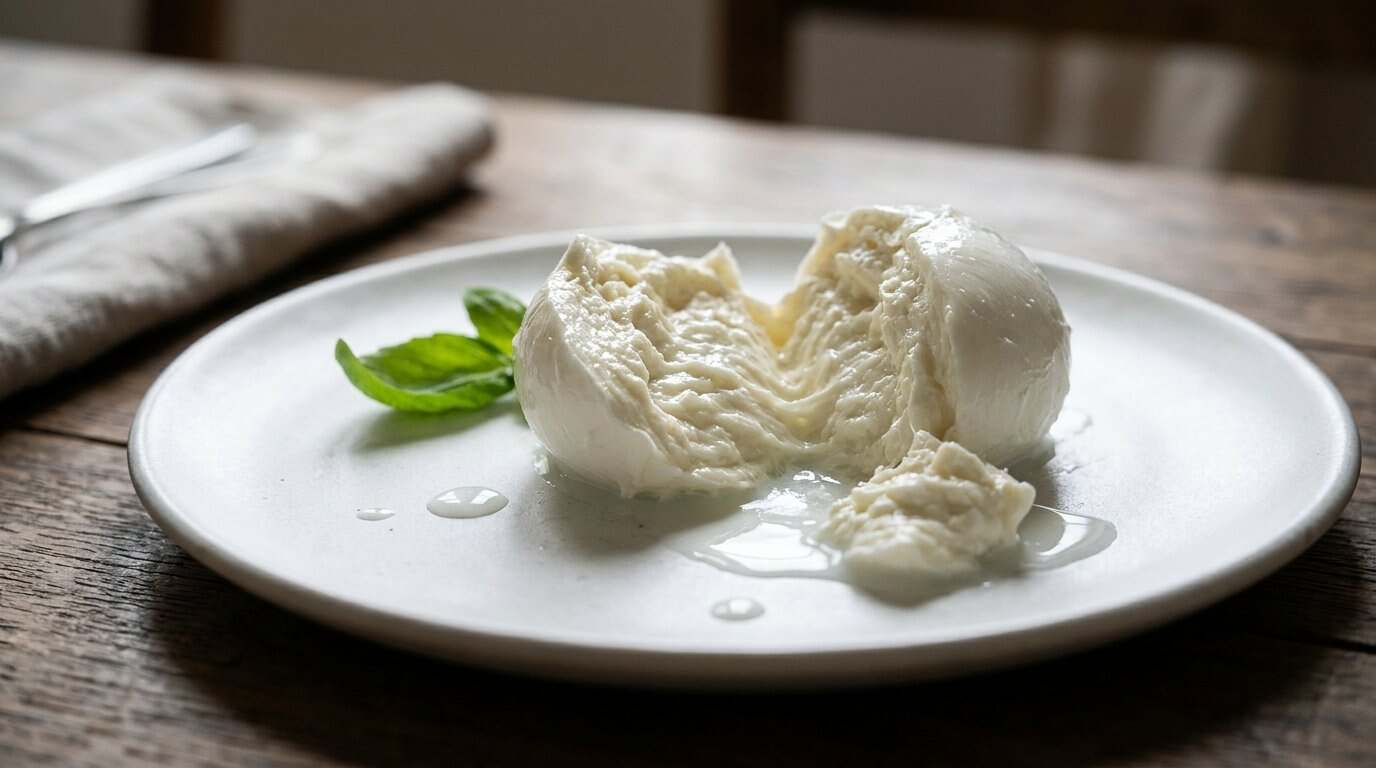
Culture’s account of the stretching step is more specific about the fat and water. Hot water, it says, liquefies the fat droplets and collapses the casein protein network, and as the curd is pulled the strands align into bundles while fat and whey collect in long columns between them. Those columns act as weak points, which is why the cheese “just peels” along its length and comes apart in strings when pulled.
A 2021 review in Food Technology and Biotechnology by Mônica Correia Gonçalves and Haíssa Roberta Cardarelli describes the same result in technical language: stretching leads to the parallel alignment of the casein fibers, interspersed with water and fat channels. The review calls stretching a thermomechanical treatment, influenced by pH, acidity, stretching time and temperature.
The cracker test belongs to Anita Pax, a doctoral student in the ARC Dairy Innovation Hub at the University of Melbourne, who uses 240°C as a stand-in for commercial pizza ovens that run near 400°C. An Instron machine then pulls the melted cheese at constant speed and measures the force required, while electron and optical microscopes examine samples from different manufacturers. Her list of factors that affect stretchability includes milk type, temperature, pH, mechanical forces and the saltiness of the brine.
Calcium and the pH window
Why curd that is too acidic or not acidic enough will not stretch
Two chemical conditions have to be right before the hot water can do its work: acidity and calcium. The two are linked, because acid dissolves calcium out of the protein.
Gonçalves and Cardarelli report that insoluble calcium is available to form crosslinks in the paracasein matrix when the curd is heated. Lowering the pH solubilizes calcium, and with less insoluble calcium there are fewer and weaker crosslinks, so the network needs less thermal energy to flow. The review stresses that insoluble calcium plays a much larger role in texture than total calcium. Between pH 5.2 and 5.4, it adds, dicalcium paracaseinate converts to monocalcium paracaseinate, a form that favors fiber formation.
Studies disagree on the exact best number. The review cites an optimal stretching pH of 5.2 to 5.3 in one study and 5.2 to 5.5 in another, and notes that curd stretched at pH 5.3 had a more structured texture than curd stretched at pH 5.0. Starter-culture cheese, it reports, is typically stretched at pH 5.0 to 5.2, and cheese acidified directly at 5.5 to 5.7.
The cheesemaking site Cheese Scientist, which cites no studies of its own, gives the same general range of about 5.2 to 5.4 and describes the practical failure on each side: too high a pH and the curds will not stretch, too low and they fall apart. Cheesemakers test readiness by dropping a slice of curd into hot water; if it melts into a smooth, stretchy mass, it is ready.
McMahon and Oberg’s abstract ties calcium to the finished cheese as well: when low-moisture mozzarella melts, calcium-mediated protein bonds help it keep some stretch.
Temperature decides the texture
Water at 70 to 85 °C and a curd that must stay near 60
The hot water is hotter than the curd needs to become. Gonçalves and Cardarelli report that traditional manual stretching uses water at about 70 to 80 °C, mechanical systems often use 82 to 85 °C, and across the literature the range runs from 50 to 85 °C. The curd itself generally reaches 55 to 65 °C during stretching.
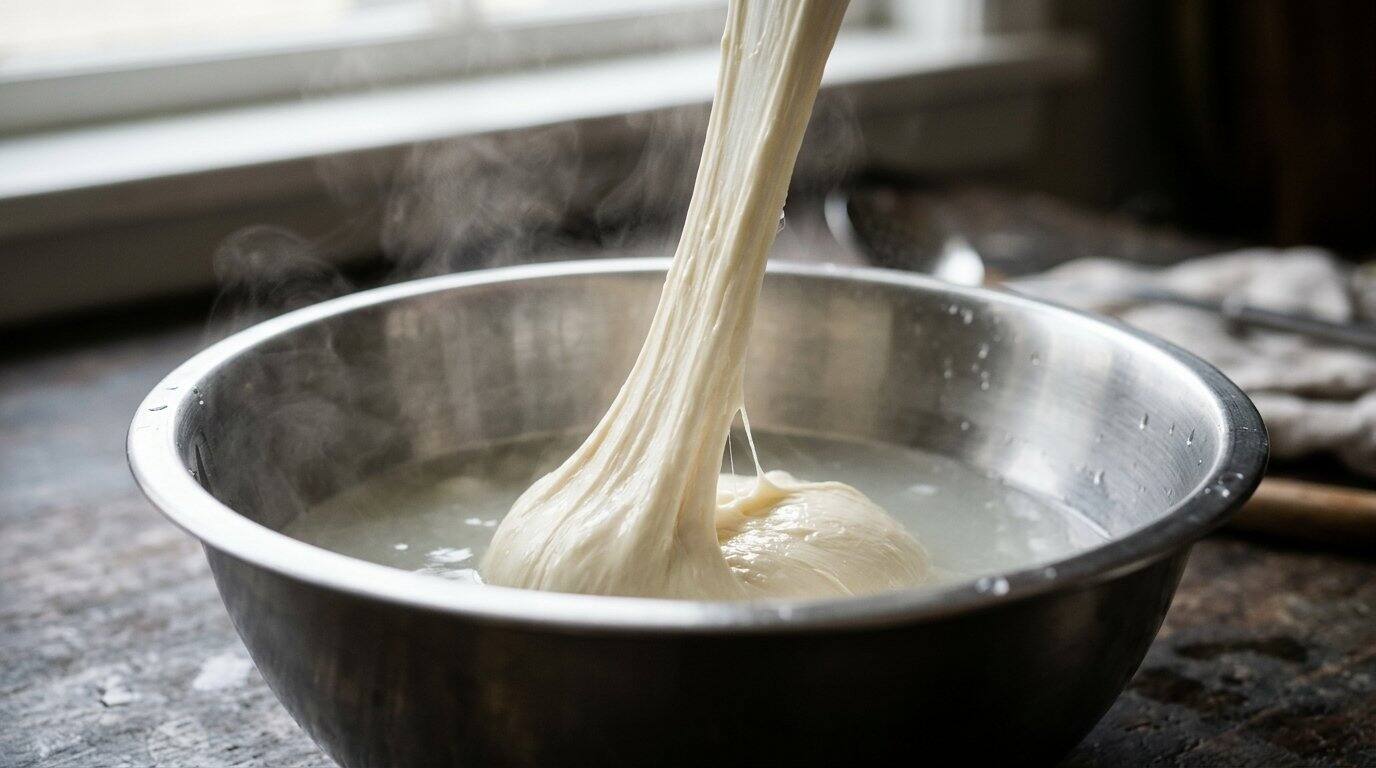
That narrow band matters. The review describes a critical range of 60 to 65 °C in which a difference of only a few degrees alters the cheese substantially. In the studies it summarizes, raising the stretching temperature from 55 to 75 °C reduced elasticity and increased fat globule size and free oil. Culture warns that curd stretched too hot or too long becomes brittle and cork-like.
Industrial equipment complicates the picture. Researchers at the Wisconsin Center for Dairy Research tested stretching temperatures of 60, 74 and 88 °C in a waterless cooker. Their abstract reports that cheese stretched at 74 °C or higher had higher pH values, attributed to reduced starter bacteria and therefore less acid development, and that those cheeses showed lower shred adhesiveness during storage while retaining firmness and chewiness.
Cheese Science adds that the curd can reach roughly 55 to 70 °C, a heat that can partly deactivate enzymes and reduce bacterial culture activity. Stretching shapes the chemistry as well as the structure.
Moisture and culture choice
Why pizza mozzarella is made to a moisture target
Moisture sits between 48 and 52 percent in the pizza-style cheese discussed in the Gonçalves and Cardarelli review, which says thermophilic starter cultures are favored because they help reach that level. Higher curd temperatures strengthen hydrophobic interactions that squeeze water out of the protein matrix, and higher stirring speeds lower moisture further, according to the same review.
McMahon and Oberg report that the thermophilic cultures, Streptococcus thermophilus alone or with Lactobacillus helveticus, slow protein breakdown, so the cheese stays firm enough to shred for longer. If moisture, fat and calcium are right, the cheese needs only a few weeks of aging and can be shredded right away or frozen.
Fresh mozzarella works differently. Culture describes it as high-moisture, soft and juicy, with a milder flavor and best eaten fresh, while the low-moisture type is firmer, shreds easily and keeps longer. Acidification also varies by maker: some mozzarella is slow-cultured with bacteria for a lactic note, and some is acidified directly with citric acid or vinegar.
How that cheese behaves once it is on a hot sandwich or pizza, including oil release and browning, is a separate subject covered in why cheese melts and turns greasy.
Other stretched cheeses
Provolone, scamorza, string cheese and a few that only look similar
Mozzarella is the best-known pasta filata cheese, though far from the only one. The Cheese Scientist site names burrata, provolone, scamorza, caciocavallo, Oaxaca (quesillo), string cheese, kashkaval, provola and ragusano alongside mozzarella, and notes that halloumi is not technically pasta filata even though some variants include stretching steps. More on one of those relatives appears in provolone cheese, and the question of which cheese suits a sandwich is taken up in best cheese for grilled cheese.
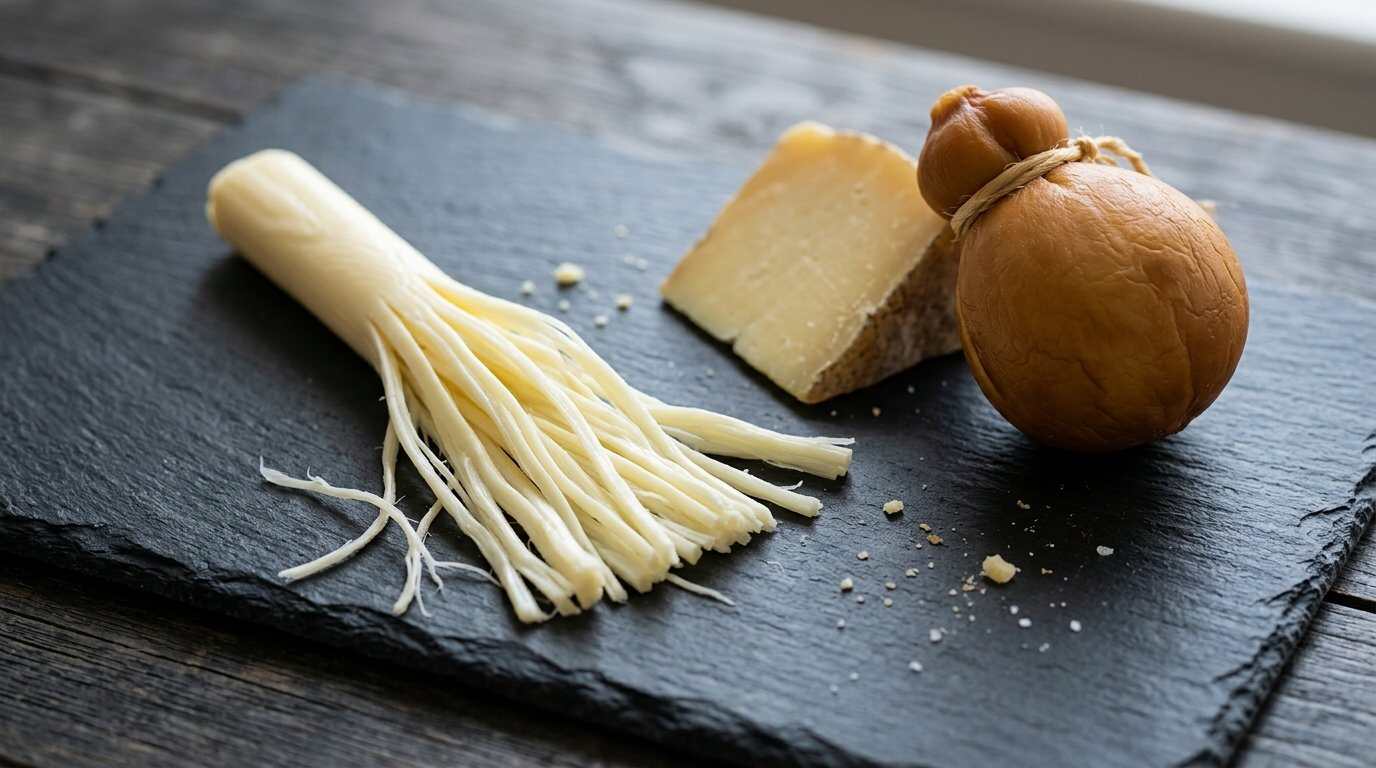
String cheese is the plainest demonstration of the structure. McMahon and Oberg note that the fibrous structure of low-moisture mozzarella allows it to be sold as individually wrapped string cheese. The strings that peel off are the same aligned protein bundles that the hot water and the stretching produced.
Common questions
What is pasta filata?
The term translates as “spun paste.” Culture magazine’s guide to mozzarella defines pasta filata as a family of cheeses stretched in hot water, with caciocavallo, kasseri and kashkaval among the examples, and mozzarella as a fresh, regional version of the style.
Why does mozzarella stretch when Cheddar does not?
Researchers at the University of Melbourne’s Bio21 Institute link the stretchiness to the aligned protein structure created by heating and pulling the curd. Cheddar, by contrast, has a web-like structure with fat spread evenly through it.
How hot is the water used to stretch the curd?
Gonçalves and Cardarelli report that traditional manual stretching uses water at about 70 to 80 °C and mechanical systems often use 82 to 85 °C, with the curd itself generally reaching 55 to 65 °C.
Sources
- Phys.org, “What makes mozzarella stretchy?” (University of Melbourne / Bio21 Institute research, 2015): https://phys.org/news/2015-10-mozzarella-stretchy.html
- Gonçalves and Cardarelli, “Mozzarella Cheese Stretching: A Review,” Food Technology and Biotechnology, 2021: https://ftb.com.hr/archives/1702-mozzarella-cheese-stretching-a-review
- Culture: the word on cheese, “Stretched to Perfection: A Guide to Mozzarella”: https://culturecheesemag.com/stories/stretched-perfection-guide-mozzarella/
- Cheese Science, “Pasta Filata”: https://cheesescience.org/pasta-filata.html
- Science Focus, “Why is mozzarella cheese so stretchy?”: https://www.sciencefocus.com/nature/why-is-mozzarella-cheese-so-stretchy
- McMahon and Oberg, “Cheese: Pasta-filata Cheeses: Low-Moisture Part-Skim Mozzarella (Pizza Cheese),” Encyclopedia of Dairy Sciences, 2011 (abstract page, Utah State University Digital Commons): https://digitalcommons.usu.edu/nfs_facpub/69
- Aversa, Govindasamy-Lucey, Johnson, Jaeggi and Lucey, “Impact of stretching temperature in a waterless cooker on the functionality of Mozzarella cheese,” ADSA 2019 abstract: https://m.adsa.org/2019/abs/t/79106
- Cheese Scientist, “Pasta Filata 101”: https://cheesescientist.com/trivia/pasta-filata/
- University of Melbourne Bio21 Institute, “Molecular Mozzarella: What makes Mozzarella stretchy?”: https://www.bio21.unimelb.edu.au/node/137
Keep reading
- Sodium Citrate and Smooth Melted Cheese: How the Salt Works
- Gruyère Cheese: Swiss AOP Rules, French IGP, Ageing and How It Melts
- Cheese Slicer vs Knife vs Grater: How Each Tool Changes a Grilled Cheese
More in this section: Food Science guide.