In this story
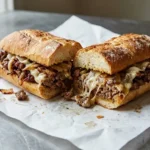
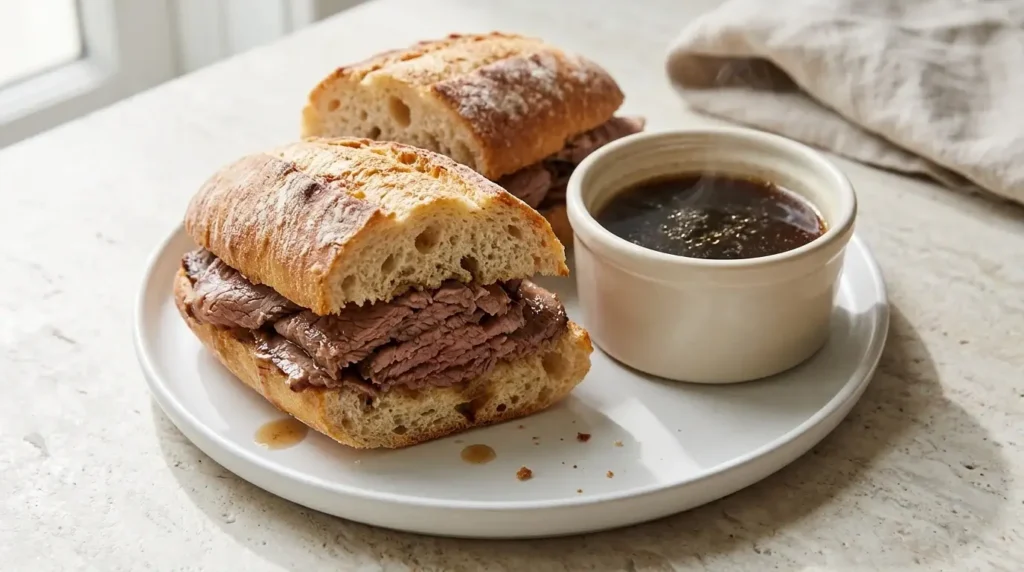
A French dip is sliced roast beef piled on a French roll and eaten with the beef’s own juice, which is where the phrase “au jus” comes from. Britannica describes the juice as the drippings left from roasting the meat, usually brought to the table in a small bowl for dipping. Despite the name, the sandwich is credited to Los Angeles, where two restaurants in the same downtown district still insist that it started in their kitchens, according to Britannica.
Philippe the Original and Cole’s both opened in 1908, both carve hot meat for rolls, and both have a story about a roll meeting a pan of juice. Neither can show a menu from the time to settle it.
Video: The URL of Sandwich: Philippe vs Cole’s – the Los Angeles French dip wars, Trippy Food
What makes a sandwich a French dip
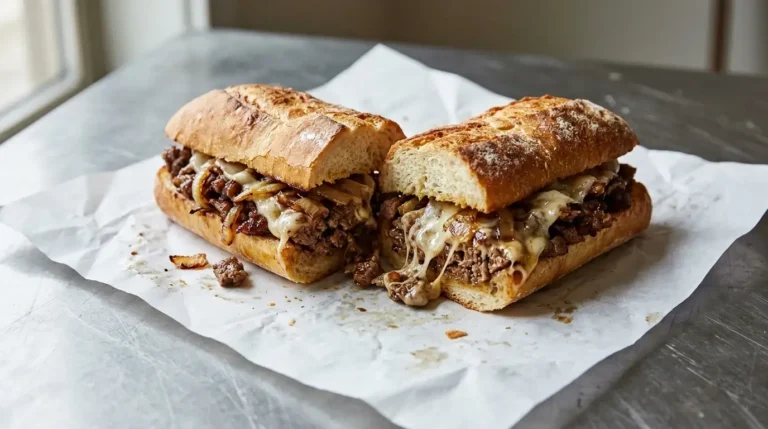
Three parts define it: thinly sliced hot roast meat, a sturdy roll, and the cooking juices. Mashed describes the standard build as thin slices of beef on a long white roll, soaked in the juices from the roasting pan until the bread turns chewy yet moist. The roll carries the sandwich: The Daily Meal specifies a crusty French roll or baguette that holds up to dipping.
Beef is the default, but not the rule. Britannica notes that pork, ham, turkey and lamb are sometimes used, and Philippe’s own site says its sandwich can be ordered with roast beef, pork, leg of lamb, turkey or ham. Cheese, hot peppers and spicy mustard turn up as extras, and french fries are a common side, according to Britannica.
Single dipped, double dipped, wet
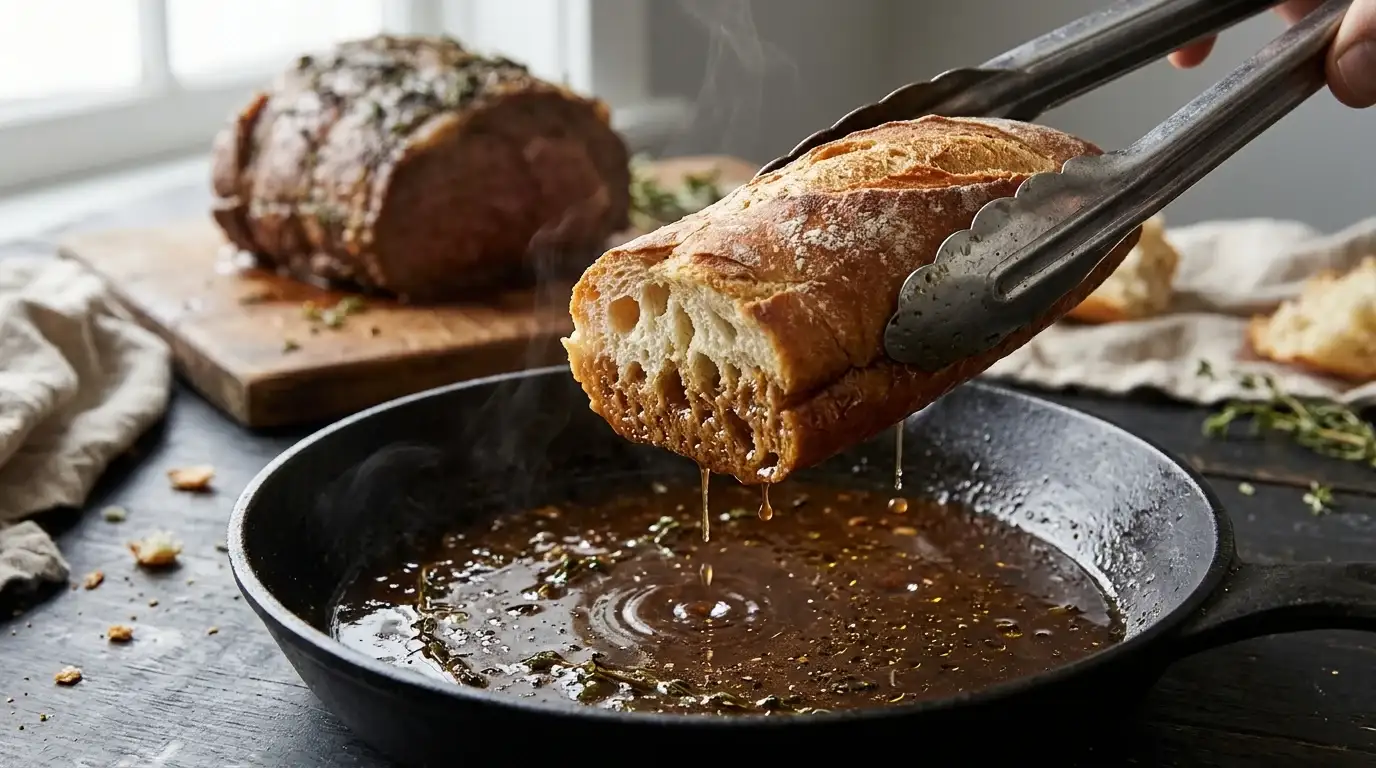
How much juice reaches the bread is a matter of order. Time Out reports that at Philippe’s the staff do the dunking, and customers choose single-dipped, double-dipped or wet. At Cole’s, by contrast, the jus comes in a cup on the side, and the diner handles the dipping, as Los Angeles magazine found when it compared the two.
The Philippe’s story
Philippe Mathieu, a French-born cook nicknamed “Frenchie,” opened his restaurant in Los Angeles in 1908, according to Snopes. The restaurant’s own site gives the invention date as 1918: Philippe’s says Mathieu was building a sandwich for a policeman when he dropped the sliced roll into a pan of hot roasting juices. The officer took it anyway and came back the next day with friends, all asking for the dipped version.
Other tellings disagree on the details. Time Out records a descendant who says the customer was a fireman rather than a police officer, and a current employee who says a girl working the line dropped the roll. Tasting Table gives the year as 1917 on the word of Mathieu’s descendants, and adds a version in which Mathieu, irritated by a fireman’s complaint that the bread was stale, swiped it through the gravy on purpose. Snopes also lists that deliberate-dunking variant.
The 1951 interview
Mathieu gave a different account in a 1951 interview, the year the restaurant moved to its current building. Snopes summarizes the interview: a police officer had asked for roast pork on French bread, and a customer later wanted a roll dipped in gravy. No accident and no stale bread appear in it. Tasting Table’s reading of the same interview adds that the first dipped sandwich was made with pork and that the officer also wanted pickles, onions and olives.
Ownership and address
Philippe’s says Harry, Dave and Frank Martin bought the business from Mathieu in 1927 for about $5,000. The original address was on Aliso Street; the freeway work of 1951 pushed the restaurant to 1001 N. Alameda Street, a former machine shop with a hotel on the second floor. Time Out adds that the Martin family’s fourth generation now runs it, and that on busy days it sells somewhere between 3,100 and 3,600 French dips.
The Cole’s story
Cole’s Pacific Electric Buffet sits in the basement of the old Pacific Electric Building, a railway hub downtown. Tasting Table says the building saw 100,000 commuters a day and that Henry Cole opened the restaurant in 1908. Time Out spells the owner’s first name Harry, a small discrepancy between the two sources.
Cole’s version has a medical reason behind it. Within six months of opening, Time Out reports, chef Jack Garlinghouse softened a roll in meat juices for a regular who had sensitive gums, dunking the sandwich at the carving station. That would put the first French dip in 1908, a full decade ahead of the date Philippe’s gives. Los Angeles magazine notes that Cole’s calls itself the originator of the French dip on its own website, and that Philippe’s calls itself the home of the original French dipped sandwich.
A second Cole’s version
The sore-gums legend is not the only one. Tasting Table cites a 1997 Los Angeles Times interview in which Gitti Beheshti, an owner of Cole’s, said the bread simply fell into the gravy for one customer, and the next person in line asked for the same. Snopes notes that this account resembles the one told at Philippe’s. Tasting Table describes the whole Cole’s story as anecdotal, handed down among employees.
Why the origin stays contested
Neither restaurant has produced a document from the period. Time Out says neither can show an original 1908 opening menu or a 1918 menu that would record the first mention of the sandwich, and the same article mentions unsubstantiated rumors that a midcentury legal dispute went in Cole’s favor. Snopes treats the competing stories as legends and concludes that the truth may be lost to history.
The case made for Philippe’s
Philippe’s has argued its position on its own site. The restaurant’s page on the question says a 1951 Los Angeles Times article supports Mathieu as the inventor, calls Cole’s account conjecture and oral history, and states that the sandwich first appears in print in the 1930s, with nothing linking Cole’s to the invention until long after Philippe’s connection was established. That page is the restaurant’s own advocacy, and the print claim was not checked against newspaper archives for this article.
The name offers a second argument. Both Tasting Table and Philippe’s cite the fact that around 1900 “French dip” was a fashion term for a dropped-waist dress or a slimmer waistline, and suggest Mathieu’s background and his gravy-dipped sandwich made a pun. Tasting Table concludes that the circumstantial evidence leans toward Philippe’s but proves nothing.
How the jus is made
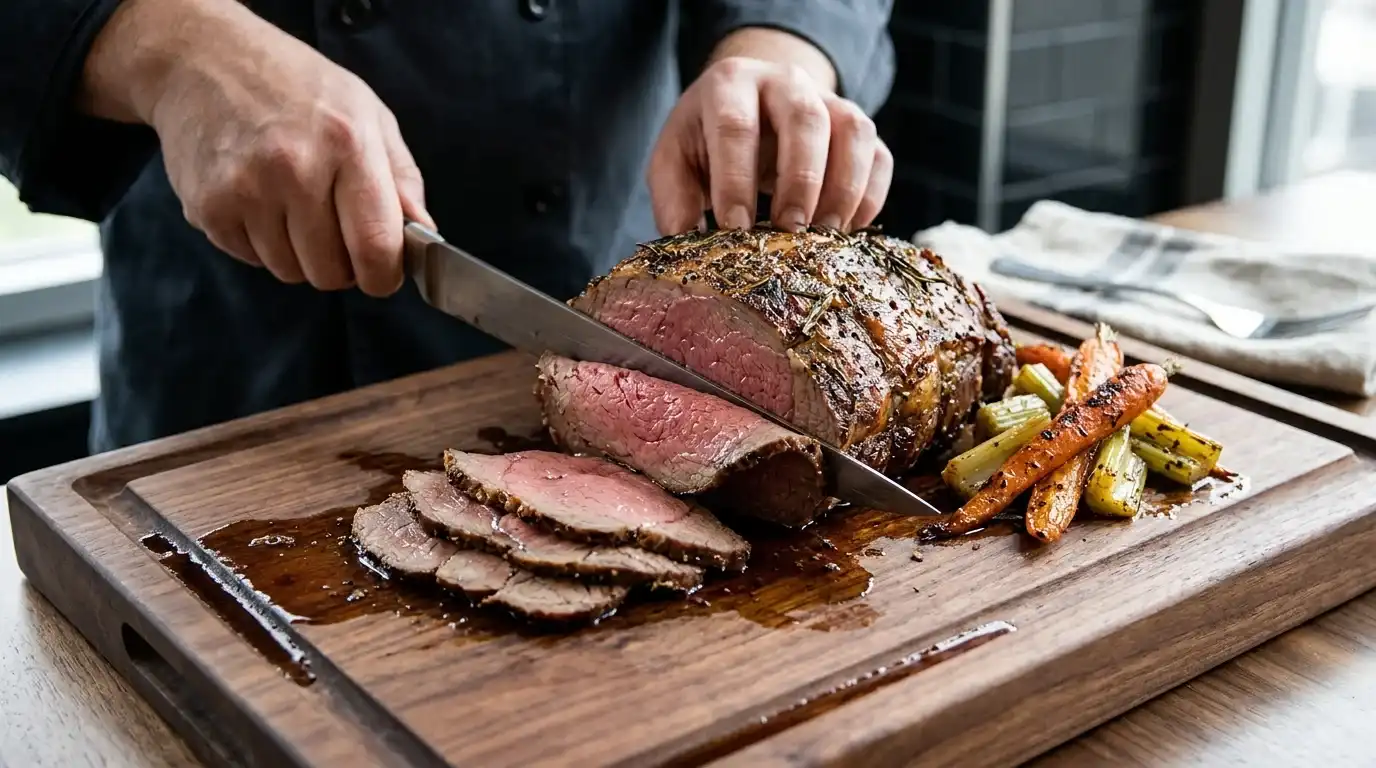
The classic jus comes from the roast itself. Time Out reports that Philippe’s roasts its meats slowly with carrots, celery and a secret spice blend, then combines the drippings with stock and beef bones each day. Los Angeles magazine observed that the Philippe’s jus carries beef fat and soaks about half a centimeter into the roll.
Cole’s takes a long route. Time Out says chef Neal Fraser’s current version is practically a bone broth that takes two to three days to make, served with a house-baked roll built to survive dipping.
A home method without a roast
Not every recipe starts from a roast. Vindulge builds its au jus from beef stock instead: carrot, celery and leek are softened in olive oil for 6 to 8 minutes, then simmered for 15 to 20 minutes with 2 cups of stock, whole peppercorns, chili flakes and salt, and strained. The liquid goes on the table warm. Mashed lists other versions that start with the pan juices and add garlic, herbs and a little Worcestershire sauce, or that braise the beef in consommé with soy sauce and aromatics.
French dip and Italian beef
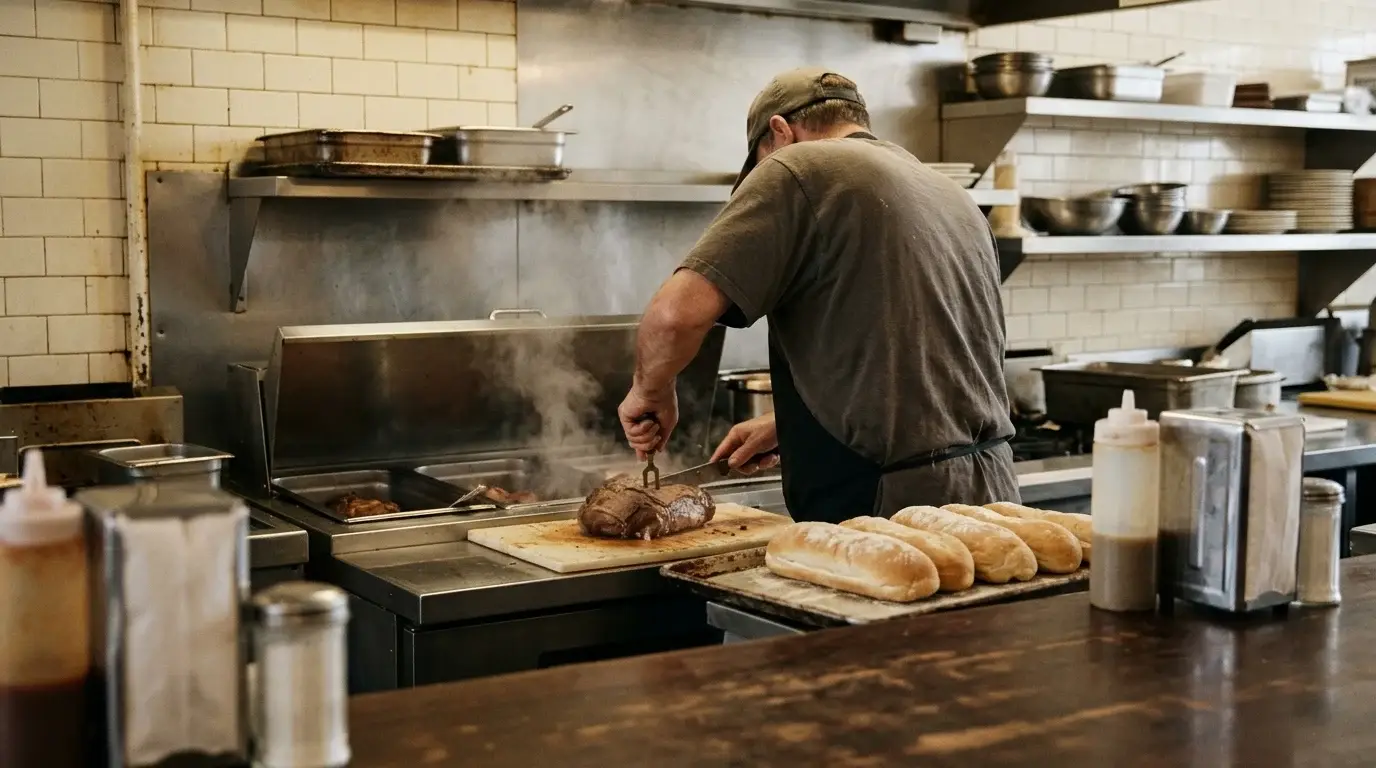
The two are often mistaken for each other because both pair sliced beef with a long roll and a pool of savory liquid. The Daily Meal traces Italian beef to Chicago’s Little Italy, and Chowhound says it likely dates to the 1920s. Chowhound places the French dip’s likely roots at Cole’s in 1908 or Philippe’s in 1918, which would make it the older sandwich.
Where they separate
The difference starts with the seasoning. The Daily Meal says Italian beef is rubbed with black and red pepper, cloves, garlic, basil and oregano, sliced very thin, and held in its own reheated broth. A French dip is plainer, with the liquid served alongside or applied at the counter. The bread differs as well: a crusty French roll for the dip, against the softer, thin-crusted Italian bread from Chicago bakeries.
Toppings split the two further. French dip builds lean toward Swiss or provolone and spicy mustard. Italian beef traditionally takes hot giardiniera or sweet peppers, and cheese is common but not traditional, according to The Daily Meal. Chowhound adds that a French dip is served with a side of jus, while an Italian beef usually is not, because its gravy is already in the sandwich.
Even the vocabulary of wetness runs in parallel. A French dip can be single dipped, double dipped or wet. An Italian beef can be dry, dipped or wet, and the wet version is typically wrapped in foil or wax paper to hold it together. The cut of beef is where the sources disagree: The Daily Meal gives bottom round for the French dip and top round or sirloin tip for Italian beef, while Chowhound says both use top or bottom round. Other long-roll sandwiches follow their own regional rules, as in the case of the hoagie, sub, hero and grinder, which share a bread shape but little else with either of these.
Sources:
- Britannica, French dip: https://www.britannica.com/topic/French-dip
- Snopes, French dip fact check: https://www.snopes.com/fact-check/french-dip/
- Time Out Los Angeles, a look at L.A.’s most iconic sandwich on the French dip’s 100th or 110th birthday: https://www.timeout.com/los-angeles/news/a-look-at-l-a-s-most-iconic-sandwich-on-the-french-dips-100th-or-110th-birthday-020118
- Philippe the Original, About Us: https://www.philippes.com/about-us
- Philippe the Original, page on the real inventor of the French dip: https://philippes.com/philippes-real-inventor-french-dip/
- Tasting Table, why two Los Angeles restaurants fight over the French dip: https://www.tastingtable.com/1896889/who-invented-french-dip-beef-sandwich-california-local
- Los Angeles magazine, who really makes the better French dip, Cole’s or Philippe’s: https://lamag.com/food/really-makes-better-french-dip-coles-philippes
- Vindulge, French Dip Sandwich with Homemade Au Jus: https://www.vindulge.com/?p=7032
- Mashed, What Is A French Dip And How Do You Make It: https://www.mashed.com/321073/what-is-a-french-dip-and-how-do-you-make-it
- The Daily Meal, Italian beef vs French dip: https://www.thedailymeal.com/1943583/italian-beef-vs-french-dip/
- Chowhound, French dip vs Italian beef: https://www.chowhound.com/1831199/italian-beef-vs-french-dip-sandwich-difference
- YouTube, The URL of Sandwich: Philippe vs Cole’s – the Los Angeles French dip wars (Trippy Food): https://www.youtube.com/watch?v=OhVYtjQMTis