In this story
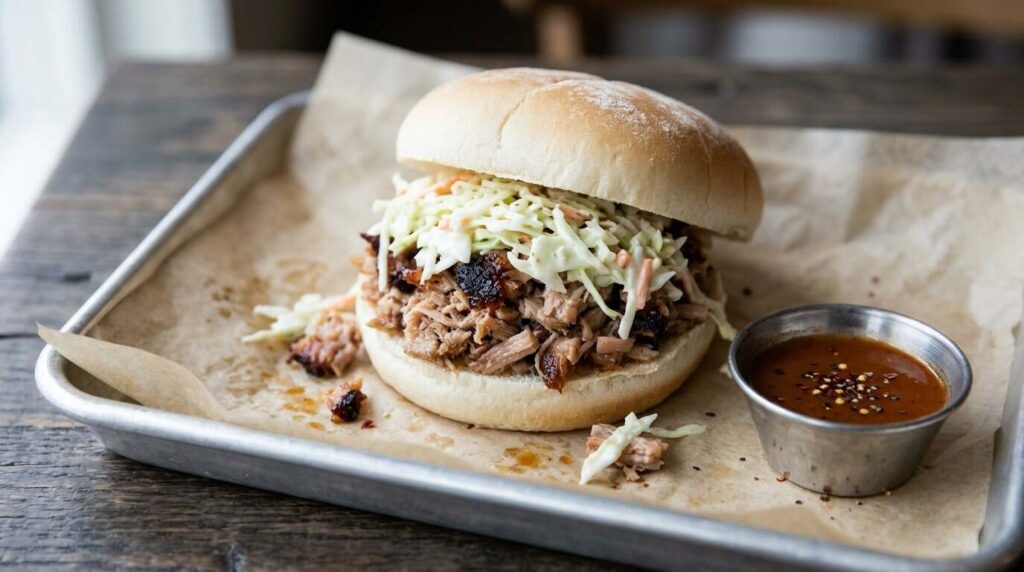
North Carolina has no single pork sandwich. The state’s barbecue splits along a line near Raleigh, with whole hogs and a vinegar-and-pepper sauce to the east and pork shoulders with a thin, reddish dip to the west, and both end up chopped on a bun, often with slaw. The Museum of the New South describes the dividing line as generally Raleigh and the Research Triangle Park rather than a clear border, and the North Carolina Pork Council adds that in the state “barbecue” means pork only.
Video: The Legendary Skylight Inn’s Whole Hog BBQ — from the Munchies YouTube channel
Two Styles and a Third at the Border
Raleigh as a rough divide between whole hog and shoulder
The terms “Eastern” and “Lexington” (or “Western” or “Piedmont”) cover differences in cut, sauce and sides. According to the Museum of the New South, both styles cook pork for a long time at low temperature, and the main differences are the sauce and the cuts of pork. NCpedia adds a third strand, a mustard-based sauce that crossed over from South Carolina.
The history behind them is older than either label. NCpedia notes that the word likely came from the Taino “barbacoa” through Spanish, and that by 1728 William Byrd was writing that “The only business here is raising of Hogs.” The Museum of the New South offers an account in which colonists, lacking the lemons used by Caribbean cooks, substituted vinegar, a reason offered for why both Carolina styles lean on vinegar. The same page records Bob Melton’s Barbecue in Rocky Mount, opened in 1924, as the first sit-down barbecue restaurant in the state.
The North Carolina Pork Council counts more than 450 barbecue restaurants in the state and has organized a Whole Hog Barbecue Championship since 1985.
Eastern Style: Whole Hog Over Wood
Salt, pepper, vinegar and the entire animal on a brick pit
Eastern cooks use the whole animal. Atlanta Magazine describes a cookhouse in Ayden where fireplaces burn oak and hickory down to coals, shoveled under butterflied hogs of 160 to 180 pounds that roast overnight in three-foot-high redbrick pits sealed with sheet-metal lids. The seasoning is salt, pepper, vinegar and Texas Pete hot sauce, applied after the skin and fat are separated from the meat. Everything from the hog is then chopped together with diced skin and fat. At nearby Bum’s, according to the same article, the chop is coarser, leaving bigger pieces.
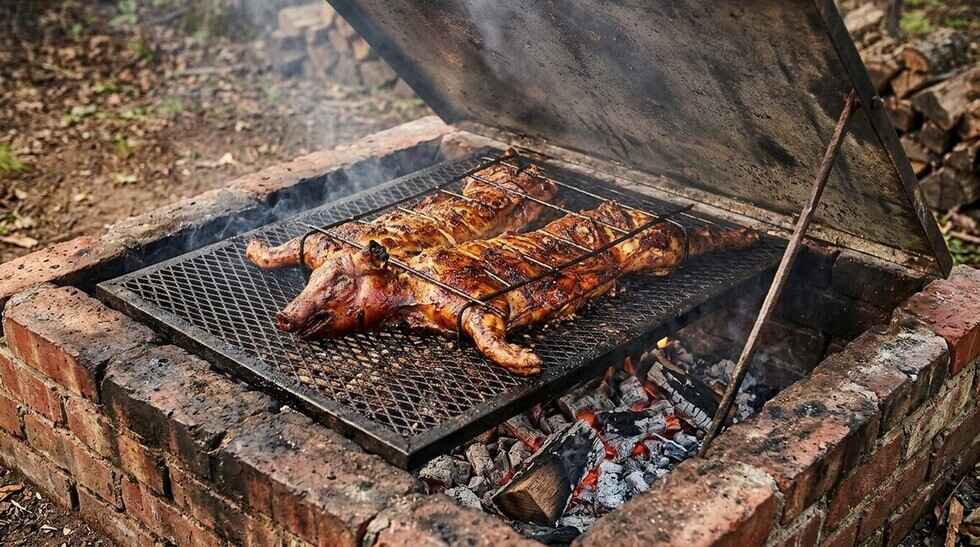
The Skylight Inn in Ayden is the best-documented example. The Southern Foodways Alliance oral history records that Pete Jones opened it in 1947, when he was about 17, after learning barbecue from the Dennis family, whom the page names as the first in North Carolina to serve pit barbecue to the public. His grandson Sam Jones summarized the approach as “Whole hog cooked over wood, the way my ancestors and my family did it years and years ago.” In an interview with Garden & Gun, he put the rule more bluntly: “you do whole hog over wood, and if you don’t do that, it’s not barbecue.”
The sauce at Skylight sits on the tables as a vinegar mixture, and Atlanta Magazine reports that diners are encouraged to use only a splash. Atlanta Magazine quotes Samuel Jones on his grandfather: “My grandfather said you could make a napkin taste good if you put enough sauce on it.”
Lexington Style: Shoulder, Hickory and Dip
Ten hours on coals in a closed pit, then chopped to order
West of the divide, cooks work with a single cut. Our State writer Bob Garner describes the pork shoulders at Lexington Barbecue roasting about ten hours over mostly oak coals, with hickory added when available, attendants adding fresh coals every half hour or so and turning the shoulders along the way. Stamey’s in Greensboro says its shoulders, roughly 15 pounds each, cook eight to ten hours over hickory coals in enclosed brick pits, with drippings falling onto the coals for added smoke.
The wood is a point where sources do not line up. The Lexington Barbecue Festival says hickory, at roughly an hour per pound; Garner says mostly oak; the Dallas Morning News says oak and hickory together. All agree on the shoulder itself. Deborah Johnson of the North Carolina Pork Council told the newspaper that the shoulder’s fat content helps it stay moist over a long cook.
The people behind it are documented better than the recipes. Stamey’s says Warner Stamey, born in 1911, learned pit barbecue from Jess Swicegood and Sid Weaver, who sold pork from tents near the Lexington courthouse, and in 1938 bought Swicegood’s business and renamed it. Garner calls Stamey a pioneer of the style and mentor to Wayne Monk, who began as a 16-year-old carhop and bought the roadside location of what became Lexington Barbecue in 1962. One more detail from the Garner piece: the dark outer crust, called the “brown,” is lifted off after cooking and saved for special orders.
Vinegar-Pepper Sauce and Lexington Dip
One sauce has no tomato; the other borrows ketchup to soften the vinegar
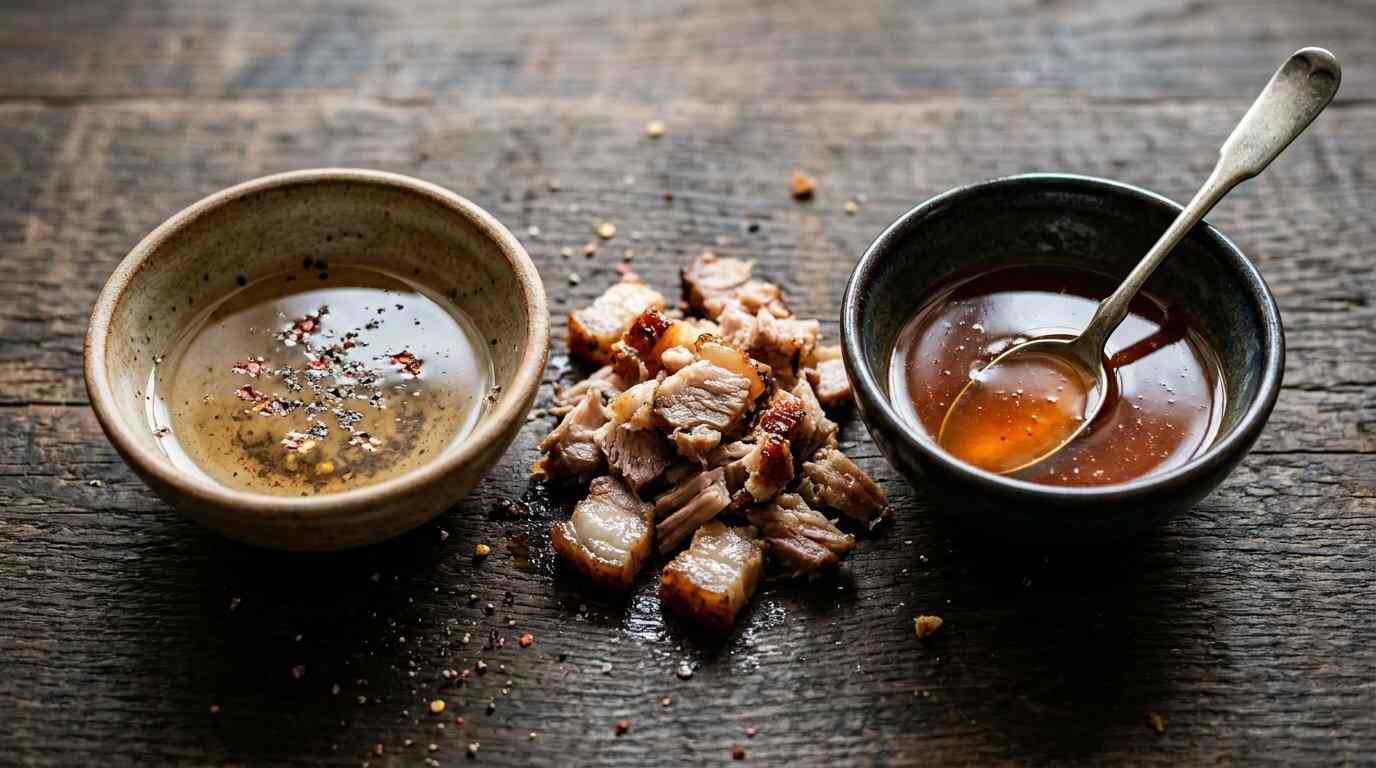
The Museum of the New South lists the Eastern sauce as vinegar, salt, black pepper, water and ground cayenne, with no tomatoes. Lexington sauce starts similarly, with vinegar, salt and pepper, and adds ketchup and brown sugar to soften the acidity; the museum places its emergence in the late 19th or early 20th century. At the Barbecue Center in Lexington, the Southern Foodways Alliance describes the dip as vinegar-heavy, made with ketchup, sugar, salt and pepper, and kept hot in glass coffee pots.
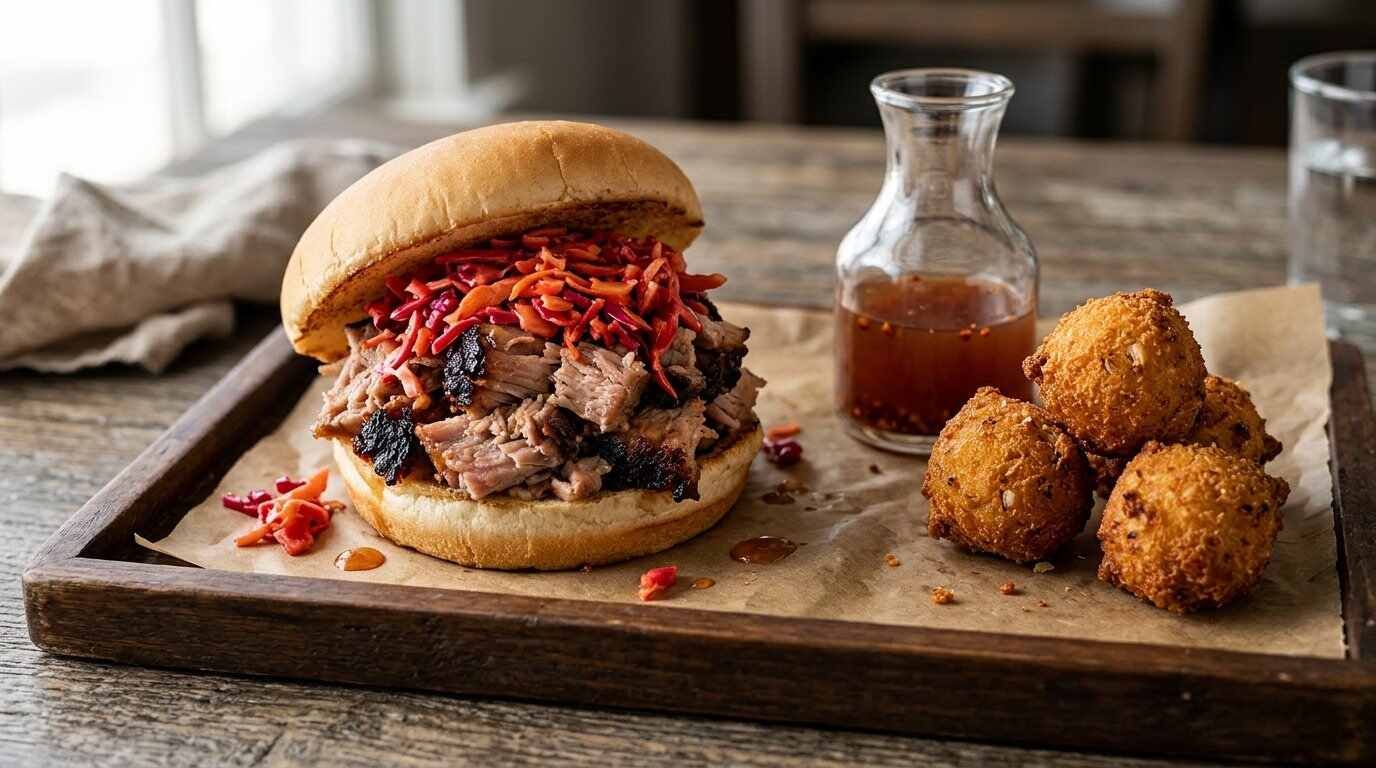
Whether the sauce goes on the meat during cooking or at the table is another contested point. NCpedia says the eastern hog is basted with cider vinegar, red pepper and salt, while Piedmont vendors often serve the thin tomato-based sauce at the table as dip rather than basting with it. The Lexington Barbecue Festival’s history page says the meat is basted with dip. America’s Test Kitchen sums up the flavors in an article on the divide, calling Eastern sauce “salty, fiery, and vinegary” and describing Lexington sauce as redder, sweeter and slightly thicker.
Chopped, Pulled or Sliced
What the “pulled” in pulled pork means in North Carolina
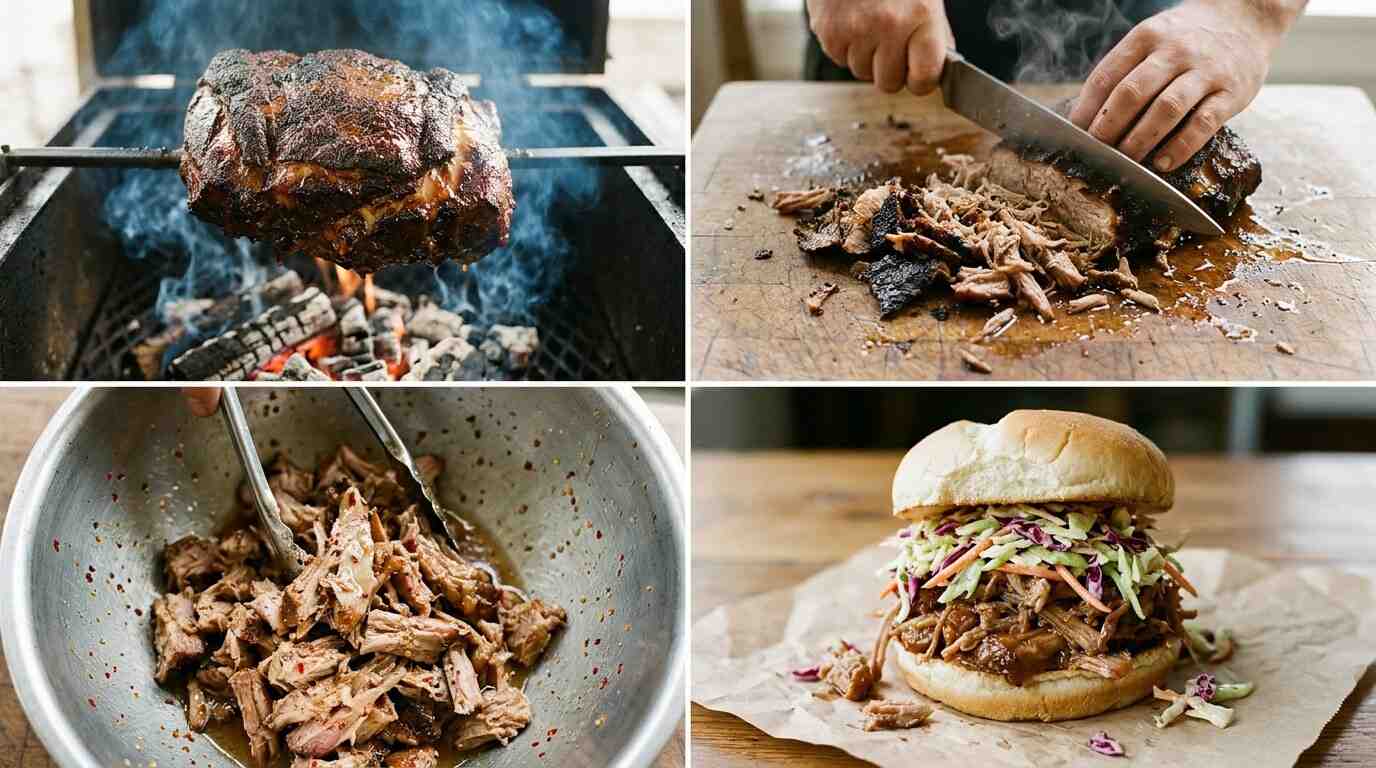
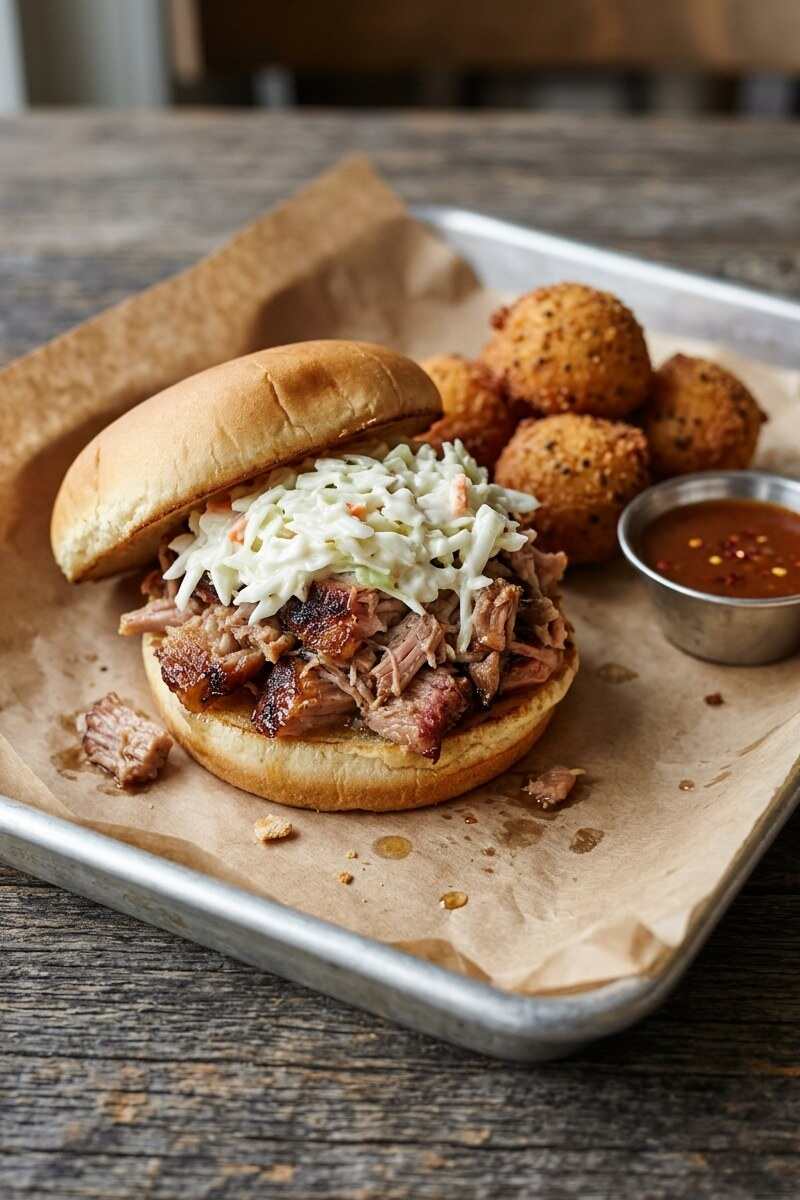
The phrase “pulled pork” is widely used outside the state, while barbecue restaurants in North Carolina more often say “chopped.” The distinction is partly regional and partly practical. The Dallas Morning News describes Eastern pork as chopped or pulled and dressed in a thin vinegar-and-pepper sauce. The Museum of the New South notes that Eastern barbecue is usually finely chopped, while Lexington’s is chopped, sliced or cut into chunks. America’s Test Kitchen quotes the Lexington options as “chopped, sliced, or chopped coarse.”
Orders at Lexington Barbecue include the “brown” described above, a blend of crisp exterior and soft meat. The Southern Foodways Alliance interview with owner Sonny Conrad, who began as a curb-service teenager in 1955, describes the order as a mix of “hickory coal-crisp exterior skin” and smoky, soft shoulder meat. Conrad, according to the same page, says dip and red slaw come with every sandwich and plate, and about 40 percent of customers still eat in their cars.
The chopped, sauced format puts the Carolina sandwich alongside other sauced-meat sandwiches, such as the Italian beef and the sloppy joe, and raises the usual question of bread against moisture covered in the post on why sandwiches get soggy.
Slaw on the Bun
White cabbage in the east, red cabbage in the west, and a debate about the sandwich itself
Coleslaw is where the sandwich becomes more than pork on bread. NCpedia lists white or yellow coleslaw among the sides of eastern cooking and says it is often put on sandwiches. The Lexington side is red slaw, cabbage colored by the dip, which the Barbecue Center makes alongside the dip in batches of about 100 gallons each per week, according to the Southern Foodways Alliance. The Dallas Morning News defines the festival’s red slaw the same way, as cabbage dressed in Lexington dip.
At the Skylight Inn the arrangement varies by source. Atlanta Magazine describes the classic order as a tray of pork, cornbread and slaw, not a sandwich, while Visit NC lists the restaurant among those selling pork sandwiches with slaw and corn bread. America’s Test Kitchen describes both styles as good on a bun, with Eastern plates usually coming with collards, coleslaw, cornbread or boiled potatoes tossed in barbecue sauce, and Lexington plates with hushpuppies, fresh fries and red slaw.
Hushpuppies have their own Lexington link: Stamey’s credits Warner Stamey with introducing them to North Carolina barbecue diners.
The Lexington Barbecue Festival
From a 1983 conversation to a crowd in the hundreds of thousands
The sandwich has a yearly stage in Lexington. According to the festival’s history page, the first Lexington Barbecue Festival took place on October 27, 1984, after a 1983 conversation between Joe Sink Jr. of the local newspaper and bank officials and a feasibility study by Kay Saintsing. Roughly 30,000 people attended that year. Attendance passed 100,000 in 1994 and was estimated at 200,000 in 2014. The Dallas Morning News reports that four of the area’s 15 barbecue restaurants cook for the event: Barbecue Center, Smokey Joe’s, Speedy’s and Stamey’s.
Newer cooks complicate the east-west map. The same article reports that Buxton Hall Barbecue in Asheville cooks whole hogs, and that its chef, Elliott Moss, says cooking the whole animal mixes the different cuts while the hog cooks in its own fat. Visit NC lists Red Bridges Barbecue Lodge in Shelby, which cooks pork on hickory overnight, and sandwiches such as a grilled pimento cheese and barbecue combination at Hubba Hubba Smokehouse in Flat Rock.
Common questions
What is the difference between Eastern and Lexington barbecue?
Eastern cooks use the whole hog over wood, and the Museum of the New South lists the sauce as vinegar, salt, black pepper, water and ground cayenne, with no tomatoes. Lexington cooks use pork shoulder, and the sauce starts similarly but adds ketchup and brown sugar.
Where is the dividing line between the two styles?
The Museum of the New South describes the line as generally Raleigh and the Research Triangle Park rather than a clear border.
Is it pulled pork or chopped pork?
The phrase “pulled pork” is widely used outside the state, while barbecue restaurants in North Carolina more often say “chopped.” The North Carolina Pork Council adds that in the state “barbecue” means pork only.
Sources
- Museum of the New South, “Carolina Barbecue”: https://www.museumofthenewsouth.org/southern-tables/carolina-barbecue
- North Carolina Pork Council, “NC Barbecue Capital of the World”: https://www.ncpork.org/nc-bbq-capital-of-the-world/
- NCpedia, “Barbecue”: https://www.ncpedia.org/barbecue
- Atlanta Magazine, “Whole pig is boss in Eastern North Carolina”: https://www.atlantamagazine.com/barbecue/whole-pig-is-boss-in-eastern-north-carolina/
- Southern Foodways Alliance, North Carolina BBQ oral history, Samuel Jones (Skylight Inn): https://www.southernfoodways.org/?p=11665
- Southern Foodways Alliance, Barbecue Center oral history: https://www.southernfoodways.org/interview/barbecue-center/
- Garden & Gun, Sam Jones interview: https://gardenandgun.com/sam-jones-interview
- Our State, Lexington Barbecue (Bob Garner): https://www.ourstate.com/lexington-barbecue/
- Stamey’s Barbecue, History: https://www.stameys.com/history
- Lexington Barbecue Festival, History: https://thebarbecuefestival.com/p/history
- The Dallas Morning News, “Go whole hog: barbecue debate in North Carolina”: https://www.dallasnews.com/life/travel/2016/11/11/go-whole-hog-barbecue-debate-north-carolina-hot-spots
- America’s Test Kitchen, “Which Side of the North Carolina Barbecue Battle Are You On”: https://www.americastestkitchen.com/articles/6037-Which-Side-of-the-North-Carolina-Barbecue-Battle-Are-You-On
- Visit NC, “Taste North Carolina: barbecue styles, history, new twists”: https://www.visitnc.com/list/taste-north-carolina-barbecue-styles-history-new-twists
- Visit NC, Lexington Barbecue listing: https://www.visitnc.com/listing/lexington-barbecue-restaurant
Keep reading
- Southern Tomato Sandwich: White Bread, Duke’s Mayonnaise and a Summer Tomato
- Zingerman’s Delicatessen: The Ann Arbor Deli Behind the Numbered Sandwiches and the Reuben
- Bacon Butty: The British Bacon Sandwich, Its Names, Its Sauce Wars and Its Science
More in this section: Recipes and Techniques guide.