In this story
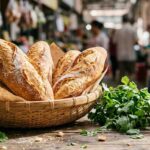
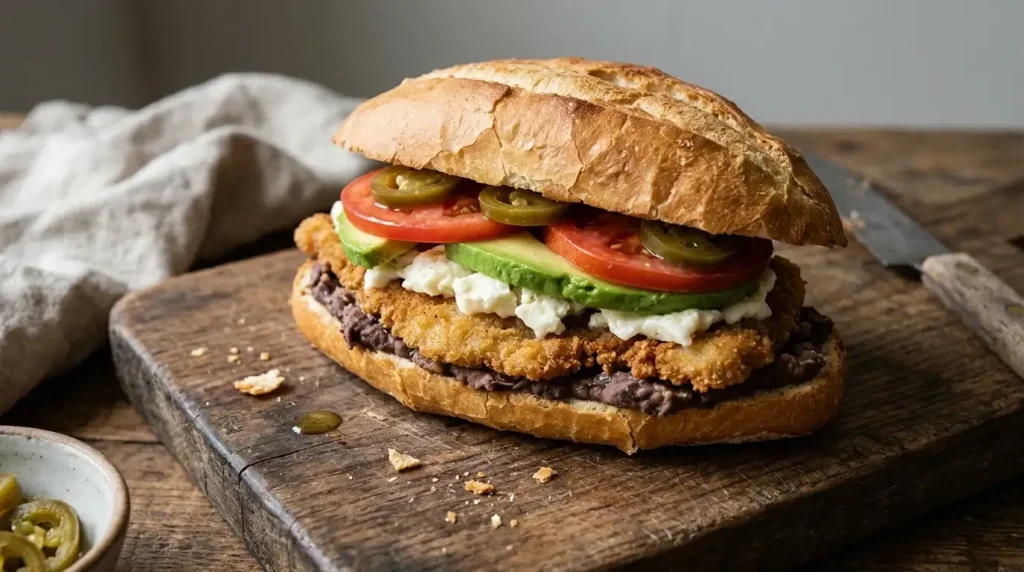
The Mexican torta is a sandwich built on a split wheat roll, most often a bolillo or a telera, and filled with anything from breaded cutlets to refried beans to pork stewed in its own fat. Two rolls dominate: the bolillo is torpedo-shaped with a crunchy crust and soft crumb, while the telera is larger and rounder, with two long cuts across the top.
Video: Mexico City’s Street Tortas | City Guides: Mexico City | Bon Appetit, Bon Appétit
Nobody can say with certainty who made the first one. Accounts of the torta’s beginnings lean on a foreign army, a Belgian baker, an eleven-year-old in Mexico City and a salsa spill in Guadalajara, and the sources behind those stories often disagree on dates, places and even which city gets the credit.
The bolillo, the telera and the French intervention
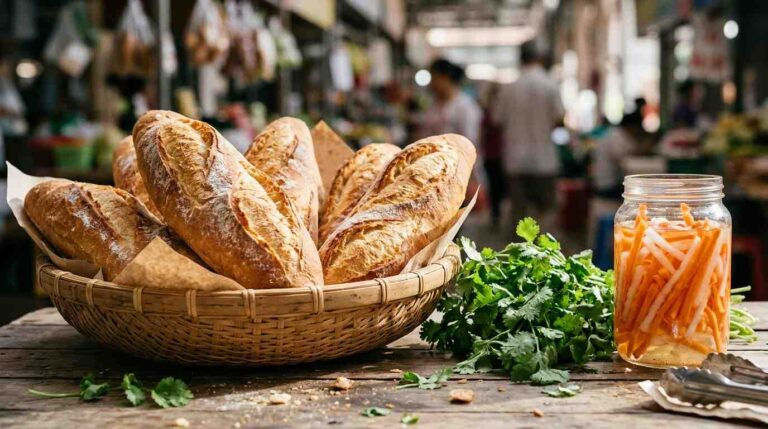
The bread comes first, because the torta is hard to picture without it. Mexico News Daily states that neither roll began in Mexico City: the bolillo’s birthplace was Guadalajara, and the telera’s was Andalusia in southern Spain, where a bread of that name has been baked since the 17th century. In Mexico the telera has been made from the same wheat dough as the bolillo since at least 1871, according to the same article.
The person most often tied to the bolillo is Camille Pirotte, a Belgian baker. The story places him in Guadalajara during the Second French Intervention, when Maximilian of Habsburg briefly held the title of emperor of Mexico. Mexico News Daily dates his posting to a battalion there to around 1864 and credits him with baguette-style breads made without starter yeast. Excélsior gives a sharper date, January 6, 1864, for his arrival with French troops, yet it hedges the rest with the Spanish word “supuestamente”, meaning supposedly, when describing the European techniques he is said to have introduced. Texas Monthly likewise calls the Pirotte account a popular story rather than a documented fact.
Other writers treat the French link as speculation about the whole sandwich. Eat Mexico describes the common guess that the torta grew out of the 1860s intervention, when Mexican bakers began making their own bread modeled on the baguette, and notes that the exact origin is unknown. Mexico News Daily, in a separate piece, places the sandwich in the 19th century under Porfirio Díaz, when European influence was strong, and says there is no scholarly consensus. That article also traces the torta back to the Spanish bocata, so the lineage runs through Spain as well as France.
The telera and bolillo split the work in practice. According to Tasting Table, the bolillo is used for the tamal torta, the pepito and the guacamaya, while the telera goes to the milanesa torta and the pambazo. Both appear under the cubana, so the pairing is not rigid.
Armando, the 1864 advertisement and Pachuca
Ask where the torta began and the usual answer is a single name. Mexico News Daily recounts the lore that Armando Martínez Centurión began selling “tortas compuestas”, sandwiches with several ingredients, in 1892 at the age of eleven, using telera with ham, pork loin, sardines, avocado, chipotle and cheese. The article says plainly that he allegedly founded the institution, though it adds that he certainly opened the first tortería in Mexico City.
A second version of the same man appears in a different retelling. In the other Mexico News Daily article, he slices a bolillo and fills it in 1892 and opens his shop on what is now Motolinía Street in downtown Mexico City, with chicken, milanesa and ham on offer and students and workers as customers. The same piece reports that the writer Jorge Ibargüengoitia reportedly said Armando once showed a creation with up to 25 ingredients at a diplomatic event at a French embassy.
Then comes the paper trail that complicates him. Mexico News Daily mentions an 1864 advertisement for a “torta compuesta” in the Puebla newspaper El Pájaro Verde, which would put the sandwich nearly three decades before Armando. The Dallas Morning News refers to an 1864 newspaper in Mexico City as the earliest known reference, so the two accounts do not agree on which city printed it. Eat Mexico adds that the torta was supposedly first introduced in Puebla, and that the sandwich took its modern form in Mexico City.
A fourth claim comes from a torta shop owner. In the Dallas piece, Martín Ramírez says tortas originated in Pachuca, Hidalgo, and the article itself reports that historians disagree. No fetched source offers documents for the Pachuca claim.
Torta ahogada in Guadalajara
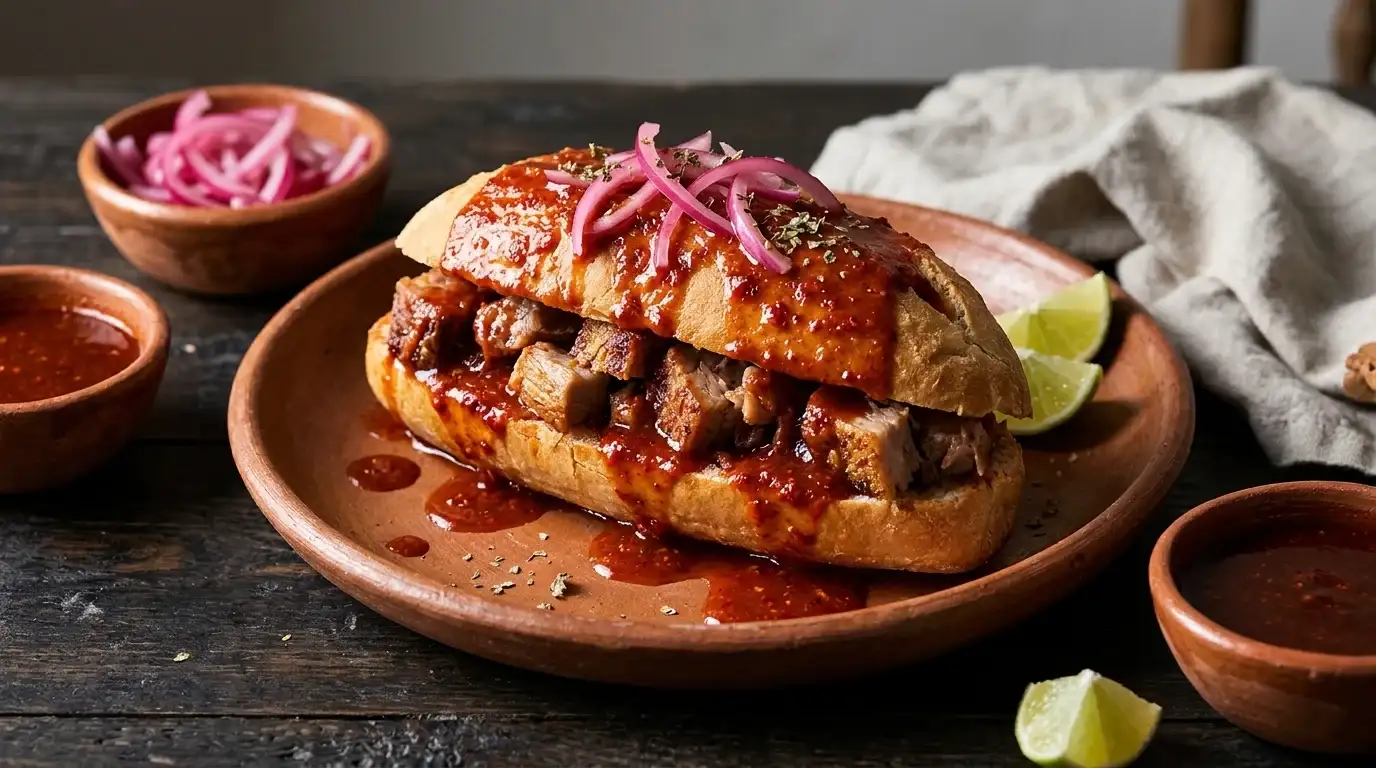
Guadalajara’s contribution is the sandwich that is eaten with a spoon as much as by hand. The name means “drowned sandwich”, and Texas Monthly describes it as a roll with carnitas and a layer of refried beans, with salsa poured over half or all of it. The sauce may be a mild tomato salsa, a hotter salsa roja, or both.
The bread is the birote salado, a salty sourdough roll shaped like a small baguette. Texas Monthly notes that its firm crust and soft, absorbent interior let it hold up under the sauce. Excélsior describes the same crumb as slightly sour, with enough structure to soak without falling apart quickly, and lists a spicy red sauce of chile de árbol, tomato, garlic and vinegar, with onion softened in lime juice as a garnish. Fillings beyond carnitas include buche, tongue and chicken, and the soaking itself varies from half to full, sometimes with fried beans alongside.
The origin of the soaking is where the accounts split. Mexico News Daily credits Luis de la Torre, known as Güero, in the 1920s, saying a torta slipped into a container of salsa and the customer liked the result. Texas Monthly retells a similar accident but sets it in the early 1900s, with a vendor dropping a torta into a bucket of salsa. Excélsior places the first soaking in the 1920s or 1930s and allows that it happened either by accident or at a customer’s preference, and it says Güero is only “attributed” the sales at the Jardín de San Francisco near the old train station, without documentation.
The scale of the trade is better documented than its beginnings. Mexico News Daily cites a 2022 INEGI estimate of more than 1,300 businesses in Jalisco selling it, mostly in Guadalajara. Excélsior adds that Guadalajara established a Día de la Torta Ahogada in 2022. As for reception, one baker told Texas Monthly that people “either love it or hate it”.
Cemita of Puebla
The cemita takes its name from its roll. Sandwich Tribunal explains that the name comes from the sesame-seeded bread, which is larger and stiffer than a hamburger bun, slightly sweet and crusty. Chilango offers a lineage for it: the bread developed gradually from the colonial-era bizcochos de sal of Puebla and a bread introduced by the French, and it is topped with sesame. The article gives no date for that blending, which leaves the French connection as one more attribution without a year.
The standard dressing is distinctive. Sandwich Tribunal lists avocado, white cheese, chipotle en adobo and papalo, the last a pungent herb often compared to cilantro and described there as polarizing. The cheese is either soft panela or a stringy quesillo-style Oaxacan cheese. Papalo grows as a weed year-round in Puebla, according to the same article, which helps explain why the herb defines the sandwich there and not elsewhere.
Fillings in Puebla run to milanesa, pata (the connective tissue of a cow’s foot), carne enchilada, or cheese and vegetables. One Chicago cemita maker builds a “Cemita Atómica” from milanesa, ham and carne enchilada together. Because Pueblan vendors tend to specialize, a stand known for tacos al pastor usually offers a cemita al pastor too.
Torta de milanesa and torta cubana in Mexico City
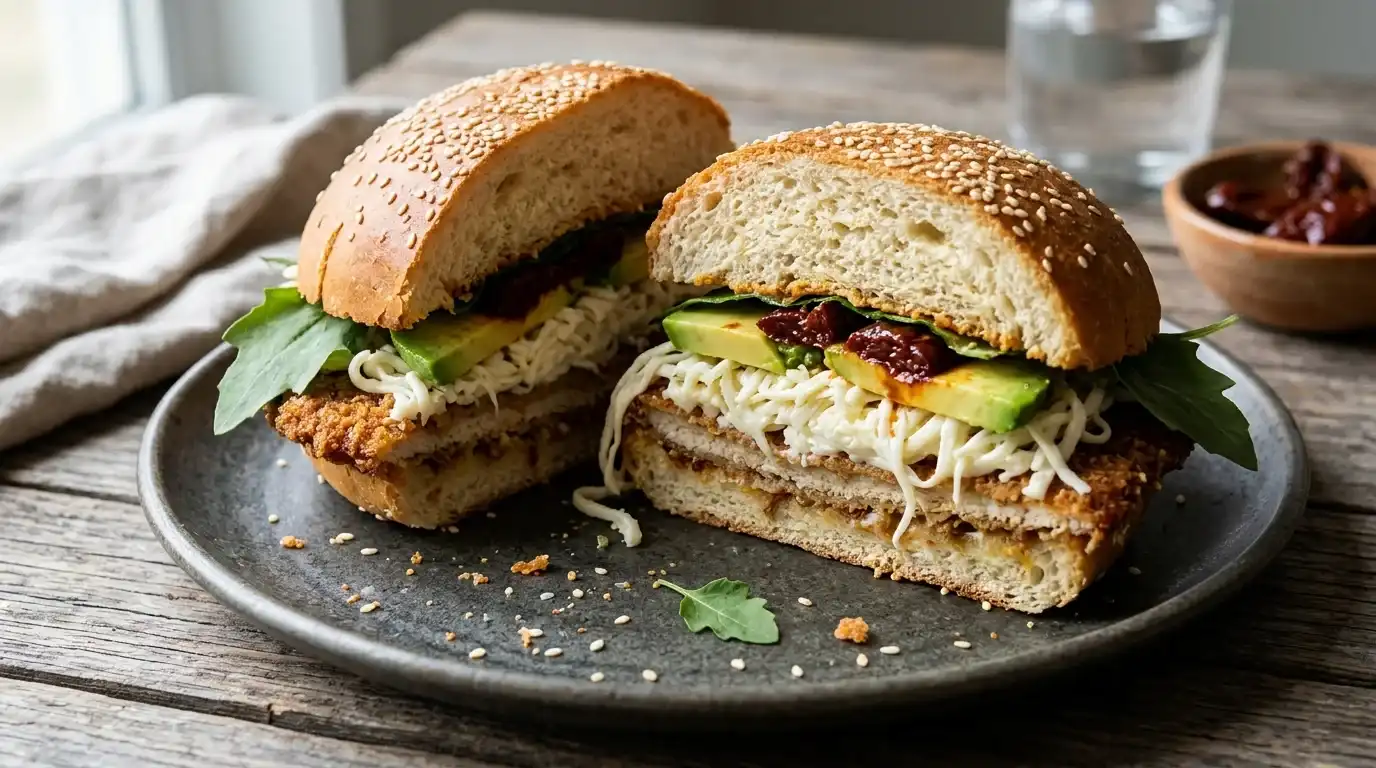
Mexico City’s best-known tortas are filled with fried, breaded meat. The Dallas Morning News reports that breaded beef milanesa is a common filling, often with ham, pork leg, sausage or egg, and that mayonnaise usually goes on the bread first. Mexico News Daily notes that milanesa also turns up inside the Puebla cemita and the cubana.
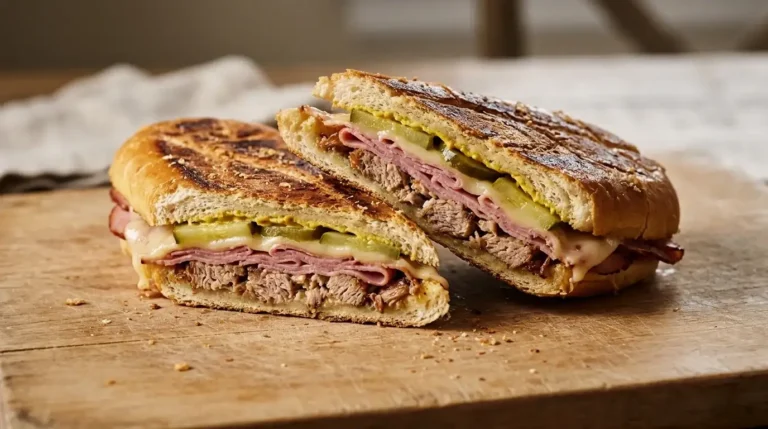
The cubana is the heaviest of them. A Dallas shop owner calls it “the queen” of tortas, and the version he describes holds chorizo, pork leg, milanesa, ham, sausage, Oaxaca and panela cheeses, American cheese, mayonnaise, tomato, avocado, onion and jalapeño or chipotle. The Daily Meal’s description is similar, with hot dogs, bacon and egg also possible, and it stresses that the Mexican sandwich differs from the Cuban sandwich of ham, roast pork, Swiss cheese, pickles and salami.
The naming is contested. Mexico News Daily lays out three theories. One says Fidel Castro, living in exile in Mexico City in the 1950s, ordered a turkey, ham and cheese sandwich at a shop on Calle de Motolinia. A second credits Leopoldo “Don Polo” Sánchez Preciado and ties the name to the Cuban Missile Crisis. A third holds that the sandwich came from one of the torterías on Calle República de Cuba and has nothing to do with Castro. The Daily Meal calls the street the most popular explanation, says the exact shop is uncertain and notes that the Castro story is less supported. It also reports a fourth, playful claim that compares the sandwich to Cuban women, said to have everything a person could want.
Fillings, spreads and the stand
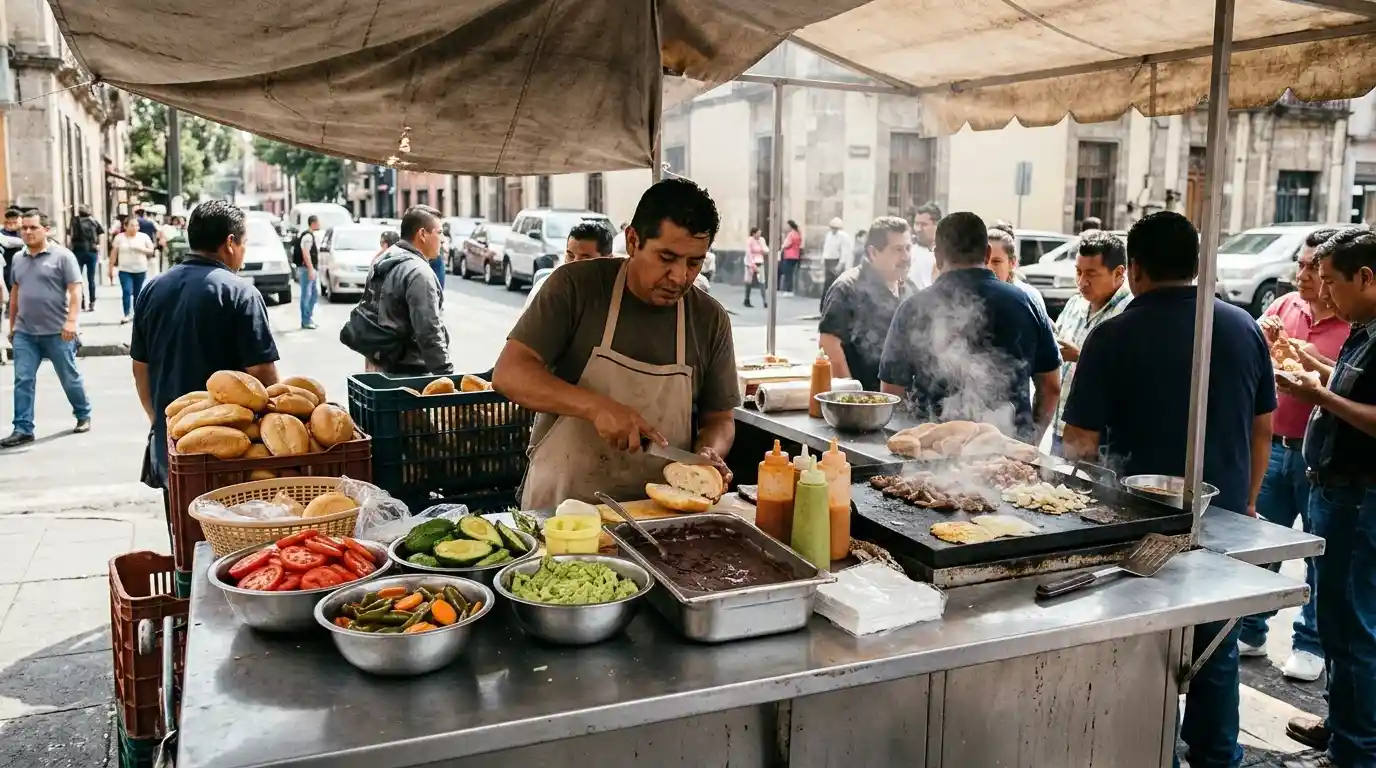
Across regions, the pattern of construction holds steady. Mexico News Daily’s guide lists refried beans, mayonnaise, tomato, lettuce, avocado, pickled chilies, onion and Oaxaca cheese as the essential toppings, with the soft inside of the roll (the migajón) often scooped out first. Main fillings range from milanesa and steak to ham, sausage, cod, eggs, tuna, turkey, pork leg and al pastor. Eat Mexico adds butter as a spread that flavors the bun and keeps toppings in place, and says vendors in Mexico City commonly ask “rajas o chipotle?” to decide which chile goes in.
Regional cousins fill out the map. Tasting Table lists the guajolota, a tamal tucked inside bread; the pambazo, dipped in guajillo salsa and fried; the torta pepito of grilled arrachera with avocado; the guacamaya of León with chicharrón; and the torta de la barda from Tamaulipas. Mexico News Daily places the barda in the 1920s and says the Zacatecas torta de Malpaso, stuffed with chorizo, arose around the time of the ahogada.
The stand is part of the dish. Per the Dallas Morning News, torta stands resemble food trucks without wheels, with all cooking done on site. Mexico News Daily describes tortas as street food sold on nearly every corner, inexpensive, and an everyday meal rather than a delicacy, often paired with a soda. The Dallas article credits the 1970s television show El Chavo del 8 with helping carry the sandwich across Mexico and Latin America. Some shops sell versions close to a meter long, and finishing one earns a free meal. The sources fetched say nothing about market stalls specifically, so the market side of torta culture remains undocumented here.
Sources:
- A timeline of classic Mexican tortas, from Cuauhtémoc to Cuba, Mexico News Daily: https://mexiconewsdaily.com/food/a-timeline-of-classic-mexican-history-of-the-torta/
- Taste of Mexico: Tortas, Mexico News Daily: https://mexiconewsdaily.com/food/taste-of-mexico-torta
- What Makes Mexican Tortas Unique?, Tasting Table: https://www.tastingtable.com/1205732/what-makes-mexican-tortas-unique
- What is a Mexican Torta?, Eat Mexico: https://eatmexcity.com/what-is-a-mexican-torta
- Así surgió la torta ahogada: la joya gastronómica de Guadalajara, Excélsior: https://www.excelsior.com.mx/recetas/historia-de-la-torta-ahogada-como-nacio-el-emblema-tapatio/1740540
- torta ahogada, Texas Monthly: https://www.texasmonthly.com/food/torta-ahogada/
- Cemitas: Pueblan Specialty, Chicago Favorite, Sandwich Tribunal: https://sandwichtribunal.com/2015/03/cemitas-pueblan-specialty-chicago-favorite
- Cemitas, Chilango: https://www.chilango.com/comida-y-tragos/cemitas/
- The Popular Mexican Sandwich Named After The Street Where It Originated, The Daily Meal: https://www.thedailymeal.com/1710879/mexican-sandwich-torta-cubana-name
- Mexico City is the capital of tortas, The Dallas Morning News: https://dallasnews.com/food/2025/01/24/mexico-city-is-the-capital-of-tortas-and-we-have-a-piece-of-that-in-dallas-fort-worth
- Mexico City’s Street Tortas, Bon Appétit (YouTube): https://www.youtube.com/watch?v=tWooM2UVraI