In this story
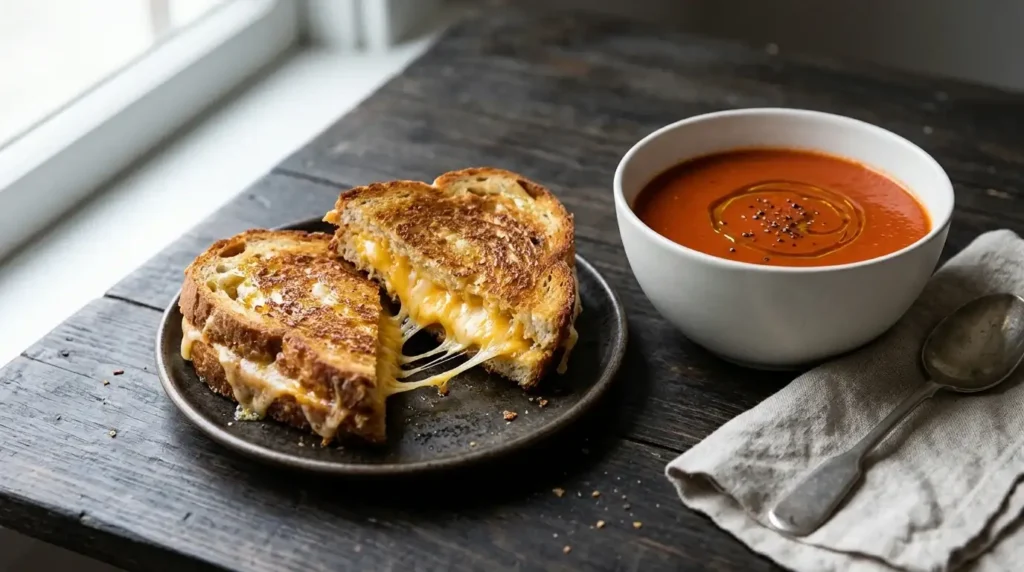
Grilled cheese and tomato soup share a menu line across much of the United States, yet none of the pages fetched for this article names the first time the two were served together. Food journalism offers a familiar chain of causes: cheap canned soup, processed cheese, sliced bread, hard economic times, two world wars and school cafeterias. Every ingredient in that chain has a documented date. The pairing itself does not.
Video: The BEST Tomato Soup for Grilled Cheese Lovers, Natashas Kitchen
What follows separates the dated facts from the repeated ones, reports what cooks and food writers say about why the combination works, and sets out tomato soup methods from published recipes.
Where the claim comes from
Several food sites state the origin as settled, and they disagree with one another. A Tasting Table article by Michelle Welsch says the combination did not occur until World War II, when military families and sailors relied on the meal. Chowhound places the start in the early twentieth century, somewhere between the Great Depression and the years after the war. Food Republic reaches back to the 1920s and says the 1929 crash “further solidified” the pairing. Victoria columnist Eric Akis, writing in the Times Colonist, puts the decision after the war, when school cafeterias and other institutional kitchens concluded that a grilled cheese needed a side and tomato soup supplied vitamin C.
Four sources, three different eras. None of the four cites a menu, a cookbook, a newspaper advertisement or a historian, and the fetched text of each article names no archive. The accounts agree on the ingredients and the institutions and on little else, which makes them useful as a list of leads and weak as evidence.
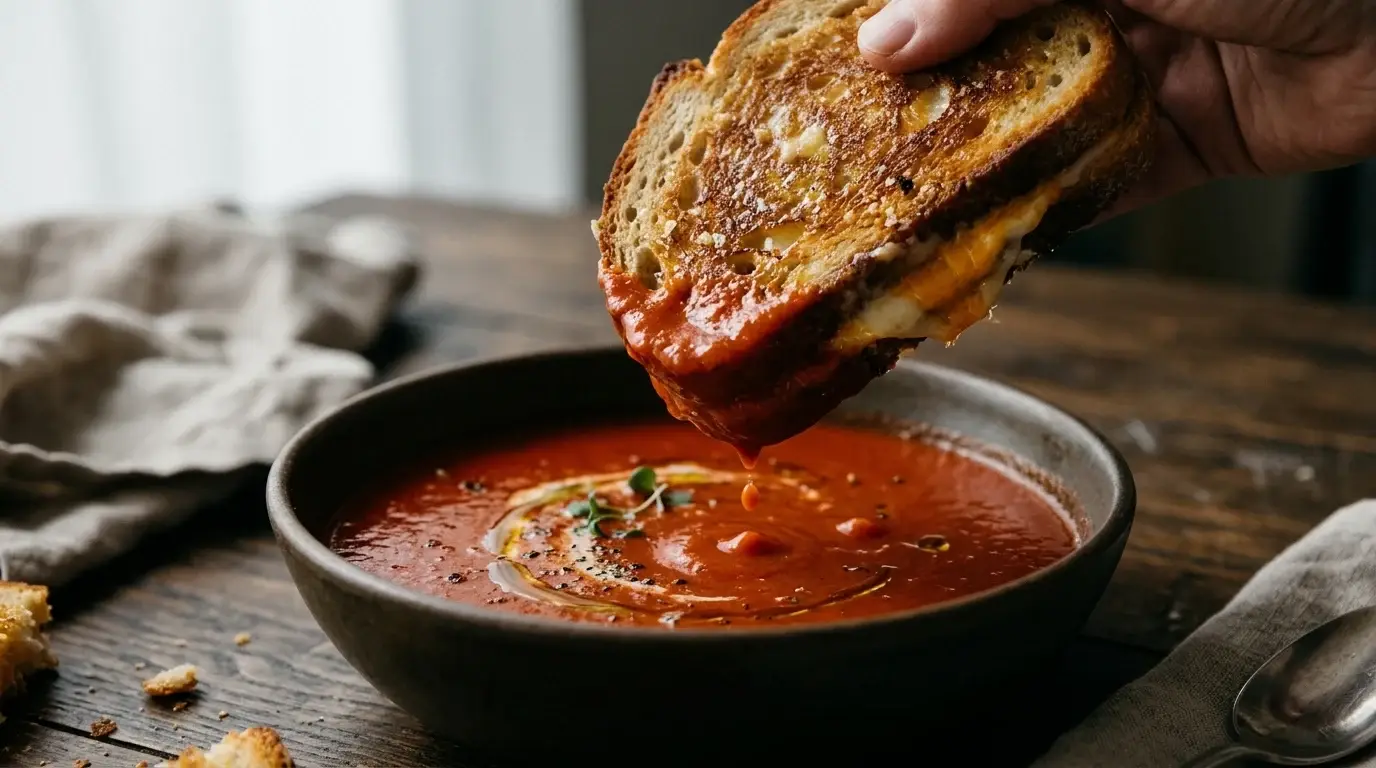
Condensed soup, processed cheese and sliced bread
The soup side has the firmest dates. The Campbell company’s own timeline credits chemist John T. Dorrance with inventing the process of condensing soup in 1897, which allowed smaller cans, and records national distribution in 1911. The New Jersey Hall of Fame states that the first product of Dorrance’s laboratory was condensed tomato soup, and that the company had already sold a ready-to-eat beefsteak tomato soup in 1895. Tomato soup in a can, then, predates every sandwich development discussed below.
Cheese came next. Northern Public Radio reports that James L. Kraft received the U.S. patent for processed cheese on June 6, 1916, that the federal government bought 5 million pounds of it to feed soldiers in World War I, and that by 1930 Kraft made 40 percent of the cheese eaten in the country. Sliced bread followed. According to the Smithsonian, the Chillicothe Baking Company in Missouri installed the first bread-slicing machine in 1928, and by 1929 most towns of more than 25,000 people had sliced bread.
The sandwich itself is older than the machinery. Digiday notes a “toasted cheese” recipe in a cookbook from around 1915 and says the term “grilled cheese” first appeared in print in 1932, in a Los Angeles Times luncheon menu. It also describes a 1920s newspaper advertisement that promoted Kraft American cheese for grilled sandwiches. By the early 1930s, a cook could buy canned tomato soup, sliced bread and melting cheese in the same shop. That establishes availability. It does not establish that anyone put them on one tray.
What school lunch records show
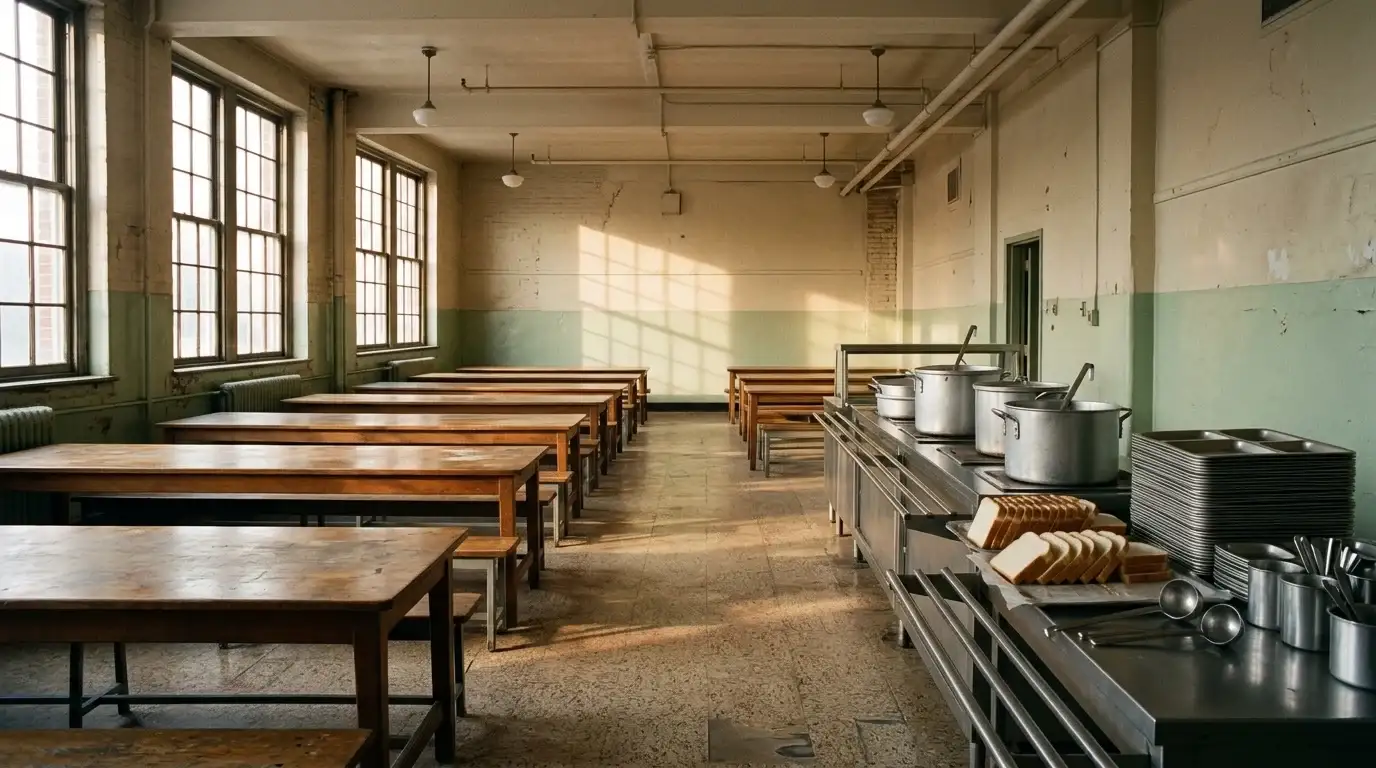
The school-lunch explanation appears in four of the articles above, always without a named program or year. Federal school-lunch documents that could be fetched point somewhere less tidy.
A 1934 U.S. Department of Agriculture publication, School Lunches With Recipes to Serve 50 Children, includes a thick soup of canned tomatoes and peanut butter. The Tasting History recipe page, which reproduces it, lists the soup at about four cents a serving and pairs it with a plain buttered sandwich, an apple, milk and a cookie. No cheese sandwich appears.
The USDA’s October 1936 Miscellaneous Publication No. 246, Menus and Recipes for Lunches at School, shows the same pattern. Its first-week menu offers peanut butter and tomato soup with a grated-carrot sandwich and toast or a bread-and-butter sandwich. Its second week offers vegetable soup with a cottage-cheese sandwich on raisin bread. A search of the fetched text turned up no toasted or grilled cheese sandwich and no cream of tomato soup, though canned tomato soup does serve as an ingredient in an egg and rice dish.
The statute that made the program permanent came later. The USDA’s program history describes the National School Lunch Act of June 4, 1946, and its Type A lunch of milk, a protein-rich food, fruit or vegetables, bread and butter. The excerpt mentions neither sandwiches nor soup.
These documents show tomato soup and cheese sandwiches in school menus of the 1930s, though not side by side. They do not support a school-lunch origin, and they do not rule one out, since later menus were not examined.
Hard times and wartime kitchens
The Depression and the war years recur in every account, with a little more support for the sandwich than for the soup. A Tasting Table history of the sandwich says pre-sliced bread in the 1920s encouraged sandwich inventions, among them an open-faced “cheese dream” popular during the Depression, and that Navy cooks in World War II followed a government-approved recipe called “American cheese filling sandwiches.” Digiday likewise says Navy cooks made cheese sandwiches, some of them open-faced. Akis adds that grilled cheese appeared in government cookbooks and Navy kitchens because it was cheap, easy and met nutrition standards.
A transcription of the 1944 revision of The Cook Book of the United States Navy exists online, but the page reached for this article shows only the table of contents, so the recipe name stays secondhand. A Task & Purpose article on the book reports a line saying cheese “takes exceedingly high rank on the list of essential foods in the Navy,” and mentions neither a cheese sandwich nor tomato soup.
No fetched source ties wartime cheese sandwiches to tomato soup. The Welsch claim about sailors and military families rests on the article’s say-so.
Why the pairing works
The explanations come from cooks and columnists, not laboratory studies, and no controlled tasting on the subject turned up in the research for this article.
Acid against fat. A Wine Spectator writer testing wines with the meal found that acidity did the work: “The acidity of the wine cut through the richness of the sandwich but also held its own with the acid in the tomatoes.” The same logic applies to the soup, which brings tartness to a buttered, cheese-filled sandwich. America’s Test Kitchen, in its creamless tomato soup, treats that tartness as a problem to be tamed with a little brown sugar, not removed.
Crisp against smooth. Andrew Zimmern’s recipe describes the contrast of crisp bread and creamy soup as what makes dipping satisfying. His sandwich layers oven-roasted tomato between American cheese slices and uses mayonnaise in place of butter, which the recipe says gives a crisper crust.
Savory depth. The Umami Information Center’s food tables list glutamate figures of 180 for cheddar, 310 for Emmental and 1,200 to 1,680 for Parmigiano Reggiano, with no units given on the page. Its vegetable table lists 650 to 1,140 milligrams per 100 grams for dried tomatoes and gives no figure for fresh ones. The tables establish that both foods carry glutamate. They do not say the pairing is a deliberate flavor synergy, and neither page makes that claim.
Nutrition. Vitamin C is the reason repeated most often, in Chowhound and the Times Colonist, while Food Republic speaks of vitamins in general. It reads as a rationale for institutional menus, and none of the three supplies a nutrition document from the period.
Making tomato soup for the sandwich
Published recipes agree on one point and split on nearly everything else: canned tomatoes are the base. In a Book Riot comparison of four cookbook recipes, tester Tracy Shapley Towley recommended fresh tomatoes only at peak season and good canned whole tomatoes the rest of the year. The methods differ in thickener, fat and time.
| Method | Tomatoes | Thickener | Fat or dairy | Time |
|---|---|---|---|---|
| America’s Test Kitchen | Two 28-ounce cans whole | 3 slices white bread | Olive oil, broth, no cream | About 5 minutes after the tomatoes boil |
| J. Kenji López-Alt via Food52 | Two 28-ounce cans whole peeled | 2 slices white bread | Olive oil blended in, no dairy | 5 minutes prep, 10 minutes cooking |
| Eric Akis | One 14-ounce can crushed | 1 tablespoon flour | Stock, then milk or light cream | 10 minutes prep, about 15 cooking |
| Andrew Zimmern | 5 pounds fresh, roasted | None | Olive oil, 2 cups cream | 90 minutes roasting, 75 simmering |
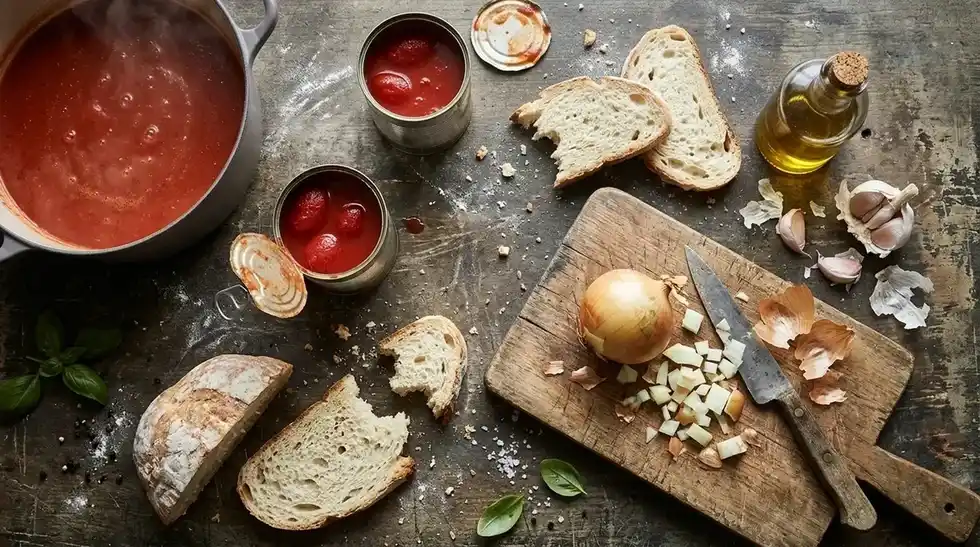
The bread method. America’s Test Kitchen softens a chopped onion and minced garlic in olive oil for 3 to 5 minutes, mashes the canned tomatoes in the pot, and stirs in brown sugar and torn bread. After about 5 minutes at a boil the bread breaks down, and the soup is blended in batches with a tablespoon of oil per batch before broth goes in. The recipe explains that butter muted the tomato flavor, and it dismisses cream as a fix: “Adding cream—the usual stodgy solution—merely dulls it.” López-Alt’s version cooks the onion about 4 minutes without browning, simmers the tomatoes with bread and water for 5 minutes, and drizzles olive oil into the blender with the vent covered by a towel.
The roux method. Akis cooks sliced onion for 4 minutes, adds garlic for 1 minute, then stirs in flour, tomato paste and oregano for another minute before adding stock and crushed tomatoes. Five minutes of simmering and a pinch or two of sugar finish the base, and milk or cream goes in after puréeing.
The long method. Zimmern roasts tomatoes at 300 degrees Fahrenheit for 90 minutes, builds a shallot and wine base, and simmers everything for 75 minutes before finishing with cream.
The Book Riot tester ranked the rice-thickened soup first, found bread less effective and flour thinnest, and judged a roasted version, with nearly two hours of roasting alone, not worth the effort.
Sources
- Tasting Table, “Grilled Cheese And Tomato Soup: The History Behind The Iconic Pairing”: https://tastingtable.com/1525637/history-grilled-cheese-tomato-soup-pairing
- Chowhound, “The History Behind Why We Eat Grilled Cheese With Tomato Soup”: https://chowhound.com/1627589/grilled-cheese-tomato-soup-history
- Chowhound, “Why We Eat Grilled Cheese With Tomato Soup”: https://www.chowhound.com/stories/why-we-eat-grilled-cheese-with-tomato-soup
- Food Republic, “The Historical Reason We Pair Tomato Soup And Grilled Cheese”: https://www.foodrepublic.com/1488429/grilled-cheese-tomato-soup-pairing-history
- Times Colonist, Eric Akis, “Tomato soup with grilled cheese a match made in heaven”: https://www.timescolonist.com/life/food-and-drink/eric-akis-tomato-soup-with-grilled-cheese-a-match-made-in-heaven-4659164
- The Campbell Company, “Campbell history”: https://www.thecampbellscompany.com/about-us/our-story/campbell-history/
- New Jersey Hall of Fame, “John Dorrance”: https://njhalloffame.org/?p=459
- Northern Public Radio, “This Week in Illinois History: Krafting Cheese, June 6, 1916”: https://www.northernpublicradio.org/illinois/2021-06-07/this-week-in-illinois-history-krafting-cheese-june-6-1916
- Smithsonian Magazine, “Take a Look at the Patents Behind Sliced Bread”: https://www.smithsonianmag.com/smart-news/take-look-patents-behind-sliced-bread-180963870/
- Digiday, “Unsolved Mysteries: Did JWT Really Invent the Grilled Cheese Sandwich?”: https://digiday.com/agencies/unsolved-mysteries-jwt-really-invent-grilled-cheese-sandwich
- Tasting History, “School Lunch: Peanut Butter and Tomato Soup”: https://www.tastinghistory.com/recipes/schoollunchsoup
- USDA Miscellaneous Publication No. 246, Menus and Recipes for Lunches at School (1936), Internet Archive: https://archive.org/download/menusrecipesforl246carp/menusrecipesforl246carp.pdf
- USDA Food and Nutrition Service, National School Lunch Program history (archived): https://webarchive.library.unt.edu/web/20090109040329/http:/www.fns.usda.gov/cnd/Lunch/AboutLunch/ProgramHistory_5.htm
- Tasting Table, “The Murky History Behind The Classic Grilled Cheese Sandwich”: https://www.tastingtable.com/1859125/history-grilled-cheese-sandwich
- The Cook Book of the United States Navy (1944), HyperWar transcription: https://www.ibiblio.org/hyperwar/USN/ref/CookBook/index.html
- Task & Purpose, Navy cookbook article: https://taskandpurpose.com/history/navy-cookbook-world-war-ii.md
- Wine Spectator, “8 and 20 pairing: Grilled Cheese and Spicy Tomato Soup with Beaujolais”: https://www.winespectator.com/articles/8-20-grilled-cheese-and-spicy-tomato-soup-with-beaujolais-44526
- America’s Test Kitchen, Creamless Creamy Tomato Soup: https://www.americastestkitchen.com/cooksillustrated/recipes/4412-creamless-creamy-tomato-soup
- Andrew Zimmern, Extra Crispy Grilled Cheese and Cream of Tomato Soup: https://andrewzimmern.com/recipes/ultimate-grilled-cheese-cream-of-tomato-soup/
- Umami Information Center, food tables: https://www.umamiinfo.com/richfood/
- Umami Information Center, vegetables: https://www.umamiinfo.com/richfood/foodstuff/vegetables.html
- Food52, J. Kenji López-Alt’s 15-Minute Creamy (Vegan) Tomato Soup: https://food52.com/recipes/78495-j-kenji-lopez-alt-s-15-minute-creamy-vegan-tomato-soup
- Book Riot, “Cookbook Showdown: The Best Tomato Soup Recipes, Tested”: https://bookriot.com/best-tomato-soup-recipes/
- YouTube, Natashas Kitchen, “The BEST Tomato Soup for Grilled Cheese Lovers”: https://www.youtube.com/watch?v=hkEelgx_J7g